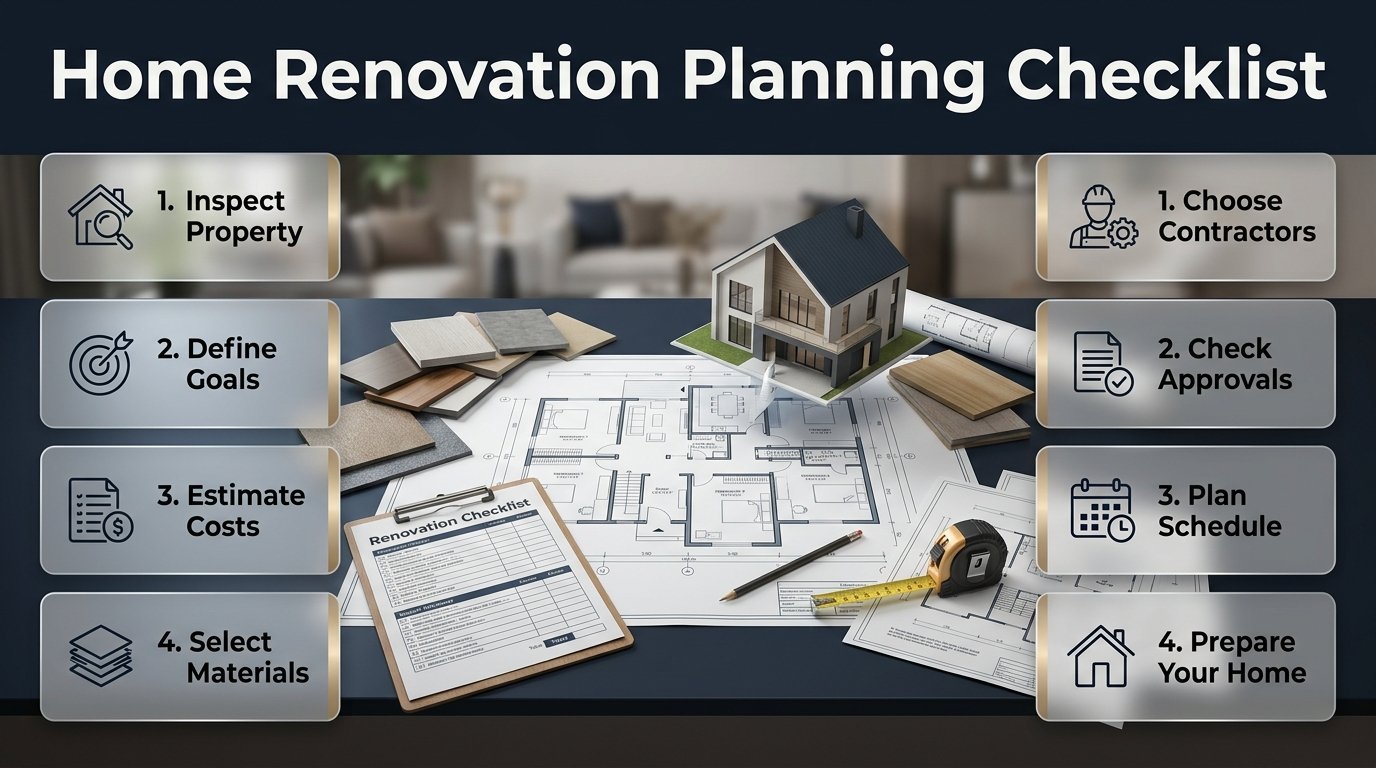
Introduction
Home Renovation Planning Checklist | Renovating a home can quickly become stressful when decisions are made at the last minute. You might discover hidden damage after removing old flooring, realize that essential materials have not arrived, or find that the original budget doesn’t cover the work your property actually needs. These problems are common, but careful preparation can make them much easier to manage.
A home renovation planning checklist gives you a structured way to organize the entire project before construction begins. It helps you identify necessary repairs, define your renovation goals, estimate costs, choose suitable materials, coordinate contractors, and prepare your household for disruption. Instead of relying on memory or making decisions under pressure, you can follow a clear plan from the initial inspection to the final walkthrough.
Whether you’re renovating one room or improving an entire property, the most effective approach is to make decisions in the right order. Start with the condition of your home, establish a realistic budget, and then coordinate the design, approvals, materials, and construction schedule.
This guide explains how to plan a renovation step by step, which documents to prepare, what mistakes to avoid, and how to monitor progress without losing control of your budget. It also includes practical checklists, examples, professional recommendations, and answers to common homeowner questions.
1. What Should You Include in a Home Renovation Planning Checklist?
A home renovation planning checklist should cover every major decision that affects the project’s cost, safety, schedule, and final result. It should include your goals, property inspection, budget, contractor selection, materials, required approvals, household preparation, progress monitoring, and final inspection.
Use the following master checklist as your starting point. Add or remove tasks according to the size and complexity of your renovation.
Complete renovation planning checklist
Before planning the work
- Identify the main reasons for renovating.
- List the rooms and areas that need improvement.
- Separate essential repairs from optional upgrades.
- Photograph existing damage and outdated features.
- Check for moisture, structural concerns, and service problems.
- Decide which improvements are most important to your household.
Before hiring contractors
- Establish an affordable project budget.
- Research the materials and finishes you want.
- Obtain comparable written quotations.
- Check relevant qualifications, references, and insurance.
- Confirm whether permits or other approvals are required.
- Prepare a preliminary schedule.
- Agree on the scope of work and payment arrangements.
Before construction starts
- Confirm dimensions and material specifications.
- Finalize important design decisions.
- Order materials according to the project schedule.
- Arrange furniture storage and site protection.
- Plan temporary access to essential facilities.
- Confirm contractor access, working hours, and responsibilities.
- Keep all project documents in one place.
During and after construction
- Review progress against the agreed schedule.
- Record payments and approved changes.
- Inspect concealed work at the appropriate stages.
- Photograph important installations before they are covered.
- Record incomplete tasks and defects.
- Collect relevant certificates, warranties, and manuals.
- Complete the final inspection and agree on outstanding corrections.
The checklist is most useful when you treat it as a live project document. Mark tasks complete only when the relevant work or decision has actually been completed, and update the list whenever the project scope changes.
2. How Do You Set Clear Renovation Goals Before Starting?
The first planning decision is understanding what you want the renovation to achieve. A clear objective prevents you from spending money on attractive improvements while ignoring the problems that affect everyday comfort, safety, or property maintenance.
Walk through your home and evaluate each room separately. Consider how the space is used, what currently works well, and what causes frustration. A kitchen may need better storage rather than a complete redesign, while a bathroom with persistent moisture problems may require repairs before any decorative changes.
Create a room-by-room improvement plan
Use a simple table to record the current problem and the intended outcome.
| Room or area | Current problem | Planned improvement |
|---|---|---|
| Kitchen | Poor storage and damaged worktops | Improve cabinetry and replace damaged surfaces |
| Bathroom | Weak ventilation and leaking fixtures | Address moisture and plumbing issues |
| Living room | Worn flooring and insufficient lighting | Replace flooring and improve lighting |
| Bedroom | Limited storage | Add practical storage solutions |
| Exterior | Damaged paint and drainage concerns | Repair affected surfaces and address drainage |
Next, classify each improvement into three groups:
- Essential: Work required to address safety concerns, active damage, or important functional problems.
- Useful: Improvements that make daily activities easier or reduce ongoing maintenance.
- Optional: Decorative upgrades and features that can be postponed without affecting the property’s condition.
This classification becomes especially important if the estimated cost exceeds your budget. You can postpone optional work without abandoning the essential parts of the project.
Professional tip: Write down the three most important outcomes you expect from the renovation. Use these priorities to assess every major design choice, material purchase, and proposed variation.
For broader guidance on managing a property and planning practical improvements, explore Active Property Care Brendan.
3. How Should You Inspect Your Home Before Renovation?
A pre-renovation inspection helps you identify problems that may affect the work once construction begins. Inspect visible surfaces and accessible fixtures, but remember that a visual check cannot confirm the condition of every hidden component.
Start with walls, ceilings, floors, doors, windows, plumbing fixtures, electrical fittings, and exterior drainage. Record defects and take photographs so you can discuss them with the relevant contractor.
Property inspection checklist
- Check walls and ceilings for cracks, damp patches, peeling paint, and water stains.
- Inspect floors for loose tiles, damaged boards, and uneven surfaces.
- Look for visible plumbing leaks and recurring drainage problems.
- Check windows and doors for damaged seals and operating difficulties.
- Identify damaged roof coverings or gutters where safely accessible.
- Look for signs of moisture and inadequate ventilation.
- Note damaged exterior finishes and areas where water collects.
- Identify any unusual movement, sagging, or structural concerns.
- Review the condition of existing fixtures that may be reused.
Why should you investigate defects before decorating?
Covering a problem without addressing its cause often leads to repeat work. For example, repainting a damp wall may improve its appearance temporarily, but the paint can deteriorate again if the source of moisture remains unresolved.
Similarly, replacing a damaged floor without investigating the underlying cause may leave an uneven or unsuitable surface beneath the new material.
Have potentially serious structural, electrical, plumbing, or moisture-related defects assessed by appropriately qualified professionals. Do not attempt to diagnose hidden building problems solely from photographs or surface appearance.
For smaller maintenance issues, the guide to Common Home Repairs and Improvements can help you distinguish routine improvement tasks from problems that may need specialist attention.
4. How Do You Establish a Realistic Renovation Budget?
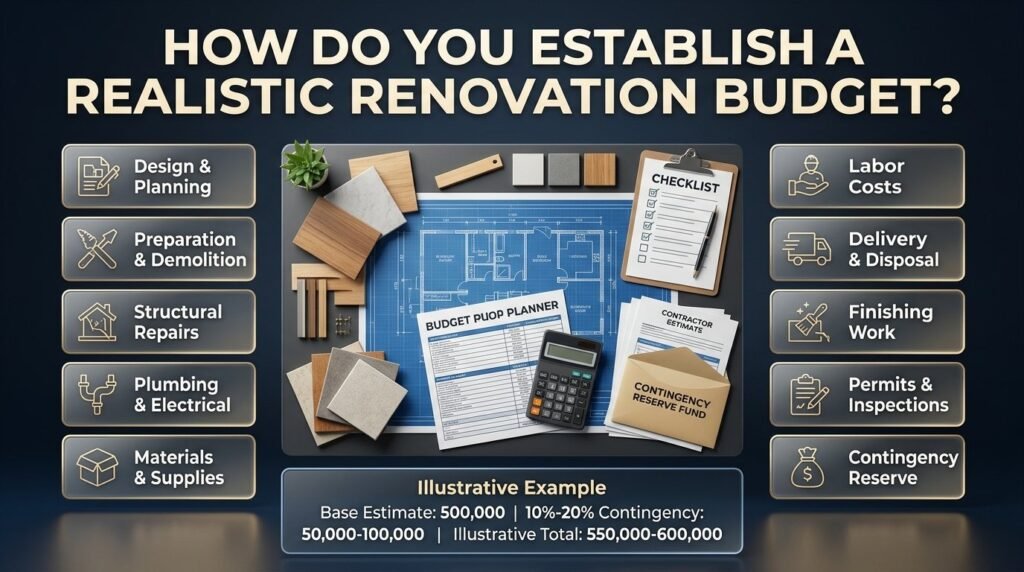
A reliable renovation budget includes more than the visible cost of materials. It must account for preparation, labor, waste removal, delivery, professional services, necessary approvals, finishing work, and unexpected repairs.
Begin with the work you have already identified. Ask contractors to price clearly defined tasks rather than requesting a general estimate for an entire room without specifications.
Build an itemized renovation budget
| Category | Costs to consider |
|---|---|
| Design and planning | Measurements, drawings, consultations |
| Preparation | Surface protection, dismantling, demolition |
| Structural work | Repairs, framing, approved alterations |
| Essential services | Plumbing, electrical work, ventilation |
| Materials | Flooring, paint, tiles, cabinets, fixtures |
| Labor | Contractor and specialist trade charges |
| Delivery and disposal | Transport, handling, waste removal |
| Finishing | Decorating, hardware, final adjustments |
| Approvals | Applicable permits and inspection fees |
| Contingency | Unforeseen work and legitimate additional costs |
For example, suppose your preliminary renovation estimate is 500,000 in your local currency. A contingency allowance of 10%–20% would equal 50,000–100,000, creating a planning range of 550,000–600,000.
This is an illustration, not a universal requirement. The appropriate allowance depends on the property’s age, the reliability of the initial inspection, the work involved, and the possibility of hidden defects.
Keep contingency funds separate from the amount allocated to planned improvements. Using the entire reserve for decorative upgrades leaves you less prepared if a necessary repair emerges.
How can you compare renovation quotations fairly?
Check whether each quotation includes the same work, material quality, preparation, disposal, finishing, and tax or other applicable charges. A lower quotation may exclude tasks that another contractor has included.
Read How to Plan a Construction Budget for a broader budgeting approach, and use Construction Cost Breakdown Explained to understand how individual expenses contribute to the total.
For projects that require detailed financial preparation before workers arrive, How to Plan a Construction Budget Before Work Begins provides a relevant next step.
Common mistake: Treating the lowest quotation as the best value without checking its exclusions. Compare the complete scope, quality requirements, payment terms, and contractor credentials before making your decision.
5. How Do You Prioritize Renovation Tasks?
Renovation work should be arranged according to risk, property condition, practical needs, and the dependencies between tasks. Cosmetic improvements should not take priority over repairs that protect the building or prevent ongoing damage.
A sensible starting order is to address immediate safety concerns, stop active leaks, investigate structural problems, and repair essential services. Once the underlying issues are resolved, you can proceed with the planned improvements.
Use this renovation priority table
| Priority | Type of work | Examples |
|---|---|---|
| Urgent | Immediate safety or active damage | Serious electrical faults, major leaks |
| High | Building protection | Roof defects, persistent moisture, structural repairs |
| Medium | Functional improvements | Better storage, lighting, ventilation |
| Low | Decorative changes | Accent walls, decorative accessories |
This order helps you avoid paying twice for the same area. If you paint a wall before repairing a leaking pipe, the finished surface may need to be replaced or repainted.
The same principle applies outdoors. Repair drainage concerns before installing decorative landscaping, and address damaged exterior surfaces before applying a new finish.
If the project includes garden or exterior improvements, review Outdoor & Garden Care to help distinguish necessary property work from optional landscaping.
6. How Do You Create a Renovation Timeline That Works?
A renovation timeline shows which tasks must happen first, when materials need to arrive, and when contractors will be required. It should also identify decisions that could delay the next stage if they are not made on time.
Start by listing the main activities and arranging them in a logical sequence. Your contractor should confirm the appropriate order for the specific construction method and materials.
Suggested renovation schedule
| Stage | Main activities | Important consideration |
|---|---|---|
| Planning | Inspection, scope, budget, design | Resolve key decisions early |
| Preparation | Approvals, orders, site protection | Confirm access and deliveries |
| Initial work | Demolition and necessary repairs | Investigate newly exposed defects |
| Installation | Services and specified building components | Complete required checks before covering work |
| Finishing | Surfaces, fixtures, painting, hardware | Follow product installation instructions |
| Completion | Cleaning, inspection, corrections | Collect required documents |
The duration of each stage varies considerably. A simple painting project may take a few days, while a major kitchen renovation may require several weeks or longer. Structural work, specialist installations, approvals, and delayed deliveries can extend the schedule.
Avoid assuming that every task can begin immediately after the previous one. Some materials require drying or curing time, and certain installations cannot proceed until inspections have been completed.
How can you reduce delays?
- Confirm material availability before setting firm installation dates.
- Finalize dimensions and specifications before placing orders.
- Agree on who is responsible for coordinating different trades.
- Schedule necessary inspections in advance where possible.
- Record outstanding decisions and the dates they must be resolved.
- Discuss delays promptly and update the schedule when circumstances change.
Quick tip: Ask your contractor to identify the activities most likely to delay the project. Focus your planning efforts on those critical tasks rather than assuming every part of the schedule carries the same risk.
7. How Do You Choose the Right Renovation Contractor?
A suitable contractor should understand the scope of work, explain the proposed method, provide a clear quotation, and communicate honestly about costs and timing.
The best choice is not necessarily the cheapest or the contractor who promises the fastest completion. You need someone whose experience, qualifications, working arrangements, and proposal suit your particular renovation.
Contractor selection checklist
- Request detailed written quotations.
- Compare quotations against the same specifications.
- Check relevant project experience and references.
- Verify required qualifications, licenses, and insurance.
- Confirm who will supervise the work.
- Ask whether subcontractors will be involved.
- Establish expected working hours and site access.
- Agree on payment stages and change procedures.
- Confirm responsibility for site protection and waste removal.
- Review workmanship warranties and applicable contract terms.
What should a renovation agreement include?
The agreement should describe the work, specified materials, project price, payment schedule, anticipated dates, and the process for approving additional work. It should also clarify how defects, delays, and incomplete tasks will be handled.
Ask questions about anything unclear before signing. If a quotation refers to allowances rather than confirmed prices, establish which selections remain undecided and how changes in those allowances will affect the total.
Avoid relying solely on verbal promises. Keep important decisions and changes in writing so both parties have a clear record of what was agreed.
For general guidance on caring for a building beyond the renovation itself, explore Property Care and Care for a Property.
8. How Do You Select Materials That Suit Your Home?
Material selection should be based on the intended use of the room, durability, moisture exposure, maintenance requirements, installation method, and total cost. An attractive product may not be suitable if it cannot withstand the conditions in which it will be used.
Compare materials before ordering, and make sure your selections are compatible with existing surfaces and the planned construction method.
Material selection checklist
- Confirm the exact dimensions and required quantities.
- Check the product’s suitability for the intended location.
- Compare durability and maintenance requirements.
- Review installation instructions and preparation needs.
- Check stock availability and delivery times.
- Confirm color, finish, size, and model.
- Review warranty conditions and product limitations.
- Check compatibility with existing fixtures and surfaces.
- Confirm the return policy before purchasing surplus materials.
Which materials work best in different rooms?
Kitchens benefit from surfaces that suit food preparation, frequent cleaning, and daily wear. Bathrooms require materials appropriate for moisture exposure, along with suitable waterproofing and ventilation systems. Living rooms and bedrooms may offer more flexibility, but flooring and wall finishes should still suit the level of use.
For flooring, compare durability, slip performance where relevant, maintenance, and installation requirements. For cabinets, check measurements, door clearances, hardware, and the space required for appliances.
Order materials only after the necessary measurements and specifications have been confirmed. Inspect deliveries for visible damage and keep receipts and product documentation.
For more detailed selection guidance, use How to Choose Building Materials.
9. What Permissions and Safety Checks Should You Arrange?

Some renovations require formal approval, permits, specialist inspections, or permission from a landlord or property management body. Requirements vary by location, property type, and the nature of the proposed work.
Before beginning, determine whether your project affects structural components, building extensions, electrical systems, plumbing, drainage, or other regulated installations.
Before-work compliance checklist
- Confirm local building and planning requirements.
- Obtain necessary permissions before starting regulated work.
- Check lease, ownership, or building-management restrictions.
- Confirm which tasks require qualified professionals.
- Arrange required inspections at the appropriate stages.
- Discuss safe access, dust control, and ventilation.
- Identify potential hazardous materials in older buildings.
- Keep approval documents and inspection records.
Do not remove a structural wall or change an essential service based only on a contractor’s informal assurance. Have the proposed work assessed by appropriately qualified professionals and obtain the necessary approvals.
Site safety also deserves attention during ordinary renovations. Keep work areas separated from household activities, maintain safe access routes, and ensure that children and pets cannot enter hazardous areas.
If unexpected damage or a possible hazardous material is discovered, pause the affected work and seek appropriate professional advice before proceeding.
10. How Should You Prepare Your Household for Renovation?
Preparing your household reduces disruption and protects belongings while work is underway. Consider how the renovation will affect access to rooms, cooking, bathing, sleeping, working, and storing everyday items.
If you are renovating one room, moving furniture and protecting adjacent surfaces may be sufficient. A larger project may require temporary living arrangements or a separate area for essential household activities.
Household preparation checklist
- Remove valuables, fragile objects, and unnecessary furniture.
- Store belongings in a dry, secure location.
- Protect unaffected floors and surfaces.
- Confirm where tools and materials will be stored.
- Establish safe routes around the work area.
- Plan temporary kitchen, bathroom, or laundry arrangements.
- Discuss noise, dust, deliveries, and working hours.
- Keep essential documents and daily-use items accessible.
- Make suitable arrangements for children and pets.
- Confirm who can access the property and when.
How can you keep the home organized during construction?
Create a simple storage system with labeled boxes for items removed from each room. Keep frequently used belongings separate from items that will remain packed until the project is finished.
Protecting the home also involves managing cleaning and waste. Agree with the contractor on daily cleanup, waste collection, and the protection of areas not included in the renovation.
For ongoing organization advice, see Cleaning & Organization.
If the project requires you to stay elsewhere, organize accommodation and travel arrangements early enough to avoid last-minute decisions. The Travel Guide can help with broader travel planning, while How to Plan a Trip Budget may help you organize the cost of a temporary stay or relocation.
11. How Do You Track Renovation Progress and Spending?
A renovation needs regular monitoring because the original estimate and schedule can change when new information becomes available. Tracking progress helps you identify problems early, maintain clear communication, and make informed decisions about additional work.
For a small project, a spreadsheet may be sufficient. Larger projects may require more detailed reporting from the contractor or project manager.
Keep a weekly project record
Record the following information:
| Item | What to record |
|---|---|
| Progress | Tasks completed and work remaining |
| Budget | Original estimate and current forecast |
| Payments | Amounts paid and outstanding |
| Changes | Approved additions or revised specifications |
| Materials | Orders, deliveries, and shortages |
| Schedule | Upcoming milestones and current delays |
| Issues | Defects, discoveries, and decisions required |
For example, if demolition reveals damage behind a bathroom wall, ask the contractor to explain the problem, document the affected area, and provide a revised estimate before approving the additional repair.
Check whether the change affects other tasks. A plumbing alteration might affect wall finishing, waterproofing, tiling, and the completion date.
How often should you review the project?
For an active renovation, a weekly review is a useful starting point, although complex projects may need more frequent meetings. The aim is to understand what has been completed, what comes next, and which decisions are required.
Keep a record of approved changes, including their cost and schedule implications. Do not assume that an informal discussion automatically changes the contract.
Expert tip: Photograph concealed installations, such as relevant pipework or wiring, before they are covered. Keep these records with any required inspection documentation and product information.
12. How Can You Avoid Common Home Renovation Planning Mistakes?
Most preventable renovation problems arise when decisions are rushed, the scope is unclear, or important details are left undocumented. A little extra preparation can prevent expensive corrections later.
Mistakes to avoid
Starting without a defined scope
When the work is not clearly described, additional tasks may be added informally. Costs rise, contractors may disagree about responsibilities, and the original completion date becomes less realistic.
How to avoid it: Write down the rooms, repairs, specifications, and finishing work included in the agreement.
Ignoring hidden defects
A project may appear straightforward until demolition exposes damaged materials, moisture, or outdated installations.
How to avoid it: Inspect the property carefully, investigate warning signs, and maintain a contingency allowance for legitimate unforeseen work.
Underestimating the total cost
Homeowners sometimes budget for the main materials but forget labor, delivery, disposal, preparation, and finishing.
How to avoid it: Build an itemized budget and compare complete quotations rather than headline prices.
Ordering materials before measurements are final
Incorrect dimensions, incompatible fittings, and unsuitable products can lead to waste and delays.
How to avoid it: Confirm measurements, installation requirements, and specifications with the relevant professional before ordering.
Making frequent design changes
Late changes can affect completed work, material orders, contractor availability, and several connected tasks.
How to avoid it: Finalize major decisions before construction and use a written approval process for necessary changes.
Skipping safety checks or required approvals
Unapproved work can create safety risks, require expensive corrections, or cause compliance problems.
How to avoid it: Verify local requirements and use appropriately qualified professionals for regulated work.
Failing to inspect completed work
Accepting a project without checking the agreed specifications can leave incomplete tasks or defects unresolved.
How to avoid it: Inspect each important stage and complete a documented final walkthrough.
13. What Should You Do When the Renovation Is Finished?
Completion involves more than seeing that the contractors have left the property. You should verify the agreed work, document defects, obtain relevant records, and understand any remaining maintenance responsibilities.
Arrange the final inspection when the work is sufficiently complete and suitable conditions allow you to examine the finishes and installations.
Final inspection checklist
- Confirm that all agreed tasks have been completed.
- Check walls, ceilings, flooring, and visible finishes.
- Test doors, windows, cabinets, and installed hardware.
- Check accessible plumbing fixtures for leaks.
- Confirm that required electrical testing and documentation are available.
- Verify that ventilation systems operate as intended.
- Check that installed materials match the agreed specifications.
- Record incomplete work and visible defects.
- Confirm the process and timing for corrections.
- Collect relevant manuals, warranties, receipts, and certificates.
- Confirm that waste and debris have been removed as agreed.
- Keep final payment arrangements consistent with the contract.
Use a room-by-room inspection rather than relying on a general impression. A living room might look finished while a cabinet door remains misaligned or a section of flooring has been left incomplete.
Record outstanding items in writing and agree on how they will be addressed. Follow the contract and applicable local requirements when determining acceptance and final payment.
After completion, retain project photographs and documentation. These records may help with future maintenance, warranty claims, and later improvements.
14. How Do You Maintain Your Home After Renovation?
A renovation can improve a property, but continued maintenance is necessary to protect the results. Different materials and systems require different care, so follow the instructions supplied by their manufacturers and installers.
Create a simple maintenance calendar for recurring inspections, cleaning, servicing, and minor repairs.
Post-renovation maintenance checklist
- Check for new signs of moisture or leaks.
- Maintain ventilation and extraction systems.
- Clean surfaces using suitable products and methods.
- Inspect sealants and joints where appropriate.
- Address loose hardware or minor defects promptly.
- Arrange servicing for systems that require it.
- Review exterior drainage and visible weather damage.
- Keep warranty documents and maintenance instructions accessible.
The appropriate inspection frequency depends on the property, materials, weather exposure, and equipment. Some items need regular servicing, while others only require occasional checks or attention when a problem appears.
For a seasonal approach, consult Seasonal Property Maintenance. The guide to Home Maintenance can also help you organize routine tasks that support the long-term condition of your property.
Should you plan future improvements now?
You can record improvements that were postponed because of budget or scheduling limits. This makes future planning easier and reduces the chance of repeating research or measurements.
However, distinguish between work that can safely wait and defects that need prompt attention. Active leaks, electrical hazards, and potentially serious structural problems should not be postponed simply because they were not included in the original renovation.
15. How Should You Coordinate Renovation Work With Other Personal Plans?
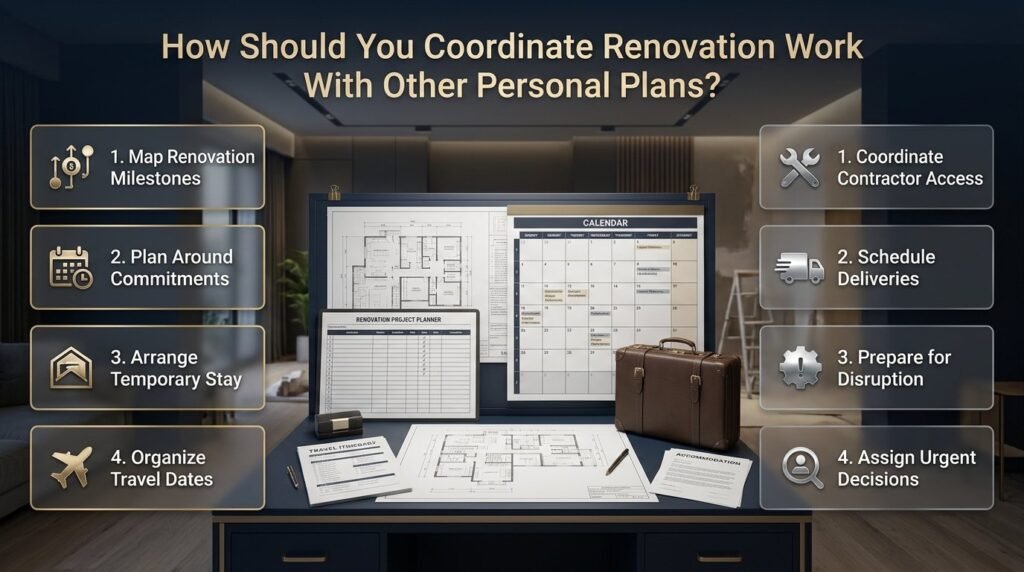
A renovation can affect work schedules, family commitments, travel, and temporary accommodation. Coordinating these arrangements early helps prevent avoidable stress when rooms become unavailable or contractors need access to the property.
Start by identifying the periods when your home will be most disrupted. Confirm whether you need to relocate temporarily, arrange transport for belongings, or change existing commitments.
If you are planning a trip during the renovation, consider the practical responsibilities that will remain while you are away. Someone may need to provide access to contractors, receive deliveries, or respond to unexpected decisions.
The Plan a Journey guide can support general journey planning, and How to Plan a Travel Itinerary can help organize dates and activities around important renovation milestones.
If temporary accommodation is necessary, consider its location, travel time, costs, and suitability for the duration of the work. How to Choose the Right Hotel Location is relevant when comparing accommodation locations.
For international travel that must fit around the project, First-Time International Travel Checklist provides a separate planning resource.
These arrangements should support the renovation rather than complicate it. Avoid scheduling important construction decisions for a time when you will be difficult to reach, and agree in advance who can authorize urgent work if you are unavailable.
16. What Professional Recommendations Make Renovation Planning More Effective?
Good renovation planning depends on clear information, realistic expectations, and timely decisions. Professionals need accurate specifications and access to the information required to complete their work correctly.
You can support the process by following a few practical principles.
Confirm dimensions before ordering
Measure relevant spaces carefully and check openings, clearances, and service connections. Have the responsible professional confirm critical dimensions before purchasing expensive or custom-made items.
Resolve technical issues before finishing
Complete necessary inspections and checks before covering plumbing, wiring, insulation, or other concealed installations. Correcting a hidden problem after finishing can require removing materials that were already installed.
Keep one central project file
Store the contract, quotations, drawings, receipts, approvals, photographs, and change records in one organized location. This makes it easier to answer questions and track the history of decisions.
Set deadlines for important selections
Choose finishes, fixtures, and materials early enough to meet ordering and installation deadlines. A delayed selection can hold up several trades even when other parts of the project are ready.
Separate required work from optional upgrades
When costs increase, protect the budget for necessary repairs and safety-related work first. Reconsider decorative extras before reducing the scope of essential work.
Review the schedule before major stages
Confirm what must be ready before each stage begins. Check that materials are available, relevant approvals have been addressed, and required decisions have been made.
Keep communication factual and documented
When a problem arises, identify the issue, request a proposed solution, and confirm any cost or schedule change in writing. Clear records are more useful than relying on memory or informal conversations.
For larger projects involving construction or substantial alterations, Construction Guide and Build or Renovate offer related guidance on planning and approaching building work.
What Should Be Included in a Home Renovation Planning Checklist?
A complete home renovation planning checklist should cover every major stage of the project, from identifying renovation needs to inspecting the finished work. It helps homeowners organize tasks, estimate costs, coordinate contractors, and avoid missing important details before construction begins. The checklist should be tailored to the property’s condition, the renovation budget, and the complexity of the planned improvements.
Before starting, make sure your checklist includes:
Renovation goals: Identify the rooms that need improvement and define the results you expect.
Property inspection: Record visible damage, moisture concerns, plumbing problems, and other necessary repairs.
Budget preparation: Include materials, labor, delivery, waste removal, professional fees, and a contingency allowance.
Contractor selection: Compare written quotations, relevant experience, qualifications, and project timelines.
Materials and approvals: Confirm product specifications, delivery dates, and any required permits or inspections.
Final inspection: Check completed work, document defects, and collect relevant warranties and project records.
A well-organized checklist should remain accessible throughout the renovation. Update it when decisions change, and mark tasks complete only when the work or required approval has actually been completed.
How Do You Plan a Home Renovation Budget Without Overspending?
Planning a renovation budget begins with defining the scope of work and obtaining realistic estimates for each major expense. Homeowners often underestimate the total cost because they focus on visible materials and overlook preparation, labor, disposal, delivery, and unexpected repairs. An itemized budget makes these expenses easier to identify before construction begins.
Follow these practical budgeting steps:
List every planned task: Separate essential repairs from optional upgrades so you know which expenses should receive priority.
Obtain comparable quotations: Ask contractors to price the same scope and material specifications.
Allow for unexpected costs: A contingency of around 10%–20% can be a useful starting point, depending on the property’s condition and project complexity.
Track spending regularly: Record payments, approved changes, outstanding commitments, and the forecast final cost.
Postpone optional upgrades if necessary: Protect the budget for safety-related work and essential repairs before adding decorative features.
For example, if demolition reveals concealed water damage, request a written explanation and revised estimate before authorizing additional work. This helps you understand how the discovery affects both the total cost and the completion date.
The most reliable approach is to establish a realistic spending limit before hiring contractors and review the budget throughout the project rather than waiting until the final invoice arrives.
What Is the Best Order for Planning and Completing a Home Renovation?
The best renovation sequence begins with inspection and planning, followed by budgeting, approvals, preparation, construction, finishing, and final inspection. Completing tasks in the correct order reduces rework because repairs and essential installations can be addressed before decorative surfaces are added.
A practical renovation sequence includes:
Inspect the property: Identify defects and determine which areas require professional assessment.
Define the project scope: Decide what will be repaired, replaced, or improved.
Prepare the budget and design: Establish costs, specifications, and priorities.
Confirm contractors and approvals: Arrange the necessary professional services and permissions.
Order materials and prepare the property: Check measurements, delivery schedules, storage, and site protection.
Complete essential repairs and installations: Address structural concerns and required plumbing, electrical, or other service work.
Install finishes: Complete flooring, painting, fixtures, cabinets, and decorative details in the appropriate order.
Inspect and document the results: Check the agreed work and resolve outstanding defects.
The exact sequence depends on the renovation. For example, a bathroom may require plumbing repairs and waterproofing before tiling, while a kitchen renovation may depend on confirmed cabinet dimensions before certain installations can proceed.
Always coordinate the sequence with the responsible professionals. Finishing a surface before resolving the underlying problem can increase costs and delay completion.
How Can You Avoid Delays During a Home Renovation Project?
Renovation delays can result from unavailable materials, late design decisions, unexpected damage, contractor scheduling conflicts, or missing approvals. Although not every delay can be prevented, careful preparation and regular communication can reduce avoidable interruptions.
To keep the project moving:
Finalize important decisions early: Confirm flooring, fixtures, cabinetry, finishes, and other selections before their installation deadlines.
Check material availability: Verify delivery dates before relying on them in the construction schedule.
Confirm contractor responsibilities: Establish who will coordinate different trades and arrange inspections.
Allow realistic time for each stage: Include necessary drying, curing, inspection, and delivery periods.
Review progress regularly: Discuss completed tasks, upcoming work, outstanding decisions, and emerging problems.
Document changes: Record the cost and scheduling effects of additional work before approving it.
For instance, if a selected cabinet is unavailable, ask the supplier or contractor about realistic alternatives before the installation date is affected. Confirm that any replacement meets the required dimensions, specifications, and budget.
A useful renovation schedule should identify the tasks most likely to delay other work. Managing these important dependencies is more effective than simply setting an ambitious completion date without considering the practical requirements.
What Should Homeowners Check Before Accepting a Completed Renovation?
Before accepting a completed renovation, homeowners should compare the finished work with the agreed contract, inspect visible surfaces and installations, identify outstanding defects, and collect relevant documentation. A final inspection provides an opportunity to address incomplete work before the project is formally closed.
Use this final inspection checklist:
Walls and ceilings: Check the agreed finishes, visible damage, and signs of unresolved moisture.
Flooring and tiles: Inspect visible joints, damaged areas, and the quality of the completed installation.
Doors, windows, and cabinets: Confirm that they open, close, and operate correctly.
Plumbing: Check accessible fixtures for leaks and confirm that they function as intended.
Electrical installations: Confirm that required testing and documentation have been provided by the appropriate professional.
Fixtures and materials: Verify that installed products match the agreed specifications.
Outstanding work: Record incomplete tasks and visible defects in writing.
Project documents: Collect relevant warranties, manuals, receipts, certificates, and inspection records.
If you identify a defect, document its location and agree on the correction process with the contractor. Follow the contract and applicable local requirements when arranging acceptance and final payment.
Do not rely solely on the appearance of a finished room. Where technical installations are involved, obtain the required professional inspections and documentation. Keeping a complete project record also makes future maintenance and warranty claims easier to manage.
Conclusion: Make Your Home Renovation Easier With a Clear Plan
A successful home renovation begins with careful planning, realistic budgeting, and a clear understanding of the work your property needs. By following a structured home renovation planning checklist, you can organize priorities, compare contractor quotations, select suitable materials, prepare for unexpected expenses, and establish a practical project timeline before work begins. These steps help you make informed decisions and reduce avoidable delays, confusion, and unnecessary costs.
Remember that renovation planning does not end when construction starts. Keep track of spending, confirm important decisions in writing, monitor progress, and address unexpected problems before they affect other stages of the project. Give essential repairs and safety-related improvements priority over optional upgrades, and maintain a contingency fund for unforeseen issues.
Before considering the project complete, inspect the finished work against the agreed specifications and collect relevant warranties, receipts, and inspection documents. A well-organized renovation process can improve your property’s functionality, comfort, and long-term value while making the entire experience more manageable.
For practical guidance on property maintenance, construction planning, and home improvement, explore brendanactivepropertycare and use the right resources to plan your next project with greater confidence. With clear goals, realistic expectations, and consistent oversight, you can turn your renovation ideas into a more comfortable and well-maintained home.