
Introduction
Outdoor & Garden Care | A beautiful outdoor space doesn’t need constant work or an expensive makeover. However, a neglected garden, blocked drainage channel, overgrown lawn, or damaged fence can quickly turn a pleasant outdoor area into a source of stress. The key is knowing which tasks matter most, how often to complete them, and when a small problem needs professional attention.
At Brendan Active Property Care, property care is approached as part of keeping a home comfortable, practical, and well maintained. Outdoor and garden care follows the same principle: regular attention, sensible planning, and timely repairs can help prevent unnecessary costs while keeping outdoor spaces attractive and usable.
Whether you have a small patio, a family garden, a lawn, a courtyard, or a larger property with trees and planting beds, this guide will help you create a manageable maintenance routine. You’ll learn how to care for plants, maintain lawns, manage weeds, protect outdoor structures, improve drainage, prepare for seasonal changes, avoid common mistakes, and decide which jobs you can handle yourself.
What Does Outdoor and Garden Care Include?
Outdoor and garden care includes the regular tasks required to keep gardens, lawns, patios, paths, fences, planting areas, and other exterior spaces clean, healthy, safe, and functional. It combines plant care with practical property maintenance, helping outdoor areas remain attractive without allowing minor problems to develop into expensive repairs.
The exact work depends on your property. A compact courtyard may need container watering, sweeping, and occasional pruning. A larger garden may require lawn maintenance, tree inspections, drainage checks, and seasonal planting.
Which areas should you include in an outdoor maintenance plan?
A complete plan should consider the following areas:
- Plants and flower beds: Watering, pruning, feeding, weeding, and checking for pests.
- Lawn and grass: Mowing, edging, aeration where appropriate, and monitoring bare or waterlogged patches.
- Paths and patios: Removing leaves, controlling slippery growth, checking loose paving, and maintaining joints.
- Fences and gates: Looking for loose fixings, damaged boards, corrosion, and changes in alignment.
- Trees and shrubs: Monitoring growth, checking visible damage, and arranging qualified inspections when necessary.
- Drainage: Keeping accessible surface drains clear and watching for standing water.
- Outdoor furniture: Cleaning surfaces, checking stability, and protecting suitable materials from weather.
- Exterior features: Inspecting steps, retaining walls, sheds, garden lighting, and other structures.
These areas are connected. For example, a leaking outdoor tap may waste water and create muddy ground. Poor drainage may damage planting beds and leave paving slippery. A damaged fence can become a safety concern rather than merely an appearance issue.
Pro Tip: Walk around your entire property before buying plants, tools, or maintenance products. A short inspection helps you identify the most important jobs first and prevents spending money on improvements while existing problems remain unresolved.
How Can You Create a Simple Outdoor Maintenance Schedule?
The easiest way to maintain a garden is to divide the work into small, repeatable tasks. Instead of waiting until the outdoor space looks neglected, use a schedule that covers frequent checks, seasonal work, and occasional repairs.
You don’t need to complete every task every week. Plant growth, local weather, soil conditions, and the materials used around your property will determine the appropriate frequency.
Weekly outdoor and garden care checklist
During a normal weekly inspection, check the following:
- Water plants according to their needs and current weather conditions.
- Remove visible weeds before they spread widely.
- Pick up fallen branches, litter, and excessive leaf buildup.
- Inspect pots and planting beds for dry soil or standing water.
- Check accessible paths and steps for slippery or loose areas.
- Look for obvious leaks around outdoor taps and irrigation connections.
- Check whether grass needs mowing, depending on its growth rate.
- Remove rubbish from accessible surface drainage grates.
Some weeks will require very little work. During hot weather or rapid plant growth, however, watering and inspection may need to happen more frequently.
Monthly outdoor maintenance checklist
Once a month, set aside time for a more detailed inspection.
| Area | What to check | Why it matters |
|---|---|---|
| Lawn | Bare patches, weeds, uneven growth | Helps identify developing problems |
| Flower beds | Soil moisture, plant health, unwanted growth | Supports healthier planting |
| Patio | Loose paving, damaged joints, surface buildup | Reduces trip and slip risks |
| Fence and gate | Loose fixings, corrosion, damaged panels | Helps maintain stability |
| Drainage | Slow drainage and standing water | Identifies possible blockages |
| Outdoor furniture | Loose connections and weather damage | Extends useful life |
| Garden equipment | Damaged cables, handles, or fittings | Helps prevent unsafe use |
A monthly check is also a good opportunity to record repairs that don’t need immediate attention. This creates a manageable task list rather than an overwhelming collection of unfinished jobs.
How often should you maintain your garden?
The correct frequency depends on the task, the climate, and the condition of the property.
| Task | Typical starting frequency | What changes the schedule? |
|---|---|---|
| General garden inspection | Weekly | Weather, plant growth, property size |
| Watering | As required | Rainfall, temperature, soil, plant species |
| Lawn mowing | When grass growth requires it | Season, grass type, moisture |
| Weeding | Weekly or as needed | Growing season and weed pressure |
| Patio cleaning | Monthly or as needed | Foot traffic, leaves, algae, weather |
| Fence inspection | Monthly visual check | Wind exposure, material, visible damage |
| Drainage inspection | Monthly and after heavy rain | Tree debris, soil, drainage design |
| Seasonal planting work | At suitable seasonal intervals | Local growing conditions |
Treat these frequencies as a starting point, not a universal rule. For example, watering every day may be unnecessary in cool, rainy weather and insufficient for certain containers during extreme heat.
How Do You Keep Garden Plants Healthy Throughout the Year?
Healthy plants need the right balance of sunlight, water, suitable soil, nutrients, and space. The best approach is to understand what each plant requires instead of treating every plant in the garden in the same way.
A plant that prefers dry soil may develop root problems if watered too frequently, while a newly planted shrub may need closer attention until its roots become established.
How can you choose the right plants for your garden?
Start by examining the conditions your garden already offers. Consider how much direct sunlight different areas receive, whether the soil drains quickly, and how much room plants will have when fully grown.
Before purchasing a plant, check:
- Sunlight requirements: Does it need full sun, partial shade, or mostly shaded conditions?
- Water requirements: Does it prefer consistently moist soil or periods of drying?
- Mature size: Will it outgrow its container or block a walkway?
- Climate suitability: Can it tolerate your area’s usual heat, cold, humidity, and rainfall?
- Maintenance needs: Will it require frequent pruning, feeding, or pest control?
For example, a sunny patio with limited space may suit compact shrubs and suitable container plants. A shaded corner may be better for species adapted to lower light levels.
Choosing plants that suit the existing conditions usually requires less corrective work than trying to maintain plants in an unsuitable location.
How should you water outdoor plants correctly?
Watering should respond to soil moisture, weather, plant type, and root development. Rather than following a rigid daily schedule, check whether the root zone needs water and apply it in a way that allows moisture to reach the roots.
For many established garden plants, deeper watering at appropriate intervals is more effective than frequent, shallow sprinkling. However, seedlings, shallow-rooted plants, and some containers may need more frequent attention.
Follow this process:
- Check the soil around the plant rather than judging only by the surface.
- Water near the root zone, avoiding unnecessary spraying onto paths and walls.
- Apply water slowly enough for the soil to absorb it.
- Check whether moisture has reached the required depth.
- Adjust the next watering session according to weather and plant response.
Common mistake: Watering every plant for the same length of time. A small pot, a mature tree, and a newly planted flower bed have different water requirements.
What is the best way to improve garden soil?
Good soil supports root growth, holds appropriate amounts of moisture, and allows excess water to drain. If plants repeatedly struggle despite suitable sunlight and watering, the soil may need attention.
Start with simple observations. Does water remain on the surface? Does the soil become hard and compacted? Does it dry out unusually quickly? Are plant roots struggling to establish?
You can improve many planting beds by incorporating suitable, mature compost or other appropriate organic matter. This can support soil structure and improve its ability to hold moisture, although the right amendment depends on the existing soil and plants.
For a more reliable approach:
- Avoid working very wet soil, which can worsen compaction.
- Add compost where suitable rather than relying on excessive chemical fertiliser.
- Use containers with adequate drainage holes.
- Consider a soil test if growth problems persist.
- Avoid adding lime, sulphur, or specialised treatments without understanding the soil’s needs.
Excess fertiliser can damage plants and contribute to unwanted nutrient runoff. Applying nutrients according to actual requirements is more sensible than feeding plants simply because growth looks slow.
How can mulch make garden maintenance easier?
Mulch is a protective layer placed over the soil surface. Depending on the material, it can help conserve moisture, reduce weed growth, moderate soil temperature, and limit soil erosion.
Organic mulch may include suitable wood chips, bark, or other garden materials. Inorganic options, such as decorative gravel, may suit certain landscape designs but do not provide the same organic matter benefits as decomposing materials.
To use mulch effectively:
- Remove established weeds before applying it.
- Spread an even layer appropriate to the material and planting area.
- Keep mulch away from direct contact with tree trunks and plant crowns.
- Check moisture beneath the layer before watering.
- Replenish it when it breaks down or becomes too thin.
Mulch should support healthy soil rather than bury plants. Piling material against a tree trunk can retain unwanted moisture around the bark and encourage damage.
How Can You Maintain a Lawn Without Wasting Time or Water?
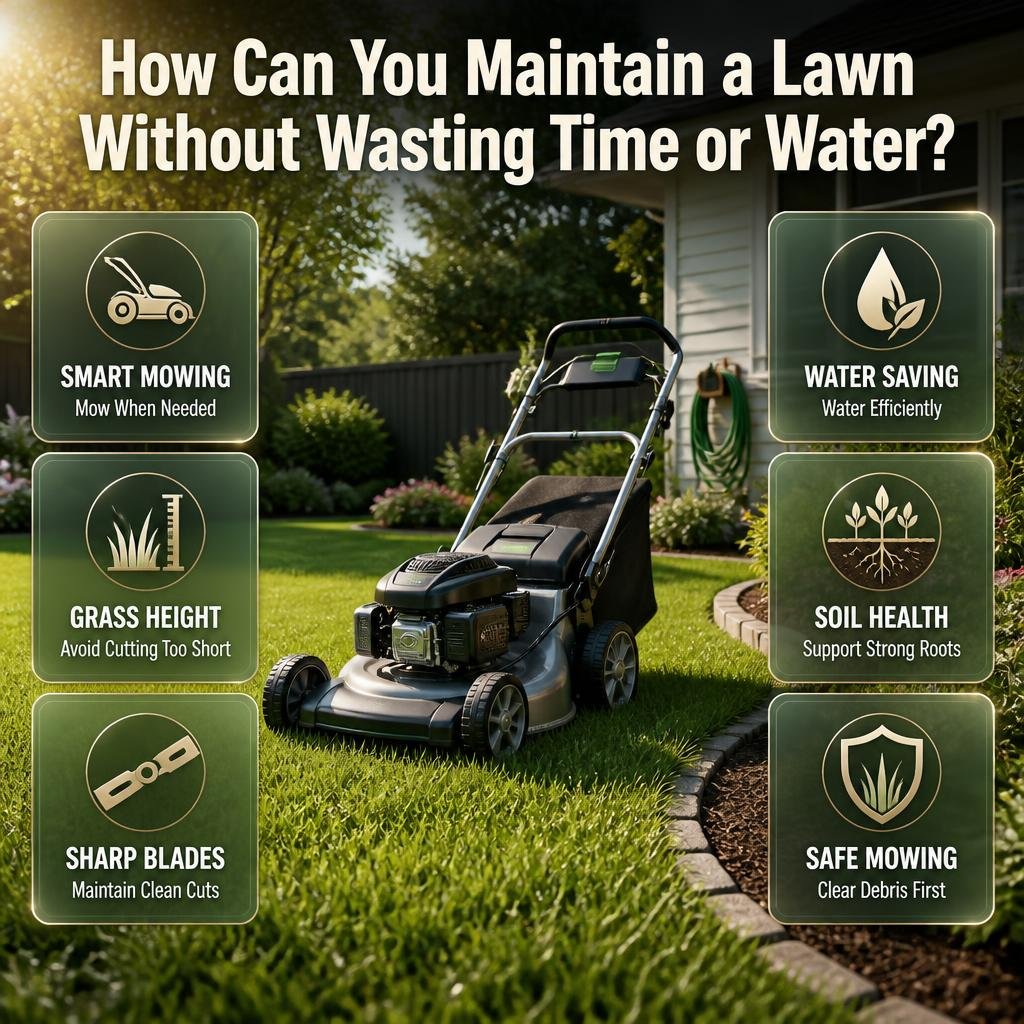
Lawn care becomes easier when mowing, watering, feeding, and soil management work together. A lawn that receives excessive water or is cut too short may struggle even when it looks neat immediately after maintenance.
The correct routine depends on grass species, climate, soil, sunlight, and how heavily the lawn is used.
How often should you mow the grass?
Mow when the grass has grown enough to benefit from cutting, rather than following a fixed calendar regardless of conditions.
As a general rule, avoid removing more than about one-third of the grass blade in a single mowing session. Cutting too much at once can stress the lawn, particularly during hot or dry weather.
For better results:
- Set the mower height according to the grass species.
- Keep the cutting blades sharp.
- Avoid mowing when the lawn is excessively wet.
- Reduce mowing frequency during periods of slow growth.
- Keep children and pets away from the operating mower.
- Inspect the area for stones, toys, branches, and other objects before starting.
A slightly taller lawn can help shade the soil and support deeper roots in many grass types. The ideal height still depends on the species, so avoid applying one mowing height to every lawn.
How can you repair bare patches in a lawn?
Bare patches can develop because of heavy foot traffic, compacted soil, poor drainage, unsuitable sunlight, pests, or irrigation problems.
Simply adding grass seed without identifying the cause may provide only temporary improvement.
Use this practical process:
- Identify the cause. Check for shade, standing water, excessive wear, or signs of plant damage.
- Prepare the area. Remove loose dead material and address surface compaction where appropriate.
- Improve the growing conditions. Correct drainage or traffic issues before reseeding.
- Choose suitable grass. Use a variety that matches your climate, sunlight, and existing lawn.
- Follow establishment instructions. Keep the seedbed appropriately moist without flooding it.
- Limit foot traffic. Give new grass time to establish before using the area heavily.
If the same patch repeatedly fails, investigate further rather than continually buying more seed.
Should you fertilise your lawn regularly?
Not necessarily. Fertiliser should be based on the grass type, growing season, soil condition, and actual nutrient needs.
Too much fertiliser can encourage excessive growth, increase mowing requirements, damage grass, and contribute to water pollution. A soil test can help determine whether particular nutrients are needed.
Before applying any lawn product, read its label carefully, use the recommended amount, and keep it away from drains and watercourses. Avoid spreading fertiliser immediately before heavy rainfall if runoff is likely.
What should you do about compacted lawn soil?
Compacted soil restricts the movement of air and water and can make it harder for roots to develop. It often occurs where people repeatedly walk, park equipment, or play on the same area.
Aeration may help in suitable lawns by creating openings that improve water infiltration. However, the method and timing should match the grass species and soil conditions.
If the area remains waterlogged or water repeatedly runs off, aeration alone may not solve the problem. Poor grading, unsuitable soil, or an underlying drainage issue may require a different solution.
Expert Tip: Before investing in lawn treatments, check whether the problem is caused by mowing height, irrigation, shade, compaction, or drainage. Correcting the underlying cause usually produces a more lasting improvement.
How Can You Control Weeds Without Damaging Garden Plants?
Weeds compete with desirable plants for light, water, nutrients, and space. They can also spread quickly if allowed to produce seeds.
The most practical approach is to identify weeds early, remove them using an appropriate method, and make the growing environment less favourable for their return.
Which weed removal method should you use?
| Method | Best suited to | Important consideration |
|---|---|---|
| Hand pulling | Small weeds and accessible beds | Remove as much of the root as practical |
| Hand hoeing | Young weeds in suitable soil | Avoid damaging nearby plant roots |
| Mulching | Planting beds with suitable mulch | Keep material away from stems and trunks |
| Mechanical removal | Larger suitable areas | Check for underground utilities before digging |
| Targeted weed treatment | Specific weeds where appropriate | Follow the product label and local requirements |
Hand removal is often sufficient for a small garden. Larger areas may need a more organised approach, particularly where perennial weeds return from underground roots.
Avoid pulling weeds when doing so would disturb valuable plant roots or spread seeds across the garden. If a weed is unfamiliar, identify it before handling it, especially if it may be irritating or harmful.
How can you prevent weeds from returning?
Prevention is usually easier than repeatedly clearing a heavily overgrown garden.
- Inspect planting beds regularly.
- Remove young weeds before they produce seeds.
- Apply suitable mulch.
- Fill empty planting spaces with appropriate ground cover where practical.
- Clean gardening tools when moving between areas with suspected invasive weeds.
- Avoid moving contaminated soil or plant material around the property.
Do not assume every unwanted plant needs a chemical treatment. Choosing the least disruptive effective method can reduce unnecessary costs and help protect nearby plants.
How Do You Keep Trees, Shrubs, and Hedges in Good Condition?
Trees and shrubs provide shade, privacy, structure, and visual interest. Their maintenance needs vary according to species, age, size, growth rate, and location.
The objective is not to cut everything back regularly. It is to maintain healthy growth, prevent avoidable damage, and recognise when professional assessment is necessary.
When should you prune garden plants?
Pruning involves selectively removing branches, stems, or other plant growth. The correct timing depends on the plant species, flowering cycle, health, and reason for pruning.
For routine maintenance:
- Remove dead or clearly damaged small branches when it is safe to do so.
- Use clean, sharp tools appropriate for the branch size.
- Avoid removing excessive live growth.
- Learn the plant’s flowering and growth habits before shaping it.
- Check for nesting wildlife before carrying out disruptive work.
- Dispose of diseased plant material appropriately.
Some flowering shrubs bloom on older growth, while others flower on newer growth. Pruning at the wrong time can remove the next season’s flowers.
Large branches, trees near overhead electrical lines, unstable limbs, and work requiring a ladder or chainsaw should be left to suitably qualified professionals. Never attempt to cut a branch that could fall onto a person, building, road, or power line.
How should you maintain hedges?
Hedges need enough space, suitable light, and pruning appropriate to their species.
Before trimming, check whether the hedge is blocking a path, interfering with a gate, or growing close to a building. Correcting these issues gradually is often better than removing large amounts of growth at once.
Use suitable equipment and protective gear, and follow the manufacturer’s safety instructions. Avoid electrical equipment in wet conditions or where cables could be damaged.
If a hedge has become too large, contains substantial dead growth, or requires work at height, obtain professional advice before attempting a major reduction.
How can you recognise a plant health problem?
Look for changes from the plant’s normal condition rather than relying on a single symptom.
Common warning signs include:
- Yellowing or wilting leaves.
- Unusual spots, discolouration, or leaf loss.
- Sudden changes in growth.
- Damaged stems or branches.
- Sticky residue or visible insect activity.
- Soil that remains wet for unusually long periods.
- Repeated decline despite appropriate watering.
These signs do not always identify a specific cause. Yellow leaves, for example, may result from excessive watering, nutrient problems, root damage, or unsuitable light.
Observe the plant, review recent changes, and investigate before applying treatments. If the problem spreads quickly or affects valuable trees, a qualified horticultural professional can help identify the cause.
How Can You Maintain Patios, Paths, and Driveways?
Hard landscaping is easy to overlook because it does not grow like a lawn or flower bed. However, paths, patios, steps, and driveways are essential to the safe use of outdoor spaces.
Regular cleaning and inspection help prevent dirt buildup and reveal problems before they become more serious.
How should you clean an outdoor patio?
Start by removing leaves, loose soil, and other debris with a suitable brush. Use a cleaning method appropriate to the surface, whether it is concrete, natural stone, porcelain paving, timber decking, or composite material.
Before using a pressure washer or chemical cleaner, check the manufacturer’s guidance. Excessive pressure can damage paving joints, softer stone, timber finishes, and surface coatings.
A practical cleaning routine includes:
- Remove loose debris.
- Identify stains and the material causing them.
- Test a suitable cleaner on a small, inconspicuous area.
- Clean without damaging joints or surrounding plants.
- Rinse only where appropriate and prevent dirty runoff from entering drains.
- Allow the surface to dry and check for remaining hazards.
Avoid mixing cleaning chemicals or using products in ways not specified on their labels.
How do you deal with slippery outdoor surfaces?
Algae, moss, wet leaves, and certain surface deposits can make outdoor paths slippery. Shaded or damp locations may need more frequent attention than sunny, well-drained areas.
Remove loose leaves promptly and use a surface-appropriate cleaning method. If the surface remains slippery after cleaning, investigate whether persistent moisture, poor drainage, or inadequate sunlight is contributing to the problem.
Where a path has uneven slabs, loose steps, or a significant change in level, cleaning alone will not correct the hazard. Arrange a suitable repair.
Common Mistake: Using the strongest available cleaning product on every outdoor surface. Different materials respond differently, and an aggressive cleaner can create permanent damage.
How should you inspect fences, gates, and outdoor structures?
Check fences, gates, sheds, decking, and retaining walls for visible deterioration.
Look for loose fasteners, cracked boards, rust, peeling protective coatings, movement, or signs that timber is remaining wet. Pay particular attention to the points where posts meet the ground, as moisture and soil contact can contribute to deterioration.
Simple maintenance may include cleaning, tightening accessible suitable fittings, and refreshing protective coatings when needed. However, leaning retaining walls, unstable decking, badly corroded supports, and structural movement require a more careful assessment.
Don’t assume a fence is secure simply because its panels look intact. The posts, fixings, and supporting ground also matter.
How Can You Improve Garden Drainage and Prevent Standing Water?
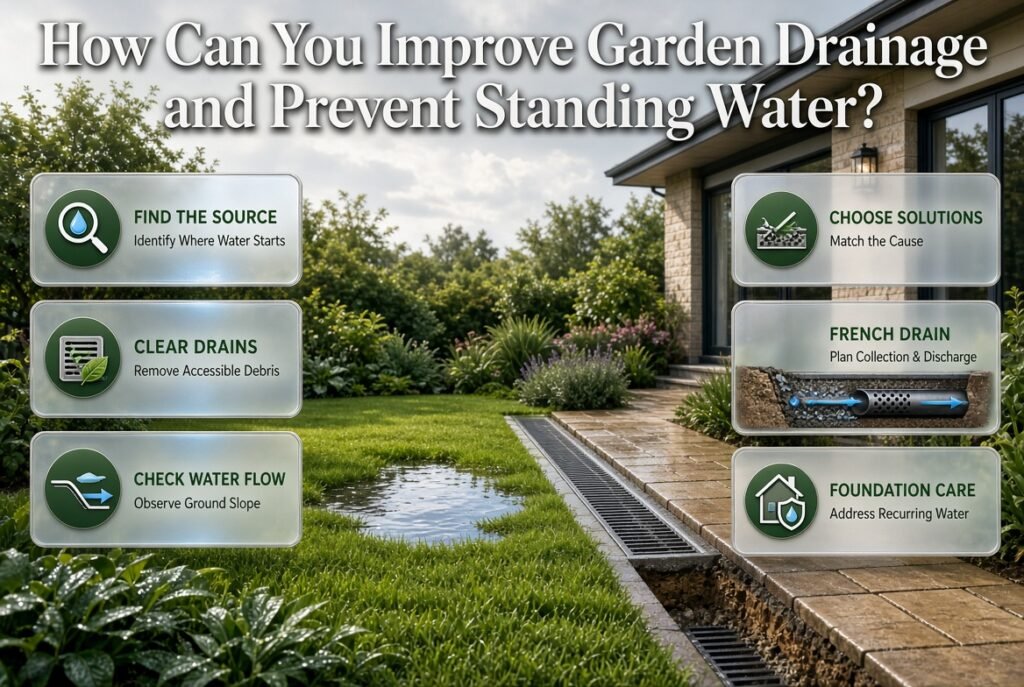
Good drainage allows excess water to move away from areas where it could damage plants, paving, structures, or foundations. Poor drainage can leave lawns waterlogged, create slippery paths, and contribute to damp conditions near buildings.
The right solution depends on why water is accumulating. A blocked surface drain requires a different response from an incorrectly graded garden or a damaged underground pipe.
What are the warning signs of poor drainage?
Watch for:
- Water remaining on lawns long after surrounding areas have dried.
- Repeated puddles near doors, paths, or building walls.
- Soil that stays saturated.
- Plants that struggle in persistently wet areas.
- Water flowing toward the house rather than away from it.
- Slow drainage from accessible surface channels.
- Soil erosion or sediment collecting in unexpected places.
One puddle after heavy rain does not automatically mean the property has a serious drainage problem. The concern is persistent or recurring water accumulation, particularly when it affects buildings, access routes, or plant health.
How can you improve drainage around a garden?
Begin with observations rather than digging immediately.
Step 1: Identify the source. Check whether water comes from irrigation, a leaking tap, roof runoff, a blocked surface drain, or rainfall collecting in a low spot.
Step 2: Check accessible drainage points. Remove loose leaves and debris from safe, accessible grates. Do not remove covers from deep drains or enter confined spaces.
Step 3: Observe the direction of water flow. Notice whether paving or soil directs water toward the building.
Step 4: Choose an appropriate solution. Depending on the cause, this may involve irrigation adjustments, surface grading, suitable planting, improved soil structure, or a professionally designed drainage system.
Step 5: Monitor the result. Check the area after the next period of rainfall or irrigation to see whether the problem has improved.
Never redirect water onto neighbouring property or into a drainage system where discharge is prohibited. Significant excavation, buried pipe repairs, and changes to the property’s drainage layout may require professional assessment and local approval.
Should you install a French drain?
A French drain is a drainage system that typically uses a gravel-filled trench and perforated pipe to collect and redirect water. It may help in suitable situations, but it is not a universal fix.
Before installing one, determine where the water is coming from, whether the soil can support the proposed design, and where the collected water can legally and safely discharge.
An incorrectly installed drain can move the problem elsewhere, clog over time, or fail to manage the actual source of water. If water is reaching the foundations or repeatedly entering the property, seek a qualified drainage professional rather than relying on a quick DIY solution.
For related work around the wider property, the Home Maintenance guide can sit naturally alongside your garden maintenance routine.
How Can You Make Outdoor and Garden Care More Water-Efficient?
Efficient watering is about delivering the right amount of water to the right place. Using more water does not necessarily make plants healthier, and excess irrigation can wash soil and nutrients away.
A water-efficient garden can still be attractive, colourful, and comfortable to use.
Which watering method is best for your garden?
| Method | Advantages | Limitations |
|---|---|---|
| Watering can | Precise for small containers | Time-consuming for large gardens |
| Garden hose | Flexible and easy to use | Can waste water if left running |
| Sprinkler system | Covers larger lawn areas | May water paths or lose water to wind |
| Drip irrigation | Directs water toward plant roots | Requires periodic checks for blockages and leaks |
| Soaker hose | Useful for suitable planting beds | Coverage depends on layout and water pressure |
The best option depends on your garden size, plant types, budget, and available water supply.
Inspect irrigation equipment regularly. Check for broken sprinkler heads, leaks, blocked emitters, and water spraying onto hard surfaces. Adjust timers as weather and plant requirements change.
How can you reduce evaporation?
Several practical changes can reduce unnecessary water loss:
- Water at a suitable time when temperatures and wind are lower.
- Apply mulch to suitable planting beds.
- Group plants with similar watering needs.
- Repair leaking hoses and irrigation fittings.
- Avoid watering paths and driveways.
- Use suitable drought-tolerant plants where appropriate.
- Adjust automatic watering systems after changes in weather.
In dry climates, plant selection can make a substantial difference. However, drought-tolerant does not mean that a plant needs no water, particularly during establishment.
Is an automatic irrigation system worth it?
An automatic irrigation system may be useful for larger gardens, frequent travel, or planting areas with consistent watering requirements.
Its main benefit is convenience, but a timer alone cannot guarantee efficient watering. A poorly adjusted system can water too frequently, miss dry areas, or continue running when plants don’t need additional moisture.
Before installing one, consider:
- The number and type of planting zones.
- Water pressure and supply.
- Plant-specific water requirements.
- Soil drainage and slope.
- Maintenance access.
- Timer adjustment and sensor options.
If you already have an irrigation system, checking its operation may be more economical than replacing it.
What Seasonal Outdoor Maintenance Should You Do?
Seasonal maintenance helps you respond to changing temperatures, rainfall, plant growth, and outdoor use. Rather than treating every season as a complete garden overhaul, focus on the tasks that protect your property and support healthy growth at that time of year.
The schedule below is a general framework. Adjust it to your local climate, plant species, and weather patterns.
Spring: Prepare the garden for active growth
Spring is a useful time to inspect the garden, repair winter damage where relevant, and prepare planting areas for the growing season.
Recommended tasks include:
- Remove accumulated leaves and dead plant material.
- Inspect irrigation hoses, sprinkler heads, and accessible connections.
- Check fences, gates, paths, and garden furniture.
- Add suitable compost or mulch where needed.
- Identify plants that need pruning or replacement.
- Repair bare lawn areas at an appropriate time for the grass species.
- Check that drainage points are accessible and functioning.
Spring is also a good time to review your equipment. Clean tools, inspect mower condition, and replace damaged items before the workload increases.
Summer: Protect plants from heat and water stress
In hot weather, excessive evaporation and high temperatures can place additional stress on plants. Containers may dry faster than planting beds, and newly planted shrubs may need more attention than established specimens.
To manage summer conditions:
- Check soil moisture more frequently during heatwaves.
- Water according to plant needs rather than a fixed timer alone.
- Provide suitable shade for plants that cannot tolerate intense direct sun.
- Avoid unnecessary heavy pruning during periods of severe heat.
- Check irrigation systems for leaks and uneven coverage.
- Inspect outdoor seating and paths for weather-related deterioration.
- Schedule physically demanding garden work for cooler parts of the day.
If plants wilt during extreme heat, don’t automatically assume they need more water. Wilting can also occur when saturated soil prevents roots from functioning properly.
Autumn: Clean up and prepare for changing weather
In climates with cooler autumns, falling leaves and changing rainfall patterns create different maintenance priorities.
Useful tasks include:
- Clear leaves from paths and accessible drainage grates.
- Remove diseased plant material where appropriate.
- Inspect fence panels and garden structures.
- Adjust irrigation as plant water requirements change.
- Repair small surface defects before they worsen.
- Review the garden’s performance during the previous season.
- Plan suitable planting or replacement work.
In warmer climates, autumn may instead offer a more comfortable period for planting and outdoor improvements. Follow local growing guidance rather than applying a cold-climate calendar to a warm region.
Winter: Inspect, protect, and plan
Winter maintenance depends heavily on whether your area experiences frost, heavy rain, strong winds, or relatively mild conditions.
In colder regions, protect vulnerable plants and prepare appropriate irrigation components for freezing weather. In milder regions, concentrate on drainage, weather damage, tool maintenance, and planning improvements.
Avoid working on wet, unstable ground or undertaking major pruning without understanding the needs of the plant.
| Season | Main priorities | Common issue to watch for |
|---|---|---|
| Spring | Preparation, planting, inspections | Winter damage and irrigation faults |
| Summer | Water management and heat protection | Dry soil, heat stress, leaks |
| Autumn | Leaf removal and weather preparation | Blocked drains and deteriorating surfaces |
| Winter | Protection and preventative checks | Frost damage, storms, persistent moisture |
Seasonal landscaping guidance from university extension services also recommends adjusting irrigation, checking equipment, and maintaining soil according to local conditions.
How Can You Maintain Outdoor Lighting and Garden Furniture?
Outdoor lighting and furniture make gardens more useful, particularly around seating areas, paths, entrances, and outdoor dining spaces. Both benefit from regular cleaning and inspection.
How should you care for garden furniture?
The correct cleaning method depends on whether furniture is made from timber, metal, plastic, woven synthetic material, or another surface.
Start by checking the manufacturer’s instructions. Use a suitable cleaner and avoid abrasive methods that could remove protective finishes.
A simple routine includes:
- Remove dust, leaves, and debris.
- Clean surfaces using an appropriate method.
- Check joints, fasteners, and legs for instability.
- Inspect timber for peeling finishes or signs of deterioration.
- Look for corrosion on metal components.
- Protect cushions and fabrics from unnecessary moisture.
- Store removable items when weather conditions could damage them.
Furniture that wobbles or has a damaged support should not be used until it has been repaired or replaced.
How can you keep outdoor lighting safe?
Outdoor lighting may improve visibility around steps, entrances, paths, and seating areas. However, damaged electrical fittings or poorly installed cables can create serious hazards.
During a visual inspection, look for cracked housings, loose fixtures, exposed wiring, damaged cables, or water entering components that should be protected from moisture.
You can clean accessible light covers when the equipment is safely switched off and the manufacturer permits it. Electrical repairs, new wiring, and work involving outdoor electrical connections should be handled by a qualified professional.
Do not handle electrical equipment with wet hands or attempt to repair a fitting while it is energised.
Quick Tip: Include lighting and furniture in your monthly garden inspection. A short check can reveal loose fittings or weather damage before the outdoor area is used for a gathering.
How Can You Prevent Garden Pests and Plant Diseases?
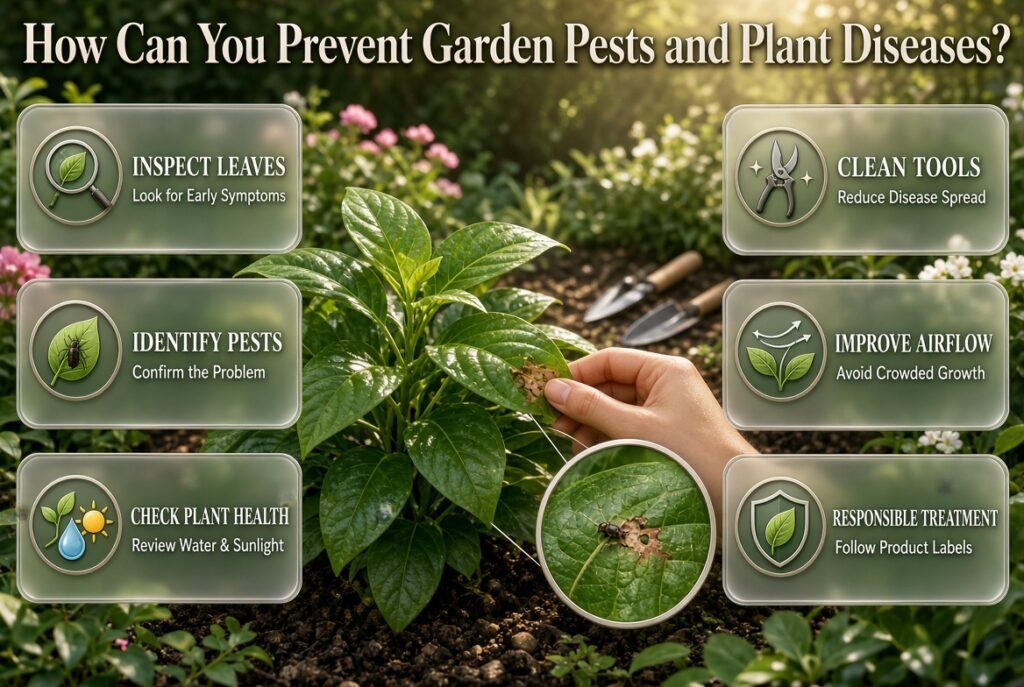
Pests and plant diseases can damage leaves, roots, flowers, and fruit. However, not every insect is harmful, and not every change in leaf colour requires treatment.
The best starting point is to identify the problem and understand whether it threatens plant health.
What should you check when a plant looks unhealthy?
Inspect the plant carefully and compare the symptoms with its normal growth pattern.
Look for:
- Visible insects or feeding damage.
- Spots, mould-like growth, or unusual discolouration.
- Damaged stems or roots.
- Changes in soil moisture.
- Crowded growth with poor air circulation.
- Recent changes in watering, fertiliser, or sunlight.
Consider whether the problem affects one plant or several. If multiple plants decline at the same time, a shared issue such as irrigation failure, heat stress, or a soil problem may be involved.
How can you manage pests responsibly?
Begin with the least disruptive suitable approach.
- Remove clearly affected plant material when appropriate.
- Keep tools clean between affected plants.
- Improve airflow where crowding contributes to disease.
- Avoid overwatering and unnecessary fertilising.
- Protect healthy plants from unnecessary disturbance.
- Seek identification advice when symptoms are unclear.
If a treatment is required, use a product specifically labelled for the pest and plant involved, and follow all directions and local regulations. Keep children and pets away as instructed on the label.
Avoid combining treatments or increasing their concentration in an attempt to get faster results. More product does not automatically mean better pest control.
How Should You Plan an Outdoor and Garden Care Budget?
A maintenance budget helps you distinguish routine spending from urgent repairs and optional improvements. It also makes it easier to decide whether to complete a task yourself or arrange professional help.
There is no single correct budget for every garden. A small paved courtyard has very different requirements from a property with mature trees, extensive lawns, irrigation, and multiple outdoor structures.
Which outdoor maintenance costs should you plan for?
Consider these common expense categories:
| Expense category | Examples | Budgeting approach |
|---|---|---|
| Routine supplies | Compost, mulch, plant supports | Estimate based on actual usage |
| Watering | Hoses, connectors, irrigation repairs | Inspect for leaks before upgrading |
| Lawn care | Mower servicing, grass repair | Consider lawn size and grass type |
| Cleaning | Brushes, suitable cleaners | Choose products compatible with surfaces |
| Repairs | Fence fixings, paving repairs | Prioritise safety and deterioration |
| Tree care | Specialist pruning and assessment | Obtain professional estimates |
| Pest management | Identification and suitable treatment | Confirm the cause before spending |
| Optional improvements | New planting, seating, decorative features | Plan after essential maintenance |
Prices vary by location, property size, materials, labour requirements, and the condition of the garden. Obtain written estimates for significant work rather than relying on a generic online figure.
How can you reduce garden maintenance costs?
The best savings often come from preventing repeated problems.
First, fix small issues promptly. A leaking irrigation connector can waste water over time, while an unstable gate may become more expensive to repair if its supporting post deteriorates.
Second, choose plants that suit the site. Plants requiring constant corrective care may cost more over their lifetime than suitable alternatives.
Third, maintain tools properly. Cleaning and storing equipment according to its instructions can reduce avoidable replacement costs.
Fourth, separate essential work from cosmetic improvements. Repairing a dangerous step is more urgent than replacing healthy plants simply to change the colour scheme.
Finally, plan recurring tasks. A calendar helps prevent duplicated purchases, forgotten inspections, and unnecessary emergency appointments.
Should you hire a gardener or do the work yourself?
The decision depends on the job’s complexity, safety risks, tools required, and your ability to complete it correctly.
| Task | DIY may be suitable when | Professional help is preferable when |
|---|---|---|
| Watering and basic plant care | Plant needs are understood | Plants repeatedly decline without a clear cause |
| Hand weeding | The area is small and weeds are identified | Growth is extensive or difficult to identify |
| Light cleaning | Surfaces and methods are understood | Stains or deterioration require specialist treatment |
| Basic lawn mowing | Equipment is suitable and safely operated | The area is hazardous or machinery is unsuitable |
| Minor garden tidying | No significant risks are present | Heavy materials or unstable structures are involved |
| Tree pruning | Work is limited to safe, accessible small growth | Branches are large, unstable, or near power lines |
| Drainage repair | The issue is simple and accessible | Water affects foundations or underground systems |
| Electrical work | Routine visual checks only | Repairs or installation are needed |
Professional assistance is not necessarily required for every maintenance task. Equally, a job should not become a DIY project simply because tools are available.
What Are the Most Common Outdoor Maintenance Mistakes?
Many garden problems develop because maintenance is performed without identifying the underlying cause. Avoiding a few common mistakes can make your routine more effective and reduce unnecessary expenditure.
1. Watering without checking the soil
Why it happens: A fixed watering schedule seems easier than checking individual plants.
Why it causes problems: Some plants may receive too much water while others remain dry. Excess moisture can also contribute to root problems.
How to avoid it: Check soil moisture, consider recent weather, and adjust watering according to plant type and growing conditions.
2. Cutting grass too short
Why it happens: A very short lawn may appear tidy immediately after mowing.
Why it causes problems: Removing too much leaf growth can stress the grass and reduce its ability to cope with difficult conditions.
How to avoid it: Follow the appropriate mowing height for your grass species and avoid removing more than about one-third of the blade in one session.
3. Applying fertiliser without understanding the problem
Why it happens: Slow growth or yellow leaves are often assumed to indicate nutrient deficiency.
Why it causes problems: The real cause may be poor drainage, root damage, unsuitable light, or excessive watering.
How to avoid it: Investigate the symptoms first and use soil testing or expert advice when appropriate.
4. Ignoring drainage because the garden eventually dries
Why it happens: Homeowners may assume standing water is harmless if it disappears after several hours.
Why it causes problems: Recurring water accumulation can damage plants, make surfaces slippery, and reveal drainage faults.
How to avoid it: Observe the area after rainfall and irrigation. Investigate persistent puddles or water flowing toward buildings.
5. Using the wrong cleaning method
Why it happens: Strong pressure or concentrated cleaning products may appear to offer faster results.
Why it causes problems: Paving joints, timber finishes, plants, and surrounding surfaces may be damaged.
How to avoid it: Match the method to the material, follow product instructions, and test an inconspicuous area first.
6. Pruning without understanding the plant
Why it happens: Every shrub appears to need the same trimming schedule.
Why it causes problems: Incorrect pruning may remove flowers, damage the plant’s shape, or expose it to unnecessary stress.
How to avoid it: Identify the plant and understand its growth and flowering habits before making significant cuts.
7. Buying plants before measuring the space
Why it happens: A plant looks attractive in a nursery or garden centre.
Why it causes problems: Mature growth may block paths, crowd neighbouring plants, or require repeated pruning.
How to avoid it: Check mature dimensions and plan spacing before purchasing.
8. Leaving small repairs until they become urgent
Why it happens: Loose paving, damaged fence fixings, or minor leaks may not appear serious.
Why it causes problems: Continued use and weather exposure can worsen the defect.
How to avoid it: Record maintenance issues and prioritise them according to safety, potential damage, and repair urgency.
9. Using one schedule for every season
Why it happens: A routine that worked previously becomes a habit.
Why it causes problems: Watering, mowing, pruning, and plant growth change with weather and season.
How to avoid it: Review the schedule periodically and adjust it to local conditions.
10. Attempting hazardous work without suitable expertise
Why it happens: Hiring a professional may seem expensive compared with doing the work independently.
Why it causes problems: Tree work, electrical repairs, unstable structures, and major drainage work can create serious risks if handled incorrectly.
How to avoid it: Recognise the limits of routine DIY maintenance and obtain qualified help for work involving significant hazards.
What Do Experienced Property Care Professionals Recommend?

Effective maintenance is less about completing the greatest number of tasks and more about identifying the right task at the right time.
A sensible professional approach combines observation, prioritisation, appropriate tools, and a clear record of completed work.
Start with a property-wide inspection
Walk around the garden and note the condition of plants, paths, fences, drainage points, and outdoor structures. Look for changes since the previous inspection.
A simple record might include:
- The location of the problem.
- What you observed.
- Whether the issue is urgent.
- What action is required.
- Whether the problem returns after repair.
This record helps distinguish a one-off issue from a recurring fault.
Fix the cause rather than the symptom
Suppose a lawn develops a bare patch beside a downpipe. Adding seed may improve its appearance temporarily, but repeated waterlogging could prevent the grass from establishing.
Investigate the drainage first, correct the cause where possible, and then repair the lawn.
The same principle applies to plants that repeatedly wilt, patios that remain slippery, and fences that lean after rainfall.
Use the right tools for the job
Basic gardening equipment may include:
- A suitable hand trowel.
- Gardening gloves.
- A hand pruner for appropriate small stems.
- A watering can or suitable hose.
- A sturdy garden brush.
- A rake.
- A measuring tape.
- A suitable lawn mower, if needed.
- Containers for collecting garden waste.
Choose equipment based on the actual work you need to do. Buying specialist tools for occasional tasks may be less practical than hiring a qualified professional who already has the appropriate equipment.
Inspect tools before use, follow safety instructions, and store them securely.
Prioritise work according to risk
Not every defect deserves the same urgency.
Use the following decision framework:
| Priority | Examples | Recommended response |
|---|---|---|
| Immediate | Exposed electrical wiring, an unstable structure presenting an immediate hazard | Keep people away and arrange appropriate urgent assistance |
| High | Significant drainage problems near a building, unstable steps, major tree damage | Arrange prompt professional assessment |
| Moderate | Loose paving without immediate danger, recurring irrigation leaks | Schedule a timely repair |
| Routine | Weeding, ordinary pruning, cleaning furniture | Include in the regular maintenance plan |
| Optional | Decorative planting, new garden ornaments | Plan after essential work |
This framework is a practical guide rather than a formal safety assessment. If a situation presents an immediate danger, keep people away and contact the appropriate emergency or specialist service.
Coordinate garden care with the rest of the property
Outdoor maintenance should not be planned in isolation. Roof runoff, plumbing leaks, exterior walls, driveways, fences, and landscaping can affect one another.
For example, a garden bed positioned against a building may hide signs of moisture, while poorly directed irrigation may contribute to damp conditions around an exterior wall.
When an outdoor problem involves a wider property defect, the Common Home Repairs and Improvements guide provides a natural next step for understanding general repair priorities.
You can also explore Brendan Active Property Care for related property care information and practical maintenance topics.
Keep a simple maintenance record
A maintenance record doesn’t need complicated software. A notebook or spreadsheet is often enough.
Record the inspection date, completed work, materials used, recurring problems, and repairs that still need attention.
Over time, these notes can help you identify patterns. For example, you might discover that a particular planter dries out much faster than others or that a gate repeatedly needs adjustment after strong winds.
Expert Tip: Take photographs of recurring problems from the same position. Comparing them over time can help you judge whether a crack, damp patch, plant disease, or structural defect is changing.
How Can You Make a Small Garden Easier to Maintain?
A small garden can be attractive and practical without requiring a large collection of plants or complicated landscaping. The most effective design uses the available space carefully and keeps routine maintenance manageable.
Choose a simple planting layout
Instead of filling every empty space, choose a small number of suitable plants with complementary growth habits. Consider mature size, sunlight requirements, watering needs, and how easily you can reach each planting area.
Leave enough space to access pots, clean paving, inspect walls, and maintain irrigation connections.
Use containers strategically
Containers work well on patios, balconies, and compact paved areas. They also allow you to rearrange plants as sunlight changes.
However, containers usually need closer moisture monitoring than many established garden beds. Choose pots with suitable drainage holes and a size appropriate for the plant.
Place containers where excess water can drain without creating slippery surfaces or damaging nearby materials. Check whether the pot is heavy enough to remain stable in exposed conditions.
Reduce unnecessary decorative features
Every additional feature can create another maintenance task. Elaborate water features, complicated planting borders, and large collections of small pots may look appealing but require more cleaning and attention.
A simpler layout with clear pathways, grouped containers, suitable plants, and a practical seating area can be easier to maintain over time.
Design for access
Make sure you can reach taps, drainage grates, planting beds, and outdoor storage without moving heavy furniture or stepping over delicate plants.
Good access reduces the time needed for routine maintenance and makes it easier to notice problems early.
How Should You Prepare Your Garden Before Going on Holiday?
Leaving a property unattended can create problems if irrigation fails, containers dry out, or severe weather damages outdoor features.
The amount of preparation needed depends on the length of your absence, the weather forecast, plant requirements, and whether anyone will check the property.
Before leaving:
- Check that irrigation equipment is functioning properly.
- Repair obvious hose or connection leaks.
- Water plants according to their needs.
- Move vulnerable containers to a suitable protected location where appropriate.
- Remove loose garden items that could be affected by forecast strong winds.
- Clear accessible surface drainage grates of leaves and debris.
- Secure gates, sheds, and outdoor storage.
- Arrange for a trusted person to inspect the property if necessary.
Do not simply increase the irrigation timer and assume the garden will be fine. A faulty sprinkler or leaking pipe could waste water while leaving plants dry elsewhere.
For a longer absence during hot weather, arrange appropriate checks of vulnerable plants and the irrigation system. Give the person checking the property clear instructions about watering and any known maintenance concerns.
What Should You Check After Heavy Rain or Strong Winds?
Severe weather can reveal problems that are difficult to notice during ordinary inspections. After conditions have become safe, inspect accessible outdoor areas for damage and signs of water accumulation.
After heavy rain
Check for:
- Persistent standing water.
- Blocked surface drainage points.
- Soil erosion or displaced mulch.
- Water flowing toward doors or walls.
- Loose paving or washed-out joints.
- Damaged irrigation fittings.
- Plants leaning because the surrounding soil has become unstable.
Avoid walking across saturated ground if doing so could damage the garden or create a slipping hazard. Don’t enter flooded areas where electrical equipment or contaminated water may present a risk.
After strong winds
Look for fallen branches, damaged fence panels, loose garden furniture, displaced containers, and visible damage to sheds or other structures.
Keep away from hanging branches, unstable trees, damaged electrical equipment, and structures that appear unsafe. Arrange appropriate professional assistance for hazards that cannot be assessed safely from the ground.
Once the property is safe, record any damage and decide which repairs need immediate attention and which can be scheduled.
How Can Outdoor and Garden Care Support Property Value?
A well-maintained garden can improve a property’s appearance and make outdoor areas more enjoyable. Clean paths, healthy planting, stable fences, functioning drainage, and usable seating areas all contribute to the overall impression of care.
However, garden maintenance does not guarantee a particular increase in market value. The effect depends on location, property condition, buyer preferences, and the quality of the work.
Focus on improvements with practical benefits
Before spending money on a major landscaping project, consider whether smaller improvements would achieve the same objective.
For example:
- Repairing a damaged gate may improve security and usability.
- Cleaning a neglected patio can make an existing seating area more inviting.
- Correcting a leaking irrigation line can reduce waste.
- Replacing unsuitable plants may reduce ongoing maintenance.
- Improving access around planting beds can make future upkeep easier.
Keep essential repairs separate from cosmetic upgrades. If drainage is causing problems or a path is unsafe, address those concerns before investing heavily in decorative planting.
Is professional landscaping always necessary?
No. Many properties can be maintained successfully with regular inspections, basic gardening skills, and suitable equipment.
Professional landscaping may be worthwhile when the project involves major layout changes, complex irrigation, extensive planting, retaining structures, or drainage design.
Before agreeing to substantial work, ask for a clear scope, materials specification, estimated completion time, and written quotation. Check relevant qualifications and local requirements for specialist work.
The best improvement is one that suits your property, budget, and willingness to maintain it over the long term.
How Can I Maintain My Garden Throughout the Year Without Spending Too Much Money?
Maintaining a garden throughout the year becomes more affordable when you focus on preventative care instead of waiting for problems to develop. Regular inspections, appropriate watering, timely pruning, and early weed removal can help prevent minor issues from turning into expensive repairs. Choosing plants suited to your local climate also reduces the need for excessive watering, fertilisers, and replacement plants.
Practical ways to reduce garden maintenance costs:
Choose plants that suit your soil, sunlight, and local weather conditions.
Use suitable mulch to conserve soil moisture and suppress weeds.
Inspect irrigation equipment regularly to identify leaks and blockages.
Maintain gardening tools properly to extend their useful life.
Prioritise essential repairs before spending money on decorative improvements.
A simple weekly maintenance routine can save time and money over the long term while keeping your outdoor space attractive and manageable.
How Often Should I Water My Garden Plants and Lawn?
The ideal watering frequency depends on the plant species, soil type, weather, sunlight exposure, and stage of growth. Newly planted flowers and shrubs generally need closer monitoring than established plants, while containers may dry out faster than garden beds. During hot weather, water requirements can increase, but watering every day is not automatically necessary.
Follow these watering practices for healthier plants:
Check moisture around the root zone before watering.
Water slowly enough to allow moisture to reach the roots.
Water during cooler parts of the day when practical.
Adjust irrigation after rainfall or changes in temperature.
Watch for signs of both underwatering and excessive moisture.
For lawns, avoid cutting grass too short or relying on a fixed watering schedule without considering soil conditions. Correct watering supports healthy root development and helps prevent unnecessary water waste.
What Is the Best Way to Prevent Weeds, Garden Pests, and Plant Diseases?
The most effective approach combines regular inspection, suitable plant care, and early intervention. Weeds compete with garden plants for water, nutrients, and sunlight, while pests and diseases may spread when problems remain unnoticed. However, not every insect is harmful, and symptoms such as yellow leaves can have several causes, including poor drainage, unsuitable sunlight, and watering problems.
Use these preventative measures:
Remove young weeds before they produce seeds.
Apply appropriate mulch to suitable planting beds.
Maintain proper spacing and airflow between plants.
Inspect leaves and stems for unusual changes or damage.
Remove affected plant material when appropriate.
Identify the cause of a problem before applying treatments.
If a pest or disease cannot be identified, seek advice from a qualified horticultural professional. Using unnecessary chemicals or applying treatments incorrectly may damage beneficial insects, healthy plants, and surrounding areas.
How Can I Improve Garden Drainage and Prevent Water From Collecting Around My Property?
Poor garden drainage can cause waterlogged soil, unhealthy plant roots, slippery paths, and recurring puddles near buildings. The first step is to identify why the water is accumulating. Common causes include blocked surface drains, leaking irrigation connections, compacted soil, low areas in the garden, or surfaces that direct water toward the house.
Steps to improve outdoor drainage:
Inspect accessible surface drainage grates and remove loose debris.
Check irrigation hoses and outdoor taps for leaks.
Observe where water collects after rainfall.
Avoid directing runoff toward your home’s foundations or neighbouring properties.
Consider suitable soil improvements where compaction is contributing to the problem.
Arrange professional assessment for persistent flooding or suspected underground drainage faults.
Avoid installing a drainage system without understanding where the water will go. A properly planned solution addresses the underlying cause rather than simply moving the problem to another part of the property.
Which Outdoor and Garden Maintenance Tasks Should I Handle Myself, and When Should I Hire a Professional?
Many routine gardening tasks can be managed independently, including watering, weeding, basic lawn care, light cleaning, and visual inspections. However, the right decision depends on the complexity of the job, the equipment required, and the risks involved. Attempting specialised repairs without suitable knowledge can create safety hazards or lead to additional property damage.
DIY tasks that are often manageable:
Watering plants and maintaining containers.
Removing ordinary weeds and garden debris.
Mowing the lawn with suitable, safely operated equipment.
Cleaning appropriate outdoor surfaces.
Inspecting fences, gates, and accessible drainage points.
Tasks that may require professional assistance:
Pruning large trees or removing unstable branches.
Repairing major drainage problems near foundations.
Working on outdoor electrical wiring or lighting connections.
Repairing unstable retaining walls, decking, or steps.
Diagnosing persistent plant diseases or extensive pest problems.
Before hiring a professional, request a clear description of the work, a written quotation, and information about relevant qualifications. This helps you compare options and make informed decisions while keeping your property safe and well maintained.
Conclusion: Build a Healthier, More Beautiful Outdoor Space
Outdoor and garden care is an important part of maintaining a comfortable, attractive, and well-functioning property. From watering plants and managing weeds to improving drainage, caring for lawns, and keeping outdoor surfaces clean, small maintenance tasks can make a meaningful difference over time. The key is to follow a consistent routine rather than waiting until minor problems become expensive repairs.
Start by assessing your garden’s condition, understanding the needs of your plants, and identifying areas that require attention. Adjust watering according to the weather, maintain healthy soil, remove weeds regularly, and inspect fences, paths, gutters, and drainage areas throughout the year. Seasonal maintenance also helps you prepare your outdoor space for changing temperatures and rainfall.
Remember that effective garden care does not always require expensive equipment or professional services. Many routine tasks can be handled yourself, while complex drainage problems, significant tree work, and persistent pest issues may require qualified assistance. If you are also looking after the rest of your property, combining outdoor tasks with a regular Home Maintenance schedule can help you stay organized and prevent overlooked issues.
For additional guidance on keeping your property safe, functional, and well maintained, explore Brendan Active Property Care and learn more about Common Home Repairs and Improvements.
Ultimately, the best approach to outdoor and garden care is simple: maintain regularly, address problems early, and choose practical solutions suited to your property. With a little planning and consistent attention, you can enjoy a cleaner, healthier, and more inviting outdoor space throughout the year.