Introduction
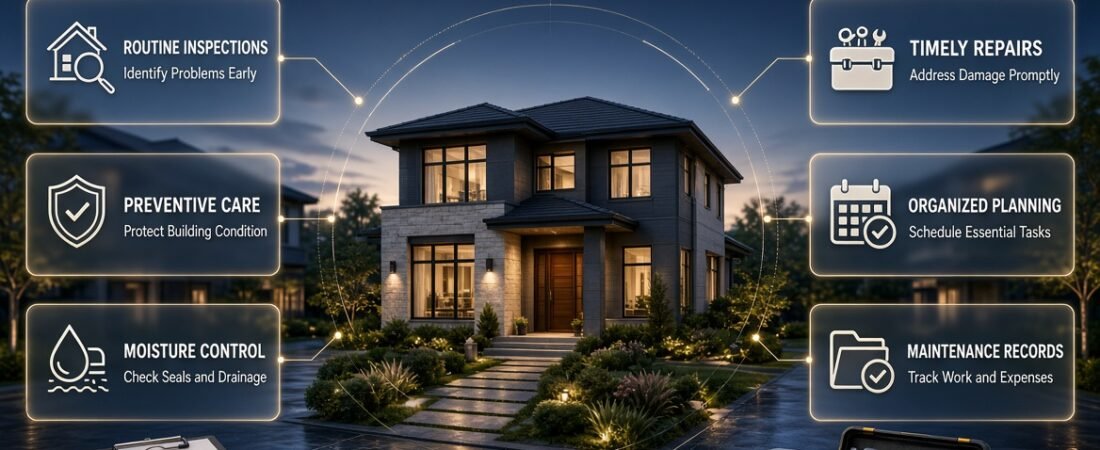
Care for a Property | Taking care of a property involves much more than keeping rooms clean or repairing something when it breaks. A building needs regular attention to remain safe, comfortable, functional, and in good condition. Small issues such as deteriorating seals, blocked drainage, loose fittings, damaged exterior surfaces, and persistent moisture can gradually become more serious when they are overlooked.
For homeowners, landlords, tenants, and property managers, understanding how to care for a property makes everyday responsibilities easier to organize. A practical approach helps identify problems early, prioritize important work, manage maintenance expenses, and make informed decisions about repairs. It also reduces the uncertainty that often comes with looking after a building over many years.
The key is to treat property care as an ongoing process rather than a collection of emergency tasks. Regular observations, sensible planning, appropriate cleaning, timely repairs, and accurate records can make a meaningful difference to a property’s condition.
At Brendan Active Property Care, the main idea is simple: property care should be practical, organized, and focused on protecting the building’s long-term usability. This guide explains how to create a property care routine, inspect important areas, prevent common problems, manage maintenance responsibilities, control expenses, and decide when professional assistance is necessary.
Whether you own a family home, manage a rental property, or simply want to understand your building better, the following recommendations will help you approach property care with greater confidence.
What Does Care for a Property Actually Mean?
Care for a property is the ongoing process of protecting and maintaining a building, its essential systems, its interior spaces, and its surrounding areas. It includes routine inspections, cleaning, preventive maintenance, repairs, safety checks, and planning for future work.
The purpose is not to make every building look brand new. Instead, property care aims to keep the property suitable for its intended use while identifying deterioration and addressing problems before they create unnecessary disruption.
A complete property care routine usually covers five main responsibilities.
1. Protecting the Building’s Physical Condition
The building itself requires attention throughout its life. Roof coverings, walls, foundations, windows, doors, exterior finishes, and drainage components all help protect the property from everyday wear and environmental conditions.
Regularly observing these components can help identify visible damage, water entry, deteriorating finishes, or changes that require further investigation.
For example, peeling exterior paint might be a cosmetic issue, but it could also indicate that moisture is affecting the surface. The correct response depends on the underlying cause rather than the appearance alone.
2. Maintaining Essential Systems
Plumbing, electrical installations, heating equipment, ventilation, and other building systems support daily activities. Their condition affects convenience, safety, and the overall functionality of the property.
Property care includes watching for warning signs, following manufacturer maintenance instructions, and arranging appropriate servicing.
It does not mean dismantling equipment or attempting every repair yourself. Inspections should remain within your skills, while hazardous or specialist work should be handled by appropriately qualified professionals.
3. Keeping Interior Spaces Clean and Usable
Cleaning and organization help preserve surfaces, maintain comfortable living conditions, and make it easier to notice developing problems.
Kitchen worktops, bathroom fixtures, floors, cupboards, and frequently used areas need routine attention. Storage spaces should also remain reasonably organized so that leaks, dampness, or other concerns are not hidden behind accumulated belongings.
4. Managing Outdoor Areas
Paths, fences, gardens, exterior steps, accessible drainage points, and surrounding vegetation are also part of property care.
Poorly maintained outdoor areas may create trip hazards, obstruct drainage, or make access more difficult. Appropriate upkeep helps the property remain usable and easier to inspect.
5. Planning Maintenance and Repairs
A building requires decisions about what needs attention immediately, what can be scheduled, and what may need replacement in the future.
Maintenance records, inspection notes, and a realistic budget make these decisions easier. They also help distinguish essential work from optional improvements.
Why Is Property Care Important?
Property care matters because a building is a long-term asset that experiences regular use and gradual deterioration. Its condition changes with age, weather, occupancy, materials, and the quality of previous maintenance.
A consistent routine helps property owners and managers respond to these changes before they become unnecessarily difficult to manage.
Preventing Small Problems From Becoming Larger
Many maintenance problems develop gradually. A minor plumbing leak may affect nearby materials, while deteriorating exterior seals can allow moisture to enter vulnerable areas.
The earlier a problem is identified, the more opportunities you may have to address it before additional damage occurs.
This does not mean every small defect will become a major repair. It means that ignoring a warning sign without understanding its cause is an avoidable risk.
Pro tip: When you notice a new defect, record its location and condition. If it changes over time, that information can help a professional understand what is happening.
Supporting Safety
Property care includes checking for conditions that could create risks for occupants and visitors.
Examples include loose handrails, damaged steps, unstable exterior fittings, malfunctioning safety devices, and signs of electrical or gas-related problems.
Not every safety issue is visible during an ordinary walkthrough. Some require professional testing or inspection. Nevertheless, regular observations provide a useful starting point for identifying concerns that deserve attention.
If an immediate hazard is suspected, keep people away from the affected area and seek appropriate assistance.
Maintaining Everyday Comfort
A property should support the activities for which it is used. Functional doors, reliable plumbing, suitable ventilation, clean surfaces, and well-maintained access routes contribute to a more comfortable environment.
When maintenance is neglected, ordinary tasks can become inconvenient. A sticking door, recurring drain blockage, or poorly functioning ventilation system may affect daily routines even when the building remains structurally sound.
Supporting Long-Term Property Value
A property’s condition influences how it is perceived by buyers, tenants, visitors, and inspectors.
A well-maintained building generally presents more positively than one with visible neglect. Maintenance records can also help explain what work has been completed and which components have been replaced.
However, maintenance does not guarantee a particular market value. Location, market conditions, building design, and other factors also influence value.
Making Expenses More Predictable
Unexpected repairs can place pressure on a household or property budget. Regular inspections and planned maintenance help identify likely expenses and allow time to compare suitable solutions.
For example, if an inspection identifies deterioration in an older exterior component, you may be able to obtain estimates and schedule the work before it becomes an urgent problem.
The goal is not to eliminate all unexpected costs. It is to improve preparation and reduce avoidable surprises.
What Areas Should a Property Care Plan Cover?
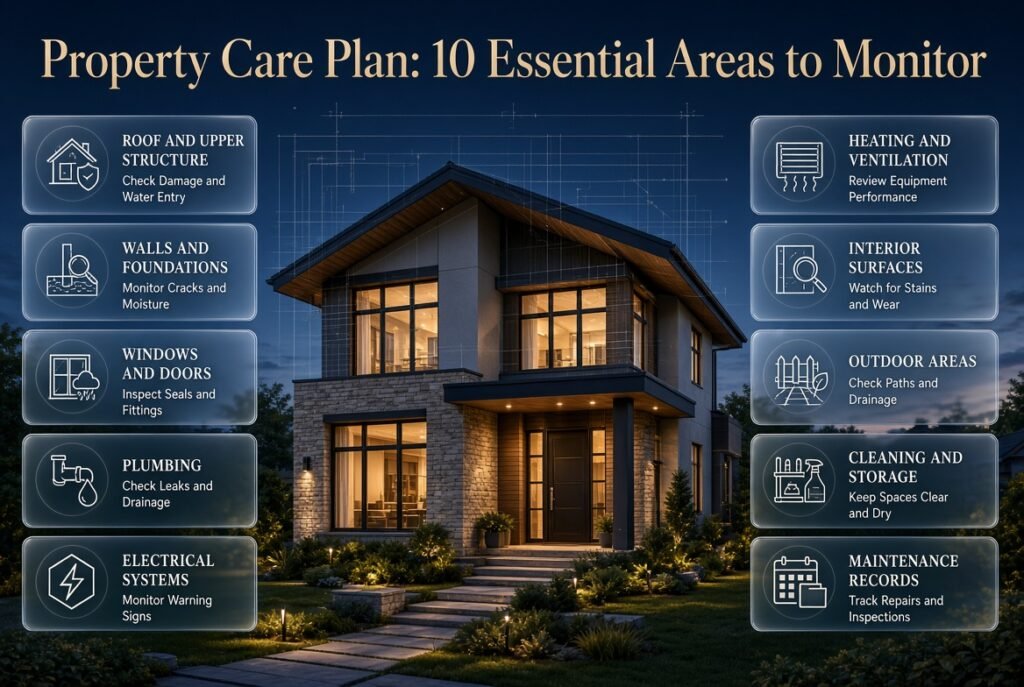
A useful property care plan covers the entire building rather than concentrating only on visible rooms.
The following table provides a starting point.
| Area | What to monitor | Main purpose |
|---|---|---|
| Roof and upper structure | Visible damage, water entry, and deterioration | Protect the building from weather |
| Walls and foundations | New cracks, moisture, and surface changes | Identify defects requiring assessment |
| Windows and doors | Damaged seals, loose fittings, and difficult operation | Maintain function and weather protection |
| Plumbing | Visible leaks, drainage performance, and fixture condition | Reduce water-related problems |
| Electrical systems | Warning signs and required professional inspections | Support safe operation |
| Heating and ventilation | Equipment performance and maintenance requirements | Maintain suitable indoor conditions |
| Interior surfaces | Stains, damage, moisture, and wear | Preserve usability and identify problems |
| Outdoor areas | Paths, fences, vegetation, and accessible drainage | Improve access and reduce hazards |
| Cleaning and storage | Hygiene, clutter, and hidden dampness | Keep spaces usable and easier to inspect |
| Maintenance records | Inspection dates, repairs, and service information | Support future planning |
The importance of each area depends on the property. An older house may require more attention to aging materials, while a newer building may need routine servicing and monitoring of recently installed equipment.
A rental property may also have different inspection and documentation requirements from an owner-occupied home.
How to Inspect a Property Properly
A property inspection is a structured review of the building’s visible condition and any known maintenance concerns. It helps establish priorities and provides a baseline for future comparisons.
A simple walkthrough can be useful, but it should not be confused with a formal structural survey or specialist building inspection.
Step 1: Prepare an Inspection Checklist
Before starting, create a list of the main areas you want to review.
Include interior rooms, visible exterior components, accessible utility areas, bathrooms, kitchens, entrances, and outdoor spaces.
Your checklist should record:
- The location of each concern.
- A description of the observed condition.
- Whether the issue appears new or has been present previously.
- Whether immediate action may be necessary.
- Any follow-up inspection or professional assessment required.
Avoid trying to diagnose every problem yourself. Your first task is to identify and document what you can observe safely.
Step 2: Start With General Safety
Look for obvious hazards before examining cosmetic details.
Check for unstable steps, damaged handrails, water near electrical equipment, unusual gas-related odors, and other conditions that could require immediate action.
Do not touch potentially dangerous equipment or attempt to test suspected faults through trial and error.
If an urgent safety concern exists, address access and obtain appropriate assistance before continuing the inspection.
Step 3: Examine Interior Rooms
Walk through each room and observe walls, ceilings, floors, doors, windows, and visible fixtures.
Look for new stains, damaged finishes, unusual odors, loose fittings, and changes in how doors or windows operate.
Pay particular attention to areas around plumbing fixtures and external walls, where moisture or movement may become visible.
A small mark does not automatically indicate a serious defect. The location, pattern, persistence, and change over time all matter.
Step 4: Review Kitchens and Bathrooms
Kitchens and bathrooms deserve attention because they involve frequent water use and regular cleaning.
Look for visible leaks, damaged seals, persistent condensation, deteriorating grout, and drainage problems.
Check whether ventilation appears to be functioning as intended. If moisture remains persistent despite ordinary cleaning and ventilation, investigate the underlying cause rather than repeatedly treating the visible symptoms.
Step 5: Check Accessible Exterior Areas
From safe ground-level positions, observe the property’s visible exterior.
Look for damaged surfaces, loose components, deteriorating paint, water staining, obstructed drainage points, and vegetation affecting access.
Do not climb onto roofs or use unsafe ladders to inspect inaccessible components. Arrange a suitable professional inspection where access or equipment creates a risk.
Step 6: Record and Prioritize Findings
After the walkthrough, organize the findings according to urgency.
A useful classification is:
- Urgent: A suspected immediate safety hazard or active problem requiring prompt intervention.
- High priority: A defect that could worsen significantly if left unattended.
- Routine: A repair or maintenance task that can be scheduled.
- Planned improvement: An optional upgrade that does not currently address an urgent defect.
This system helps prevent minor cosmetic work from distracting you from problems that could affect safety or cause further damage.
How to Create a Practical Property Care Schedule
A maintenance schedule organizes recurring tasks so that important responsibilities are less likely to be forgotten.
There is no single schedule suitable for every property. The correct intervals depend on the building’s condition, the equipment installed, local environmental conditions, manufacturer instructions, and applicable requirements.
The following framework can help you get started.
Weekly Tasks
Weekly activities generally focus on cleanliness, usability, and noticing obvious changes.
Examples include:
- Cleaning frequently used surfaces.
- Keeping entrances and walkways clear.
- Looking for obvious plumbing leaks.
- Removing ordinary household debris.
- Noting new odors or visible damage.
- Reporting problems that need attention.
These tasks should fit naturally into normal household routines.
Monthly Tasks
Monthly checks can provide a more structured review of accessible areas and essential fixtures.
Consider reviewing:
- Visible plumbing connections.
- Bathroom and kitchen seals.
- New stains on walls or ceilings.
- Accessible drainage points.
- The condition of doors, handles, and frequently used fittings.
- Safety devices according to their manufacturer instructions.
Monthly observations do not replace specialist inspections or scheduled equipment servicing.
Seasonal Tasks
Seasonal maintenance should reflect local weather and the property’s exposure to environmental conditions.
Before periods of heavy rainfall, for example, check accessible drainage areas and look for visible signs of exterior deterioration.
Before particularly hot or cold weather, review the condition of relevant building components and ensure that required equipment servicing is up to date.
In areas affected by strong winds, dust, or heavy seasonal debris, exterior checks may deserve additional attention.
Annual Tasks
An annual review provides an opportunity to assess the overall maintenance plan.
Review previous repairs, unresolved concerns, service records, and components that may require replacement.
Arrange appropriate professional inspections or servicing according to the property’s requirements.
An annual review is also a useful time to update the maintenance budget and revise responsibilities.
Maintenance Schedule Example
| Task | Suggested planning interval | Notes |
|---|---|---|
| General cleaning | Weekly or as needed | Adapt to household use |
| Visible leak checks | Regularly | Investigate new signs promptly |
| Bathroom seal observations | Monthly or as needed | Replace failed seals appropriately |
| Outdoor drainage review | Seasonally and after relevant weather | Use safe, accessible checks |
| Safety device checks | According to manufacturer instructions | Arrange required servicing |
| Major system servicing | As specified for the equipment | Use suitable professionals |
| Maintenance record review | After repairs and during annual planning | Keep documentation organized |
Use these intervals as a starting point, not as a substitute for equipment instructions or specialist advice.
For more detailed routines and task planning, the Home Maintenance guide can help you organize the everyday responsibilities involved in keeping a building in good condition.
How to Protect the Exterior of a Property
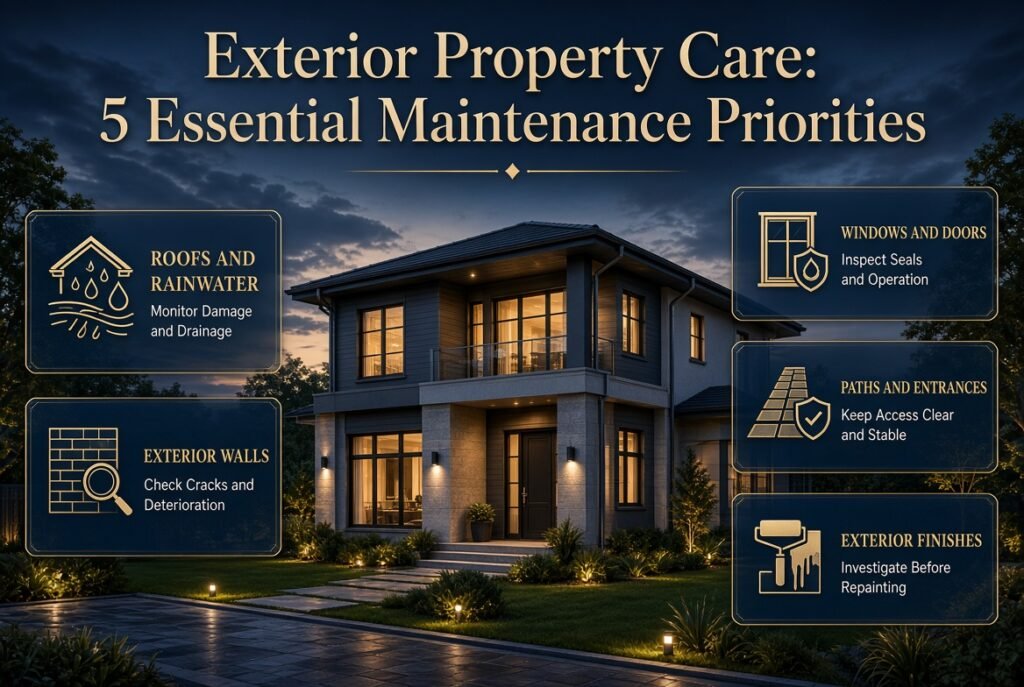
The exterior forms an important protective layer between the building and its surroundings. Its condition affects water resistance, access, appearance, and the performance of other building components.
Exterior maintenance should focus on identifying deterioration and addressing its cause.
Roofs and Rainwater Management
Roofs and associated drainage components help direct water away from vulnerable areas.
Look for visible signs of damage from safe ground-level positions. Water stains near ceilings, recurring dampness, or debris around accessible drainage points may indicate that further investigation is needed.
The absence of visible damage does not prove that a roof is in perfect condition. Some defects require closer inspection by a suitable professional.
Avoid climbing onto roofs or attempting repairs at height without the appropriate training, equipment, and safeguards.
Exterior Walls
Walls may develop cracks, stains, peeling coatings, or damaged finishes over time.
Some changes are cosmetic, while others may be associated with moisture, movement, or material deterioration.
Pay attention to changes rather than assuming every crack has the same cause. Growing cracks, significant displacement, or damage accompanied by other warning signs should be assessed by an appropriate professional.
Use repair products that are compatible with the original material and suitable for the exposure conditions.
Windows and Doors
Windows and doors support access, ventilation, security, and weather protection.
Observe whether they open and close properly, whether visible seals are deteriorating, and whether water staining appears nearby.
Do not force a door or window that has suddenly become difficult to operate. Changes in alignment can have several causes, and repeated force may worsen the damage.
Where necessary, arrange appropriate adjustment or repair.
Paths, Steps, and Entrances
Outdoor access areas should remain reasonably clear and stable.
Look for loose paving, uneven surfaces, damaged steps, and vegetation obstructing walkways. Address hazards that could affect residents or visitors.
Drainage should also be considered. Water collecting repeatedly on a path may indicate a slope or drainage issue that needs more than routine cleaning.
Exterior Painting and Surface Protection
Paint and other exterior finishes can help protect suitable surfaces, but they are not universal solutions to moisture or structural problems.
Before repainting, identify peeling, bubbling, or persistent staining and investigate the underlying cause.
Surface preparation, compatible materials, and appropriate drying conditions are important for a durable result.
Common mistake: Applying a fresh coating to conceal deterioration without addressing the cause. This may improve the appearance temporarily while leaving the original problem unresolved.
How to Maintain Plumbing and Prevent Water Damage
Water-related problems deserve particular attention because moisture can affect several building components at once.
Leaks may damage finishes, contribute to persistent dampness, and create conditions suitable for mold growth. Some water-related problems are obvious, while others remain hidden until stains or odors appear.
Monitor Visible Plumbing
Look for moisture around accessible pipes, taps, sinks, toilets, and appliance connections.
Pay attention to recurring puddles, unexplained dampness, and changes in drainage performance.
Do not dismantle unfamiliar plumbing components or use excessive force on fittings. If a leak cannot be resolved safely through a simple, appropriate action, arrange professional assistance.
Respond Quickly to Active Leaks
If water is entering the building, take reasonable steps to limit further damage without exposing yourself to hazards.
Keep people away from affected areas, especially if water is near electrical equipment or ceilings show signs of instability.
If it is safe and you know how to operate the relevant shutoff, stop the water supply where appropriate. Otherwise, seek assistance.
Document the affected area and arrange repairs to the source of the leak. Drying or repainting the visible damage alone will not correct the underlying problem.
Maintain Bathroom and Kitchen Seals
Sealants around baths, showers, sinks, and other wet areas can deteriorate with age and use.
Observe whether seals are cracked, detached, or visibly damaged. A failed seal may allow water to enter surrounding materials.
The correct repair depends on the surface, product, and location. Remove and replace failed sealant appropriately rather than simply covering it with another layer.
Understand Drainage Problems
Slow drains and recurring blockages may result from debris, buildup, unsuitable disposal practices, or a deeper plumbing issue.
Avoid repeatedly using aggressive treatments without understanding the cause. Never mix cleaning chemicals, and always follow product safety instructions.
If blockages return frequently or several fixtures drain poorly at the same time, seek a suitable plumbing assessment.
How to Care for Interior Spaces
Interior property care involves maintaining surfaces, preserving usable space, and identifying conditions that may affect comfort or the building itself.
The most effective routine combines ordinary cleaning with periodic observations.
Keep Floors and Surfaces Suitable for Their Materials
Different materials require different cleaning methods.
Wood, stone, laminate, tile, and carpet can react differently to moisture and cleaning products. Follow the material manufacturer’s instructions and test unfamiliar products in an inconspicuous area when appropriate.
Avoid excessive water on surfaces that may be damaged by moisture.
Clean spills promptly and investigate repeated staining rather than treating every mark as a simple cleaning issue.
Maintain Doors, Handles, and Fixtures
Frequently used fittings experience wear over time.
Loose handles, sticking doors, damaged hinges, and unstable fixtures may be straightforward to address, but the appropriate solution depends on the cause.
Record recurring faults and avoid forcing components that have become difficult to operate.
Manage Storage Areas
Storage spaces can conceal maintenance concerns when items are packed tightly against walls or plumbing.
Leave reasonable access to areas that need inspection and keep belongings away from damp surfaces.
Store heavy items safely and avoid blocking access to essential equipment or emergency shutoffs.
An organized storage area makes inspections easier and helps identify problems sooner.
Monitor Indoor Moisture
Persistent condensation, musty odors, and repeated damp patches deserve attention.
Ventilation, heating patterns, outdoor weather, plumbing defects, and building materials can all affect moisture levels.
If a problem persists, determine its cause before relying on cleaning or decorative treatments. Professional assessment may be needed where moisture is widespread or concealed.
How to Maintain Outdoor Areas and Gardens

Outdoor areas contribute to the usability and overall condition of a property. Their maintenance requirements vary according to the design, size, vegetation, and local environment.
Maintain Vegetation Appropriately
Plants should be managed according to their type, growth pattern, and location.
Keep paths and entrances clear, monitor vegetation growing against vulnerable building surfaces, and obtain appropriate advice when large trees or substantial branches present a concern.
Do not remove large branches or undertake dangerous tree work without suitable expertise.
Keep Outdoor Surfaces Clear
Remove ordinary debris from paths, entrances, and accessible outdoor areas.
Check for loose paving, slippery surfaces, damaged steps, and obstructions that could affect access.
Cleaning should be accompanied by attention to the condition of the surface itself.
Review Fences and External Fixtures
Fences, gates, railings, and outdoor fittings may loosen or deteriorate with exposure.
Look for visible instability, damaged connections, and corrosion where relevant.
Repairs should suit the material and the forces the component needs to withstand. Where stability is uncertain, arrange a professional assessment rather than relying on a temporary cosmetic fix.
Pay Attention to Water Around the Building
Water should drain as intended rather than repeatedly collecting against vulnerable areas.
Observe how outdoor surfaces behave after rainfall and investigate persistent pooling.
Changing drainage arrangements can affect neighboring areas and the building’s foundation conditions, so substantial modifications may require professional advice.
For a more focused approach to gardens, paths, and exterior upkeep, consult the Outdoor & Garden Care guide.
How Cleaning and Organization Support Property Care
Cleaning is an essential part of property care, but it works best when it is connected to broader maintenance responsibilities.
A clean property is easier to use, while organized spaces make it easier to notice changes and access components that require attention.
Establish a Manageable Cleaning Routine
Divide cleaning tasks according to frequency and use.
Frequently used surfaces may need daily attention, while storage areas and less-used rooms can follow a different schedule.
Avoid creating a routine so complicated that it becomes difficult to maintain. Consistency is more useful than an ambitious checklist that is repeatedly abandoned.
Clean Without Damaging Materials
Use appropriate products and follow instructions for dilution, application, ventilation, and storage.
Do not mix cleaning chemicals, particularly products that may release hazardous fumes when combined.
Wear suitable protective equipment where required, and keep products away from children and pets.
Investigate Persistent Odors and Stains
An odor or stain that repeatedly returns may indicate a problem beyond ordinary dirt.
Possible causes include hidden moisture, plumbing issues, contaminated materials, or inadequate ventilation.
Identify the source before applying stronger cleaning products or covering the affected surface.
Maintain Clear Access
Keep stairways, entrances, and important utility areas reasonably clear.
Clutter can make cleaning harder and delay the discovery of leaks or damage.
For practical routines involving household cleanliness and organization, the Cleaning & Organization guide provides a relevant next step.
When Does a Property Need Repairs or Improvements?
Property repairs and improvements serve different purposes, although some projects involve both.
A repair addresses an existing fault or restores a component’s function. An improvement changes or upgrades the property beyond its current condition.
Understanding this difference helps with budgeting and prioritization.
Essential Repairs
Essential repairs address defects that affect safety, functionality, weather protection, or the prevention of further damage.
Examples may include correcting a significant leak, repairing unstable steps, replacing a failed component, or resolving a dangerous electrical fault.
The appropriate priority depends on the risk and severity of the problem.
Routine Repairs
Routine repairs address smaller defects that still deserve attention.
Examples include adjusting a sticking door, securing an appropriate loose fitting, or replacing a damaged fixture.
These jobs can often be scheduled together, provided they do not involve hazards or conditions that require immediate attention.
Improvements
Improvements may include updating finishes, reorganizing storage, upgrading fixtures, or changing a space to suit different needs.
They can make a property more convenient or attractive, but they should not take priority over unresolved safety concerns or defects that could worsen.
How to Decide What to Do First
Before approving work, ask four questions:
- Does the problem affect safety?
- Could delaying it cause additional damage?
- Does it prevent the property from functioning as intended?
- Is the proposed work necessary now, or can it be planned for later?
This approach creates a more rational order of work.
When you need to understand common repair decisions and practical improvement options, the Common Home Repairs and Improvements guide can support your planning.
How to Budget for Property Care
A property care budget should reflect the building’s actual condition and likely maintenance requirements.
A single budget figure cannot suit every property because construction type, age, location, equipment, occupancy, and previous repairs all affect costs.
Separate Routine Costs From Major Repairs
Routine costs may include cleaning supplies, minor replacements, and scheduled servicing.
Repair costs arise when a component fails or becomes damaged. Major replacement costs may involve roofing, heating equipment, exterior finishes, or other substantial building components.
Keeping these categories separate makes spending patterns easier to understand.
Assess the Property’s Condition
A realistic budget begins with information.
Review inspection notes, repair history, equipment age, and known defects. Where significant work may be required, obtain appropriate estimates before making financial commitments.
Do not assume that an older component must automatically be replaced. Its condition, performance, expected remaining service life, and repair options should all be considered.
Compare Estimates Carefully
The cheapest estimate is not necessarily the most suitable option.
Compare the work included, materials proposed, expected completion time, exclusions, warranties, and relevant qualifications.
Ask contractors to explain uncertainty, especially when hidden damage may affect the final scope.
Keep a Contingency Reserve
Setting aside funds for unexpected repairs can make property ownership easier to manage.
The amount should reflect your circumstances and the building’s likely risks rather than a universal percentage.
A property with several aging systems may require a different approach from one with recently serviced equipment.
Review Spending Regularly
Record maintenance expenses and review them periodically.
Recurring costs may reveal opportunities to improve planning, while repeated repairs to the same component may indicate that a more permanent solution deserves consideration.
The objective is to make informed decisions, not to eliminate every expense.
Property Care Responsibilities for Owners, Landlords, and Tenants

Property care responsibilities depend on the legal arrangement, local requirements, and the terms of any relevant agreement.
Understanding those responsibilities helps prevent misunderstandings and makes it easier to organize maintenance work.
Responsibilities of Property Owners
Owners generally need to understand the condition of their property, plan maintenance, and address responsibilities imposed by applicable law.
They should keep relevant records, consider future replacement needs, and arrange appropriate professional assessments when necessary.
If the property is rented out, the owner’s obligations may differ from those of an owner-occupier.
Responsibilities of Landlords
Landlords should understand their legal duties concerning repairs, safety, and the condition of the rental property.
They should establish a clear process for receiving reports, assessing problems, and arranging necessary work.
Maintenance requests should be documented so that reported issues, decisions, and completed repairs can be tracked.
Responsibilities of Tenants
Tenants should follow their tenancy agreement, use the property appropriately, keep it reasonably clean, and report damage or maintenance concerns promptly.
They should not assume that they are responsible for every repair or undertake significant alterations without the required permission.
The agreement and applicable law determine the relevant responsibilities.
Responsibilities of Property Managers
Property managers may coordinate inspections, contractors, maintenance schedules, records, and communication.
A clear reporting system helps ensure that urgent problems are distinguished from routine requests.
For larger properties or multiple buildings, consistent documentation makes it easier to compare maintenance needs and monitor outstanding work.
Why Clear Communication Matters
Many maintenance delays occur because the responsible person is uncertain about the problem, the required action, or the next step.
A useful report should explain where the issue is located, what has been observed, when it began, and whether the situation appears to be worsening.
Photographs may help document the condition when they can be taken safely.
Clear communication does not replace an inspection, but it helps the responsible person decide what action is appropriate.
How to Choose Between DIY Maintenance and Professional Help
Some property care tasks are suitable for household members, while others require specialist knowledge or equipment.
The decision should depend on risk, skill, complexity, and the consequences of a failed repair.
Tasks That May Be Suitable for DIY
Depending on your abilities and circumstances, simple tasks may include:
- Routine cleaning.
- Organizing storage.
- Removing ordinary debris from accessible areas.
- Observing visible damage.
- Recording maintenance concerns.
- Performing simple adjustments that are clearly covered by manufacturer instructions.
Even seemingly simple tasks should be stopped if they reveal an unexpected hazard.
Tasks That May Require Professionals
Professional assistance may be necessary for electrical faults, gas equipment, structural concerns, roofing work at height, persistent water intrusion, specialized equipment servicing, and regulated building work.
Qualifications and legal requirements vary by task and location.
Do not attempt work that requires skills, protective equipment, or authorization you do not possess.
How to Evaluate a Contractor
Before agreeing to substantial work, consider:
- Relevant qualifications and experience.
- Appropriate insurance where required.
- A clear written scope of work.
- Materials and methods proposed.
- Estimated timing and cost.
- Warranties and exclusions.
- Procedures for handling unexpected findings.
Ask questions if an estimate is unclear. Understanding what is included can help prevent disagreements later.
Why Diagnosis Matters
A visible defect does not always reveal its cause.
For example, a damp patch may be related to plumbing, exterior water entry, condensation, or another moisture source.
Repairing the surface without identifying the cause may lead to recurring problems.
The most effective solution addresses the underlying issue and then restores the affected materials appropriately.
What Role Does Construction Play in Property Care?
Construction and property care overlap when maintenance involves substantial repairs, alterations, or replacement of building components.
Routine upkeep generally aims to preserve the existing building. Construction work may change, rebuild, or significantly repair part of the structure.
Understanding the difference helps determine when specialist planning may be necessary.
Minor Maintenance Versus Major Work
Minor maintenance might involve repairing a small damaged surface or replacing a suitable fixture.
Major work may involve structural alterations, substantial roof replacement, significant drainage changes, or modifications to essential building systems.
The distinction depends on the scope and complexity of the project rather than the name given to it.
Plan Before Starting Major Projects
Before approving substantial work, identify the problem, clarify the intended outcome, and understand the likely scope.
Depending on the project, you may need a building professional, engineer, specialist contractor, or relevant approval.
Consider how the work could affect occupants, access, utilities, surrounding materials, and future maintenance.
Avoid Cosmetic Solutions to Structural Problems
Decorative finishes can improve appearance, but they cannot reliably correct an unresolved structural or moisture-related defect.
If there are signs of significant movement, persistent water entry, or other substantial deterioration, obtain an appropriate assessment before proceeding with cosmetic work.
For additional context on building projects and larger repairs, the Construction guide is relevant to this aspect of property care.
Common Property Care Mistakes and How to Avoid Them
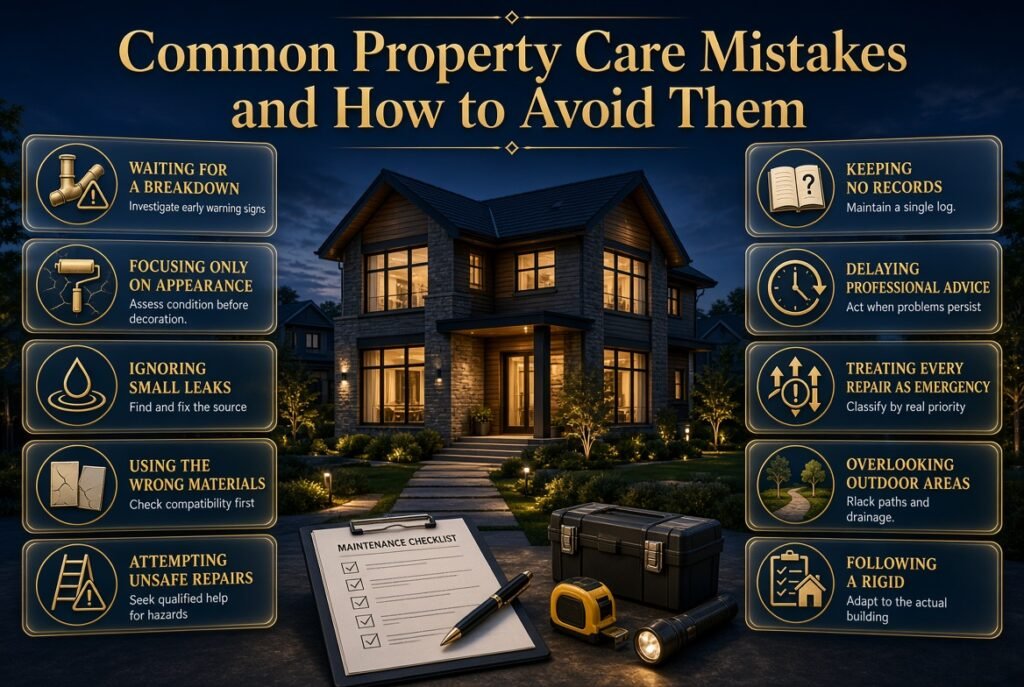
A good maintenance plan can still fail if it relies on assumptions or focuses on the wrong priorities.
Understanding common mistakes helps make the process safer and more efficient.
Mistake 1: Waiting for a Breakdown
Why it happens: People often assume that a building requires attention only when something stops working.
Why it can be harmful: Problems may develop gradually and remain unnoticed until they cause disruption or secondary damage.
How to avoid it: Carry out reasonable visual checks, follow servicing requirements, and investigate new warning signs.
Mistake 2: Focusing Only on Appearance
Why it happens: Fresh paint and clean rooms offer immediate, visible results.
Why it can be harmful: Cosmetic improvements may hide deterioration without addressing the cause.
How to avoid it: Assess the building’s condition before spending money on decoration.
Mistake 3: Ignoring Small Leaks
Why it happens: A slow drip or occasional damp patch may seem unimportant.
Why it can be harmful: Continued moisture may damage surrounding materials or contribute to persistent dampness.
How to avoid it: Investigate the source and arrange suitable repairs instead of repeatedly cleaning the affected surface.
Mistake 4: Using the Wrong Materials
Why it happens: A convenient product may appear suitable for every repair.
Why it can be harmful: Incompatible materials may fail, damage the surface, or interfere with moisture movement.
How to avoid it: Check compatibility, follow manufacturer instructions, and obtain specialist advice when necessary.
Mistake 5: Attempting Unsafe Repairs
Why it happens: People may want to reduce costs or finish a job quickly.
Why it can be harmful: Electrical, gas-related, structural, and height-related work can create serious hazards.
How to avoid it: Limit DIY work to tasks you can complete safely and seek qualified help for specialist work.
Mistake 6: Keeping No Records
Why it happens: Small tasks seem easy to remember.
Why it can be harmful: Important details may be lost, recurring problems may go unnoticed, and warranties may become difficult to locate.
How to avoid it: Keep a single maintenance log and update it after inspections and repairs.
Mistake 7: Delaying Professional Advice
Why it happens: A property owner may hope that a problem will disappear on its own.
Why it can be harmful: Uncertain or serious defects may remain unresolved while the cause becomes harder to identify.
How to avoid it: Seek an appropriate assessment when a problem persists, worsens, or affects safety.
Mistake 8: Treating Every Repair as an Emergency
Why it happens: Without a priority system, all defects may seem equally urgent.
Why it can be harmful: Minor tasks may consume time and money that should be directed toward more important concerns.
How to avoid it: Classify work according to safety, potential damage, functionality, and the consequences of delay.
Mistake 9: Overlooking Outdoor Areas
Why it happens: Most daily activity takes place indoors.
Why it can be harmful: Damaged paths, obstructed drainage, and deteriorating exterior components may create avoidable problems.
How to avoid it: Include outdoor spaces in the regular inspection routine.
Mistake 10: Following a Schedule Without Considering the Building
Why it happens: General checklists are easy to copy.
Why it can be harmful: They may omit the property’s actual risks or include tasks that are unnecessary for its equipment and materials.
How to avoid it: Adapt the schedule to the building’s age, construction, location, equipment, and professional recommendations.
Expert Recommendations for Better Property Care
An effective property care system is built around clear priorities, accurate observations, and repeatable processes.
Create a Single Source of Maintenance Information
Keep inspection notes, invoices, service records, warranties, and contractor details together.
A digital folder or paper file can work equally well if it is organized and easy to access.
The objective is to avoid searching through unrelated documents whenever a repair is required.
Track Recurring Defects
If the same problem appears repeatedly, record each occurrence.
Repeated drainage issues, recurring dampness, or repeated equipment faults may indicate an unresolved cause.
A history of the problem can help a professional identify patterns and decide what investigation is necessary.
Separate Observations From Diagnoses
Write down what you can actually see.
For example, recording a new ceiling stain is more useful than declaring that the roof is definitely leaking when the source has not been confirmed.
Accurate observations support better decisions and reduce the risk of unnecessary work.
Schedule Work Around Risk
Arrange tasks according to their importance and the consequences of delay.
Safety concerns and active damage deserve prompt attention. Routine work can be grouped into manageable sessions, while optional improvements can be planned around available resources.
This approach helps make maintenance more efficient without overlooking essential responsibilities.
Understand the Limits of Visual Inspections
A walkthrough can identify visible concerns, but it cannot reveal every hidden defect.
Concealed plumbing, internal structural conditions, electrical faults, and other problems may require specialist testing.
Use ordinary inspections to identify where further assessment may be needed, not to certify the entire property as defect-free.
Review the Plan After Major Changes
A property care schedule should change when equipment is replaced, building work is completed, occupancy changes, or new maintenance concerns emerge.
Update records after significant repairs and follow any new servicing instructions.
This keeps the plan relevant rather than allowing it to become an outdated checklist.
A Practical 30-Day Property Care Plan
If you are starting from scratch, a short introductory plan can help you organize the most important responsibilities without trying to address everything at once.
Week 1: Understand the Property
Walk through accessible areas and record visible concerns.
Identify urgent hazards, active leaks, recurring dampness, damaged fittings, and other problems that may need professional attention.
Do not undertake unsafe repairs simply to complete the checklist.
Week 2: Organize Routine Tasks
Create a simple schedule for cleaning, visible inspections, and other recurring activities.
Decide who is responsible for each task and how maintenance concerns should be reported.
Use realistic intervals and adjust them according to the building’s needs.
Week 3: Address Priorities
Arrange necessary repairs based on their urgency.
Obtain estimates for substantial work and clarify the proposed scope before making commitments.
Complete simple, safe tasks where appropriate, and keep a record of the work performed.
Week 4: Establish Long-Term Planning
Review completed tasks, outstanding concerns, and likely future expenses.
Create a maintenance record and identify any equipment servicing or professional inspections that need to be scheduled.
Use the results to build a continuing routine rather than treating the first month as a one-time project.
What Should You Have at the End?
By the end of the first month, aim to have:
- A basic record of the property’s condition.
- A list of urgent and routine maintenance concerns.
- A realistic schedule for recurring tasks.
- A record of repairs already completed.
- A plan for professional inspections where needed.
- An initial budget for known maintenance requirements.
The purpose is to establish control and visibility, not to complete every possible repair within 30 days.
How Do You Take Care of a Property to Prevent Expensive Repairs?
Taking care of a property starts with regular inspections, preventive maintenance, and addressing small problems before they develop into larger issues. Pay particular attention to plumbing, visible roof damage, exterior walls, drainage, ventilation, and areas where moisture can accumulate. A consistent maintenance routine helps identify early warning signs and makes it easier to plan repairs before they become urgent.
Important practices include:
Inspect accessible areas regularly for leaks, cracks, damaged seals, and unusual changes.
Follow recommended servicing schedules for essential equipment.
Repair minor defects promptly instead of repeatedly postponing them.
Keep records of previous repairs to identify recurring problems.
Arrange professional assessments when damage is difficult to diagnose.
What Should Be Included in a Complete Property Maintenance Checklist?
A complete property maintenance checklist should cover the building’s interior, exterior, essential systems, outdoor areas, and maintenance records. The checklist should identify what needs attention, how frequently it should be reviewed, and who is responsible for completing the work. Adjusting it to the property’s age, condition, and equipment makes the routine more useful than following a generic list.
Essential checklist categories include:
Interior: Check walls, ceilings, floors, windows, doors, and visible signs of dampness.
Plumbing: Look for leaks, damaged seals, and recurring drainage problems.
Exterior: Observe accessible roof areas, exterior finishes, paths, fences, and drainage.
Safety: Follow instructions for testing safety devices and arrange required professional inspections.
Documentation: Record completed repairs, service dates, warranties, and outstanding issues.
How Can You Reduce Property Maintenance Costs Without Compromising Quality?
You can manage property maintenance costs by prioritizing essential repairs, scheduling preventive work, comparing detailed estimates, and avoiding unnecessary replacements. The objective is not simply to choose the cheapest option; it is to select a suitable solution that addresses the underlying problem and provides reliable results. Regular maintenance records also help identify repeated expenses that may justify a more permanent repair.
Practical ways to manage costs include:
Address problems that could cause further damage before spending on cosmetic improvements.
Compare contractors based on their experience, proposed methods, materials, and warranties.
Group suitable routine tasks to reduce unnecessary visits.
Maintain a reserve for unexpected repairs and planned replacements.
Avoid unsafe DIY work that could lead to additional damage or expensive corrective work.
How Often Should You Inspect and Maintain a Property?
Property inspections should follow a schedule based on the building’s condition, equipment requirements, local environment, and previous maintenance issues. Routine visual checks can be incorporated into everyday activities, while more detailed reviews can be planned monthly or seasonally. Professional servicing and formal inspections should follow applicable requirements and manufacturer recommendations rather than an arbitrary timetable.
A practical inspection routine includes:
Weekly: Notice visible leaks, unusual odors, and changes in frequently used areas.
Monthly: Review accessible plumbing, visible dampness, fixtures, and other recurring concerns.
Seasonally: Check appropriate exterior areas, drainage, and weather-related maintenance needs.
Annually: Review maintenance records, upcoming replacements, and required professional servicing.
Immediately when necessary: Investigate active leaks, suspected safety hazards, or defects that are worsening.
When Should You Hire a Professional Instead of Handling Property Repairs Yourself?
Professional help is appropriate when a repair involves safety risks, specialist equipment, structural concerns, regulated work, or a problem whose underlying cause is uncertain. Simple cleaning and basic maintenance observations may be manageable independently, but electrical faults, gas-related concerns, substantial water damage, and work at height require particular caution. Choosing the right professional helps ensure that the repair addresses the actual problem rather than temporarily hiding its symptoms.
Consider hiring a professional when:
You notice growing cracks, significant structural movement, or unexplained building damage.
Water continues entering the property despite reasonable initial action.
Electrical equipment shows signs of damage or malfunction.
Roofing or other repairs require hazardous access.
The same defect keeps returning after previous repairs.
The work requires specialist qualifications, permits, or professional testing.
Before approving substantial work, request a clear written estimate, confirm the proposed scope, and check relevant qualifications and warranties. This helps you understand what the repair involves and make a more informed decision.
Conclusion
Taking care of a property is an ongoing responsibility that requires regular inspections, preventive maintenance, timely repairs, and thoughtful planning. Whether you own a house, manage a rental property, or look after a residential building, a consistent maintenance routine helps protect the structure, preserve its value, and create a safer, more comfortable environment.
The most effective approach is to address small problems before they become expensive repairs. Checking for leaks, maintaining electrical and plumbing systems, caring for outdoor areas, keeping interiors clean, and scheduling seasonal inspections can make property management more manageable over time. A realistic maintenance budget and a clear record of completed work also help you prioritize essential tasks and avoid unnecessary expenses.
Every property has different needs, so your maintenance plan should reflect its age, condition, location, and everyday use. Start with the most important safety and structural concerns, establish a practical inspection schedule, and seek professional assistance when a repair requires specialist knowledge or equipment.
With the right habits and a proactive mindset, property care becomes easier to organize and more effective in the long term. Explore Brendan Active Property Care for practical guidance on maintaining, improving, and protecting your property with greater confidence.