Introduction
Cleaning & Organization | A home can look untidy even when you spend hours cleaning it. Kitchen counters fill up again, laundry collects in the bedroom, bathroom shelves become crowded, and everyday items seem to disappear just when you need them. The problem is not always a lack of effort. Often, it comes down to having no simple system for cleaning, organizing, and maintaining each space.
Cleaning and organization work best when they are treated as two connected parts of home care. Cleaning removes dirt, dust, spills, and buildup, while organization gives belongings a practical place so rooms remain easier to maintain. When both habits work together, everyday chores become more manageable, and your home can feel more comfortable without requiring constant attention.
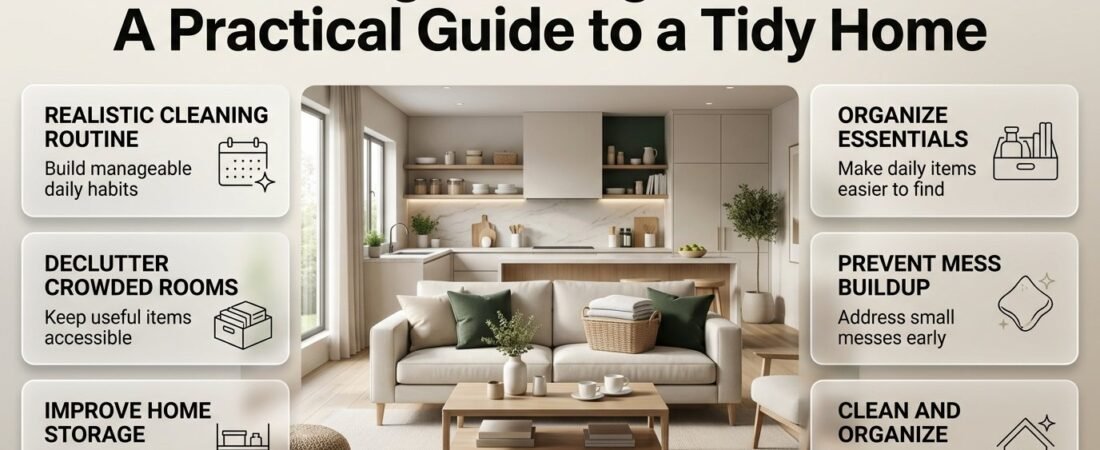
At Brendan Active Property Care, homeowners can explore practical ideas for maintaining a comfortable, functional living environment. This guide explains how to build a realistic cleaning routine, declutter crowded rooms, improve storage, organize essential household items, and prevent everyday messes from becoming larger jobs.
Whether you live in a small apartment, a family house, or a property with several rooms, the goal is the same: create a home that supports your daily life rather than adding unnecessary work to it.
You do not need expensive storage products, a complicated cleaning schedule, or an entire weekend to get started. A few well-planned routines and sensible decisions can make a noticeable difference.
What Is Cleaning and Organization, and Why Do They Matter?
Cleaning and organization are complementary household practices that help maintain a hygienic, functional, and comfortable living space. Cleaning focuses on removing dirt, dust, stains, and unwanted residue. Organization focuses on arranging belongings so they are easy to find, use, and return to their proper places.
Cleaning without organization can become repetitive because clutter makes surfaces harder to reach and maintain. Organization without cleaning can leave dust, spills, and grime hidden behind neatly arranged belongings. Combining both practices creates a more sustainable approach to home care.
The Difference Between Cleaning, Tidying, and Organizing
Although these activities are related, they solve different problems.
| Activity | Main purpose | Everyday example |
|---|---|---|
| Cleaning | Remove dirt and unwanted residue | Wiping kitchen counters and mopping floors |
| Tidying | Return misplaced items to their proper locations | Putting shoes away and clearing the dining table |
| Organizing | Create a practical system for belongings | Arranging pantry items by category |
| Decluttering | Remove items that are no longer needed | Donating unused clothes |
| Deep cleaning | Address neglected areas and accumulated grime | Cleaning behind appliances where accessible |
Understanding these differences helps you choose the right task instead of trying to solve every household problem with the same approach.
For example, if a kitchen counter is covered with mail, bags, and unused appliances, cleaning it first may not be practical. Removing the unnecessary items and relocating belongings creates enough space to wipe the surface properly.
What Are the Main Benefits of an Organized Home?
A well-maintained home offers several practical advantages.
- Less time searching: Keys, cleaning products, documents, and everyday essentials have designated locations.
- Simpler cleaning: Clear surfaces and accessible floors are easier to dust, vacuum, and mop.
- Better use of space: Cupboards, drawers, shelves, and wardrobes can accommodate belongings more efficiently.
- Improved household routines: Family members can find and return items without repeatedly asking where everything belongs.
- Better protection for belongings: Appropriate storage helps protect clothes, documents, kitchen equipment, and other possessions from avoidable damage.
- More predictable maintenance: Regular small tasks reduce the chance that ordinary messes will develop into difficult cleaning projects.
An organized home does not need to look perfect. It simply needs to work well for the people who live in it.
How Should You Start Cleaning and Organizing Your Home?
The most effective starting point is to identify the areas causing the greatest daily frustration. Instead of attempting to reorganize the entire property, choose one manageable space, remove unnecessary clutter, clean accessible surfaces, and establish a simple arrangement for the items you keep.
This approach makes progress easier to see and prevents the task from becoming overwhelming.
Step 1: Identify Your Main Priorities
Walk through your home and notice where mess accumulates most frequently. You may find that the kitchen becomes crowded after meals, laundry collects near the bedroom, or shoes and bags create congestion around the entrance.
Write down three to five areas that need attention.
Prioritize areas according to their effect on daily life. A cluttered kitchen worktop may deserve attention before a decorative shelf because it affects food preparation and everyday cleaning.
Practical example: If you regularly lose your keys, create a designated tray near the entrance before reorganizing an entire cupboard.
Step 2: Gather Basic Cleaning Supplies
Preparing supplies in advance prevents unnecessary interruptions.
A basic household cleaning kit may include:
- Microfiber cloths
- A mop and bucket suitable for your flooring
- A broom or vacuum cleaner
- A scrub brush and soft cleaning sponge
- General-purpose household cleaner
- Dishwashing liquid
- Bathroom cleaner appropriate for the surfaces involved
- Cleaning gloves when recommended by product instructions
- Waste and recycling bags
- A small basket for items that belong in other rooms
You do not need a different product for every surface. Choose products based on the material being cleaned and follow the manufacturer’s directions.
Safety note: Never mix cleaning products. In particular, mixing bleach with vinegar, ammonia, or other cleaners can release dangerous gases. Keep products in their original labeled containers and follow ventilation and storage instructions.
Step 3: Declutter Before Deep Cleaning
Remove items that do not belong in the area before attempting detailed cleaning.
Use four simple categories:
- Keep: Items you use or genuinely need.
- Relocate: Belongings that belong in another room.
- Donate or give away: Usable items you no longer need.
- Recycle or discard: Items that cannot reasonably be reused.
Be realistic about the available space. Keeping every object simply because it might be useful someday can make cupboards difficult to manage.
However, avoid discarding important documents, valuable belongings, or items belonging to other family members without checking first.
Step 4: Clean From Higher Surfaces to Lower Surfaces
Once the area is clear, remove dust from higher surfaces before cleaning lower ones.
A useful sequence is:
- Remove cobwebs and dust from accessible high surfaces.
- Dust shelves, furniture, and other surfaces.
- Wipe frequently touched areas.
- Clean visible marks and spills.
- Vacuum or sweep the floor.
- Mop if the flooring permits it.
This order reduces the likelihood of dust falling onto an area you have already cleaned.
Step 5: Give Every Essential Item a Home
After cleaning, decide where each retained item belongs.
Store frequently used belongings where they are convenient to reach. Keep occasional-use items in less accessible storage, provided they remain easy to retrieve safely.
For instance, everyday cooking utensils belong near the food preparation area, while seasonal decorations can be stored in clearly labeled boxes.
Step 6: Establish a Short Maintenance Routine
A clean room stays manageable when everyone knows what to do after using it.
Put items away after use, wipe spills promptly, and return shared belongings to their designated locations. These small actions reduce the amount of work required during the next cleaning session.
How to Create a Realistic Home Cleaning Schedule
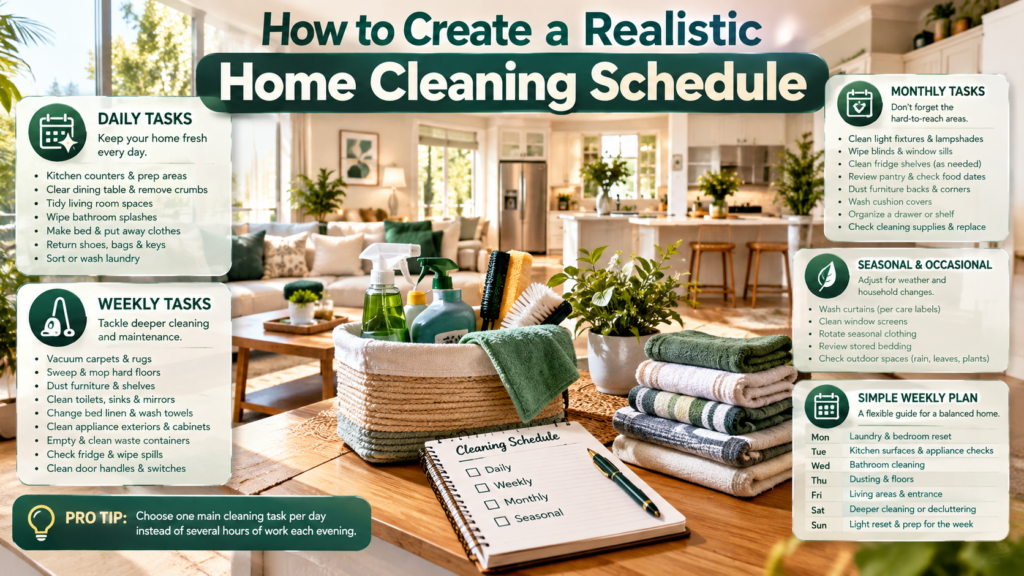
A cleaning schedule divides household tasks into manageable groups rather than leaving everything until the house feels noticeably dirty. The best schedule reflects your household size, available time, flooring, pets, cooking habits, and daily activities.
There is no single timetable that suits every property. A busy kitchen may need more frequent attention than a guest room that is rarely used.
Daily Cleaning Tasks
Daily maintenance focuses on areas that accumulate mess quickly.
| Area | Practical daily task |
|---|---|
| Kitchen | Wipe counters and clean food-preparation areas |
| Dining area | Clear the table and remove crumbs |
| Living room | Return misplaced items and straighten shared spaces |
| Bathroom | Wipe obvious splashes and leave wet areas to dry |
| Bedroom | Put away clothes and make the bed if useful |
| Entrance | Return shoes, bags, and keys to their places |
| Laundry | Sort or wash a load when needed |
You do not need to complete every possible chore daily. Focus on the tasks that prevent the next day from starting with unnecessary mess.
A brief evening reset can be particularly useful. Clear the most frequently used surfaces, return shared items, and prepare the kitchen for the next morning.
Weekly Cleaning Tasks
Weekly cleaning usually addresses areas that need more attention than a quick daily tidy.
Depending on household use, a weekly routine may include:
- Vacuuming carpets and rugs.
- Sweeping and mopping suitable hard floors.
- Dusting shelves, furniture, and accessible fixtures.
- Cleaning toilets, sinks, mirrors, and bathroom surfaces.
- Changing bed linen and washing used towels.
- Cleaning kitchen appliance exteriors and cabinet fronts where needed.
- Emptying waste containers and cleaning them when necessary.
- Checking the refrigerator for spoiled food and wiping spills.
- Cleaning frequently touched door handles and switches.
Adjust the frequency when a surface becomes dirty sooner. For example, a heavily used bathroom may need attention more than once a week.
Monthly Cleaning Tasks
Monthly tasks address areas that are easy to overlook during regular maintenance.
Consider including:
- Cleaning accessible light fixtures and lampshades.
- Wiping blinds and window sills.
- Cleaning refrigerator shelves as needed.
- Reviewing pantry contents and checking food dates.
- Removing dust from accessible furniture backs and corners.
- Washing suitable washable cushion covers.
- Organizing one drawer, cupboard, or storage shelf.
- Inspecting cleaning supplies and replacing empty products.
The purpose is not to make every month identical. Use this list as a reminder to address neglected areas before buildup becomes difficult to remove.
Seasonal and Occasional Cleaning
Seasonal cleaning is an opportunity to review tasks that depend on weather, household changes, or the condition of the property.
Examples include washing curtains according to their care labels, cleaning window screens, rotating seasonal clothing, reviewing stored bedding, and checking areas that need more detailed attention.
Outdoor spaces may require additional care during periods of heavy rain, falling leaves, or increased plant growth. Relevant guidance is available in Outdoor & Garden Care.
A Simple Weekly Cleaning Plan
| Day | Suggested focus |
|---|---|
| Monday | Laundry and bedroom reset |
| Tuesday | Kitchen surfaces and appliance checks |
| Wednesday | Bathroom cleaning |
| Thursday | Dusting and floors |
| Friday | Living areas and entrance |
| Saturday | One deeper cleaning or decluttering task |
| Sunday | Light reset and preparation for the week |
Treat this as a flexible example rather than a strict rule. Move tasks around when necessary, and allow time for rest and other responsibilities.
Pro tip: Choose one main cleaning task per day instead of creating a schedule that requires several hours of work every evening.
Room-by-Room Cleaning and Organization Guide
Different rooms create different cleaning challenges. Kitchens need food hygiene and accessible work surfaces, bathrooms require moisture management, bedrooms benefit from practical clothing storage, and living rooms need systems for shared belongings.
Organizing each room according to its purpose makes the entire property easier to maintain.
1. How to Keep the Kitchen Clean and Organized
The kitchen is often one of the busiest areas of a home. Cooking, washing dishes, preparing drinks, and storing groceries all create frequent mess.
The key is to keep essential work areas accessible and prevent unrelated belongings from collecting on counters.
Organize Kitchen Counters
Begin by removing items that do not need to remain on the worktop.
Keep everyday appliances accessible when you use them regularly. Store occasional-use equipment in suitable cupboards if doing so makes the work surface easier to maintain.
Avoid overcrowding the area around the sink and cooking appliances. Accessible surfaces make it easier to clean spills before they dry.
Improve Pantry Storage
Arrange food by category, such as breakfast items, dry ingredients, snacks, canned goods, and baking supplies.
Place frequently used items where they are easy to reach. Keep older products toward the front so they can be considered before newer purchases.
Use containers only when they suit the food and storage conditions. Food-safe, properly labeled containers can be useful, but original packaging may be preferable when it contains important ingredients, allergen information, or expiry details.
Keep food storage areas dry and follow the storage directions on packaging.
Maintain Kitchen Hygiene
Clean food-contact surfaces before and after preparing food. Use separate equipment for raw foods and ready-to-eat foods where appropriate, and wash utensils thoroughly between uses.
Remove food scraps promptly, clean visible spills, and avoid allowing standing water to remain around sinks.
Do not use the same cloth for food-preparation surfaces and unrelated dirty areas without washing it properly.
Common Kitchen Organization Mistakes
- Keeping rarely used appliances on the counter.
- Buying containers before checking cupboard dimensions.
- Storing food without clear labels when identification is needed.
- Allowing expired or spoiled products to accumulate.
- Using decorative arrangements that block practical work areas.
A functional kitchen is one where the items you need are accessible and surfaces can be cleaned without moving a large number of objects.
2. How to Organize and Clean a Bedroom
Bedrooms should support rest, dressing, and everyday routines. Clothing piles, crowded bedside tables, and overfilled wardrobes can make the room difficult to maintain.
Organize Clothing by Category
Group clothes according to type, season, or frequency of use. Keep everyday clothing accessible and store suitable seasonal items separately.
Before rearranging the wardrobe, review items that no longer fit your needs, are damaged beyond practical repair, or are rarely used. Donate usable items when appropriate.
Avoid packing clothing into drawers so tightly that items become difficult to retrieve. A storage system works only when it is convenient enough to maintain.
Keep Bedside Tables Simple
Bedside surfaces often collect chargers, books, cups, papers, and personal belongings.
Choose a small number of items to keep within reach. Use a drawer or tray for essentials, and return other belongings to their proper locations.
Clear surfaces are easier to dust and reduce the need to move numerous objects during cleaning.
Maintain Bedding and Floors
Wash sheets and pillowcases regularly according to household needs and fabric-care instructions. Vacuum or clean the floor using a method suitable for the material.
Check underneath accessible furniture for dust and misplaced items. Before moving heavy furniture, assess whether it can be moved safely or seek assistance.
Improve Bedroom Storage
Under-bed containers can be useful for suitable items when the space remains dry and accessible. Wardrobe shelves can hold folded clothing, while small dividers can keep accessories together.
Avoid storing damp clothing or bedding in enclosed containers. Allow fabrics to dry completely before putting them away.
3. How to Keep the Bathroom Clean and Organized
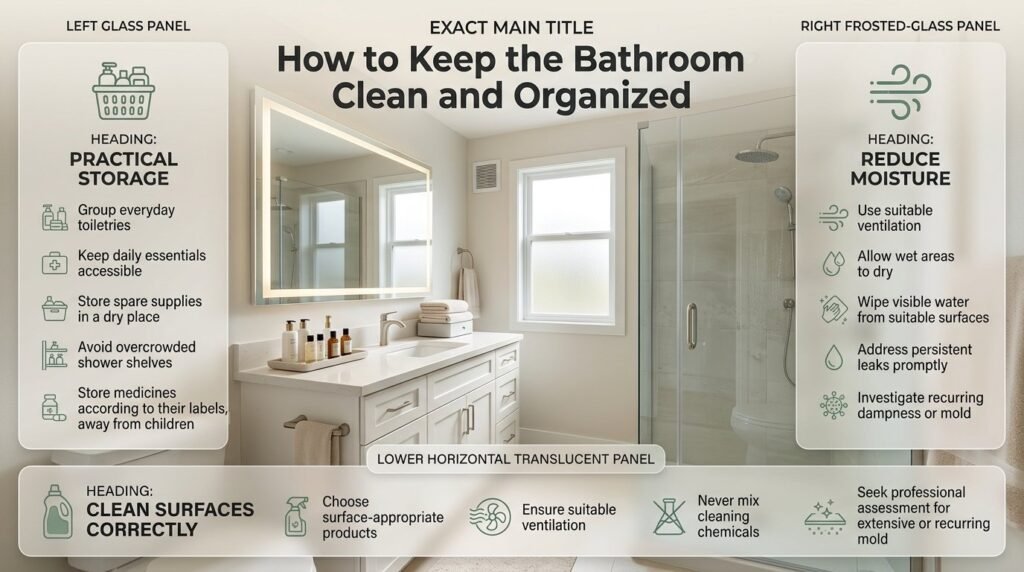
Bathrooms require consistent attention because water, soap residue, and humidity can create cleaning challenges.
Start by removing unnecessary products from the sink, shower, and shelves. Group toiletries by use, and keep daily essentials accessible without filling every available surface.
Create Practical Bathroom Storage
Use suitable trays or organizers to group small products. Keep frequently used toiletries together and store spare supplies in a dry location.
Do not overcrowd shower shelves. Bottles should remain stable, and the surfaces beneath them should be accessible for cleaning.
Store medicines according to their labels and keep them away from children. Do not store products in places exposed to unsuitable heat or moisture.
Reduce Moisture Buildup
Use the bathroom’s ventilation system when available and appropriate. After showering, allow the space to dry, and wipe visible water from suitable surfaces.
Repair persistent leaks promptly. If damp patches or mold repeatedly return, investigate the underlying moisture problem rather than relying only on surface cleaning.
Small areas of surface mold may require careful cleaning according to the material and product directions. Extensive or recurring mold, hidden dampness, or moisture caused by a leak may require qualified professional assessment.
Clean Bathroom Surfaces Correctly
Use products suitable for the surface being cleaned. Natural stone, coated fixtures, grout, glass, and acrylic may respond differently to cleaning agents.
Never assume that a strong product is better. Follow the label, use suitable ventilation, and do not combine chemicals.
4. How to Organize the Living Room
Living rooms often serve several purposes: relaxation, entertainment, family gatherings, studying, and hosting visitors.
Because different people use the same space, shared storage systems are particularly helpful.
Create Functional Zones
Identify the main activities that take place in the room. You might have a seating area, a reading corner, a television area, or a small workspace.
Keep items associated with each activity nearby. Books can go on a nearby shelf, while remote controls can have a designated tray.
Avoid placing storage furniture where it blocks natural walking routes or makes windows and doors difficult to access.
Manage Decorative Items
Decorations add personality, but too many objects can make dusting unnecessarily difficult.
Choose meaningful pieces and group smaller decorations thoughtfully. Leave enough space around them to clean surfaces without moving everything repeatedly.
This does not mean removing personal belongings. The goal is to display them in a way that supports the room’s everyday use.
Control Cables and Entertainment Accessories
Keep chargers, cables, and small electronic accessories together in suitable organizers.
Follow the manufacturer’s guidance for ventilation and cable management. Avoid tightly enclosing equipment that produces heat, overloading electrical outlets, or placing cables where people may trip.
5. How to Keep Entryways and Hallways Organized
Entryways receive shoes, bags, coats, keys, deliveries, and other items that come into the house.
Without a simple system, these belongings can spread into nearby rooms.
Create a designated place for everyday essentials. Depending on available space, this might include a shoe rack, wall hooks, a key tray, or a small basket.
Keep the walking route clear, especially around stairs and exits. Do not allow storage containers to obstruct doors or emergency escape routes.
A washable entrance mat can help capture dirt brought indoors. Clean it according to its material and the amount of use it receives.
6. How to Organize a Home Office or Study Area
Workspaces become difficult to use when papers, stationery, charging cables, and unrelated belongings compete for limited desk space.
Start by removing items that do not support your current work or study activities.
Group essential supplies in drawers or desk organizers. Keep frequently used documents accessible, but store sensitive paperwork securely.
Create a clear system for papers:
- Action required.
- Information to keep.
- Documents to file.
- Papers that can be recycled or discarded securely.
Review the system regularly so that temporary piles do not become permanent.
Keep drinks away from electronic equipment, and avoid placing storage items where they interfere with comfortable movement or equipment ventilation.
7. How to Organize Laundry and Utility Areas
Laundry areas can become crowded because they combine dirty clothing, clean clothing, cleaning supplies, and household equipment.
Use separate baskets for dirty laundry and, when useful, for clean items awaiting folding. If several people share the laundry, labeled baskets can make it easier to distribute clothing.
Keep detergents and cleaning products in their original containers, follow their labels, and store them securely away from children and pets.
Wipe spills promptly and keep floors clear around appliances.
Check appliance manuals for maintenance requirements. If a washing machine or dryer develops a leak, unusual smell, or other persistent fault, arrange appropriate inspection instead of treating the problem as ordinary cleaning.
What Are the Best Decluttering Methods for a Busy Household?
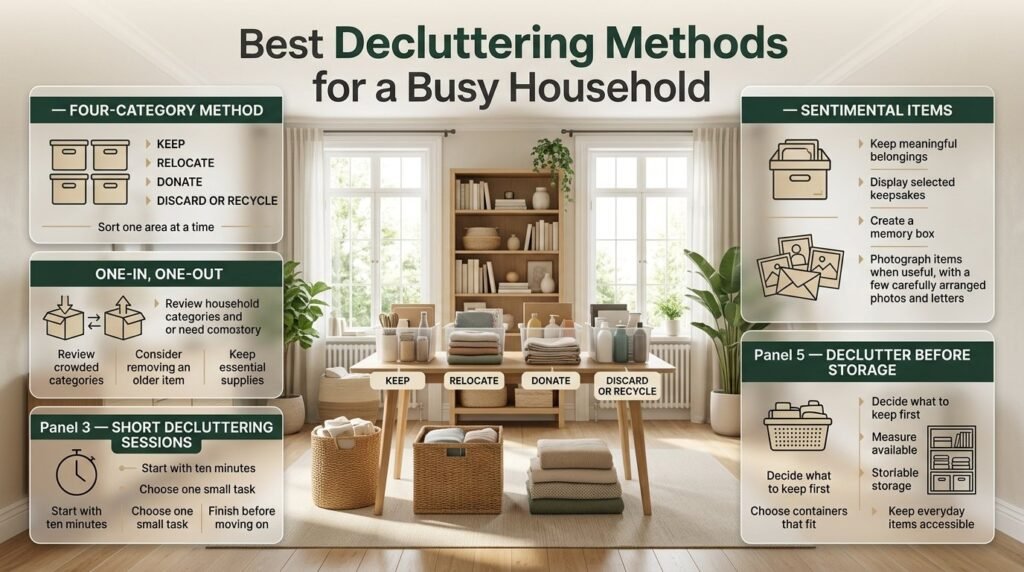
Decluttering means reviewing possessions and removing items that are no longer needed or useful. It does not mean throwing away everything that is not used daily. The aim is to make your belongings manageable and ensure the storage available suits your household.
Use the Four-Category Method
Choose one drawer, shelf, or cupboard and sort its contents into four groups: keep, relocate, donate, and discard or recycle.
Finish the chosen area before moving to another one. This helps prevent piles from spreading across the house.
For example, when organizing a kitchen drawer, keep the utensils you regularly use, move unrelated items elsewhere, donate usable duplicates when appropriate, and recycle or discard damaged items responsibly.
Apply the One-In, One-Out Rule
When you bring a new item into an already crowded category, consider whether an older item can be donated or removed.
This is particularly useful for clothing, mugs, decorative accessories, and children’s toys.
The rule should not be applied blindly to essential supplies. A household may reasonably need extra towels, emergency provisions, or replacement items.
Use Short Decluttering Sessions
A ten-minute session can be enough to organize a single drawer or clear a small surface.
Choose a specific outcome before starting. Instead of writing “organize bedroom,” define the task as “sort the bedside table and put away the items that do not belong there.”
Small, completed tasks are easier to maintain than large projects that remain unfinished.
Handle Sentimental Items Thoughtfully
Photographs, inherited objects, letters, and gifts may have emotional value even when they are not used regularly.
Do not force quick decisions about meaningful belongings. Consider displaying selected pieces, keeping a clearly defined memory box, or photographing an object when a digital record is sufficient.
The purpose of decluttering is to create a more functional home, not to remove everything that has personal meaning.
Avoid Buying Storage Before Decluttering
Buying matching containers can feel like progress, but additional storage will not necessarily solve the problem if the home contains more belongings than its available space can reasonably accommodate.
First decide what to keep. Then measure the available shelves, drawers, and cupboards.
Choose containers that fit the space, protect their contents, and make frequently used items easy to access.
How Can You Organize a Small Home Without Spending Too Much?
Small homes benefit from thoughtful storage, clear surfaces, and furniture arrangements that preserve movement. Expensive renovations are not always necessary; often, the greatest improvements come from reducing unused belongings and making better use of existing space.
Use Vertical Storage Carefully
Shelves, wall hooks, and suitable organizers can use otherwise unused vertical space.
Before installing anything, check the wall type, the expected load, and the appropriate fixing method. Heavy objects should not be placed on unsuitable shelves or insecure fittings.
Keep frequently used items within comfortable reach. Store less frequently used belongings higher up only when they can be retrieved safely.
Make Better Use of Cupboards
Group similar belongings together and avoid mixing unrelated categories in the same space.
For example, cleaning cloths may be stored together in a designated cupboard, while stationery belongs in a desk drawer or office organizer.
Adjustable shelves and drawer dividers can help use available space more efficiently. However, do not fill every gap so tightly that items become difficult to remove.
Choose Multi-Purpose Furniture When It Suits Your Needs
Furniture with built-in storage can be useful in compact homes.
Examples include a storage bench for suitable household items or a bed frame with drawers. Before buying, measure the room and consider whether the furniture will leave enough space for doors, drawers, and normal walking routes.
Avoid purchasing large furniture solely because it offers extra storage. A bulky unit can reduce usable floor space and make cleaning harder.
Create a Home for Everyday Essentials
Keys, bags, shoes, chargers, and reusable shopping bags often create recurring clutter because they lack a convenient destination.
Choose one practical location for each category and make sure household members can use it easily.
The best storage arrangement is not necessarily the most attractive one. It is the one that people can maintain without needing constant reminders.
How to Keep Cleaning Supplies Organized
Cleaning products are easier to use when they are stored safely and arranged according to purpose.
Start by checking product labels, closing containers properly, and removing empty packaging. Do not transfer chemicals into food or drink containers, and do not remove labels that identify the contents.
Arrange Supplies by Task
You can group products into categories such as:
- Kitchen cleaning.
- Bathroom cleaning.
- Floor care.
- Laundry.
- Glass and mirror cleaning.
- General household cleaning.
Keep only the tools and products you need for each category. Store them in a designated area so they are easy to find before beginning a task.
Store Products Safely
Follow the manufacturer’s temperature, ventilation, and storage instructions. Keep products away from food and out of children’s and pets’ reach.
Do not store incompatible chemicals together in a way that risks accidental mixing or leakage. Keep products in their original containers whenever possible.
If a container leaks, follow its label and relevant safety instructions rather than handling the contents casually.
Maintain Cleaning Tools
Dirty tools can spread residue instead of removing it.
Wash reusable cloths and mop heads according to their care instructions. Allow tools to dry properly before storage, and replace damaged equipment when it can no longer be cleaned or used effectively.
Inspect vacuum filters and other equipment components according to the manufacturer’s maintenance schedule.
What Are the Most Common Cleaning and Organization Mistakes?
Even a well-intentioned cleaning routine can become inefficient when tasks are approached in the wrong order or storage systems are too complicated.
Understanding common mistakes helps you avoid wasted effort.
Mistake 1: Trying to Clean the Entire House at Once
Why it happens: A full-house cleaning session may seem like the fastest way to make progress.
Why it causes problems: Large projects can become tiring, especially when rooms are not finished before attention shifts elsewhere.
How to avoid it: Work through one room or clearly defined zone at a time. Complete the essential tasks before moving to another area.
Mistake 2: Organizing Without Decluttering
Why it happens: New boxes and baskets create an immediate sense of order.
Why it causes problems: Unnecessary belongings still occupy space, and crowded storage areas remain difficult to use.
How to avoid it: Review possessions first, then choose storage solutions for the items you decide to keep.
Mistake 3: Using the Wrong Cleaning Product
Why it happens: People assume that a stronger cleaner will remove dirt faster.
Why it causes problems: Unsuitable products can damage finishes, discolor materials, or create chemical hazards.
How to avoid it: Read product labels and check the surface manufacturer’s instructions. Never mix cleaning products.
Mistake 4: Cleaning Around Clutter
Why it happens: Moving objects takes time, so it is tempting to wipe only the exposed areas.
Why it causes problems: Dust and spills remain underneath items, and the same surfaces require repeated attention.
How to avoid it: Remove movable objects, clean the surface, dry it as appropriate, and return only the items that belong there.
Mistake 5: Buying Too Many Organizers
Why it happens: Matching containers can make a room appear more orderly.
Why it causes problems: Unnecessary containers consume storage space and may not fit the actual belongings.
How to avoid it: Measure the space, assess the items, and reuse suitable baskets or containers you already own.
Mistake 6: Creating a Schedule That Is Too Ambitious
Why it happens: A detailed checklist can make it tempting to plan every chore for the same day.
Why it causes problems: The routine becomes difficult to maintain when work, school, family responsibilities, or other commitments change.
How to avoid it: Assign a few essential tasks to each day and keep deeper cleaning flexible.
Mistake 7: Ignoring Moisture and Small Maintenance Problems
Why it happens: A damp patch or small leak may seem like a minor cleaning issue.
Why it causes problems: Persistent moisture can damage materials and encourage mold growth.
How to avoid it: Dry wet surfaces appropriately, improve ventilation where possible, and investigate recurring dampness or leaks.
When a problem involves damaged plumbing, faulty fixtures, or other property defects, cleaning alone may not resolve it. The relevant guidance in Common Home Repairs and Improvements can help readers understand when a household issue needs maintenance rather than another cleaning session.
Mistake 8: Expecting the Home to Stay Perfect
Why it happens: People may believe that an effective organizing system should eliminate all future mess.
Why it causes problems: Daily life naturally creates laundry, dishes, papers, and misplaced belongings.
How to avoid it: Focus on quick resets and practical systems rather than permanent perfection.
Professional Tips for More Efficient Home Cleaning
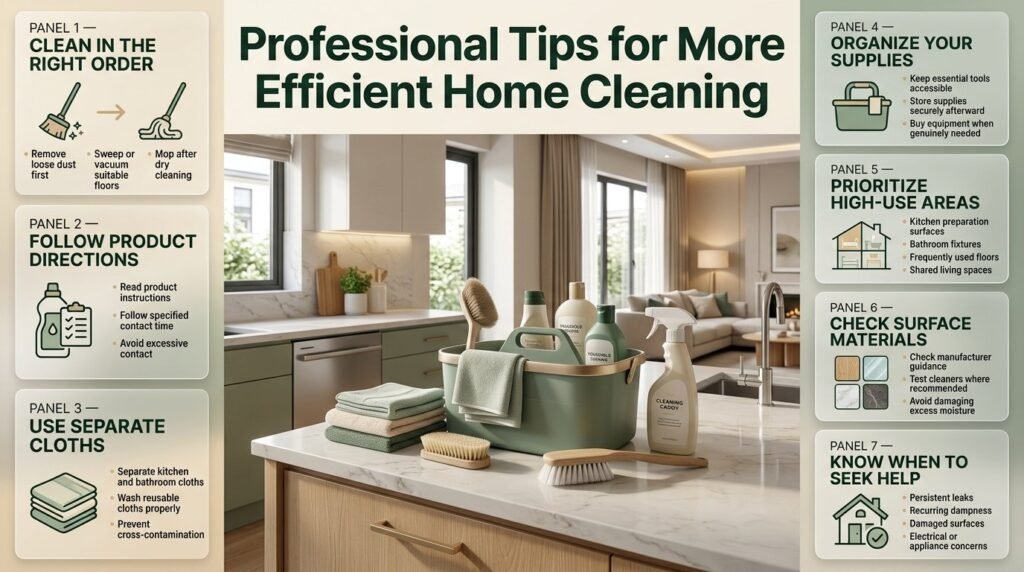
An effective household routine depends on consistency, correct methods, and a sensible order of work. You do not need professional equipment for every task, but a few established principles can make routine cleaning more efficient.
Work From Dry Cleaning to Wet Cleaning
Remove loose dust and debris before using wet cleaning methods.
For example, vacuum or sweep a suitable floor before mopping it. Otherwise, loose debris may spread across the surface and make the job harder.
The same principle applies to many surfaces: remove loose dirt first, then use the appropriate cleaner.
Allow Products to Work as Directed
Some cleaning products require a specified contact time. Wiping them away immediately may prevent them from performing as intended.
Read the instructions and follow the stated method. Do not assume that leaving a product on longer will improve the result, as prolonged contact can damage certain materials.
Use Separate Cloths for Different Tasks
Use suitable cloths for kitchen surfaces, bathrooms, and general dusting. Wash reusable materials properly between uses.
This reduces the chance of carrying dirt or contamination from one area to another.
Avoid Overloading Your Cleaning Routine
A portable caddy can keep everyday supplies together, provided it can be carried safely and stored securely afterward.
Keep the essential tools accessible and return them to storage once the task is finished.
Do not purchase specialist equipment unless it addresses a genuine household need.
Focus on High-Use Areas First
When time is limited, prioritize areas that affect everyday comfort and hygiene.
These often include food-preparation surfaces, bathroom fixtures, frequently used floors, and shared living spaces.
Less frequently used decorative areas can be scheduled for another day.
Check the Material Before Cleaning
Wood, natural stone, laminate, stainless steel, glass, and upholstered fabrics have different care requirements.
Before using a new product or method, check the manufacturer’s guidance. Test an appropriate cleaner on a small, inconspicuous area when recommended.
Avoid excessive moisture on materials that can swell, stain, or become damaged when wet.
Know When a Task Needs Professional Help
Some household problems require more than routine cleaning. Persistent leaks, recurring dampness, damaged surfaces, faulty appliances, or electrical concerns may need qualified assessment.
Do not attempt repairs beyond your training or handle hazardous materials without appropriate expertise.
For broader guidance on keeping household systems and surfaces in good condition, visit the Home Maintenance guide.
How Can the Whole Household Help Maintain Organization?
A home is easier to maintain when the responsibility does not fall entirely on one person. Shared spaces benefit from clear expectations and systems that are simple enough for everyone to follow.
Give Shared Items Designated Locations
Agree on where everyday belongings should go.
For example, keys can be returned to a tray, shoes placed on a rack, and shared remote controls returned to a basket.
The location should be convenient. If a storage system requires too many steps, people may stop using it.
Divide Tasks Fairly
Household members can share age-appropriate tasks according to their abilities and schedules.
One person may manage dishes while another puts away laundry or clears the living room. Rotate responsibilities when appropriate so that the same person does not always handle the least appealing tasks.
Keep expectations realistic and avoid making a detailed schedule more complicated than the work itself.
Establish a Short Evening Reset
A brief household reset can include clearing shared surfaces, returning belongings, and preparing the kitchen for the next morning.
The exact duration matters less than choosing a routine that people can realistically follow.
Teach Simple Habits Rather Than Relying on Reminders
Show household members where things belong and explain why the arrangement helps everyone.
For example, returning school supplies or work materials to a designated shelf makes them easier to find the next day.
When a system repeatedly fails, reconsider its design. The problem may be that the storage location is inconvenient rather than that people are unwilling to stay organized.
How to Maintain Cleaning and Organization on a Budget
An organized home does not require a large collection of matching containers or expensive cleaning equipment.
The most useful improvements often come from removing unnecessary belongings, using existing storage more effectively, and establishing habits that prevent mess from accumulating.
Reuse Suitable Household Containers
A sturdy basket may be suitable for laundry supplies, while an existing drawer divider may help organize stationery or household accessories.
However, reuse containers only when they are appropriate for their intended purpose. Food storage requires suitable food-safe materials, and cleaning chemicals must remain in compatible, clearly labeled containers.
Buy Storage According to Measured Needs
Measure shelves, drawers, and cupboards before purchasing organizers.
Consider how much space is available, what needs to be stored, and how often the items will be accessed.
Avoid buying containers simply because they look attractive. A practical solution should improve access and make cleaning easier.
Reduce Unnecessary Purchases
Before buying another household item, check whether you already own something that serves the same purpose.
This is especially useful for cleaning products, kitchen tools, stationery, and decorative accessories.
Keeping a simple inventory of essential supplies can prevent duplicate purchases and reduce cupboard clutter.
Prioritize the Most Useful Improvements
If you have limited time or money, focus on the areas that cause recurring problems.
For example, a suitable laundry basket may be more useful than decorative storage for a bedroom where clothes repeatedly end up on the floor.
Spend money where it solves a genuine problem, and make small improvements gradually.
What Is the Best Way to Keep Your Home Clean and Organized Every Day?
The best way to keep your home clean and organized is to develop small, consistent habits that prevent clutter and dirt from accumulating. Instead of waiting until the entire house needs attention, focus on everyday tasks such as wiping kitchen counters, putting belongings back in their designated places, managing laundry, and clearing frequently used surfaces. A simple daily routine makes household cleaning more manageable and reduces the need for exhausting cleaning sessions.
Practical ways to maintain a clean and organized home:
Spend a few minutes returning misplaced items to their proper locations.
Clean kitchen surfaces after preparing meals.
Keep laundry, dishes, and household waste under control.
Prepare a short daily checklist based on your household’s needs.
Schedule one larger cleaning task for a suitable day each week.
The most effective routine is one that fits your lifestyle. Consistency matters more than trying to make every room look perfect every day.
How Often Should You Clean and Organize Different Areas of Your Home?
The ideal cleaning frequency depends on how often a room is used, the number of people living in the property, and the amount of dirt or moisture it receives. Kitchens and bathrooms generally need frequent attention because they are exposed to food residue, water, and everyday use. Bedrooms, living rooms, and storage areas can follow a flexible schedule based on their condition.
A practical home cleaning schedule includes:
Daily: Clean food-preparation surfaces, tidy shared spaces, and address visible spills.
Weekly: Vacuum or sweep floors, clean bathroom fixtures, dust furniture, and change bed linen as needed.
Monthly: Review pantry contents, clean accessible neglected areas, and organize a drawer or cupboard.
Seasonally: Review stored belongings, clean suitable curtains or window coverings, and assess areas that need deeper attention.
This schedule should be adjusted when circumstances change. For example, a frequently used family bathroom may need cleaning more often than a guest bathroom. A flexible plan keeps your home hygienic without creating an unrealistic workload.
How Can You Declutter and Organize a Small Home With Limited Storage Space?
Organizing a small home starts with deciding what you genuinely need, rather than immediately buying more storage products. When cupboards, drawers, and shelves contain too many unnecessary belongings, even attractive organizers can become crowded. Decluttering first helps you understand how much storage space is actually required and makes it easier to create a practical arrangement.
Useful small-space organization strategies:
Sort belongings into categories such as keep, relocate, donate, and discard or recycle.
Use vertical shelving and suitable wall hooks where installation is safe.
Group similar items together so they are easier to find.
Choose multi-purpose furniture only when it preserves comfortable movement.
Measure cupboards and shelves before purchasing storage containers.
Keep frequently used belongings within convenient reach.
For example, a small bedroom may become easier to maintain when seasonal clothing is stored separately and everyday items remain accessible. The goal is to make the available space work better, not to fill every empty corner.
What Cleaning Supplies Do You Need for Effective Home Cleaning and Organization?
An effective household cleaning kit does not need to contain dozens of specialist products. Most routine tasks can be managed with a small selection of suitable tools and cleaners, provided they match the surfaces in your home. Choosing products according to their intended use can reduce unnecessary purchases and help prevent damage to furniture, flooring, and fixtures.
Essential household cleaning supplies include:
Microfiber cloths for suitable surfaces and everyday dusting.
A broom or vacuum cleaner for removing loose dirt.
A suitable mop and bucket for compatible flooring.
A scrub brush and cleaning sponge for appropriate tasks.
Dishwashing liquid and a general-purpose cleaner suitable for the intended surfaces.
Bathroom cleaning products when required.
Gloves and other protective equipment recommended by product labels.
Always read the manufacturer’s instructions before using a cleaner. Never mix cleaning chemicals, particularly bleach with vinegar, ammonia, or other products. Store supplies in their original labeled containers, away from food and out of children’s and pets’ reach. Correct product selection and safe storage are just as important as cleaning technique.
How Can You Prevent Clutter From Returning After Cleaning and Organizing Your Home?
Preventing clutter from returning requires a simple system that makes it easy to put things away. A one-time decluttering session may improve a room temporarily, but the improvement is difficult to maintain when everyday belongings have no convenient storage locations. Establishing practical habits helps prevent the same mess from building up again.
Habits that help maintain long-term organization:
Give frequently used items a designated place near where they are needed.
Return belongings after use instead of leaving them on counters or furniture.
Review crowded drawers and cupboards before purchasing more storage.
Use a short evening reset to prepare shared spaces for the following day.
Encourage household members to follow the same basic storage arrangements.
Adjust your system when a particular area repeatedly becomes cluttered.
For example, if shoes and bags continually collect near the entrance, a convenient shoe rack and designated hooks may solve the problem more effectively than repeatedly tidying the floor. A successful organization system should fit everyday behavior. When storage is practical and routines remain realistic, maintaining a clean and orderly home becomes much easier.
Conclusion
Maintaining a clean and organized home does not require expensive storage solutions, complicated cleaning schedules, or hours of work every day. The key is to develop practical habits that make everyday cleaning easier and prevent clutter from building up over time. By combining regular cleaning, thoughtful decluttering, and effective storage, you can create a home that feels more comfortable, functional, and easier to maintain.
Start with the areas that need the most attention, such as the kitchen, bathroom, bedroom, or living room. Remove unnecessary belongings, clean surfaces using appropriate products, and give frequently used items a designated place. A realistic daily routine, supported by weekly and monthly maintenance tasks, can help you maintain these improvements without feeling overwhelmed.
Remember that organization is not about making your home look perfect. It is about creating systems that suit your lifestyle, available space, and household needs. When everyone understands where things belong and contributes to basic household routines, cleaning becomes more manageable and clutter is less likely to return.
Take the first step today by choosing one small area to clean and organize. Build on that progress gradually, and make adjustments whenever your routine stops working effectively. With consistency, sensible planning, and a practical approach to cleaning and organization, you can create a cleaner, more orderly home that supports your everyday life.