Introduction
Seasonal Property Maintenance | A home can look perfectly fine on the outside while small maintenance problems develop behind the scenes. Gutters become blocked after autumn leaves fall, winter temperatures expose weak pipes, summer heat damages exterior finishes, and spring rain reveals roof leaks that went unnoticed for months. Without a seasonal maintenance routine, these minor issues can gradually turn into expensive repairs.
Seasonal property maintenance means inspecting, cleaning, protecting, and maintaining a property throughout the year according to changing weather conditions and household needs. It helps homeowners identify potential problems early, protect building materials, improve safety, and keep indoor and outdoor spaces in good condition.
At Brendan Active Property Care, property care is approached as an ongoing responsibility rather than a task that only matters when something breaks. A practical maintenance plan helps you decide what needs attention, when to complete each task, and when professional assistance is appropriate.
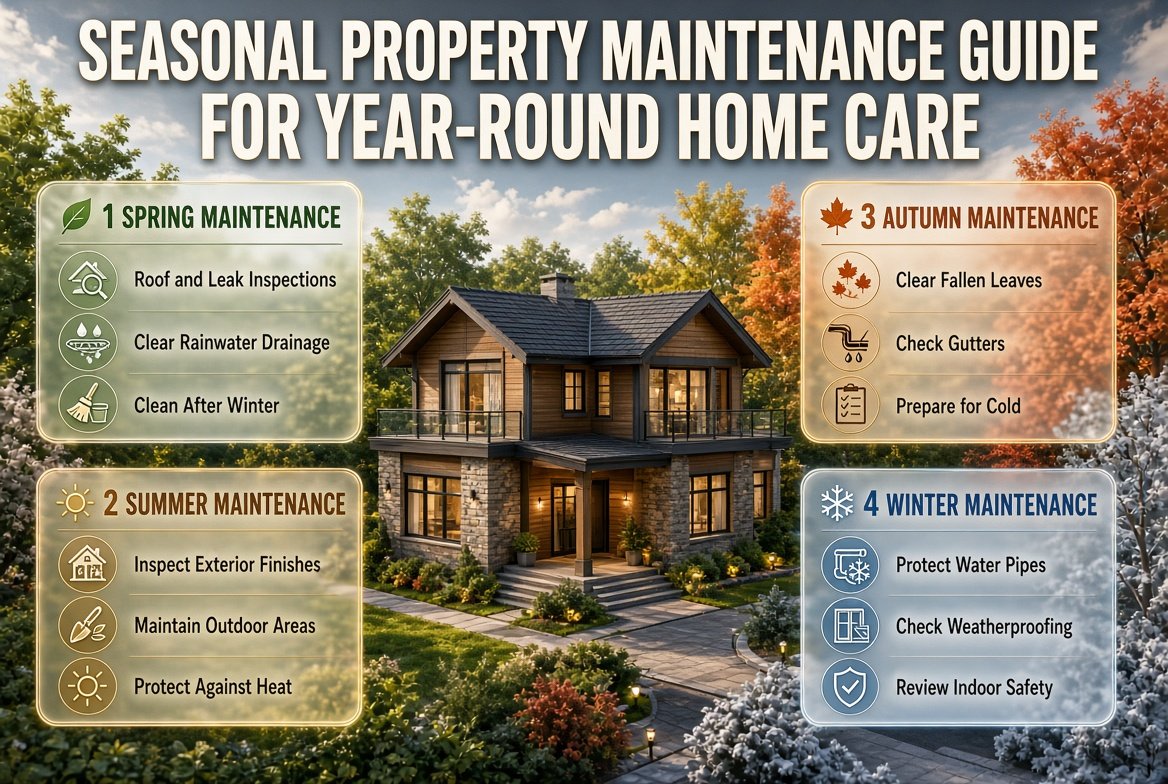
This guide explains how to maintain your property in spring, summer, autumn, and winter. You will learn which areas to inspect, how to organize seasonal maintenance tasks, what common mistakes to avoid, how to prepare for extreme weather, and how to build a manageable annual maintenance schedule without unnecessary spending.
Whether you own a small house, manage a rental property, or look after a larger family home, the goal is the same: prevent avoidable damage and make property care easier to manage throughout the year.
What Is Seasonal Property Maintenance?
Seasonal property maintenance is a planned approach to caring for a building, its systems, and its surrounding outdoor areas throughout the changing seasons. It includes preventive inspections, routine cleaning, minor repairs, weather preparation, and arranging qualified professionals when a problem requires specialist attention.
Instead of waiting for equipment to fail or damage to become obvious, you use the time of year to identify the tasks most likely to protect your property.
For example, spring is a useful time to check for winter damage, summer is suitable for many exterior projects, autumn is ideal for clearing leaves and preparing for colder weather, and winter calls for particular attention to heating, moisture, freezing temperatures, and storm conditions.
Why Does Seasonal Maintenance Matter?
A maintenance schedule makes property care more predictable. You can spread tasks across the year instead of facing a long list of urgent jobs at once.
The main benefits include:
- Earlier problem detection: Small leaks, damaged seals, loose fittings, and drainage problems can be identified before they worsen.
- Better weather protection: Roofs, windows, doors, gutters, and exterior surfaces receive attention before demanding weather arrives.
- Improved household safety: Smoke alarms, carbon monoxide alarms, handrails, electrical systems, and heating equipment can be checked appropriately.
- More controlled expenses: Planned maintenance makes it easier to prioritize essential repairs and budget for larger projects.
- Longer service life: Appropriate cleaning, servicing, and repairs can help building components and equipment last longer.
- Better comfort: Insulation, ventilation, heating, cooling, and moisture control contribute to a more comfortable indoor environment.
Maintenance does not eliminate every breakdown. However, it reduces the likelihood that preventable problems will remain unnoticed.
Which Properties Need Seasonal Maintenance?
Almost every property benefits from a seasonal plan, although the tasks differ according to building type, climate, age, and use.
A detached house may require regular gutter cleaning, garden maintenance, roof inspections, and exterior checks. An apartment owner may focus more on windows, ventilation, appliances, indoor plumbing, and responsibilities shared with the building management.
Rental property owners should also consider tenant safety, documented inspections, and maintenance responsibilities under applicable local rules. Older buildings may need closer attention to moisture, aging materials, and outdated equipment.
The best schedule is the one that reflects your property’s actual condition rather than following a generic checklist without considering local needs.
How Should You Plan a Year-Round Property Maintenance Schedule?
A useful maintenance schedule divides work into manageable tasks and assigns each task a suitable time, frequency, and priority. Start with safety-critical systems and areas exposed to weather, then organize routine cleaning and cosmetic improvements around them.
Step 1: Inspect the Property Before Making a Plan
Walk around the property and inspect visible areas inside and outside. Look for water stains, peeling paint, damaged seals, blocked drains, loose handrails, unusual smells, and equipment that is not operating properly.
Record each concern and note its location. Photographs can help you compare conditions over time, especially when tracking cracks, exterior finishes, or recurring moisture marks.
Do not climb onto roofs, open electrical equipment, or enter unsafe spaces to complete an inspection. Use a qualified professional where access or technical knowledge is required.
Step 2: Separate Urgent Repairs From Routine Tasks
Not every maintenance issue requires immediate action. A loose roof covering during a storm presents a different level of risk from a small area of faded exterior paint.
Use a simple priority system:
| Priority | Examples | Recommended response |
|---|---|---|
| Urgent | Active water leak, gas smell, exposed electrical hazard, structural instability | Address the immediate danger and contact the appropriate emergency or qualified service |
| High | Failed heating during freezing weather, worsening roof damage, significant drainage failure | Arrange prompt assessment and repair |
| Routine | Gutter cleaning, filter replacement, seasonal garden care | Schedule according to conditions and manufacturer guidance |
| Cosmetic | Minor paint touch-ups, decorative changes | Plan after safety and preventive work |
A task’s priority can change when the weather changes or the damage becomes more serious.
Step 3: Create a Seasonal Checklist
Divide tasks into spring, summer, autumn, and winter. Include monthly or recurring responsibilities separately so they are not forgotten between seasonal inspections.
For example, checking for plumbing leaks should not be postponed until the next seasonal review if you notice water damage today.
Step 4: Set a Maintenance Budget
Estimate the likely cost of routine servicing, cleaning supplies, minor repairs, and professional work. Keep a separate allowance for unexpected problems where possible.
If a repair requires a larger investment, obtain a clear description of the work, understand what is included, and compare suitable quotes rather than choosing solely on the lowest price.
For larger planned projects, How to Plan a Construction Budget can help you organize projected expenses. If you need to understand the different cost categories involved, use the Construction Cost Breakdown Explained guide.
Step 5: Keep Records
Record the inspection date, tasks completed, problems found, contractor details, and any recommended follow-up work.
Maintenance records are especially helpful for rental properties, recurring faults, equipment servicing, and planning future renovations. They also reduce the risk of paying for the same inspection or repair without understanding what was previously completed.
Pro Tip: Use one calendar for seasonal inspections and a separate list for outstanding repairs. This makes it easier to distinguish work that has been completed from work that still needs attention.
Spring Property Maintenance: How to Check for Winter Damage
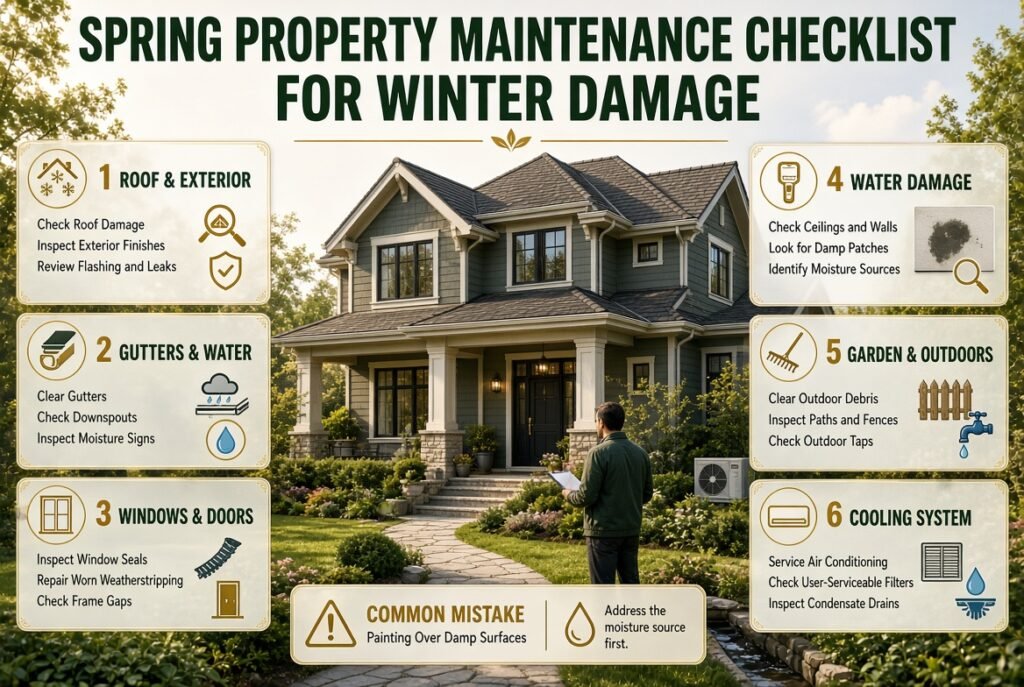
Spring is the time to assess how your property has handled cold weather, wind, rain, and periods of limited use. Start with visible damage, water management, ventilation, and outdoor areas before moving on to decorative improvements.
1. Inspect the Roof and Exterior
Look for missing or displaced roof coverings, damaged flashing visible from the ground, loose exterior components, and water marks around ceilings or upper walls.
Pay attention to changes rather than assuming that an older roof is automatically failing. A new stain, a recurring leak, or a section of damaged material deserves investigation.
Arrange a professional roof inspection when there are signs of damage or when a closer assessment is necessary. Walking on a roof without appropriate training and safety equipment creates an unnecessary risk.
2. Check Gutters and Downspouts
Winter storms and falling debris can obstruct gutters and downspouts. When water cannot drain properly, it may overflow near walls, damage exterior finishes, or contribute to moisture problems around the foundation.
Check that gutters are securely attached and that downspouts discharge water away from the building in accordance with local drainage requirements.
Clean them using safe methods or arrange professional service if access is difficult. Do not lean an unstable ladder against a gutter or attempt cleaning during wet or windy conditions.
3. Look for Water Damage
Inspect ceilings, window frames, basement walls, utility areas, and the spaces beneath sinks for damp patches, discoloration, musty smells, or peeling finishes.
The important task is to identify the source of moisture, not simply cover the visible mark with paint. A stain may indicate a roof leak, plumbing fault, condensation problem, or water entering through an exterior wall.
If moisture keeps returning, arrange an appropriate assessment before repairing the surface.
4. Examine Windows and Doors
Cold weather can expose weaknesses in weatherstripping, caulking, and window seals. Check for visible gaps, damaged sealant, difficult operation, and signs of water entering around frames.
Replace worn weatherstripping where suitable, and use products compatible with the existing materials. Persistent condensation between sealed glass panes may indicate a failed insulated-glass seal and require professional advice.
5. Prepare the Garden and Outdoor Areas
Remove accumulated debris, inspect garden paths, check fences for loose sections, and look for areas where water collects after rainfall.
Prune plants according to their species and the appropriate season. Avoid removing healthy growth indiscriminately, as some plants need specific timing for pruning.
Check outdoor taps and irrigation equipment for damage caused by freezing temperatures before restoring them to regular use.
6. Service Cooling Equipment Before Hot Weather
If your property has air conditioning, arrange servicing according to the manufacturer’s recommendations. Replace or clean user-serviceable filters as directed, keep outdoor units free of obstructing vegetation, and make sure condensate drains are not visibly blocked.
A qualified technician should inspect faults involving refrigerant, electrical components, or internal mechanical parts.
Spring maintenance is also a sensible time to review Home Maintenance tasks that should continue throughout the year.
Common Mistake: Painting over damp surfaces before resolving the cause of moisture. The new finish may hide the stain temporarily, but the underlying problem can continue damaging the building.
Summer Property Maintenance: How to Protect Your Home From Heat
Summer often provides more opportunities for outdoor repairs, painting, drainage improvements, and planned building work. However, high temperatures, intense sunlight, dry conditions, and sudden storms create their own maintenance challenges.
1. Inspect Exterior Paint and Finishes
Sunlight and heat can gradually affect exterior paint, sealants, timber finishes, and some plastic components. Check for peeling, cracking, blistering, and exposed surfaces.
Before repainting, determine whether the deterioration results from normal aging, moisture, poor preparation, or an incompatible coating. The right preparation matters as much as the paint itself.
Follow product temperature and weather requirements, and avoid painting surfaces that are excessively hot or likely to become wet before the coating cures.
2. Maintain Air Conditioning and Ventilation
Air conditioning systems work harder during hot weather. Replace filters as recommended, keep supply and return vents unobstructed, and make sure outdoor equipment has adequate clearance.
If the system produces unusual noises, leaks water indoors, repeatedly trips a breaker, or fails to cool properly, arrange a qualified inspection rather than repeatedly restarting it.
Use kitchen and bathroom exhaust ventilation where appropriate to control indoor moisture. Ventilation is particularly important in humid climates, where cool indoor surfaces may develop condensation.
3. Inspect Outdoor Plumbing and Irrigation
Check outdoor taps, hoses, irrigation connections, and visible pipework for leaks. A small leak can waste water and may cause localized damage if water repeatedly collects against the building.
Adjust irrigation according to plant needs, rainfall, local restrictions, and soil conditions. Avoid watering in ways that direct water toward foundations or saturate exterior walls.
4. Check Decks, Fences, and Paths
Inspect outdoor steps, handrails, decking, paving, and fences for movement, rot, corrosion, or loose fasteners.
Repairing a loose handrail or unstable step is more important than improving its appearance. If a deck has structural movement, extensive decay, or damaged supports, obtain a professional assessment before using it.
Keep paths clear of overgrown plants and remove trip hazards. Make sure outdoor lighting works properly around entrances, stairs, and frequently used walkways.
5. Manage Trees and Storm Preparation
Examine trees for visibly damaged limbs, leaning trunks, and branches that could affect the building or overhead services. Tree work near power lines should be left to the appropriate qualified service.
Before storm season, check that exterior objects can be secured, drains are clear, and windows and doors close correctly. Follow official weather warnings and local instructions during severe weather.
6. Plan Renovation Work Carefully
Summer may be convenient for projects that require dry weather or access to exterior surfaces. However, do not assume that every project is best completed during hot weather. Materials, adhesives, coatings, and installation methods may have specific temperature limits.
For projects involving substantial changes, review the Build or Renovate guide before deciding whether to repair an existing feature or replace it.
For major work, use the Home Renovation Planning Checklist to organize decisions, sequencing, and preparation before work begins.
Quick Tip: Schedule outdoor projects for suitable weather conditions, not simply the warmest available day. Excessive heat can make some materials harder to handle and may affect how coatings cure.
Autumn Property Maintenance: How to Prepare for Cold Weather
Autumn maintenance focuses on removing debris, checking drainage, preparing heating systems, and protecting vulnerable areas before winter arrives. Completing these tasks early gives you more time to address faults before freezing temperatures and severe weather make repairs difficult.
1. Clear Gutters and Check Drainage
Falling leaves can quickly block gutters, downspouts, and surface drains. Remove debris safely and check whether water can flow away from the property without collecting near foundations or entrances.
If trees continue shedding leaves, you may need to repeat the task during the season rather than relying on one annual cleaning.
Look for loose gutter brackets, disconnected joints, and signs of repeated overflow. Persistent drainage problems may require repairs or a more suitable drainage arrangement.
2. Service the Heating System
Arrange recommended servicing for boilers, furnaces, heat pumps, and other heating equipment before the coldest weather arrives.
Check that thermostats work, vents remain unobstructed, and user-accessible filters are maintained according to manufacturer guidance.
Do not ignore unusual smells, repeated shutdowns, visible damage, or warning indicators. Gas appliances, combustion systems, and electrical faults require appropriately qualified professionals.
3. Protect Vulnerable Pipes
Pipes in unheated garages, loft spaces, exterior walls, and other exposed areas may be more vulnerable to freezing.
Identify these locations and use suitable insulation where appropriate. Repair leaks and understand how to shut off the main water supply in an emergency.
If your property will be unoccupied during freezing weather, plan ahead for heating, water-system protection, and regular checks. Follow professional advice for the particular plumbing system rather than assuming one winterization method suits every building.
4. Check Doors, Windows, and Weatherstripping
Inspect exterior door seals, window frames, and accessible gaps where cold air or moisture may enter.
Repair damaged weatherstripping and seal appropriate gaps with products designed for the surface and location. Do not block intentional ventilation openings or drainage paths.
If you notice persistent drafts, consider whether the problem is worn seals, poor insulation, incorrect door adjustment, or a more significant building-envelope issue.
5. Prepare Outdoor Spaces
Store seasonal furniture where appropriate, secure lightweight objects, clean outdoor equipment, and remove dead plant material that could obstruct drains or create hazards.
Inspect sheds and outbuildings for roof leaks, loose doors, and signs of water entry. Check that exterior lighting works as daylight hours become shorter.
Prune plants only when appropriate for their species and local growing conditions. Some shrubs and trees are best pruned at other times of the year.
6. Review Fire and Carbon Monoxide Safety
Test smoke alarms and carbon monoxide alarms according to their instructions and applicable local requirements. Replace batteries or devices as needed, and confirm that household members understand the escape plan.
Never ignore a carbon monoxide alarm. Move to fresh air and follow local emergency guidance.
Expert Tip: Complete heating-system servicing and drainage work before the first severe cold spell. Waiting until many households need urgent service can limit appointment availability.
Winter Property Maintenance: How to Prevent Cold-Weather Damage
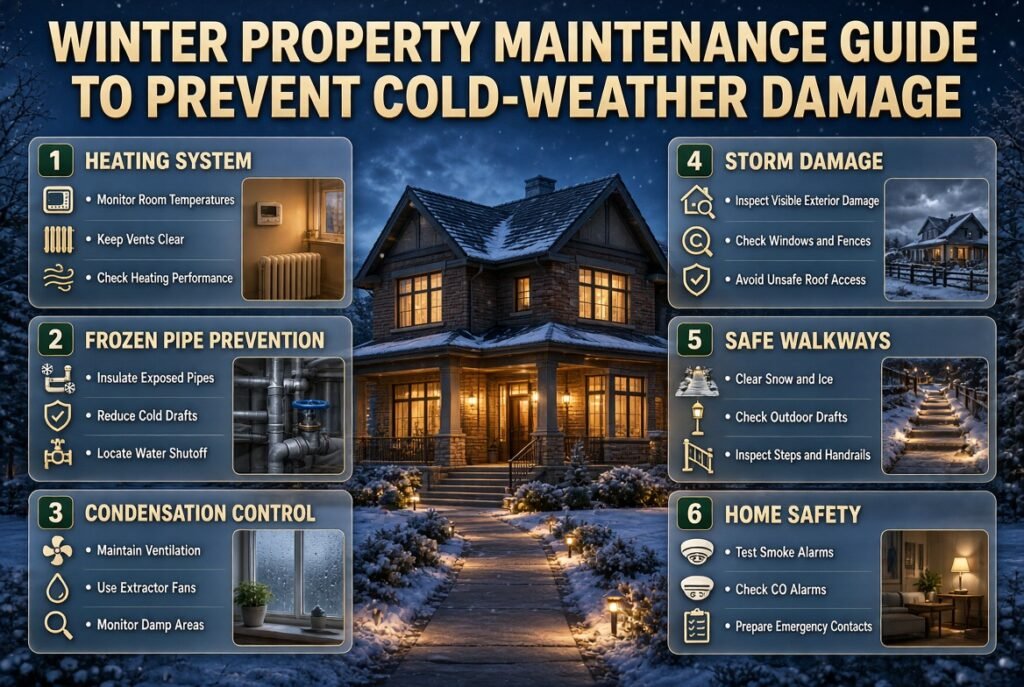
Winter maintenance is about keeping essential systems reliable, reducing moisture problems, and responding quickly to weather-related risks. Some outdoor work should be postponed until conditions improve, but indoor inspections and safety checks remain important.
1. Monitor Heating Performance
Check that occupied rooms receive adequate heat and that the heating system operates consistently. Keep vents and radiators clear of furniture, curtains, and stored items.
If some rooms remain unusually cold, investigate possible airflow problems, control settings, insulation gaps, or equipment faults. Avoid making unsafe adjustments to boilers or other combustion appliances.
A sudden loss of heating during freezing weather may require prompt professional assistance, particularly when vulnerable occupants or exposed pipes are involved.
2. Reduce the Risk of Frozen Pipes
Keep vulnerable areas appropriately warm and address cold drafts around pipework. Insulate exposed pipes using suitable materials, especially in locations identified during the autumn inspection.
Know where the main water shutoff is located and make sure it can be accessed safely.
If a pipe freezes, avoid open flames and unsafe heating methods. Contact a qualified plumber if you cannot safely resolve the situation or if a leak develops.
3. Manage Condensation and Indoor Moisture
Cold weather often means windows stay closed for longer, allowing moisture from cooking, bathing, laundry, and everyday activities to accumulate indoors.
Use extractor fans, maintain appropriate ventilation, and avoid drying large amounts of laundry in poorly ventilated rooms where possible.
Wipe away minor condensation and monitor recurring damp areas. If mold repeatedly returns or moisture affects a large area, investigate the source rather than relying only on surface cleaning.
4. Inspect for Storm Damage
After severe weather, look for visible damage to fences, exterior fixtures, windows, and accessible drainage areas. Keep away from fallen power lines, unstable structures, and damaged electrical equipment.
Do not climb onto icy roofs or use ladders in unsafe weather. Arrange professional inspection when the building may have sustained structural or roof damage.
5. Maintain Safe Access
Keep entrances, paths, steps, and frequently used walkways clear of snow and ice where these conditions occur. Use suitable de-icing products according to the surface manufacturer’s guidance and local environmental considerations.
Check outdoor lights and handrails. Repair loose steps and avoid placing objects where they create hidden hazards under snow.
6. Check Alarms and Emergency Supplies
Make sure smoke alarms and carbon monoxide alarms remain operational. Keep essential emergency contacts accessible and know how to respond to heating, water, or electrical failures.
If winter storms are common in your area, prepare suitable supplies and follow official advice during severe conditions.
Winter is also a good time to review indoor maintenance records and plan work for the coming spring. Avoid rushing into cosmetic projects when weather conditions make repairs less reliable.
Which Seasonal Maintenance Tasks Should You Complete Every Month?
Some property maintenance tasks are not limited to a particular season. Regular checks help you notice changes between major inspections and deal with small problems promptly.
| Frequency | Recommended tasks | Why they matter |
|---|---|---|
| Monthly | Check visible plumbing for leaks, test alarm functions as instructed, inspect for unusual moisture, and check commonly used doors and locks | Helps identify developing faults |
| Every few months | Maintain HVAC filters according to the manufacturer’s instructions, inspect accessible drainage, and review exterior areas | Supports reliable operation and drainage |
| Spring and autumn | Inspect the roof from a safe location, check gutters, review weather seals, and inspect the garden | Prepares the property for changing weather |
| Annually or as specified | Arrange required heating, cooling, plumbing, or other equipment servicing | Supports safe operation and manufacturer recommendations |
| After severe weather | Check for visible damage, water entry, displaced exterior components, and drainage problems | Identifies weather-related issues quickly |
These are general guidelines, not universal service intervals. Some filters need more frequent attention, while certain equipment requires servicing at specific intervals. Follow manufacturer instructions, local regulations, and professional recommendations.
For a broader household routine, use the Care for a Property guide to organize recurring responsibilities alongside seasonal work.
How Can You Make Seasonal Property Maintenance More Affordable?
Affordable maintenance is not about delaying every repair or choosing the cheapest available materials. It is about spending money where it reduces risk, prevents avoidable deterioration, and provides a reasonable long-term benefit.
Prioritize Prevention
A blocked drain, a damaged seal, or a small plumbing leak may be relatively straightforward to address when discovered early. If ignored, the same issue may affect surrounding materials and require more extensive repairs.
However, preventive work should be based on actual conditions. Replacing functional components without a clear reason can waste money just as easily as neglecting a necessary repair.
Combine Related Tasks
If a professional is already inspecting a roof, ask whether there are related concerns that should be assessed during the same visit. Similarly, group suitable exterior maintenance tasks together when doing so improves safety, access, or scheduling.
Do not combine unrelated specialist work simply to save an appointment fee if it compromises quality or safety.
Compare Quotes Properly
When hiring a contractor, compare the scope of work, materials, exclusions, warranties, expected timing, and cleanup arrangements. A low quote may not include necessary preparation or disposal.
Ask questions before authorizing additional work. For significant projects, request written details so you understand what will be completed and what may require a separate budget.
Choose Materials for the Conditions
Exterior materials must suit the climate, exposure, building design, and maintenance capacity of the owner. A finish that performs well in a sheltered location may be unsuitable for a surface exposed to frequent rain or intense sunlight.
The guide on How to Choose Building Materials can help you evaluate material choices when maintenance leads to a planned repair or replacement.
Avoid Delaying Safety-Critical Work
Never postpone an urgent electrical hazard, suspected gas leak, serious structural concern, or significant water intrusion simply because the budget is limited. Contact the appropriate qualified service and ask about safe, practical options.
For non-urgent improvements, phasing work can make costs easier to manage without ignoring immediate risks.
What Are the Most Common Seasonal Property Maintenance Mistakes?
Many maintenance problems develop because tasks are delayed, completed without identifying the cause, or carried out using unsuitable methods. Recognizing these mistakes makes your schedule more effective.
Mistake 1: Waiting Until Something Breaks
Why it happens: Routine inspections may feel unnecessary when everything appears to work.
Why it is harmful: Hidden leaks, loose fittings, blocked drainage, and deteriorating seals can worsen without obvious warning.
How to avoid it: Schedule brief inspections throughout the year and investigate changes promptly.
Mistake 2: Treating Every Climate the Same
Why it happens: Homeowners often copy checklists written for a different region.
Why it is harmful: A winter checklist designed for freezing temperatures may not suit a mild coastal climate, while a dry region may need different attention to heat, dust, and water use.
How to avoid it: Adapt tasks to local weather, property construction, vegetation, and known risks.
Mistake 3: Ignoring the Cause of Moisture
Why it happens: Painting or cleaning a visible stain seems faster than investigating it.
Why it is harmful: The source of the water may remain active, allowing damage to continue behind the finish.
How to avoid it: Check likely sources and obtain specialist advice when moisture persists or its origin is unclear.
Mistake 4: Attempting Unsafe DIY Repairs
Why it happens: Some jobs appear simple enough to complete without professional help.
Why it is harmful: Roof work, electrical repairs, gas appliances, and structural work can expose people to serious risks or create further damage when handled incorrectly.
How to avoid it: Limit DIY work to tasks you can perform safely and competently. Use qualified professionals for regulated, technical, or hazardous work.
Mistake 5: Forgetting Outdoor Drainage
Why it happens: Owners focus on visible rooms and equipment rather than the path water takes around the building.
Why it is harmful: Blocked gutters, poor grading, and obstructed drains can contribute to water entry and foundation moisture.
How to avoid it: Inspect gutters, downspouts, surface drains, and areas where water collects after rain.
Mistake 6: Keeping No Maintenance Records
Why it happens: Small jobs seem easy to remember.
Why it is harmful: Repeated faults, missed servicing, and incomplete repairs become harder to track.
How to avoid it: Record the date, problem, work completed, and next recommended action after each important task.
Mistake 7: Focusing on Appearance Before Function
Why it happens: Cosmetic improvements provide an immediate visible result.
Why it is harmful: Fresh paint or decorative changes cannot compensate for leaking pipes, unsafe steps, or damaged building components.
How to avoid it: Address safety, water management, and essential systems before cosmetic upgrades.
What Do Property Maintenance Professionals Recommend?

A reliable maintenance routine depends on observation, consistent records, sensible priorities, and knowing when a problem needs specialist attention.
Inspect Before Buying Materials
Determine what needs repair before purchasing paint, sealant, replacement parts, or cleaning products. Buying supplies too early can lead to unsuitable choices or unnecessary spending.
Check the surface, likely cause of damage, product compatibility, and conditions required for successful application.
Follow Manufacturer Guidance
Heating systems, cooling equipment, appliances, alarms, roofing materials, and finishes may have different maintenance requirements. Use the correct instructions rather than applying one general rule to every product.
If the instructions are unclear, ask the manufacturer or a qualified technician.
Treat Recurring Problems as Signals
A drain that repeatedly blocks, a window that continually leaks, or a wall that repeatedly becomes damp deserves more investigation than another temporary fix.
Recurring faults may indicate an underlying design, installation, drainage, ventilation, or maintenance issue.
Plan Work Around Weather and Access
Exterior repairs often depend on suitable temperature, moisture levels, wind, and access. Schedule work when conditions support a safe and durable result.
If a task cannot be completed safely, postponing it may be the better choice, provided any immediate hazards are controlled.
Know When a Repair Becomes a Renovation
Some defects can be addressed with routine maintenance, while others require a larger project. Repeated repairs, extensive deterioration, outdated systems, and changes in household needs may justify evaluating replacement or renovation.
Use Build or Renovate when comparing those options, and consult qualified professionals where structural, electrical, plumbing, or regulatory questions arise.
Keep the Entire Property in View
Maintenance is not limited to indoor rooms. Gardens, paths, fences, drainage, outbuildings, and storage areas all affect how a property functions.
The Outdoor & Garden Care guide can support planning for exterior upkeep, while Common Home Repairs and Improvements is relevant when an inspection identifies a repair that needs further attention.
For routine cleaning and household organization, use Cleaning & Organization to support the everyday tasks that keep the property orderly.
How Should You Maintain a Property When You Are Away?
An empty property can still experience leaks, heating failures, storm damage, and security problems. Before leaving for an extended period, arrange appropriate checks based on the building, local climate, expected absence, and insurance requirements.
Start by securing doors and windows, checking for visible leaks, arranging suitable heating or winterization where needed, and asking a trusted person or property manager to check the building when appropriate.
Do not shut off utilities or change heating settings without considering the plumbing system, appliances, ventilation, and manufacturer’s guidance. Some properties require particular conditions to prevent freezing or moisture damage.
Make sure a responsible person knows how to contact you and whom to call if an urgent problem develops.
If the absence involves a trip, organize property responsibilities alongside your travel plans. The Travel Guide offers broader travel planning context, while How to Plan a Trip Budget can help you account for travel expenses and other planned costs.
For organizing activities and dates, see How to Plan a Travel Itinerary. If you are deciding where to stay, How to Choose the Right Hotel Location provides relevant guidance. International travelers can also consult the First-Time International Travel Checklist before departure.
These travel resources serve a separate purpose from property maintenance, but they can be useful when arranging an extended absence and making sure household responsibilities are covered.
A Simple Before-You-Leave Checklist
- Check for visible plumbing leaks and unresolved water problems.
- Confirm that essential alarms are functioning.
- Secure windows, doors, and accessible outdoor equipment.
- Arrange appropriate heating and pipe protection in cold weather.
- Clear drainage points if conditions make this necessary.
- Make arrangements for property checks during a longer absence.
- Leave relevant emergency contact details with the responsible person.
- Record any existing faults that need attention when you return.
For additional information on organizing maintenance responsibilities, visit Property Care.
What seasonal property maintenance tasks should homeowners prioritize throughout the year?
Homeowners should prioritize tasks that protect the property from weather damage, maintain essential systems, and identify small problems before they become expensive repairs. The most important tasks change with the seasons. Spring is suitable for checking winter damage, summer is useful for exterior repairs, autumn focuses on preparing for colder weather, and winter requires closer attention to heating, plumbing, and indoor moisture.
A practical maintenance routine should focus on the property’s actual condition rather than following a checklist without considering local weather, building materials, and previous problems.
Important tasks to prioritize:
Spring: Inspect the roof from a safe location, check gutters and downspouts, investigate water stains, and examine window seals.
Summer: Maintain air conditioning, inspect exterior paint, check outdoor structures, and repair suitable weather-related damage.
Autumn: Clear leaves from drainage areas, arrange heating-system servicing, protect vulnerable pipes, and check weatherstripping.
Winter: Monitor heating performance, manage condensation, check for visible leaks, and respond safely to storm damage.
Throughout the year: Check visible plumbing, maintain smoke and carbon monoxide alarms according to their instructions, and keep records of completed repairs.
How can seasonal property maintenance prevent expensive home repairs?
Seasonal property maintenance can reduce avoidable repair expenses by identifying deterioration before it spreads. For example, a blocked gutter may cause water to overflow near exterior walls, while damaged window seals can allow drafts or moisture to enter. Addressing these issues early may prevent additional damage to surrounding materials.
Preventive maintenance cannot eliminate every breakdown, and an inspection may uncover a repair that needs immediate investment. Its real value is helping homeowners make informed decisions, prioritize risks, and avoid leaving manageable problems unattended.
Practical ways to reduce repair costs:
Inspect gutters, drainage systems, and visible plumbing regularly.
Investigate recurring damp patches instead of simply repainting the affected area.
Follow manufacturer recommendations for heating, cooling, and other essential equipment.
Repair damaged seals and loose exterior components before conditions worsen.
Compare contractor quotes by checking the scope of work, materials, exclusions, and warranties.
Keep maintenance records to identify repeated faults and unnecessary duplicate work.
The most effective approach is to spend money where it protects the property, rather than postponing essential repairs or replacing components that remain in good condition.
When should homeowners hire a professional for seasonal property maintenance?
Homeowners should hire a qualified professional whenever a maintenance task involves significant safety risks, specialist equipment, regulated work, or damage that cannot be diagnosed confidently. Routine visual inspections and simple cleaning may be manageable independently, but roofing, complex electrical repairs, gas appliances, structural concerns, and specialist heating-system servicing often require professional attention.
The decision should depend on the task’s complexity, the homeowner’s skills, access conditions, and the consequences of making a mistake. Saving money on a repair is not worthwhile if an incorrect fix creates a safety hazard or causes further damage.
Situations that commonly require professional help:
Roof leaks, damaged roof coverings, or suspected structural deterioration.
Gas smells, faulty combustion equipment, or suspected carbon monoxide exposure.
Electrical hazards, damaged wiring, or repeated circuit-breaker trips.
Persistent dampness, recurring mold, or unexplained water intrusion.
Heating or cooling systems that repeatedly fail or operate abnormally.
Plumbing leaks that cannot be safely isolated or repaired.
For urgent hazards, follow appropriate emergency guidance rather than waiting for a routine maintenance appointment. For non-urgent work, request a clear written quote and confirm what the service includes before authorizing repairs.
What should be included in a seasonal property maintenance checklist?
A seasonal property maintenance checklist should cover the building exterior, essential household systems, indoor conditions, outdoor spaces, and outstanding repairs. It should identify what needs checking, how often the task should be completed, who is responsible, and whether professional assistance is required.
A useful checklist is specific enough to guide action but flexible enough to accommodate different climates and property types. A house in a region with freezing winters will need different preparations from a property in a consistently warm climate.
A practical checklist should include:
Roof and drainage: Look for visible damage, blocked gutters, overflowing downspouts, and standing water.
Windows and doors: Check weatherstripping, seals, operation, and signs of moisture.
Plumbing: Inspect accessible pipes, taps, and areas beneath sinks for leaks.
Heating and cooling: Maintain user-serviceable filters and schedule servicing according to manufacturer instructions.
Safety equipment: Test smoke and carbon monoxide alarms as directed.
Outdoor areas: Inspect paths, fences, steps, handrails, and garden drainage.
Maintenance records: Record completed work, outstanding defects, service dates, and recommended follow-ups.
Review the checklist at the beginning of each season and update it whenever a new problem appears. This keeps maintenance organized and helps prevent important tasks from being forgotten.
How can homeowners prepare their property for extreme seasonal weather?
Preparing for extreme weather means identifying the risks most relevant to the property and addressing vulnerable areas before severe conditions arrive. Heavy rain can expose drainage problems, freezing temperatures can threaten unprotected pipes, strong winds can damage loose exterior components, and intense heat can place additional demands on cooling equipment.
Preparation should begin with a property inspection and a clear understanding of local weather risks. Homeowners should also know how to respond if essential services fail or the building becomes unsafe.
Essential weather-preparation measures:
Clear gutters and drainage points before periods of heavy rain, where safe to do so.
Arrange repairs for known roof, window, and exterior defects before severe weather.
Insulate vulnerable pipes where appropriate and understand how to shut off the water supply.
Service heating or cooling equipment according to manufacturer recommendations.
Secure outdoor furniture and other loose objects before forecast storms.
Keep entrances and walkways safe during snow or icy conditions.
Arrange appropriate checks when leaving the property unattended for an extended period.
Follow official weather warnings and contact qualified professionals when damage creates a safety concern.
No maintenance plan can prevent all weather-related damage. However, preparing vulnerable areas, responding promptly to warnings, and keeping essential systems in good condition can improve property resilience and reduce avoidable risks.
Conclusion
Seasonal property maintenance is one of the most practical ways to protect your home, prevent avoidable damage, and keep essential systems working reliably throughout the year. By adjusting your maintenance routine to spring, summer, autumn, and winter conditions, you can identify potential problems early and make better decisions about repairs, cleaning, and property improvements.
The key is to focus on prevention rather than waiting for something to break. Inspect your property regularly, keep gutters and drainage areas clear, maintain heating and cooling equipment, check for signs of moisture, and prepare vulnerable areas before extreme weather arrives. Keep a record of completed tasks and arrange professional assistance whenever a repair involves safety risks or specialist knowledge.
Start with a simple seasonal checklist and prioritize the tasks that matter most for your property’s condition and local climate. You don’t need to complete everything at once; consistent attention and timely repairs can make property care more manageable.
For more practical advice on home maintenance, repairs, and year-round property management, visit Brendan Active Property Care. A well-planned maintenance routine helps you protect your investment, manage repair costs more confidently, and enjoy a safer, better-maintained home in every season.