
Introduction
Property Care | Property ownership comes with responsibilities that are easy to overlook until something goes wrong. A small leak can damage a ceiling, neglected gutters can cause drainage problems, and a minor maintenance issue can become an expensive repair when left unattended. The good news is that a practical property care routine can prevent many of these problems and make everyday living more comfortable.
Property care means looking after a building, its essential systems, its indoor spaces, and its surrounding outdoor areas to keep everything safe, functional, clean, and in good condition. It includes routine inspections, preventive maintenance, necessary repairs, cleaning, seasonal preparation, and thoughtful improvements.
Whether you own a house, manage a rental property, maintain a family home, or simply want to understand how buildings should be looked after, having a clear plan makes the work easier to manage.
At Brendan Active Property Care, property-related information is organized around practical maintenance, repairs, outdoor care, and everyday solutions. This guide explains how to build a reliable property care routine, recognize problems early, plan maintenance costs, avoid common mistakes, and make better decisions about the condition of your property.
1. What Is Property Care, and Why Does It Matter?

Property care is the ongoing process of maintaining a building and its surrounding spaces so they remain safe, comfortable, functional, and presentable. It combines preventive maintenance, inspections, cleaning, repairs, and long-term planning rather than focusing only on problems that have already appeared.
Good property care matters because buildings are exposed to daily use, changing weather, moisture, temperature changes, and the natural deterioration of materials. Even a well-built property needs regular attention.
What Does Property Care Include?
Property care covers several connected responsibilities. The exact requirements depend on the building’s age, design, location, materials, occupancy, and condition.
The main areas include:
- Structural care: Monitoring visible cracks, damaged masonry, loose fittings, and other changes that may require professional assessment.
- Home maintenance: Checking plumbing fixtures, ventilation, doors, windows, electrical warning signs, and essential household systems.
- Repairs and improvements: Addressing faults, replacing worn components, and making suitable upgrades.
- Outdoor maintenance: Looking after gardens, paths, drainage, fences, exterior surfaces, and accessible outdoor spaces.
- Cleaning and organization: Keeping rooms, storage areas, kitchens, bathrooms, and shared spaces hygienic and usable.
- Preventive planning: Scheduling inspections, recording completed work, and budgeting for future maintenance.
These responsibilities overlap in practical ways, but each has a distinct purpose. Cleaning helps maintain hygiene and reveal visible problems, whereas preventive maintenance focuses on reducing the likelihood of equipment failures and building damage.
Why Is Regular Property Care Important?
Regular maintenance can help you identify developing problems before they become more disruptive. It also makes household responsibilities easier to organize because tasks are handled according to priority instead of being postponed indefinitely.
For example, noticing condensation around a window may encourage you to check ventilation, inspect the seals, and investigate whether water is entering the frame. Ignoring the issue could allow moisture damage to develop.
A consistent routine can also help you:
- Maintain safer living conditions.
- Reduce avoidable repair expenses.
- Protect paint, flooring, fixtures, and building materials.
- Improve comfort and everyday usability.
- Keep maintenance records for future reference.
- Prepare for seasonal weather changes.
- Make more informed decisions about improvements.
However, routine care cannot prevent every breakdown or guarantee that a property will retain a particular market value. Its purpose is to reduce avoidable risks and help owners respond to problems appropriately.
Who Needs a Property Care Plan?
Almost anyone responsible for a building can benefit from one.
Homeowners need a plan for their own living spaces and long-term maintenance responsibilities. Landlords need a reliable way to monitor property condition, arrange necessary work, and meet applicable legal obligations. Tenants can benefit from understanding routine household responsibilities and reporting faults promptly.
Property managers may need more detailed systems covering several buildings, contractors, inspections, documentation, and maintenance budgets.
Practical example: A homeowner who checks visible plumbing, tests suitable safety devices according to their instructions, cleans accessible outdoor drainage points, and records emerging problems is more likely to recognize warning signs than someone who only reacts after a failure.
The objective is not to inspect every part of the building every day. It is to understand what needs attention, how frequently it should be checked, and when qualified help is necessary.
2. What Are the Main Types of Property Care?

Property care becomes easier to manage when responsibilities are divided into clear categories. Each category addresses a different aspect of the building, and combining them creates a more complete maintenance strategy.
Preventive Property Care
Preventive property care involves routine checks and scheduled maintenance intended to reduce the risk of future problems.
Examples include cleaning accessible gutters when appropriate, checking visible plumbing for leaks, servicing equipment according to manufacturer recommendations, and maintaining exterior seals.
Its main advantage is that work can often be planned in advance. Instead of dealing with every issue as an emergency, you can organize suitable tasks around the property’s condition and the availability of materials or professionals.
Preventive care does not mean replacing components unnecessarily. Equipment should be inspected and maintained according to its actual condition, expected service life, and manufacturer’s guidance.
Corrective Property Care
Corrective maintenance addresses an existing fault.
Examples include repairing a leaking tap, replacing a damaged door latch, fixing a loose handrail, or arranging professional repairs for a malfunctioning heating or cooling system.
The priority depends on the consequences of the fault. A minor cosmetic defect can usually wait, while a significant water leak, electrical hazard, or unstable structural component may need urgent attention.
Corrective maintenance is sometimes unavoidable, even when preventive care is carried out consistently.
Seasonal Property Care
Seasonal maintenance prepares the property for changing environmental conditions.
Depending on the climate, this may involve checking roof drainage before heavy rainfall, inspecting exterior seals before colder weather, reviewing ventilation during humid periods, or managing garden growth during warmer months.
The most useful seasonal plan reflects local weather rather than following a generic calendar blindly.
For example, a property exposed to prolonged monsoon rainfall may need particular attention to drainage, roof leaks, dampness, and water entry. A property in a dry climate may need more attention to dust, water-efficient landscaping, and exterior materials exposed to intense sunlight.
Reactive and Emergency Property Care
Reactive maintenance begins after a fault occurs. Emergency maintenance deals with situations that create an immediate or potentially serious risk.
Examples include a burst pipe, a suspected gas leak, a dangerous electrical fault, or substantial storm damage.
In these situations, protecting people comes before protecting possessions. Keep away from dangerous areas, use emergency services when appropriate, and contact qualified professionals. Do not attempt repairs beyond your training or use electrical equipment in wet areas.
A property care plan should include contact information for relevant emergency services, utility providers, and qualified repair professionals.
Improvement-Based Property Care
Improvement work makes a property more functional, accessible, efficient, or suitable for its occupants.
Examples include improving bathroom ventilation, replacing damaged flooring, upgrading inefficient fixtures, improving storage, or making suitable accessibility changes.
Unlike routine maintenance, improvements are usually selected according to a specific goal. They should still be coordinated with essential repairs so that cosmetic upgrades do not hide underlying problems.
| Type of property care | Main purpose | Typical example | General priority |
|---|---|---|---|
| Preventive | Reduce future problems | Scheduled equipment servicing | Planned |
| Corrective | Fix an existing fault | Repairing a leaking fixture | Depends on severity |
| Seasonal | Prepare for weather changes | Checking drainage before heavy rain | Seasonal |
| Emergency | Address immediate danger | Responding to a serious leak | Immediate when hazardous |
| Improvement | Increase usability or performance | Better ventilation or storage | Based on need and budget |
Understanding these categories helps you decide whether a task belongs on the regular schedule, requires a repair appointment, or needs immediate action.
3. How Do You Create a Practical Property Care Plan?

A property care plan is a written record of what needs to be checked, when maintenance should happen, which tasks require professional assistance, and how completed work will be documented.
The most effective plan is realistic. A complicated schedule that nobody follows is less useful than a simple system that consistently addresses the property’s most important needs.
Step 1: Assess the Current Condition of the Property
Begin with a basic walkthrough of accessible areas.
Look for visible changes such as peeling paint, damp patches, damaged seals, unusual odors, loose fittings, blocked drainage points, and changes in how doors or windows operate.
Check indoor and outdoor areas without dismantling equipment or entering unsafe locations. Roof access, electrical panels, confined spaces, and suspected structural damage may require a qualified professional.
Create three lists:
- Items that appear satisfactory.
- Items requiring routine maintenance.
- Problems requiring repair, investigation, or urgent attention.
Photographs can help you compare conditions over time. Keep records securely and avoid photographing sensitive personal information unnecessarily.
Step 2: Prioritize Tasks by Risk
Not all maintenance tasks deserve equal attention.
A loose decorative handle is different from a damaged electrical outlet. A small paint defect is different from active water entering the building.
Use this practical priority system:
| Priority | Description | Example |
|---|---|---|
| Urgent | Immediate safety concern or active damage | Serious electrical fault or major water leak |
| High | A problem likely to worsen quickly | Persistent roof leakage or failing drainage |
| Medium | A repair that should be arranged soon | Damaged seal allowing moisture entry |
| Low | Cosmetic or non-urgent improvement | Touching up undamaged interior paint |
This table is a planning aid, not a substitute for professional risk assessment. Any condition that threatens life, health, or structural safety should be treated according to its actual severity.
Step 3: Set a Realistic Maintenance Schedule
Assign each task a suitable frequency based on the manufacturer’s instructions, local conditions, previous problems, and the property’s use.
For instance, visible plumbing can be checked during routine household cleaning, while equipment servicing may follow an annual or manufacturer-specified schedule. Gutter cleaning may be necessary after substantial leaf fall or before expected heavy rainfall.
Avoid assuming that every task needs monthly attention. Some checks are seasonal, some are annual, and others should happen only when conditions indicate a need.
Step 4: Establish a Maintenance Budget
List known repairs, scheduled servicing, routine supplies, and likely future replacements.
Separate essential work from optional improvements. This helps prevent spending the entire maintenance budget on decorative changes while important building problems remain unresolved.
Where possible, obtain written estimates for substantial work and compare the scope of service, materials, warranties, exclusions, and expected completion time.
Step 5: Keep a Maintenance Record
A maintenance log should record:
- Date of inspection or repair.
- Area or system involved.
- Problem identified.
- Action taken.
- Name of the contractor, where applicable.
- Cost and relevant invoice details.
- Recommended follow-up date.
These records make recurring problems easier to identify. They can also help you understand whether a component has been repaired repeatedly and may need a different long-term solution.
Step 6: Review and Update the Plan
Review your schedule after major repairs, renovations, extreme weather, or changes in occupancy.
A newly installed appliance may have different maintenance requirements from an older model. A garden redesigned with new drainage may require a different inspection routine. A property that develops recurring condensation may need ventilation improvements rather than repeated cosmetic cleaning.
Pro Tip: Put maintenance reminders on a calendar you already use. Linking tasks to an existing routine makes it easier to remember them without creating an entirely separate administrative system.
Why a Comprehensive Property Care Routine Matters
Maintaining a property requires a consistent approach to inspections, preventive maintenance, repairs, seasonal tasks, and everyday upkeep. Rather than waiting for problems to develop, property owners can benefit from identifying maintenance needs early and organizing tasks according to their urgency and importance. A practical routine also makes it easier to manage maintenance costs, protect important features of the home, and keep living spaces safe, functional, and comfortable.
Understanding how these responsibilities work together can help you make more informed decisions about long-term property maintenance. For a broader overview of essential maintenance tasks, planning methods, and practical ways to look after your home, explore our complete guide to care for a property.
4. Which Home Maintenance Tasks Should You Prioritize?

Home maintenance is one of the most important parts of property care because small household faults can affect comfort, safety, and the condition of the building.
A useful starting point is the Home Maintenance guide, which fits naturally into a broader property care routine.
Plumbing and Water Systems
Check visible pipes, taps, sink cabinets, toilet connections, and accessible water-related fittings for leaks or unusual moisture.
Pay attention to unexplained increases in water consumption, persistent dripping sounds, and water stains that appear without an obvious cause.
A leak should be investigated even when it seems minor. Water can travel behind surfaces, making the actual source difficult to identify.
Practical maintenance includes:
- Repairing dripping fixtures promptly.
- Keeping accessible drains free from suitable debris.
- Checking visible connections after plumbing work.
- Monitoring dampness around bathrooms and kitchens.
- Arranging professional assessment when leaks recur.
Do not use unsuitable chemicals or force tools into drains without understanding the plumbing system. If sewage backs up, water enters electrical areas, or a pipe bursts, seek appropriate professional assistance.
Electrical Safety
Electrical systems require particular caution because incorrect repairs can cause serious injury or fire.
You can safely pay attention to warning signs such as damaged visible cables, frequently tripping circuit protection, burning odors, unusual buzzing, or outlets that appear discolored.
Do not remove electrical covers, handle exposed wiring, or attempt internal repairs unless properly qualified and authorized.
If you notice a dangerous electrical condition, keep people away from the affected area and contact a qualified electrician. If there is immediate danger, follow local emergency procedures.
Routine electrical maintenance should focus on professional inspections when needed, safe use of appliances, and addressing warning signs promptly.
Heating, Cooling, and Ventilation
Heating and cooling equipment should be maintained according to manufacturer instructions and local safety requirements.
Depending on the system, maintenance may involve cleaning user-accessible filters, keeping ventilation openings clear, checking visible condensate drainage, and arranging professional servicing.
Poor ventilation can contribute to condensation, persistent odors, and indoor moisture problems. Kitchens, bathrooms, and laundry areas often need particular attention because they produce substantial moisture.
Avoid blocking ventilation openings to improve appearance or reduce drafts without understanding the consequences.
Doors, Windows, and Exterior Seals
Doors and windows help protect a property from weather, noise, and unwanted air movement.
Check whether locks operate correctly, visible seals are damaged, frames show signs of moisture, or water appears around openings after rainfall.
Small adjustments may improve operation, but distorted frames, recurring water entry, and significant movement require proper assessment.
Suitable sealant can help address some minor gaps, but it should never be used to conceal an unresolved leak or structural defect.
Walls, Ceilings, and Floors
Look for new cracks, bulging surfaces, loose flooring, water stains, and areas that have changed noticeably since the last inspection.
Not every crack indicates a serious structural problem. Small cosmetic cracks can develop as materials age or respond to temperature changes.
However, rapidly widening cracks, significant movement, substantial ceiling sagging, or damage accompanied by sticking doors and other changes deserves professional assessment.
Avoid painting over damp patches before investigating their cause. A fresh finish may hide the evidence temporarily without correcting the underlying problem.
Roofs and Drainage
The roof and drainage system protect many other parts of a building from water damage.
From a safe location, check for visible damage, displaced materials, overflowing gutters, or water stains inside the property. Arrange professional roof inspections when access is unsafe or the condition cannot be assessed from the ground.
Gutters and downpipes should be kept functional so rainwater can move away from the building as intended.
Never climb onto a wet, unstable, or steep roof simply to save the cost of an inspection. The potential consequences outweigh the benefit of a DIY approach.
How Often Should You Check Household Systems?
| Area | Suggested approach | When to seek help |
|---|---|---|
| Visible plumbing | Check periodically and after signs of leakage | Persistent leaks or water damage |
| Electrical warning signs | Remain alert during normal use | Burning odors, exposed wiring, repeated trips |
| Ventilation | Check during routine cleaning and seasonal reviews | Persistent condensation or poor airflow |
| Doors and windows | Inspect periodically and after severe weather | Distortion, security faults, recurring water entry |
| Walls and ceilings | Watch for visible changes | Rapid movement, significant sagging, active leaks |
| Roof drainage | Review before heavy rain and after storms | Unsafe access or suspected roof damage |
These are general planning suggestions rather than universal inspection intervals. Local conditions, building age, equipment instructions, and professional advice should determine the final schedule.
5. How Should You Handle Common Home Repairs and Improvements?

Repairs and improvements are easier to manage when you understand the difference between a small maintenance task, a repair requiring specialist skills, and an upgrade that can be planned for later.
The Common Home Repairs and Improvements guide is a relevant next step when you need to organize these tasks.
Identify the Actual Cause Before Repairing the Surface
A repair should address the source of a problem whenever possible.
For example, peeling paint near a bathroom ceiling might result from poor ventilation, a leaking pipe, or water entering from above. Repainting without investigating the moisture source can lead to the same problem returning.
Likewise, a door that no longer closes properly might need a simple adjustment, but it could also be affected by frame movement or moisture-related swelling.
Before arranging work, record what you observed, when it began, whether it has changed, and any conditions associated with it.
This information can help a professional diagnose the issue more efficiently.
Which Repairs Can You Handle Yourself?
Some basic tasks may be suitable for a capable homeowner when they understand the process, have the correct tools, and can work safely.
Examples may include:
- Tightening an accessible loose cabinet handle.
- Replacing a compatible, non-electrical cabinet fitting.
- Touching up a dry, sound painted surface.
- Replacing a simple doorstop.
- Assembling suitable storage furniture.
- Cleaning accessible household fixtures.
Even simple tasks require judgment. A repair that appears straightforward may involve hidden wiring, fragile materials, structural components, or equipment under pressure.
Stop if you discover an unexpected hazard, cannot identify the correct component, or are unsure whether the work is safe.
When Should You Hire a Professional?
Professional assistance is appropriate when a repair involves specialist knowledge, safety risks, regulated work, or damage whose cause is uncertain.
Common examples include:
- Electrical installation or internal electrical repairs.
- Gas-related faults and appliance connections.
- Significant plumbing leaks.
- Structural cracks or movement.
- Roof repairs requiring access at height.
- Persistent dampness or suspected concealed water damage.
- Major renovation work involving building regulations or permits.
Requirements vary by location. Before hiring someone, check applicable licensing, qualifications, insurance, references, and any permissions required for the proposed work.
How Can You Compare Repair Estimates?
Do not compare contractors on price alone. Two estimates may cover different materials, preparation, labor, warranties, or follow-up work.
Ask each provider to explain:
- The suspected cause of the problem.
- The proposed repair method.
- The materials and work included.
- Any exclusions or likely additional costs.
- The expected completion time.
- Relevant warranties and maintenance requirements.
A written estimate is particularly important for substantial repairs. If the diagnosis is uncertain, ask whether further investigation is needed before a final price can be provided.
Should You Repair or Replace a Damaged Component?
The decision depends on the component’s age, condition, repair history, availability of replacement parts, performance, and the consequences of another failure.
| Consideration | Repair may be suitable when | Replacement may be suitable when |
|---|---|---|
| Condition | Damage is limited and localized | Deterioration is widespread |
| Reliability | The fault is unusual and repairable | Breakdowns happen repeatedly |
| Parts | Appropriate parts are available | Parts are unavailable or unsuitable |
| Long-term cost | Repair offers reasonable service life | Repeated repairs are becoming uneconomical |
| Safety | A qualified professional confirms the repair is safe | The component cannot be made acceptably safe |
| Performance | It continues to meet household needs | It no longer meets essential requirements |
There is no universal rule that older items should always be replaced. A well-maintained older component may still perform adequately, while a newer damaged component may require immediate replacement.
Expert Tip: Ask for the reason behind a recommended replacement. A clear explanation should connect the condition of the component to safety, reliability, performance, or the expected cost of continued repairs.
6. How Can You Maintain Outdoor Areas and Gardens?

Outdoor property care protects the parts of a building that are most directly exposed to weather, soil moisture, plant growth, and changing ground conditions.
The Outdoor & Garden Care guide is useful for organizing exterior maintenance alongside indoor responsibilities.
Keep Water Moving Away From the Building
Water management is one of the most important outdoor maintenance priorities.
Inspect visible drainage routes, gutters, downpipes, and ground areas after substantial rainfall. Look for standing water near foundations, overflowing outlets, and places where runoff repeatedly collects.
The correct solution depends on the cause. It may involve clearing suitable debris, correcting a blocked outlet, or obtaining professional advice about grading and drainage design.
Do not redirect water onto a neighboring property or into a drainage system without confirming that the arrangement is appropriate and permitted.
Maintain Gardens Without Damaging the Property
Plants improve outdoor spaces, but uncontrolled growth can interfere with drainage, conceal defects, and damage certain surfaces.
Keep vegetation appropriately managed around paths, entrances, drainage points, and building openings. Select plants that suit the available space, local climate, soil conditions, and expected mature size.
Trees close to buildings deserve particular attention when roots, branches, or movement may affect structures or underground services. Significant concerns should be assessed by an appropriate professional rather than addressed through indiscriminate cutting.
Inspect Paths, Steps, and Fences
Outdoor paths and steps should remain reasonably stable and usable.
Look for loose paving, uneven surfaces, damaged handrails, slippery growth, and areas where water collects. These conditions can increase the risk of falls, especially during wet weather.
Fences and gates should be checked for loose fittings, corrosion, rot, and movement. Repairing a small loose component may prevent a larger section from deteriorating.
Where a boundary structure is shared, check ownership responsibilities and local requirements before carrying out substantial work.
Maintain Exterior Walls and Finishes
Exterior finishes help protect building materials from weather exposure.
Inspect visible paintwork, masonry, sealant, and joints for deterioration. The appropriate maintenance method depends on the surface material and the cause of the damage.
For instance, masonry should not automatically be covered with an unsuitable coating simply because the surface looks worn. Some materials need to release moisture naturally, and incompatible products can contribute to deterioration.
Seek suitable advice if you are unsure which materials or repair methods are compatible with the building.
Prepare Outdoor Areas for Severe Weather
Before expected heavy rain or strong winds:
- Check accessible drainage points.
- Secure loose outdoor furniture and movable objects.
- Review the condition of fences and gates.
- Arrange professional attention for visible roof or exterior damage.
- Keep access routes clear.
- Follow local weather warnings and emergency advice.
After severe weather, assess the property from safe locations. Do not approach unstable trees, damaged overhead cables, flooded electrical areas, or weakened structures.
Create a Simple Outdoor Maintenance Routine
Outdoor care should reflect actual conditions rather than an arbitrary calendar.
| Task | Suitable timing | Main purpose |
|---|---|---|
| Check visible drainage | Before and after substantial rainfall | Reduce water-related problems |
| Manage plant growth | As needed during growing periods | Maintain access and prevent obstruction |
| Inspect paths and steps | Periodically and after severe weather | Identify trip hazards |
| Review fences and gates | Periodically | Detect loose or damaged components |
| Check exterior finishes | During seasonal reviews | Identify deterioration early |
| Review trees near structures | When visible changes or risks arise | Arrange appropriate assessment |
A garden does not need to look perfect to be well maintained. The priorities are safety, drainage, appropriate plant management, and preventing avoidable damage.
7. Why Are Cleaning and Organization Part of Property Care?
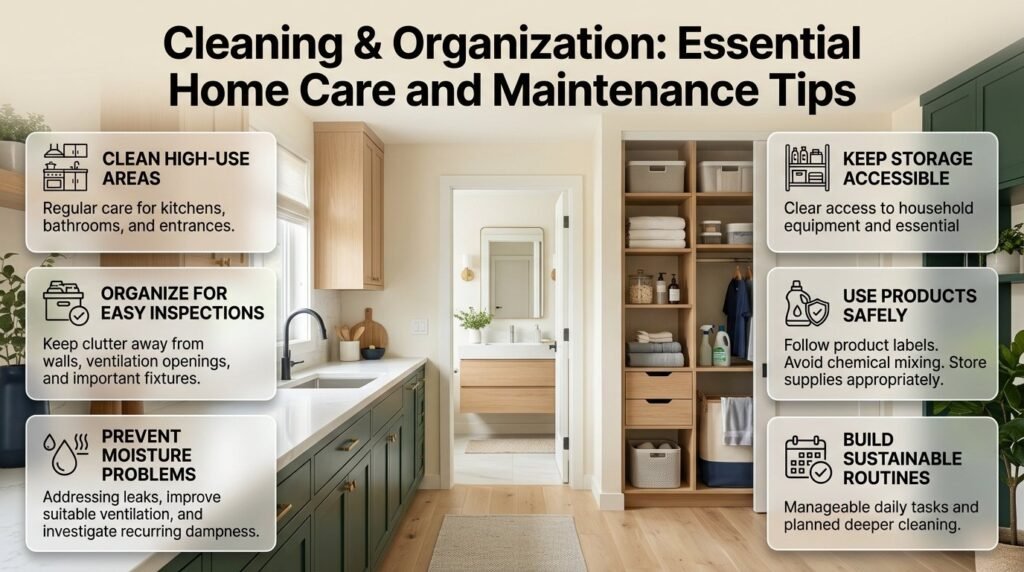
Cleaning and organization support property care by keeping spaces hygienic, usable, and easier to inspect. They can also make it easier to notice leaks, pests, damaged surfaces, and other changes that might otherwise remain hidden.
The Cleaning & Organization guide provides a relevant resource for establishing practical indoor routines.
Focus on High-Use Areas First
Kitchens, bathrooms, entrances, and frequently used living spaces generally need regular attention because they experience repeated contact, moisture, spills, and everyday wear.
A useful routine may include:
- Cleaning food preparation surfaces appropriately.
- Keeping bathroom fixtures clean and checking for leaks.
- Removing dust from suitable accessible surfaces.
- Cleaning floors using methods appropriate for the material.
- Keeping entrances clear.
- Emptying waste containers regularly.
- Maintaining suitable ventilation.
Cleaning products should be selected according to the surface and used as directed. Never mix cleaning chemicals, especially products that may react dangerously with one another.
How Does Organization Help Prevent Maintenance Problems?
Clutter can conceal damage and restrict access to essential areas.
For example, boxes stored tightly around a damp wall may make it harder to notice moisture. Items blocking ventilation openings can interfere with airflow. Overfilled cupboards can make plumbing leaks beneath sinks harder to detect.
Organization should therefore support access, not merely appearance.
Keep suitable clearance around appliances, electrical equipment, ventilation openings, and service access points according to the relevant instructions.
Prevent Moisture and Mold Problems
Persistent moisture needs attention because it can damage finishes and encourage mold growth.
Common causes include plumbing leaks, water entry from outside, inadequate ventilation, and condensation on cold surfaces.
Practical steps include:
- Using suitable extraction ventilation in bathrooms and kitchens.
- Addressing leaks promptly.
- Avoiding unnecessary obstruction of ventilation openings.
- Drying wet areas appropriately.
- Investigating recurring condensation.
- Seeking professional assessment for extensive or persistent dampness.
Simply cleaning visible mold without addressing the moisture source may allow it to return. Extensive contamination, hidden moisture, or recurring growth may require qualified remediation or building assessment.
Planning Construction and Property Improvement Projects
Property care can sometimes involve larger improvement projects that require more planning than routine maintenance. Before starting significant repairs, renovations, or structural work, it is important to understand the project requirements, expected costs, and need for qualified professionals. For further guidance on construction projects and their planning considerations, explore our construction guide.
Keep Storage Areas Accessible
Garages, utility rooms, cupboards, and storage spaces often contain tools, household supplies, and equipment needed for maintenance.
Arrange items so that essential controls, shut-off points, and access routes remain clear. Store chemicals according to their labels, away from children and pets, and in suitable conditions.
Avoid placing heavy objects where they may fall or overload shelving. Keep combustible materials away from heat sources as required by applicable safety guidance.
Make Cleaning Sustainable
A cleaning routine should fit the household’s actual schedule.
Rather than leaving every task until a major cleaning day, divide responsibilities into smaller activities. Daily tasks may involve clearing food preparation areas, while deeper cleaning can be scheduled less frequently according to use.
The goal is not constant cleaning. It is maintaining hygiene, preserving surfaces, and keeping the property easy to use and inspect.
8. How Much Should You Budget for Property Care?
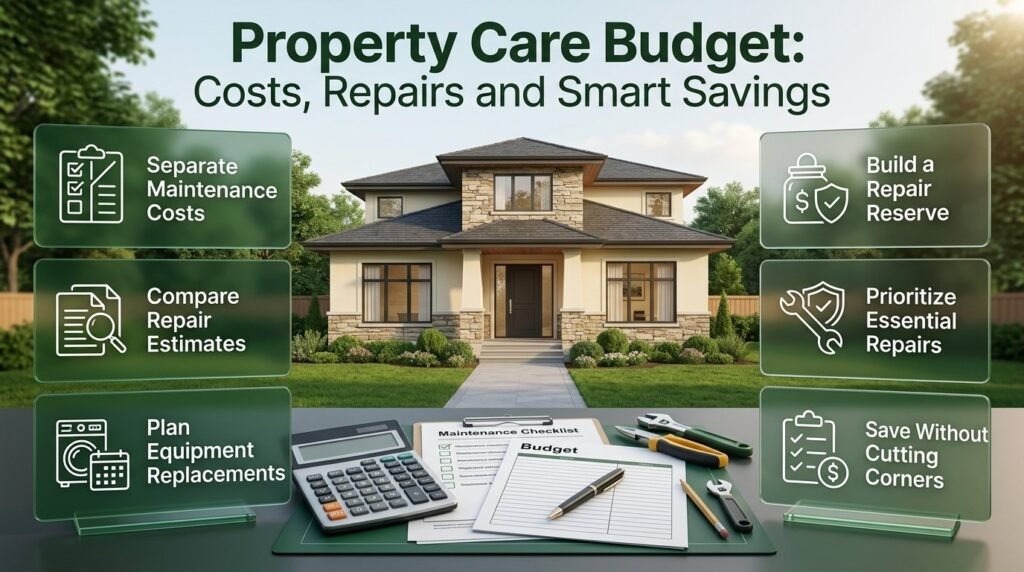
Property care costs vary according to building size, age, construction quality, location, climate, labor rates, materials, equipment, and the condition of existing systems.
There is no single budget that works for every property. A small, well-maintained apartment may require very different spending from an older detached house with extensive outdoor areas.
The best approach is to estimate costs from actual needs and maintain a reserve for unexpected repairs.
Separate Routine Costs From Major Repairs
Start by dividing your expected expenses into categories.
Routine expenses include basic maintenance supplies, scheduled servicing, suitable cleaning materials, and minor consumables.
Periodic expenses include painting, exterior maintenance, equipment servicing, and repairs that become necessary over time.
Major or unexpected expenses may include substantial plumbing work, roof repairs, equipment replacement, or storm-related damage.
This separation helps you understand which costs can be scheduled and which require financial flexibility.
Build a Property Maintenance Budget
Use the following process:
- List all known maintenance tasks.
- Obtain estimates for work requiring contractors.
- Record expected replacement costs for important equipment.
- Include recurring supplies and servicing.
- Identify unresolved problems that may become more expensive if delayed.
- Set aside a reserve that reflects your property’s risks and financial circumstances.
- Review the budget periodically and update it when prices or conditions change.
If you are responsible for a rental property, also account for applicable legal requirements, inspection obligations, and responsibilities under the tenancy agreement.
Which Maintenance Tasks Offer the Best Value?
Value comes from reducing risk and preserving function, not simply choosing the cheapest option.
A suitable repair to a leaking pipe may prevent more expensive water damage. Cleaning accessible drainage points may help reduce overflow problems. Maintaining equipment according to instructions can support reliable operation.
However, not every proposed upgrade provides a financial return. Decorative renovations, premium finishes, and optional technology should be considered separately from essential repairs.
| Expense | Main consideration | Budget approach |
|---|---|---|
| Routine supplies | Frequency of use | Estimate recurring needs |
| Equipment servicing | Manufacturer requirements | Schedule in advance |
| Minor repairs | Severity and likely progression | Address promptly where appropriate |
| Major repairs | Scope, safety, and material costs | Obtain written estimates |
| Replacements | Age, condition, and reliability | Plan ahead where possible |
| Improvements | Practical benefit and affordability | Prioritize after essential work |
How Can You Reduce Property Care Costs Without Cutting Corners?
The safest savings often come from planning, early diagnosis, and informed purchasing.
- Group suitable non-urgent jobs into one contractor visit.
- Compare written estimates on the same scope of work.
- Maintain equipment according to instructions.
- Buy compatible materials rather than choosing solely by price.
- Keep records of recurring faults.
- Avoid cosmetic repairs that conceal unresolved problems.
- Learn safe basic maintenance tasks within your ability.
Do not postpone a safety-critical repair simply because the immediate cost is inconvenient. If you cannot afford a recommended repair, discuss safe interim measures and realistic options with a qualified professional.
9. What Is the Difference Between Property Care and Property Management?
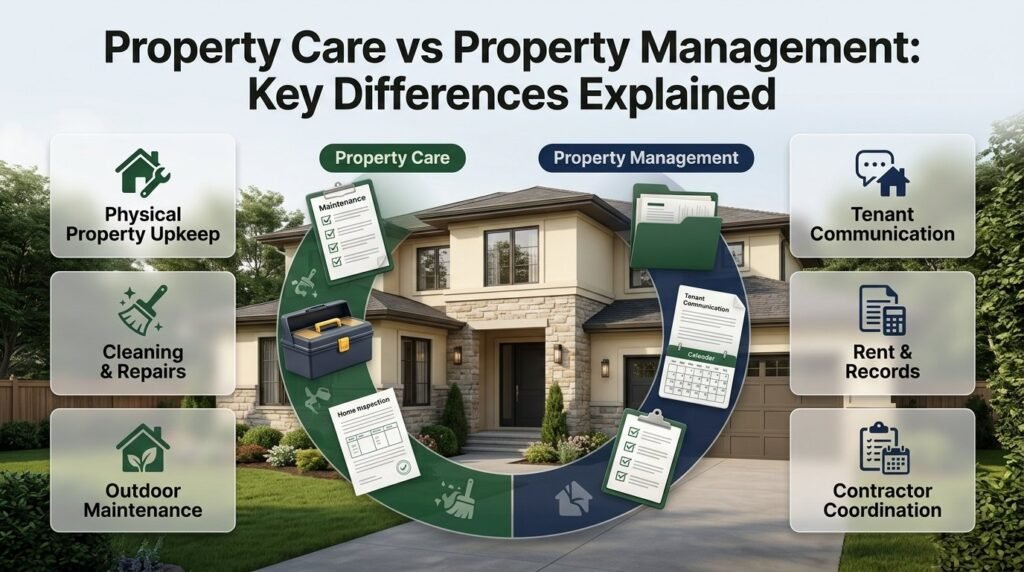
Property care and property management are related, but they are not identical.
Property care focuses on the physical condition, cleanliness, usability, and maintenance of a building. Property management generally covers a wider range of responsibilities, which may include tenant communication, rent administration, legal compliance, contracts, inspections, and coordination of maintenance providers.
The exact scope depends on the agreement and local regulations.
Property Care Responsibilities
Typical property care activities include:
- Monitoring the physical condition of the building.
- Scheduling routine maintenance.
- Identifying visible defects.
- Arranging repairs.
- Maintaining outdoor spaces.
- Coordinating cleaning and organization.
- Keeping maintenance records.
These tasks may be carried out by owners, occupants, caretakers, contractors, or property managers, depending on the arrangement.
Property Management Responsibilities
Property management may include:
- Communicating with tenants.
- Coordinating tenancy administration.
- Managing rent and financial records.
- Arranging authorized maintenance.
- Handling complaints and requests.
- Monitoring compliance with applicable rules.
- Managing contractors and service agreements.
A property manager may arrange property care without personally performing repairs.
Which Arrangement Is Right for You?
An owner living in their own home may manage routine property care independently and hire professionals when necessary.
A landlord with several rental properties may benefit from a property manager who coordinates tenant communication and maintenance providers. A large building may need a more formal maintenance system with documented inspections, service contracts, and emergency procedures.
The important point is to define responsibilities clearly. If a contractor, caretaker, tenant, or manager is expected to report faults, specify how reports should be made and who has authority to approve repairs.
10. How Can Property Care Improve Safety and Everyday Comfort?

A well-maintained property should support safe movement, comfortable indoor conditions, reliable essential systems, and convenient daily use.
Safety and comfort are connected, but they require more than keeping a building visually attractive.
Reduce Everyday Hazards
Walk through frequently used areas and consider whether doors, stairs, pathways, and entrances remain safe and accessible.
Look for loose handrails, uneven surfaces, trailing cables, damaged flooring, poor lighting, and obstacles that could cause falls.
Keep frequently used routes clear and arrange appropriate repairs when a hazard cannot be resolved through simple housekeeping.
Where children, older adults, or people with mobility needs use the property, consider their particular access and safety requirements.
Maintain Indoor Air Quality
Indoor air quality can be affected by moisture, inadequate ventilation, dust, combustion sources, and household products.
Useful measures include maintaining suitable ventilation, controlling moisture, cleaning regularly, and servicing relevant equipment according to instructions.
If the property uses fuel-burning appliances, follow applicable requirements for professional maintenance and suitable carbon monoxide detection. Never ignore an alarm or assume that an appliance is safe because it appears to operate normally.
Persistent odors, recurring dampness, or unexplained indoor air concerns may require professional investigation.
Improve Energy Efficiency Sensibly
Energy efficiency improvements should be appropriate for the building and climate.
Potential options include sealing suitable air leaks, maintaining equipment, using efficient lighting, improving controls, and investigating insulation or window upgrades where beneficial.
However, ventilation and combustion safety must not be compromised by attempts to make a building more airtight.
Before investing in substantial upgrades, understand the property’s current performance and compare the likely benefits with installation costs and ongoing maintenance requirements.
Make Daily Spaces Easier to Use
Property care also includes practical decisions about how spaces function.
For example, organizing frequently used kitchen supplies within easy reach can improve convenience. Keeping utility areas accessible makes inspections easier. Maintaining doors and drawers can prevent small faults from interfering with everyday activities.
These changes may not require major renovation. Often, the most useful improvements are the ones that remove repeated inconveniences.
11. How Should You Adapt Property Care to Different Seasons?
Seasonal property care means preparing the building for weather-related conditions before they cause avoidable damage.
The exact schedule depends on your location. A property exposed to monsoon rain needs different preparation from a building in a region with freezing winters or prolonged dry heat.
Before the Rainy Season
Rainy periods can expose weaknesses in roofs, gutters, drainage systems, exterior seals, and foundations.
Before heavy rainfall is expected:
- Check accessible drainage points for obstructions.
- Review visible roof and ceiling warning signs.
- Inspect window and door seals.
- Make sure water can drain away from the building appropriately.
- Check that outdoor items will not obstruct drainage.
- Arrange repairs for known leaks.
Do not wait until water begins entering the property to investigate a previously identified drainage problem.
During Hot Weather
High temperatures and direct sunlight can affect paint, sealants, exterior materials, gardens, and cooling equipment.
Review shading, ventilation, and equipment maintenance according to the building’s needs. Inspect accessible outdoor surfaces for deterioration and water systems for signs of leakage.
Gardens may need adjustments to watering practices depending on plant type, soil, local restrictions, and weather.
Avoid assuming that every plant needs frequent watering. Excessive watering can create its own problems and waste resources.
During Cold Weather
In colder climates, preparation may involve protecting vulnerable pipes, servicing heating systems, checking suitable insulation, and addressing drafts without compromising required ventilation.
In regions where freezing conditions are uncommon, the priorities may be different. Focus on local weather risks and the property’s known weaknesses.
If freezing temperatures are forecast and the building contains vulnerable plumbing, follow appropriate local guidance or seek professional advice about prevention measures.
After Severe Weather
After a storm, heavy rainfall, strong winds, or another severe weather event, inspect accessible areas from safe locations.
Look for water entry, displaced exterior materials, damaged fences, fallen branches, and changes in drainage.
Do not enter flooded rooms with potentially energized electrical equipment, approach damaged overhead cables, or climb onto damaged roofs. Arrange qualified assessment where safety is uncertain.
Use a Seasonal Checklist
| Period or condition | Main focus | Suggested action |
|---|---|---|
| Before heavy rain | Water entry and drainage | Check accessible drainage and visible leaks |
| Hot weather | Cooling and exterior exposure | Review ventilation, equipment, and finishes |
| Cold weather | Vulnerable systems | Follow local precautions and equipment guidance |
| After storms | Damage and hazards | Inspect safely and arrange necessary repairs |
| Seasonal transitions | General condition | Review records and update the maintenance plan |
A seasonal checklist should supplement, not replace, routine maintenance and manufacturer-required servicing.
12. What Are the Most Common Property Care Mistakes?
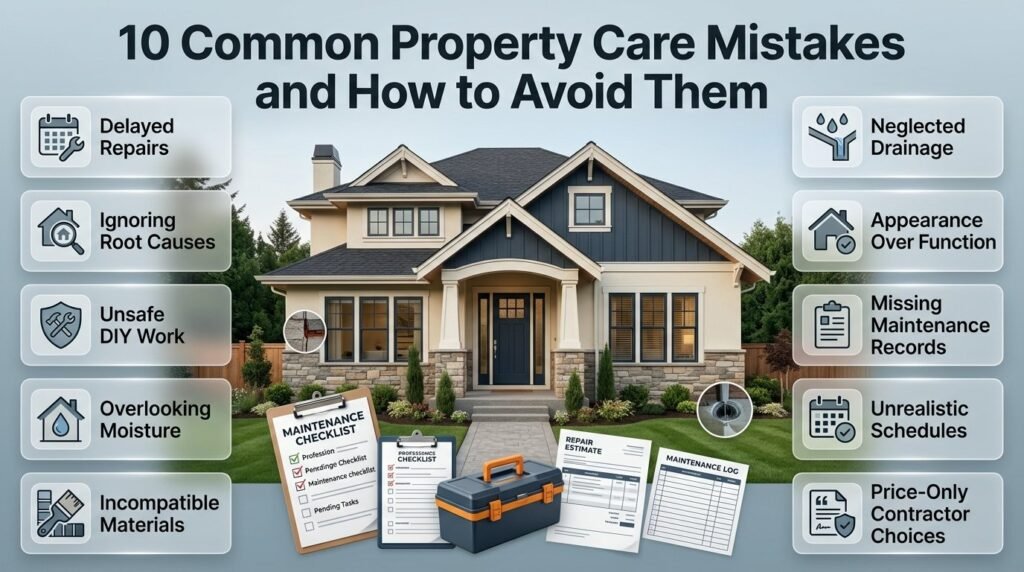
Property care mistakes often happen because people are busy, underestimate early warning signs, or assume that visible appearance tells the whole story.
Recognizing these mistakes helps you avoid unnecessary costs and make better decisions.
Mistake 1: Waiting Until Something Breaks
Many people postpone maintenance because an item still appears to work.
The problem is that some faults develop gradually. A small leak, deteriorating seal, or blocked drainage route may not cause obvious disruption at first.
How to avoid it: Record visible warning signs and schedule appropriate inspections. Address faults according to their severity rather than waiting for complete failure.
Mistake 2: Fixing the Symptom Instead of the Cause
Painting over a damp patch or repeatedly clearing the same drain may temporarily improve the situation without resolving the underlying issue.
Recurring problems usually deserve a closer look.
How to avoid it: Record when the problem appears, whether conditions affect it, and what has already been attempted. Ask a qualified professional to investigate when the cause is uncertain.
Mistake 3: Attempting Unsafe DIY Repairs
Online instructions can make specialist work look simpler than it is.
Electrical faults, gas problems, structural damage, and repairs involving height or pressurized systems can create serious hazards.
How to avoid it: Understand the limits of your skills, follow relevant safety requirements, and hire qualified professionals for work that requires specialist knowledge.
Mistake 4: Ignoring Small Water Problems
A minor drip or isolated damp patch may seem unimportant, especially when the area still looks usable.
However, moisture can affect finishes, stored belongings, and concealed building materials.
How to avoid it: Investigate unexplained moisture, repair appropriate faults, and monitor the area after work is completed. If the problem returns, seek further assessment.
Mistake 5: Using Incompatible Materials
A product that works well on one surface may be unsuitable for another.
Incorrect sealants, coatings, cleaning chemicals, or repair materials can damage surfaces or interfere with their intended performance.
How to avoid it: Read product instructions, identify the surface material, and seek professional advice when compatibility is uncertain.
Mistake 6: Neglecting Outdoor Drainage
Outdoor maintenance is often postponed because it appears separate from indoor property care.
Blocked drainage or poorly directed runoff can nevertheless affect entrances, exterior walls, and lower levels of a building.
How to avoid it: Include drainage and water management in seasonal checks, especially before periods of heavy rainfall.
Mistake 7: Focusing Only on Appearance
Fresh paint, attractive furnishings, and a tidy garden can improve presentation, but they do not prove that essential systems are functioning correctly.
How to avoid it: Address safety, water management, ventilation, and significant defects before spending heavily on cosmetic improvements.
Mistake 8: Failing to Keep Records
Without maintenance records, it becomes difficult to remember previous repairs, recurring faults, or contractor recommendations.
This can lead to repeated diagnostic costs and unnecessary replacement decisions.
How to avoid it: Keep a simple digital or paper log with dates, photographs where useful, invoices, and follow-up actions.
Mistake 9: Using an Unrealistic Maintenance Schedule
A schedule with too many unnecessary tasks can become difficult to follow. A schedule with too few checks may overlook important risks.
How to avoid it: Base task frequency on manufacturer instructions, building condition, local climate, and professional recommendations. Review the schedule when circumstances change.
Mistake 10: Choosing Contractors on Price Alone
The lowest estimate may omit important preparation, suitable materials, disposal, testing, or follow-up work.
How to avoid it: Compare written scopes, qualifications, insurance where applicable, warranties, and references alongside price.
13. What Professional Property Care Practices Make the Biggest Difference?
Professional-quality property care depends on consistent observation, clear records, sensible prioritization, and knowing when to seek specialist assistance.
You do not need an elaborate management system for a typical home. A few disciplined habits can make routine maintenance substantially more organized.
Inspect Before Spending
Before purchasing materials or booking cosmetic work, understand the condition of the affected area.
A visual inspection may be enough to identify a minor issue, but hidden damage or a recurring fault may require a specialist investigation.
This reduces the risk of paying for work that does not solve the problem.
Work From High Risk to Low Risk
Safety hazards, active leaks, serious water entry, and structural concerns deserve priority over decorative changes.
A practical sequence is:
- Protect people from immediate hazards.
- Stop active damage where it can be done safely.
- Arrange appropriate professional diagnosis.
- Complete necessary repairs.
- Check whether the repair has resolved the problem.
- Schedule any remaining maintenance or cosmetic improvements.
This sequence helps prevent attractive but unnecessary projects from taking priority over essential work.
Confirm That Repairs Have Worked
Completing a repair does not always mean the problem is permanently resolved.
For example, after a plumbing repair, the affected area should be checked appropriately for continued leakage. After addressing a moisture problem, the source should be controlled and the area monitored as advised.
The method of verification depends on the work involved. Specialist repairs may require testing or documentation by the contractor.
Use Consistent Standards
Where several people share responsibility for a property, agree on basic expectations.
Define who reports problems, who approves expenses, how emergencies are handled, and where records are stored.
For rental properties, these arrangements must also respect applicable legal obligations and the tenancy agreement.
Clear responsibilities reduce confusion and help prevent small problems from being ignored because everyone assumes someone else will handle them.
Choose Improvements That Solve Real Problems
A useful improvement should address a practical need, not merely follow a trend.
For example, better storage may reduce clutter around frequently used areas. Suitable ventilation may help manage moisture. Improved lighting may make entrances and stairways easier to use.
Before approving a project, ask:
- What problem will this improvement solve?
- Is there an underlying issue that must be repaired first?
- What materials and maintenance will it require?
- Is it suitable for the building and local climate?
- Does the expected benefit justify the cost?
Build Relationships With Reliable Professionals
It can be helpful to identify qualified electricians, plumbers, roofers, and other specialists before an emergency occurs.
Keep their contact information and record the type of work they are qualified to perform.
For substantial work, confirm the scope in writing and clarify how unexpected problems will be handled. Avoid relying on verbal promises when a project involves significant costs or safety concerns.
Expert Tip: Treat repeated faults as useful information. If the same area needs frequent repairs, investigate whether the original diagnosis, material choice, installation method, or environmental conditions need to change.
Planning for Property Care While Travelling
Planning a trip involves more than organizing your destination and travel arrangements. It is also worth considering how your property will be managed while you are away. Taking care of essential maintenance tasks, checking home security, and arranging any necessary property checks can help you leave with greater peace of mind. For additional ideas to help organize your journey, explore our travel guide.
What Does Property Care Include, and Why Is It Important?
Property care includes the regular maintenance, inspection, cleaning, repair, and protection of a building and its surrounding areas. It helps property owners identify developing problems, maintain safe living conditions, and keep essential systems working properly. A well-organized property care routine also makes it easier to plan expenses and manage maintenance responsibilities before minor issues become more disruptive.
The main areas of property care include:
Building maintenance: Monitoring visible cracks, damaged surfaces, doors, windows, and other building components.
Plumbing and electrical safety: Watching for leaks, unusual electrical warning signs, and faults that require qualified professionals.
Outdoor maintenance: Looking after drainage, gardens, paths, fences, and exterior finishes.
Cleaning and organization: Maintaining hygienic spaces and keeping important areas accessible.
Preventive planning: Scheduling inspections, recording repairs, and preparing for seasonal weather changes.
The most effective approach is to prioritize safety, address recurring problems at their source, and maintain a realistic schedule suited to the property’s age, condition, and location.
How Often Should You Carry Out Property Maintenance?
Property maintenance should follow a schedule based on the building’s condition, local climate, equipment instructions, and previous maintenance problems. Some tasks can be incorporated into everyday household routines, while others are better handled seasonally, annually, or at intervals recommended by the manufacturer or a qualified professional.
A practical maintenance schedule may include:
Regular household checks: Look for visible leaks, unusual odors, damaged fittings, and other noticeable changes.
Seasonal inspections: Review drainage, exterior surfaces, and weather-related risks before periods of heavy rain, extreme heat, or cold weather.
Scheduled servicing: Maintain appliances and building systems according to their instructions and applicable requirements.
Condition-based repairs: Arrange professional assessment when damage appears, develops, or repeatedly returns.
Avoid following a rigid calendar without considering the property’s actual needs. A building exposed to heavy rainfall may need more frequent drainage checks, while an older property may require closer attention to deteriorating components. A flexible schedule helps you focus on the tasks that matter most.
How Can Regular Property Care Help Reduce Maintenance Costs?
Regular property care can help control maintenance expenses by identifying developing faults early, supporting appropriate equipment maintenance, and reducing avoidable damage. Although no maintenance plan can prevent every breakdown, a consistent approach makes it easier to plan repairs, compare estimates, and avoid spending money on temporary solutions that fail to address the underlying problem.
Property owners can manage costs more effectively by:
Addressing leaks promptly: Unresolved water problems can damage finishes and other building materials.
Maintaining essential equipment: Follow manufacturer recommendations to support reliable operation.
Planning repairs in advance: Obtain written estimates for substantial work and compare the proposed scope.
Keeping maintenance records: Track recurring faults, completed repairs, and expected replacement needs.
Separating essential work from upgrades: Prioritize safety and necessary repairs before optional cosmetic improvements.
It is also sensible to maintain a financial reserve for unexpected problems. The appropriate amount depends on the property’s condition, likely repair needs, and your financial circumstances. Focus on long-term reliability rather than choosing the cheapest immediate solution.
Which Property Maintenance Tasks Can You Handle Yourself, and When Should You Hire a Professional?
Homeowners can often manage suitable, low-risk tasks themselves when they have the necessary knowledge, tools, and ability to work safely. However, repairs involving specialist systems, uncertain damage, or significant safety risks should be assessed by appropriately qualified professionals.
Common tasks that may be suitable for DIY maintenance include:
Cleaning accessible household surfaces and suitable fixtures.
Organizing storage areas and keeping access routes clear.
Tightening simple, accessible furniture or cabinet fittings.
Monitoring visible plumbing for signs of leakage.
Maintaining accessible outdoor areas without using hazardous equipment.
Professional assistance is generally appropriate for electrical faults, gas-related problems, substantial plumbing leaks, structural concerns, roof repairs at height, and persistent dampness with an uncertain cause.
Before hiring a contractor, review relevant qualifications, experience, insurance where applicable, written estimates, and the proposed repair method. If a problem presents an immediate danger, keep people away from the affected area and follow appropriate emergency procedures. Knowing when to stop a DIY task is an essential part of responsible property care.
What Should a Complete Property Care Checklist Include?
A complete property care checklist should cover the building’s visible condition, essential household systems, indoor cleanliness, outdoor spaces, seasonal risks, and outstanding repairs. It should also identify tasks requiring professional attention and provide a way to record completed work.
A useful checklist includes:
Interior condition: Look for new cracks, damaged flooring, water stains, and other noticeable changes.
Plumbing: Check accessible pipes, taps, and fixtures for visible leaks.
Electrical safety: Watch for damaged visible cables, unusual odors, and other warning signs without attempting unsafe repairs.
Ventilation: Keep suitable ventilation openings clear and investigate persistent condensation.
Exterior and drainage: Review accessible gutters, downpipes, paths, fences, and visible exterior damage.
Cleaning and organization: Maintain hygienic rooms and keep important service access points clear.
Seasonal preparation: Plan maintenance around local weather conditions.
Records and budgeting: Document inspections, invoices, completed repairs, and recommended follow-up work.
For the best results, divide tasks into urgent, planned, and routine categories. Address immediate safety concerns first, schedule important repairs promptly, and review the checklist after major repairs or changes to the property. This keeps maintenance manageable without overlooking essential responsibilities.
Conclusion
Effective property care is about more than fixing problems when they appear. It involves taking a proactive approach to maintenance, repairs, cleaning, outdoor upkeep, safety, and long-term planning. Whether you own a house, manage a rental property, or simply want to keep your living space in good condition, consistent care helps protect your investment and makes everyday life more comfortable.
The most practical way to maintain a property is to establish a realistic schedule, inspect important areas regularly, address small issues before they become major concerns, and keep clear records of completed work. Tasks such as routine cleaning, checking for visible leaks, maintaining outdoor spaces, and monitoring signs of wear can help you identify problems early. More complex work involving electrical systems, structural concerns, gas appliances, or other specialist repairs should be handled by qualified professionals.
A successful property care plan does not need to be complicated or expensive. Start with the areas that matter most, prioritize safety and prevention, and adjust your maintenance routine according to the property’s age, condition, location, and seasonal needs. With consistent attention and thoughtful budgeting, you can reduce avoidable repair costs, improve comfort, and preserve the property’s value over time.
For more practical guidance on maintaining and improving your space, explore Brendan Active Property Care. Taking small, well-planned steps today can help you create a safer, cleaner, more reliable property that remains easier to manage for years to come.