Introduction
How to Plan a Trip Budget | Planning a trip is exciting, but the excitement can quickly turn into stress when the costs start adding up. You might find an affordable flight, only to discover that accommodation, airport transfers, meals, sightseeing, and other expenses make the entire journey more expensive than expected. Without a clear financial plan, even a short holiday can put unnecessary pressure on your savings.
Learning how to plan a trip budget helps you understand what your journey will actually cost before you make important decisions. Instead of choosing hotels, transportation, and activities separately, you can organize everything around a realistic spending limit. This approach makes it easier to compare options, avoid unnecessary purchases, and protect money reserved for essential needs.
A successful travel budget is not about choosing the cheapest option every time. It is about deciding where your money will provide the greatest value and making sure you can afford the trip comfortably. Whether you are organizing a weekend break, a family holiday, a road trip, or an international adventure, a practical budget can make the experience easier to manage.
In this guide, you will learn how to calculate your available travel money, estimate every major expense, compare destinations, create a daily spending allowance, prepare for unexpected costs, and track expenses while travelling. You will also discover common budgeting mistakes, practical examples, and a checklist to help you organize your next journey.
For more practical ideas about organizing everyday responsibilities and planning your time effectively, visit Brendan Active Property Care.
What Is a Trip Budget and Why Do You Need One?
A trip budget is a financial plan that estimates the total amount of money required for a journey. It includes expenses before departure, costs during the trip, and any additional spending that may arise along the way.
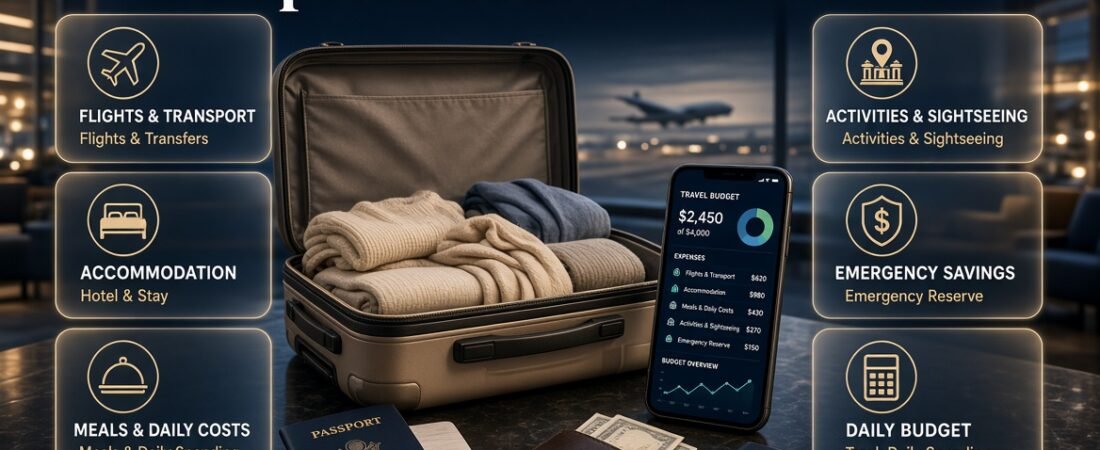
A useful travel budget covers transportation, accommodation, food, local travel, activities, insurance, travel documents, personal purchases, and an emergency reserve. It also distinguishes between expenses you pay in advance and those you will need to cover during your stay.
For example, imagine that you have $1,200 available for a five-day holiday. Your flights and accommodation cost $650, leaving $550 for meals, local transport, sightseeing, and other expenses. Once you account for these remaining costs, you can decide whether the original plan is affordable or whether you should make adjustments.
How Does a Travel Budget Improve Your Trip?
A budget helps you make decisions before money is committed. You can identify expensive categories, compare alternatives, and decide which experiences deserve the largest share of your funds.
The main benefits include:
- Better financial control: You know how much money is available for the entire journey.
- More informed bookings: You compare complete prices instead of focusing on attractive starting rates.
- Less financial uncertainty: You can estimate daily expenses before arriving at your destination.
- Greater flexibility: An emergency reserve gives you more options when unexpected costs arise.
- More enjoyable experiences: You can prioritize meaningful activities without worrying about every purchase.
A budget is particularly valuable when travelling with family or friends because it establishes spending expectations before disagreements occur.
What Should a Complete Trip Budget Include?
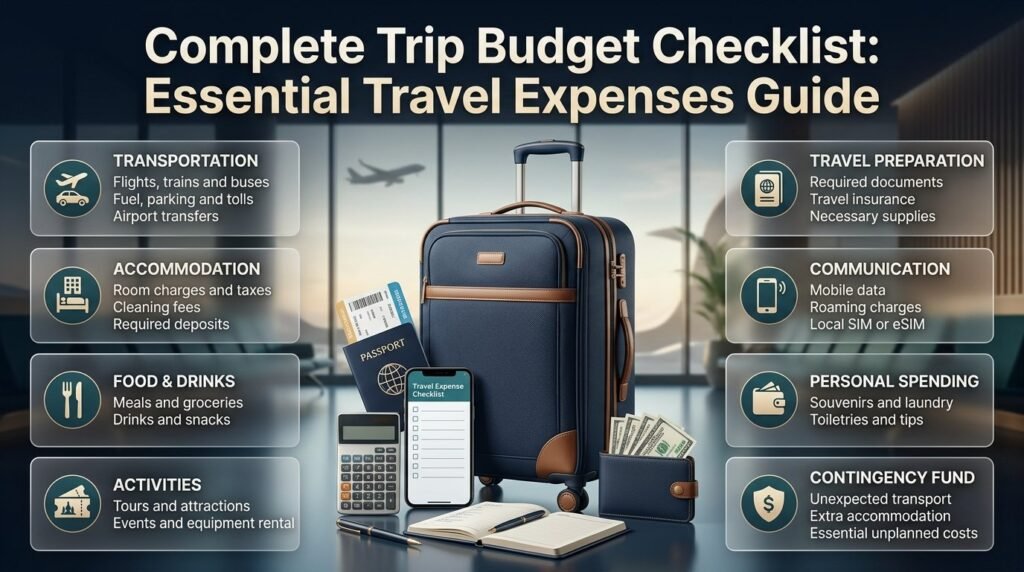
Your budget should include every cost that is reasonably predictable, even when an expense seems small.
| Budget category | Expenses to consider |
|---|---|
| Transportation | Flights, trains, buses, transfers, fuel, parking, tolls |
| Accommodation | Room charges, taxes, cleaning fees, deposits |
| Food | Meals, groceries, drinks, snacks |
| Activities | Tours, attraction tickets, events, equipment rental |
| Travel preparation | Required documents, insurance, necessary supplies |
| Communication | Mobile data, roaming, local SIM or eSIM costs |
| Personal spending | Souvenirs, laundry, toiletries, tips |
| Contingency | Unexpected transport, accommodation, or other essential costs |
The exact categories will depend on the type of trip. A road journey may require more fuel and parking expenses, while an international city break may involve additional documentation and currency exchange costs.
Step 1: Decide How Much You Can Afford to Spend
The first step is to establish your maximum affordable travel budget. Before searching for destinations or hotels, work out how much money you can set aside without affecting your regular responsibilities.
Do not build your travel plan around money you hope to receive later or savings that are already needed for essential expenses. Your budget should reflect the money that is genuinely available for travel.
Calculate Your Available Travel Funds
Use this simple formula:
Available travel money = Dedicated travel savings + Additional savings before departure − Funds reserved for other needs
Suppose you have $700 saved for a holiday and expect to save another $250 before leaving. If $150 must remain available for an essential expense, your travel funds total $800.
This amount becomes your starting point for planning transportation, accommodation, food, and other costs.
Next, decide whether the trip can be completed comfortably within that amount. If the estimated expenses exceed your available money, consider a different destination, shorter stay, or alternative travel dates.
Set a Maximum Spending Limit
Your maximum budget should be a boundary rather than a target that you must spend completely.
For example, if you can comfortably allocate $1,500 to a trip, you should not automatically choose bookings that use the full amount. Finding a more affordable hotel or selecting free activities may allow you to finish the trip with money remaining.
Practical advice: Decide on your maximum spending limit before comparing accommodation upgrades. Attractive rooms and additional services can influence your choices before you have considered the total cost.
Should You Save Money Before Booking?
Saving before booking is helpful when you need to build a dedicated travel fund. Estimate the total cost, determine how much you can save regularly, and set a realistic departure date.
If a trip is expected to cost $1,200 and you already have $400 saved, you need another $800. Saving $200 per month would require four months, assuming your savings remain available and your expenses do not change.
This simple calculation helps you avoid rushing into reservations that your current finances cannot comfortably support.
Step 2: Choose a Destination That Matches Your Budget
The destination has a major influence on the final cost of a trip. Transportation prices are important, but accommodation, meals, local transport, and activities can make an even greater difference to the total.
A destination with inexpensive flights may still be costly if hotel prices are high. Another place may require more expensive transportation but offer affordable accommodation and free attractions.
Compare the Full Cost of Different Destinations
Before deciding where to go, estimate the following:
- Return transportation.
- Accommodation for every night.
- Food and drinks.
- Transport between the airport, accommodation, and attractions.
- Entrance fees and planned experiences.
- Required documents and insurance.
- Currency exchange and payment charges.
- A suitable emergency reserve.
Try to compare destinations using the same trip length and similar comfort levels. This makes your estimates more meaningful.
For example, comparing a luxury hotel in one city with a basic guesthouse in another will not provide a fair picture of which destination offers better value.
Consider the Time of Year
Travel costs often change according to demand. School holidays, major festivals, popular summer periods, and large local events can increase accommodation and transportation prices.
If your dates are flexible, compare several departure dates and travel periods. Travelling outside the busiest season may reduce costs, although weather conditions and attraction opening times should also be considered.
A lower price is not always the best choice if poor weather prevents you from enjoying the activities you planned.
Example: Comparing Two Destinations
Consider the following illustrative estimates for a five-day trip.
| Expense | Destination A | Destination B |
|---|---|---|
| Return transportation | $250 | $310 |
| Accommodation | $350 | $240 |
| Food | $160 | $135 |
| Local transport | $65 | $50 |
| Activities | $120 | $90 |
| Estimated total | $945 | $825 |
Destination B has higher transportation costs but a lower overall estimate. This example demonstrates why you should compare the complete journey instead of choosing a destination based on one attractive price.
Use current prices for your actual destination because these figures are examples rather than market quotations.
Step 3: Estimate Transportation Costs Accurately
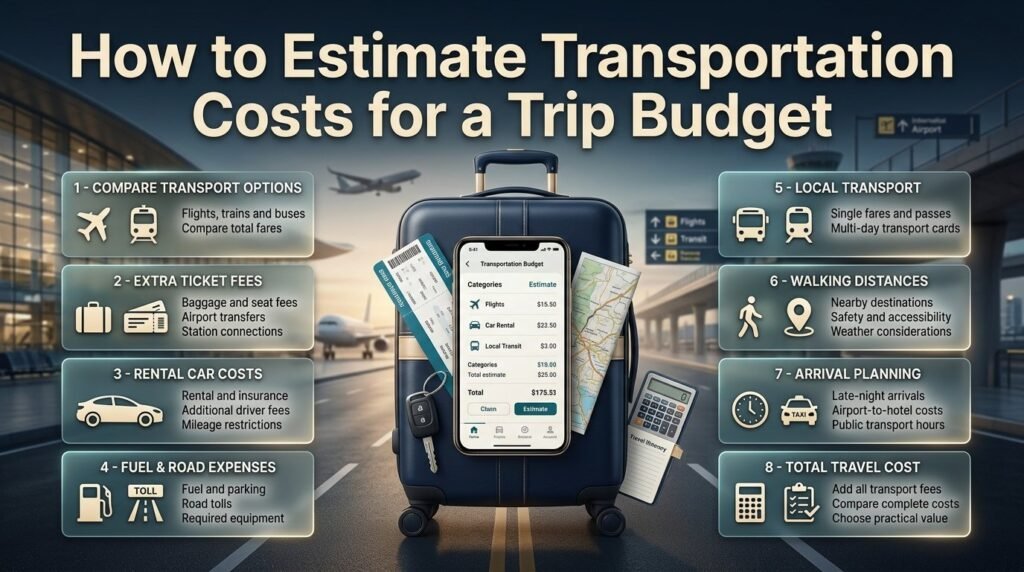
Transportation is often one of the largest parts of a travel budget. It includes getting to the destination and moving around once you arrive.
Compare the Total Price of Flights, Trains, and Buses
When comparing transport options, look beyond the initial fare.
For flights, consider baggage charges, seat-selection fees, airport transfers, and the cost of reaching an airport outside the city. For train and bus journeys, check luggage policies, connection times, station locations, and the cost of reaching your accommodation.
A cheaper ticket may become less attractive if it requires an expensive transfer or an inconvenient overnight journey.
Decide Whether to Rent a Vehicle
A rental vehicle may be useful when visiting several locations, travelling with luggage, or exploring areas with limited public transport. However, the rental price is only one part of the cost.
Include:
- Fuel.
- Parking.
- Road tolls.
- Insurance and applicable excess charges.
- Additional driver fees.
- Possible mileage restrictions.
- Any required equipment or child seats.
Compare these expenses with public transportation and occasional taxis before deciding.
Budget for Local Transportation
Estimate how you will travel between your accommodation, restaurants, attractions, and transport terminals.
Research whether your destination offers single fares, daily passes, multi-day passes, or visitor transport cards. A pass is worthwhile only when the journeys you expect to make justify its price.
Walking may reduce transport expenses for nearby destinations, but consider safety, weather, accessibility, and the distance involved.
Common Transportation Mistake
A common mistake is booking the cheapest arrival time without considering how to reach the accommodation.
An inexpensive late-night flight may require a costly taxi if public transport has stopped running. Compare the full arrival cost before making a decision.
Step 4: Plan Accommodation Expenses
Accommodation can consume a large share of your budget, particularly in popular destinations or during busy travel periods.
The right choice depends on your location, trip length, comfort requirements, and how much time you expect to spend in your room.
Compare Accommodation Types
Hotels may offer convenience and services, while hostels can provide lower-cost beds or private rooms. Guesthouses and serviced apartments may suit travellers who want additional space or cooking facilities.
Do not assume that one type is always the most affordable. Compare the final price for your dates and the number of people travelling.
Check the Complete Booking Price
Before confirming a reservation, review:
- Taxes and mandatory fees.
- Cleaning charges.
- Refund and cancellation conditions.
- Deposit requirements.
- Check-in and check-out times.
- Breakfast availability.
- Parking or resort charges, where applicable.
A room advertised at a low nightly rate may cost considerably more after additional charges are included.
Balance Location and Price
Accommodation outside the centre can be cheaper, but transportation expenses may increase. A centrally located room may save time and reduce the need for repeated taxi journeys.
Estimate the daily transport cost from each location before deciding.
For a longer stay, a property with a kitchen or laundry facilities may reduce other expenses. However, calculate these potential savings realistically rather than assuming every amenity will automatically save money.
Calculate the Accommodation Total
Use this formula:
Accommodation cost = Nightly rate × Number of nights + Additional fees
If a room costs $85 per night for five nights and the total additional fees are $40, the estimated cost is $465.
Check whether the quoted nightly rate includes taxes and whether the final amount changes according to the number of guests.
Step 5: Create a Realistic Food Budget
Food costs are easy to underestimate because travellers often think about restaurant meals but overlook snacks, drinks, coffee, and other small purchases.
Your food allowance should reflect how you actually prefer to eat while travelling.
Estimate Your Daily Food Spending
Start by researching typical meal prices at your destination. Consider whether you prefer restaurants, cafés, local markets, grocery shopping, or a mixture of options.
A realistic daily food budget might include:
- Breakfast at your accommodation or a café.
- An affordable lunch.
- Dinner at a restaurant.
- Water, snacks, and occasional drinks.
These amounts should be based on local prices rather than assumptions about what meals ought to cost.
Use Accommodation Facilities When Helpful
If your accommodation includes breakfast, calculate how much you might save compared with purchasing it separately.
A kitchen may help you prepare some meals, especially during a longer stay. However, groceries still cost money, and buying ingredients that go unused may eliminate the expected savings.
Balance convenience, food preferences, and the time required to prepare meals.
Keep Room for Local Food Experiences
Saving money does not mean avoiding every restaurant. Instead, decide which food experiences matter most and plan around them.
You might choose a special dinner on one evening and simpler meals on other days. This approach allows you to enjoy local cuisine without making every meal an expensive event.
Step 6: Plan Activities and Sightseeing Costs
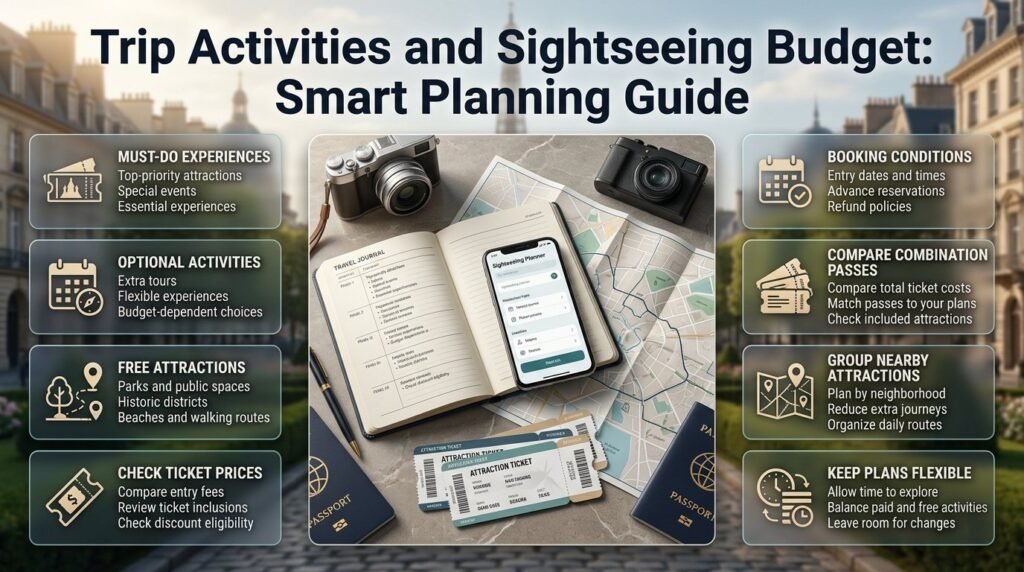
Activities often make a trip memorable, but their costs can vary considerably. Guided tours, attraction tickets, equipment hire, and special events can consume a large part of your remaining budget if you do not plan ahead.
Make a Priority List
Divide potential activities into three groups:
Must-do experiences: The attractions or events you most want to enjoy.
Optional experiences: Activities you would consider if the budget allows.
Free alternatives: Parks, public spaces, walking routes, historic districts, beaches, and other suitable no-entry-cost experiences.
This simple method helps you protect the experiences that matter most.
Check Prices and Booking Conditions
Before purchasing tickets, confirm the date, entry time, refund policy, and what the ticket includes.
Some attractions require advance reservations, while others offer discounts at particular times. Check eligibility conditions before assuming that a discount applies.
If you plan to visit several paid attractions, compare the total individual ticket cost with any available combination pass. A pass is useful only when its included activities match your itinerary and the overall price is competitive.
Avoid Overloading Your Itinerary
Trying to fit too many attractions into a short trip can increase transport expenses and leave little time to enjoy each place.
Plan activities by area so that nearby attractions can be visited together. This can reduce unnecessary journeys and make the day more manageable.
A good itinerary balances paid experiences with flexible time, allowing you to adapt without automatically spending more money.
Step 7: Include Travel Documents, Insurance, and Other Essentials
Travel preparation involves costs beyond transportation and accommodation. Depending on your destination and circumstances, you may need a passport, visa, entry permit, insurance, or other documentation.
Check Documentation Requirements Early
Confirm the entry requirements that apply to your nationality, destination, and travel dates.
Include any applicable application fees, document photographs, processing charges, and necessary travel to complete the process.
Starting early is particularly important when documents require processing time. Last-minute arrangements can create avoidable costs and stress.
Consider Travel Insurance
Travel insurance may provide protection for covered medical emergencies, cancellations, interruptions, or lost belongings, depending on the policy.
Before purchasing coverage, review the exclusions, benefit limits, deductibles, and circumstances under which claims may be accepted.
Do not assume every policy covers every activity or every reason for cancelling a trip.
Remember Communication and Personal Supplies
Your budget may also need to cover mobile data, roaming, local SIM or eSIM services, charging accessories, toiletries, laundry, and other personal essentials.
Estimate these expenses according to what you already own and what you genuinely need to purchase.
Avoid buying unnecessary travel products simply because they are marketed as essential.
Step 8: Calculate Your Daily Travel Budget
A daily travel budget helps you manage money after the main bookings have been arranged. It establishes an approximate spending limit for meals, transport, activities, and personal purchases.
However, the daily allowance should be calculated using the money that remains available after prepaid expenses and your emergency reserve have been accounted for.
Use the Daily Budget Formula
Daily spending allowance = Available money for unpaid trip expenses ÷ Number of travel days
Suppose your total travel budget is $1,500. You have already paid $550 for transport and accommodation and reserved $150 for unexpected costs.
Your remaining spending money is:
$1,500 − $550 − $150 = $800.
For a five-day trip:
$800 ÷ 5 = $160 per day.
This amount covers expenses that remain unpaid, such as meals, local transport, and activities. If some additional bookings still need to be paid, subtract those costs before setting your daily allowance.
Example of a Daily Spending Plan
| Expense | Daily estimate |
|---|---|
| Breakfast | $12 |
| Lunch | $18 |
| Dinner | $30 |
| Local transport | $15 |
| Activities | $45 |
| Snacks and miscellaneous purchases | $15 |
| Total | $135 |
In this illustrative example, a $160 daily allowance leaves $25 of flexibility.
Actual costs will depend on your destination, travel style, and itinerary. Research local prices before using these estimates for a real journey.
What If One Day Costs More Than Another?
Daily spending does not need to be identical throughout the trip.
You might spend more on a guided tour or special dinner and less on a day devoted to walking and free attractions.
Monitor the total budget across the entire journey. If you spend more than planned on one day, decide whether the additional expense is worth adjusting optional activities later.
Quick Tip: Use a daily target as a guide rather than a requirement to spend a particular amount. Money left unspent can provide extra flexibility on another day.
Step 9: Build an Emergency Reserve
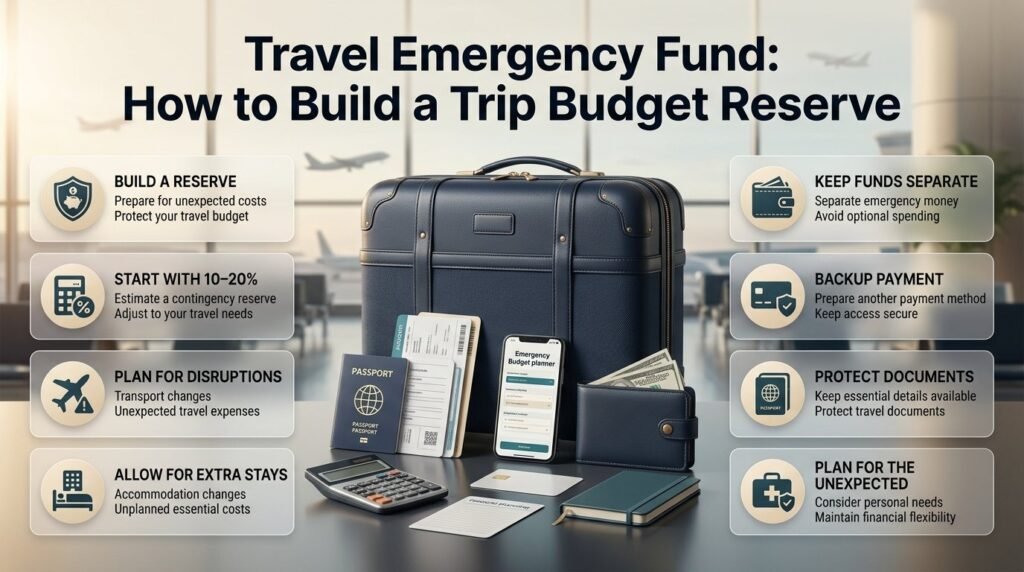
Unexpected costs can occur even when a trip has been carefully planned. Transport disruptions, accommodation changes, urgent purchases, or unforeseen personal needs may affect your finances.
A contingency reserve helps you respond without immediately disrupting the entire itinerary.
How Much Should You Reserve?
A practical starting point is around 10–20% of the estimated trip cost. The appropriate amount depends on the destination, trip length, travel arrangements, insurance coverage, and access to additional funds.
For a trip estimated at $1,000, a reserve of $100–$200 may be a useful starting estimate. It is not a guarantee that every emergency will be covered.
A remote destination or complicated international itinerary may require a different approach.
Keep Emergency Money Separate
Do not treat your contingency reserve as an extension of your shopping allowance.
Keep it accessible in a secure form suitable for your destination, and consider having a backup payment method. Keep important contact details and travel documents available if your primary device or payment method becomes unavailable.
Common mistake: Spending the emergency reserve on optional activities early in the trip. This removes the financial flexibility the reserve was intended to provide.
Step 10: Find Savings Without Sacrificing Comfort
A useful travel budget focuses on value rather than choosing the lowest price in every category.
You can often reduce expenses by comparing alternatives, planning activities carefully, and avoiding purchases that add little to the experience.
Compare Booking Options
Review the complete cost of suitable flights, accommodation, transport, and activities before committing.
A slightly more expensive option may be better value if it includes necessary baggage, provides a practical location, or avoids an additional transfer.
Check cancellation conditions as well. A refundable reservation may be worth considering when your plans remain uncertain, but compare the price difference and the actual terms.
Use Public Transport Where Practical
Public transport can reduce local travel costs in destinations with reliable services.
Research routes, operating hours, ticket options, and airport connections before arrival. For destinations where public transport is limited, compare occasional taxis or rental vehicles instead.
Walking can also reduce costs for nearby attractions, provided the route is safe and suitable for your circumstances.
Take Advantage of Free Experiences
Free museums on selected days, public parks, walking routes, cultural neighborhoods, and community events may provide worthwhile experiences without substantial entrance fees.
Check opening times and availability before relying on a free activity as the centrepiece of your itinerary.
Avoid Unplanned Purchases
Small purchases can accumulate quickly, especially when travelling through airports, tourist districts, and shopping areas.
Set a reasonable allowance for souvenirs and personal spending. Before buying something, consider whether it fits your priorities and whether you would still want it after returning home.
Step 11: Choose a Travel Budgeting Method
The best budgeting method is one that suits your habits and is simple enough to maintain.
You can use a spreadsheet, budgeting app, phone note, or another basic record-keeping method. The goal is to understand how much you planned to spend and how much money remains.
Compare Common Budgeting Methods
| Method | Best suited for | Main advantage | Limitation |
|---|---|---|---|
| Spreadsheet | Detailed planning | Easy to compare estimated and actual costs | Requires regular updates |
| Budgeting app | Frequent spending records | Convenient category tracking | Some features may require payment |
| Phone notes | Simple trips | Quick and easy to use | Totals may need manual calculation |
| Envelope method | Category-based spending | Helps maintain clear limits | Less flexible for changing expenses |
| Shared spreadsheet | Group trips | Makes shared costs visible | Requires cooperation |
How to Create a Simple Travel Budget Spreadsheet
Create columns for the expense category, estimated amount, actual amount, payment status, and notes.
For example:
| Expense | Estimated cost | Actual cost |
|---|---|---|
| Transportation | $300 | $285 |
| Accommodation | $400 | $420 |
| Food | $180 | $165 |
| Activities | $120 | $110 |
| Local transport | $70 | $75 |
| Emergency reserve | $130 | Not used |
| Total | $1,200 | $1,055 spent or committed |
These illustrative figures show how estimates can differ from actual spending. The emergency reserve remains separate rather than being treated as money available for ordinary purchases.
Update your records regularly. Daily tracking is particularly useful when the trip has a tight budget or many separate expenses.
Step 12: Plan a Budget for Family and Group Trips
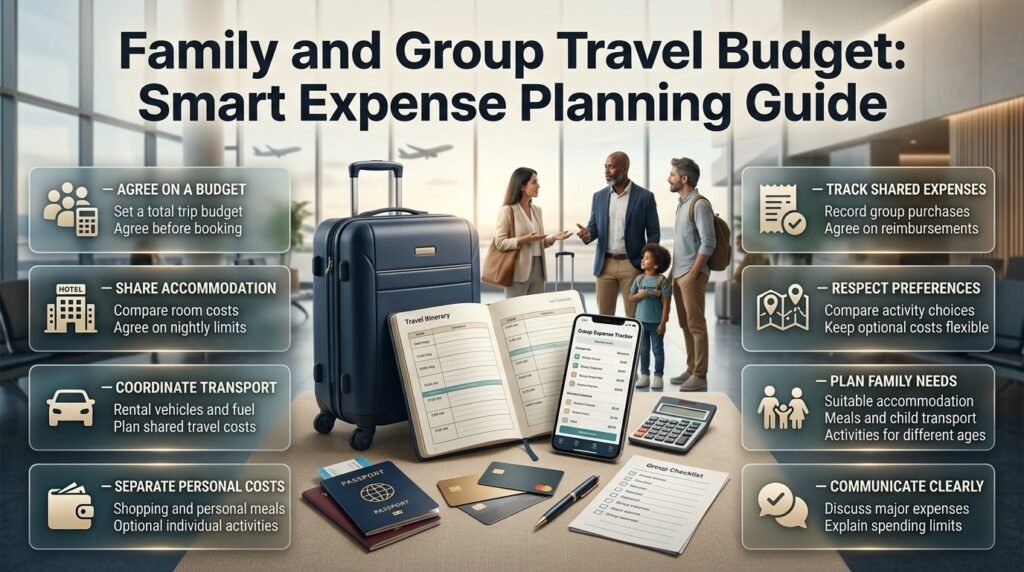
Travelling with other people introduces additional decisions. Sharing accommodation or transport can reduce costs, but unclear expectations may create disagreements.
Before making reservations, agree on the total budget and decide which expenses everyone will share.
Separate Shared and Personal Expenses
Shared expenses might include accommodation, rental vehicles, fuel, groceries, and group activities.
Personal expenses may include shopping, individual meals, optional tours, and personal upgrades.
Decide how shared purchases will be recorded and reimbursed. One person may pay for accommodation while another covers transport, with everyone checking the final amounts.
Allow for Different Preferences
Not everyone will want to spend money on the same activities.
One person may prefer guided tours, while another would rather explore independently. Agree on shared essentials and allow individual travellers to pay for optional experiences that are not part of the common plan.
Families should also consider child-related transport requirements, suitable accommodation, meal needs, and the costs of activities for different age groups.
Keep Communication Clear
Discuss major expenses before booking and explain any limits that affect the group.
For example, agree on the maximum accommodation price per night and decide whether everyone is comfortable with the proposed transport arrangements.
Clear communication makes it easier to plan within the agreed budget and reduces the chance of unpleasant surprises.
Step 13: Manage Currency and Payment Costs
International travel can introduce financial costs that are less obvious during the initial planning stage.
Exchange rates change, and payment providers may apply foreign transaction charges or currency conversion markups.
Estimate Costs in Your Home Currency
When comparing international prices, convert them into a familiar currency using a reliable converter.
For example, if an activity costs 100 units of the destination’s currency, calculate its approximate home-currency equivalent before deciding whether it fits your budget.
Remember that the final amount may differ because of the exchange rate applied when the payment is processed and any additional fees.
Check Your Payment Options
Before departure, review the foreign transaction fees, ATM withdrawal charges, and exchange-rate policies associated with your payment methods.
When a card terminal offers payment in your home currency or the local currency, check the displayed rate and fees. Paying in your home currency through dynamic currency conversion can involve an unfavorable markup.
Carry only a reasonable amount of cash and consider a secure backup payment option.
Prepare for Payment Problems
Keep your bank’s contact details accessible and understand how to report a lost card.
If you are travelling internationally, make sure you can access your account and complete any required security verification while away.
These preparations can help you avoid unnecessary disruption if your preferred payment method becomes unavailable.
Step 14: Adjust Your Budget Before and During the Trip
A travel budget should be reviewed as your plans develop. Initial estimates are useful, but confirmed booking prices and actual spending provide more reliable information.
Review the Budget Before Booking
Once you have estimated all major expenses, calculate the total again.
Check whether your plan still includes transportation, accommodation, meals, local travel, activities, necessary documentation, and the emergency reserve.
If the total exceeds your maximum budget, identify which expenses can be reduced without affecting important needs.
Possible adjustments include shortening the trip, changing dates, choosing a different accommodation option, or removing a lower-priority activity.
Check Your Spending During the Journey
Review expenses every day or two. Compare actual spending with your remaining allowance and look for patterns that may affect the rest of the trip.
If meals consistently cost more than expected, revise your food plan. If local transport is cheaper than estimated, the difference may provide flexibility for another activity.
The aim is not to eliminate every unexpected expense but to respond before small differences become a larger budget problem.
Decide When to Change Your Plans
If your budget becomes tight, prioritize essential transport, suitable accommodation, meals, and other necessary expenses.
Reduce optional purchases first. Avoid making rushed decisions that could create additional costs, such as cancelling a reservation without checking its terms.
If the trip is becoming unaffordable, reassess the remaining plans and choose the safest practical adjustments.
Common Trip Budgeting Mistakes and How to Avoid Them
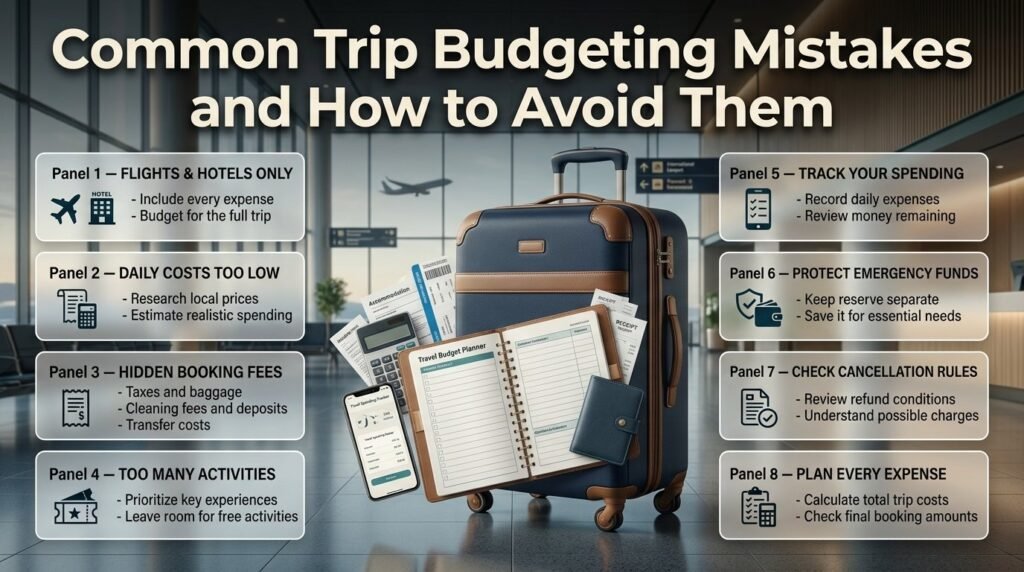
Even a detailed plan can fail when important costs are overlooked or estimates are unrealistic.
Focusing Only on Flights and Hotels
Why it happens: These expenses are easy to find and often receive the most attention during planning.
Why it causes problems: Meals, local transport, entrance fees, and other smaller expenses may leave too little money for the remainder of the trip.
How to avoid it: Build a complete expense list before making major commitments. Estimate the cost of the entire journey rather than its most visible components.
Underestimating Daily Expenses
Why it happens: Travellers may use optimistic estimates rather than checking actual local prices.
Why it causes problems: Repeated small differences can use up the money intended for later activities.
How to avoid it: Research typical meal, transport, and attraction prices. Use estimates that reflect your intended travel style.
Forgetting Additional Booking Fees
Why it happens: Advertised prices may not show every charge prominently.
Why it causes problems: Baggage, taxes, cleaning charges, deposits, and transfers can increase the final cost.
How to avoid it: Review the complete payment amount and booking conditions before confirming a reservation.
Booking Too Many Activities
Why it happens: Travellers may try to fit every recommended attraction into one itinerary.
Why it causes problems: The schedule becomes expensive, tiring, and difficult to manage.
How to avoid it: Prioritize important experiences and leave room for free activities and unplanned time.
Failing to Track Expenses
Why it happens: Recording spending may seem inconvenient during a holiday.
Why it causes problems: It becomes difficult to know how much money remains.
How to avoid it: Use a simple note or spreadsheet and review your spending regularly.
Using Emergency Money for Entertainment
Why it happens: A reserve may appear to be unused extra money.
Why it causes problems: It reduces your ability to respond to unexpected essential costs.
How to avoid it: Separate the reserve from everyday spending money and use it only when appropriate.
Ignoring Refund and Cancellation Conditions
Why it happens: Travellers focus on the price and overlook the booking rules.
Why it causes problems: Changing plans may lead to additional charges or unrecoverable payments.
How to avoid it: Read cancellation conditions before booking and consider the value of flexibility when your plans are uncertain.
Professional Tips for Creating a More Reliable Travel Budget
Experienced planners use a few practical techniques to make travel costs easier to manage.
Use Confirmed Prices Whenever Possible
Distinguish between estimated expenses and confirmed bookings. Record the final price once a reservation is made and update the remaining budget accordingly.
This prevents you from treating an early estimate as a guaranteed cost.
Plan Expensive Days in Advance
If your trip includes a special event, a guided tour, or another high-cost experience, allocate money for it before deciding how much remains for ordinary daily spending.
This makes it easier to balance expensive days with more affordable activities.
Keep Important Expenses Separate
Maintain a clear distinction between money allocated to bookings, ordinary spending, and emergencies.
Even if you use a single account, your spreadsheet or notes should show which funds are already committed.
Consider the Cost of Convenience
A more expensive option can sometimes reduce other expenses.
For example, accommodation near a reliable transport network may reduce taxi costs. A direct connection may be worth considering if it avoids an expensive overnight stay.
Compare the full cost and practical benefits before choosing.
Leave Room for Flexibility
Do not plan every available dollar around optional purchases. Prices may change, and you may discover an experience worth including once you arrive.
Flexibility is useful only when essential expenses and the emergency reserve remain protected.
Keep Records of Important Bookings
Maintain accessible records of reservations, confirmation numbers, payment amounts, and cancellation deadlines.
This makes it easier to verify what has already been paid and identify any remaining costs before departure.
Final Trip Budget Planning Checklist
Before confirming your journey, review each of the following items.
- Set a maximum affordable travel budget.
- Choose a destination and suitable travel dates.
- Compare complete transportation prices.
- Calculate accommodation costs, including additional fees.
- Estimate meals and daily personal expenses.
- Research activities and prioritize important experiences.
- Check required travel documents and applicable fees.
- Review whether travel insurance is appropriate.
- Include local transport and communication expenses.
- Set aside a contingency reserve.
- Check cancellation and refund conditions.
- Choose a simple method to track expenses.
- Prepare a suitable backup payment option.
- Review the complete budget before departure.
- Monitor actual spending throughout the trip.
Completing this checklist will not guarantee that every cost stays exactly as expected, but it will help you identify gaps before they become difficult to manage.
How Do You Create a Realistic Trip Budget Without Overspending?
Creating a realistic trip budget starts with understanding how much money you can comfortably afford to spend. Estimate the full cost of transportation, accommodation, meals, local travel, activities, and other necessary expenses before making reservations. Use actual prices where possible instead of relying on rough guesses. Once you know the estimated total, compare it with your available funds and adjust your plans if necessary.
To keep your spending under control:
Set a maximum budget: Decide your spending limit before booking flights or accommodation.
Calculate all major expenses: Include smaller costs such as baggage fees, airport transfers, snacks, and booking charges.
Keep an emergency reserve: Set aside additional money for unexpected expenses rather than treating it as entertainment money.
Track your spending: Review your expenses during the trip so you can make adjustments before exceeding your limit.
A realistic budget should support the experience you want without creating financial pressure after you return home.
How Much Extra Money Should You Include in a Travel Budget for Unexpected Expenses?
Unexpected expenses can arise from transport delays, accommodation changes, urgent purchases, or other situations that were not included in your original plan. A practical starting point is to reserve around 10–20% of your estimated trip cost, although the appropriate amount depends on the destination, trip duration, travel arrangements, and available financial support.
For example, if your planned trip costs $1,500, a reserve of $150–$300 may provide a useful starting point. However, this amount is not a guarantee that every emergency will be covered.
Consider these practical steps:
Keep the reserve separate: Do not include it in your ordinary daily spending allowance.
Review your travel arrangements: Complicated itineraries or remote destinations may require a larger financial buffer.
Check your insurance coverage: Understand which unexpected expenses may be covered and which remain your responsibility.
Maintain a backup payment method: This can help if your primary card or payment option becomes unavailable.
The purpose of an emergency reserve is to protect your travel plans and financial stability when circumstances change unexpectedly.
What Is the Best Way to Calculate a Daily Travel Budget?
The most effective method is to calculate how much money remains after accounting for prepaid expenses and your emergency reserve, then divide that amount by the number of travel days. This gives you a practical daily spending target for meals, local transportation, activities, and other costs that have not already been paid.
For example, suppose your total trip budget is $1,800. You have paid $700 for transportation and accommodation and reserved $200 for unexpected expenses. Your remaining spending money is $900. For a six-day trip, that provides a daily allowance of $150.
Use these guidelines to manage your daily budget:
Separate prepaid costs: Do not count expenses you have already paid as available spending money.
Plan expensive activities in advance: Allocate money for special tours or events before calculating your remaining daily allowance.
Allow daily flexibility: Some days will naturally cost more than others.
Review your remaining balance: If you spend more than planned, adjust optional expenses later in the trip.
A daily budget works best as a flexible guide rather than a requirement to spend exactly the same amount every day.
How Can You Reduce Travel Costs Without Sacrificing Comfort or Important Experiences?
Reducing travel costs is not simply about choosing the cheapest flight or accommodation. The better approach is to compare the complete cost of different options and identify savings that do not compromise your comfort, safety, or most important experiences.
Start by comparing travel dates, accommodation locations, transport options, and attraction prices. Consider whether public transport, free sightseeing opportunities, or accommodation with useful amenities could reduce your overall expenses.
Practical ways to save include:
Compare total booking costs: Check taxes, baggage charges, transfers, and other fees before choosing an option.
Choose accommodation strategically: A slightly higher room rate may be worthwhile if the location reduces daily transport costs.
Mix paid and free activities: Prioritize the attractions you value most and include affordable alternatives.
Plan meals realistically: Combine restaurant visits with suitable lower-cost food options when practical.
Avoid unnecessary purchases: Set a reasonable allowance for shopping and souvenirs before departure.
The goal is to spend intentionally. Saving money on less important categories allows you to direct more of your budget toward experiences that make the trip worthwhile.
What Should You Do If Your Actual Travel Expenses Exceed Your Original Budget?
If your travel expenses exceed your original estimates, review your remaining funds and identify which categories are responsible for the increase. Higher-than-expected meal prices require a different response from an unexpected transport expense. Understanding the cause helps you make sensible adjustments without disrupting essential arrangements.
Follow these steps to regain control:
Review your remaining budget: Calculate how much money is available for the rest of the trip.
Prioritize essential expenses: Protect necessary transportation, suitable accommodation, meals, and other important needs.
Reduce optional spending: Consider postponing shopping or removing lower-priority paid activities.
Use your reserve appropriately: Access emergency funds when needed rather than automatically treating them as extra spending money.
Reassess upcoming bookings: Check cancellation terms before changing reservations, since cancelling may create additional costs.
If the trip remains unaffordable after these adjustments, reconsider the remaining itinerary rather than taking on financial commitments you cannot comfortably manage. Regular expense tracking makes these decisions easier because you can identify problems early instead of discovering them after most of your money has been spent.
Conclusion: How to Plan a Trip Budget
Learning how to plan a trip budget helps you travel with greater confidence, manage your money wisely, and enjoy your journey without unnecessary financial stress. A successful travel budget begins with understanding your destination, setting a realistic spending limit, and estimating the main expenses, including transportation, accommodation, food, activities, and local travel. When you plan these costs in advance, you can make better decisions and avoid spending too much on things that are not important to your experience.
Remember that a good budget should be practical rather than overly restrictive. Compare travel options, book essential arrangements at the right time, prioritize the experiences you value most, and keep extra money available for unexpected expenses. Tracking your spending throughout the trip also helps you recognize where you can save and where spending a little more may improve your comfort or convenience.
Before departure, review your estimated costs, confirm important bookings, check your available funds, and prepare a backup plan for unexpected changes. You can also explore our Travel Guide for additional travel-planning guidance and use the Plan a Journey resource to organize your arrangements more effectively.
Ultimately, the best trip budget is one that supports your travel goals while protecting your financial well-being. With careful preparation, realistic estimates, and flexible spending decisions, you can make the most of your journey, enjoy meaningful experiences, and return home without unnecessary money worries.