
Introduction
Travel Guide | Travel can be one of the most rewarding ways to spend your time. It gives you the opportunity to explore unfamiliar places, experience different cultures, enjoy nature, visit family, and take a break from everyday responsibilities. However, a trip that looks exciting at first can quickly become stressful when transport is poorly planned, expenses are underestimated, accommodation disappoints, or important documents are forgotten.
A successful trip does not depend on spending a large amount of money or following a complicated itinerary. It starts with understanding your priorities, making realistic arrangements, and preparing for the situations that could affect your plans.
This travel planning guide explains how to choose a destination, organize transport, manage your budget, prepare a practical packing list, select suitable accommodation, and make informed decisions throughout your journey. It also explores family travel, solo trips, responsible tourism, and the importance of preparing your home before leaving.
For readers who want practical information about everyday living alongside travel inspiration, Brendan Active Property Care provides a starting point for exploring useful property care and home management topics that can support a more organized lifestyle.
Whether you are planning a weekend getaway, a family holiday, a road trip, or an international journey, the aim is to help you prepare confidently, reduce avoidable problems, and make better use of your time and money.
1. What Is Travel Planning, and Why Does It Matter?
Travel planning is the process of organizing the important details of a journey before departure. It includes selecting a destination, deciding when to travel, estimating costs, arranging transportation, choosing accommodation, preparing documents, and identifying possible risks.
Good planning gives a trip structure without requiring you to schedule every minute. It helps you understand what needs to be arranged in advance and what can be decided when you arrive.
The main benefits of planning ahead
A practical travel plan can help you:
- Control spending by setting a realistic budget.
- Avoid unnecessary delays caused by missing documents or reservations.
- Choose accommodation that suits your needs and location preferences.
- Make informed decisions about transport and travel times.
- Prepare for weather conditions and local customs.
- Leave enough time for rest, meals, and unexpected changes.
- Reduce worries about responsibilities at home while you are away.
Planning is particularly useful when traveling during busy holidays, visiting unfamiliar destinations, coordinating a group, or arranging a trip with children.
However, excessive planning can also make travel tiring. A schedule that leaves no room for rest or spontaneous discoveries can turn a holiday into another demanding routine.
Professional tip: Plan the essential parts of your trip firmly, but leave some flexible time in your itinerary. Confirm transport, accommodation, important activities, and document requirements first. Treat optional sightseeing as adjustable.
2. How Do You Choose the Right Travel Destination?

Choosing a destination becomes easier when you start with the experience you want rather than simply selecting a popular place.
Some travelers want peaceful surroundings and scenic views. Others prefer historical landmarks, museums, shopping districts, beaches, cultural experiences, or outdoor activities. Your destination should reflect your interests, available time, budget, and practical requirements.
Identify the purpose of your trip
Begin by answering three questions:
- What do I want to experience?
- How much time can I realistically spend traveling?
- What total amount can I comfortably afford?
For example, someone with only two free days may benefit more from a nearby destination than a distant location requiring several hours of travel in each direction.
A family with young children may prefer accommodation close to food options and attractions. A traveler interested in history may value museums, guided tours, and walkable historic areas more than nightlife.
The best destination is not necessarily the most famous. It is the place that matches your circumstances.
Consider weather and season
Weather can influence transportation, comfort, prices, and the activities available at your destination.
Before deciding on travel dates, consider:
- Typical temperatures during the planned month.
- Rainfall, snowfall, heat, or humidity.
- Seasonal road conditions.
- Peak tourist periods and local holidays.
- Whether your preferred activities operate during that season.
- The likelihood of weather-related transport disruptions.
Mountain destinations, for example, may be attractive during warmer months but can have changing road conditions in other seasons. Coastal destinations may offer different experiences depending on the weather and local operating schedules.
Do not rely only on photographs or general descriptions. Check conditions closer to departure and be willing to change plans when necessary.
Compare destinations before booking
| Consideration | What to evaluate | Why it matters |
|---|---|---|
| Travel time | Total time from departure to arrival | Helps you protect your usable holiday time |
| Overall cost | Transport, accommodation, meals, activities, and local travel | Prevents budget surprises |
| Weather | Seasonal conditions and forecasts | Helps with clothing and activity planning |
| Accessibility | Walking distances, stairs, transport, and available facilities | Makes the trip more comfortable |
| Safety | Current local conditions and travel advisories | Supports informed decisions |
| Activities | Attractions, nature, food, and cultural experiences | Keeps the trip aligned with your interests |
Common mistake: Choosing a destination entirely because it looks attractive on social media. A beautiful location may still be unsuitable if it requires expensive transport, has limited accommodation, or cannot be comfortably explored during your available dates.
3. How Do You Create a Realistic Travel Budget?

A travel budget is an estimate of what the complete trip will cost, not just the price of a flight or hotel.
Many travelers underestimate expenses because they calculate the most visible costs and overlook meals, local transport, entry fees, baggage charges, communication, and unexpected changes.
Calculate the full cost
Divide your estimated expenses into categories:
- Transportation to and from the destination.
- Accommodation and any applicable taxes or service charges.
- Food, drinks, and basic daily necessities.
- Local transport, parking, and transfers.
- Sightseeing tickets, tours, and activities.
- Travel insurance where appropriate.
- Required documents and entry-related expenses.
- Communication and internet access.
- Souvenirs and optional purchases.
- An emergency reserve.
Consider this example of a hypothetical three-day trip. The figures below are illustrative rather than current market prices.
| Expense | Example estimate |
|---|---|
| Return transport | 12,000 |
| Accommodation | 15,000 |
| Meals | 6,000 |
| Local transport | 3,000 |
| Activities | 4,000 |
| Other planned expenses | 2,000 |
| Subtotal | 42,000 |
| Suggested contingency reserve of 15% | 6,300 |
| Estimated total | 48,300 |
The currency is not specified because costs differ by country and destination. Replace these amounts with local prices before making a decision.
The contingency reserve is not money you must spend. It is a buffer that helps you handle minor surprises without disrupting the rest of your budget.
Separate essential and optional expenses
Essential expenses are those needed to complete the trip safely and comfortably. Optional expenses include premium upgrades, additional tours, souvenirs, and activities you can skip without affecting the main purpose of the journey.
If your estimate is too high, review optional spending before reducing essential arrangements such as suitable accommodation, safe transportation, or appropriate insurance.
Track spending during the trip
Use a notebook, spreadsheet, or simple budgeting app to record daily expenses. You do not need to monitor every small purchase obsessively; the purpose is to notice when your spending begins to exceed your plan.
A useful approach is to divide your available spending money by the number of travel days, while keeping the emergency reserve separate.
Quick tip: Do not treat a credit limit as a travel budget. Decide what you can afford before booking and consider possible exchange-rate changes, bank fees, and payment restrictions.
4. When Should You Book Flights, Trains, or Other Transport?
The right booking time depends on your route, travel season, transport provider, and flexibility. There is no single booking rule that guarantees the lowest price.
Instead of assuming that the cheapest advertised fare is the best choice, compare the complete cost and the conditions attached to each option.
Compare more than the ticket price
When evaluating transport, consider:
- Departure and arrival times.
- Total journey duration.
- Number and length of connections.
- Baggage allowances.
- Cancellation and change conditions.
- Airport or station transfer costs.
- Accessibility and comfort.
- The reliability of the route during your travel season.
A lower-priced flight may involve an inconvenient connection or costly baggage fees. A direct service may cost more but save enough time to make it worthwhile.
Allow sufficient time for connections
When booking connecting transport separately, remember that delays on the first service may not protect you from missing the second. Separate tickets can carry different responsibilities and rebooking conditions.
Whenever possible, understand the connection arrangements before purchasing. Check the transport provider’s recommended arrival time and allow for security checks, immigration, baggage collection, and transfers where applicable.
Prepare for transport disruptions
Keep your booking confirmations and relevant contact information accessible. If a service is delayed or canceled, check the provider’s official instructions before purchasing replacement tickets.
For road trips, estimate fuel or charging costs, parking, tolls, rest stops, and overnight accommodation where needed.
For longer journeys, plan breaks rather than trying to reach the destination as quickly as possible.
Professional advice: A good transport choice balances price, time, reliability, and convenience. The cheapest option is useful only when its restrictions and additional expenses fit your needs.
5. How Can You Choose Suitable Accommodation?

Accommodation affects your comfort, daily travel time, budget, and overall experience. A property that looks attractive in promotional photographs may not be practical for your itinerary.
Start by deciding what matters most: location, price, privacy, family facilities, accessibility, kitchen access, or proximity to public transport.
Choose the location before the room type
A reasonably priced room far from your planned activities may create extra transport costs and waste valuable time.
Check the approximate distance between the accommodation and the places you expect to visit. Consider how you will travel at different times of day and whether food shops, pharmacies, transport stops, and other useful services are nearby.
Also consider noise levels, neighborhood conditions, accessibility, and the suitability of the area for your arrival time.
Read reviews critically
Reviews can help you identify recurring issues that promotional descriptions may not explain.
Look for comments about:
- Cleanliness and maintenance.
- Accuracy of the property description.
- Noise and privacy.
- Staff communication.
- Check-in arrangements.
- Additional charges.
- Heating, cooling, and internet reliability.
- Transport access and surrounding facilities.
Give more attention to repeated, specific observations than to one unusually positive or negative comment.
Understand the booking conditions
Before paying, check the cancellation policy, deposit requirements, check-in and check-out times, included meals, taxes, and any security deposit.
If you expect to arrive late, confirm that the accommodation can accept your arrival time. Keep the booking confirmation and address accessible even when your phone has limited connectivity.
Common mistake: Booking a room based only on photographs and the headline price. Always review the location, full cost, conditions, and recent feedback before committing.
6. How Do You Prepare a Practical Travel Packing List?
A useful packing list includes what you genuinely need for the destination, activities, weather, and length of the trip. Packing more items than necessary can make luggage difficult to manage, while packing too little may create avoidable purchases or inconvenience.
Start with the essentials
Prepare the following categories before adding optional items.
Documents and bookings
- Passport or other required identification.
- Tickets and accommodation confirmations.
- Visas or entry documents, when required.
- Insurance information.
- Emergency contacts.
- Copies of important documents stored securely.
Clothing
- Everyday outfits appropriate for the climate.
- Comfortable walking shoes.
- Sleepwear and undergarments.
- Weather-appropriate outerwear.
- Clothing suitable for cultural expectations or planned activities.
- A spare outfit in your carry-on for longer journeys, if practical.
Personal care
- Toothbrush and toothpaste.
- Basic toiletries in permitted quantities.
- Personal hygiene supplies.
- Sunscreen appropriate for the destination.
- Any necessary personal care items.
Technology
- Phone and charging cable.
- Compatible power adapter.
- Portable battery where permitted.
- Headphones if useful.
- Offline copies of essential travel information.
Health and comfort
- Regular prescribed medication in its original packaging.
- Necessary medical information.
- Basic first-aid supplies suitable for your needs.
- Refillable water bottle where safe and practical.
- Items that help you rest comfortably during a long journey.
Medication rules vary by destination. Check the applicable requirements before carrying prescription medicines across borders, particularly if they are controlled or require supporting documentation.
Pack according to your itinerary
A city break, hiking holiday, family visit, and beach trip require different equipment.
For a walking-focused trip, comfortable footwear may be more valuable than several extra outfits. For a cold destination, appropriate layers are usually more practical than one bulky garment. For a family trip, organize essential items so that you can find them without unpacking every bag.
Keep important documents, essential medication, and items needed during the journey in accessible luggage rather than placing everything in a checked bag.
Use a final packing check
The evening before departure, check the weather, transport rules, baggage limits, and next day’s schedule. Confirm that essential items are packed and that luggage can be carried comfortably.
Pro tip: Pack complete outfits rather than unrelated clothing pieces. Choosing items that work together can reduce luggage without making the trip feel restrictive.
7. What Documents Should You Check Before International Travel?
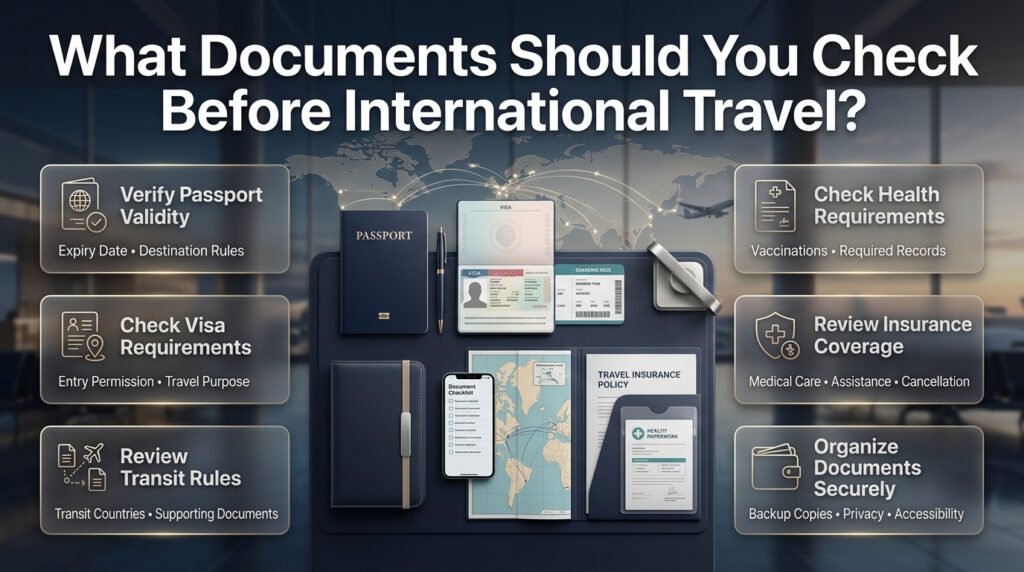
International travel requires more than purchasing a ticket. Entry rules depend on your nationality, destination, transit points, purpose of travel, and length of stay.
Requirements can change, so check the relevant official government and transport guidance before departure.
Verify passport validity
Some destinations require a passport to remain valid for a specified period beyond your planned arrival or departure. Other destinations apply different rules.
Check the requirement for every country on your itinerary, including transit countries where you may pass through immigration.
Confirm visa and entry requirements
Depending on the destination, you may need a visa, electronic authorization, proof of onward travel, accommodation details, evidence of sufficient funds, or other supporting documents.
Do not assume that an entry rule for one country applies to another. Check whether your travel purpose matches the permission you are applying for.
Check health and insurance requirements
Certain destinations may have vaccination or health documentation requirements. Travelers with specific medical needs should consult a qualified healthcare professional well before departure.
Travel insurance should be reviewed carefully. Check whether the policy covers the destination, trip duration, planned activities, medical care, emergency assistance, and cancellation risks relevant to your circumstances.
Keep documents organized
Store your documents in a secure, accessible place. Keep backup copies separate from the originals, and share your itinerary with a trusted person when appropriate.
Do not leave sensitive documents exposed in public or upload them to unfamiliar services simply for convenience.
Important: An airline ticket does not guarantee entry into another country. Immigration officials apply the destination’s entry rules, and the traveler is responsible for meeting the applicable requirements.
8. How Can You Stay Safe While Traveling?
Travel safety involves preparation, awareness, and sensible decisions. No destination can be guaranteed completely risk-free, but understanding local conditions can help you make more informed choices.
Research the destination before departure
Check current travel advisories, weather warnings, local laws, transportation conditions, and any restrictions affecting your itinerary.
A destination that was suitable several months ago may face new conditions that affect roads, public events, accommodation, or movement.
For domestic trips, local weather, road closures, and regional access requirements can be just as important as international travel documentation.
Protect your belongings
Keep your phone, wallet, identification, and other valuables secure, especially in crowded transport hubs and busy public spaces.
Use accommodation security arrangements responsibly and avoid displaying expensive items unnecessarily. Keep a backup payment method separate from your main wallet if practical.
Be cautious with unexpected requests for money, unusual payment instructions, and people claiming that urgent fees must be paid immediately.
Plan transport and arrival times
Know how you will get from the airport, station, or terminal to your accommodation. Use reputable transport providers and confirm the destination before beginning the journey.
If you expect to arrive late, arrange the transfer in advance where possible and make sure your accommodation knows your estimated arrival time.
Avoid relying on an unfamiliar route or unverified transport offer simply because it appears convenient.
Maintain communication
Tell a trusted person where you are going and when you expect to arrive. For longer trips, agree on a reasonable check-in schedule.
Save important contact information in a way that remains accessible if your phone battery runs out or internet access becomes unavailable.
If traveling with others, agree on a meeting point and a simple plan for what to do if someone becomes separated from the group.
Respect local laws and customs
Learn basic expectations regarding clothing, photography, religious sites, public behavior, and restricted locations. Ask permission before photographing people when appropriate.
Follow instructions from local authorities, avoid unsafe crowds or demonstrations, and change plans if conditions become concerning.
Expert tip: Safety planning is not a reason to become anxious about every possibility. It is a way to know what to do when circumstances change and to make calmer decisions.
9. How Can You Plan a Flexible Travel Itinerary?
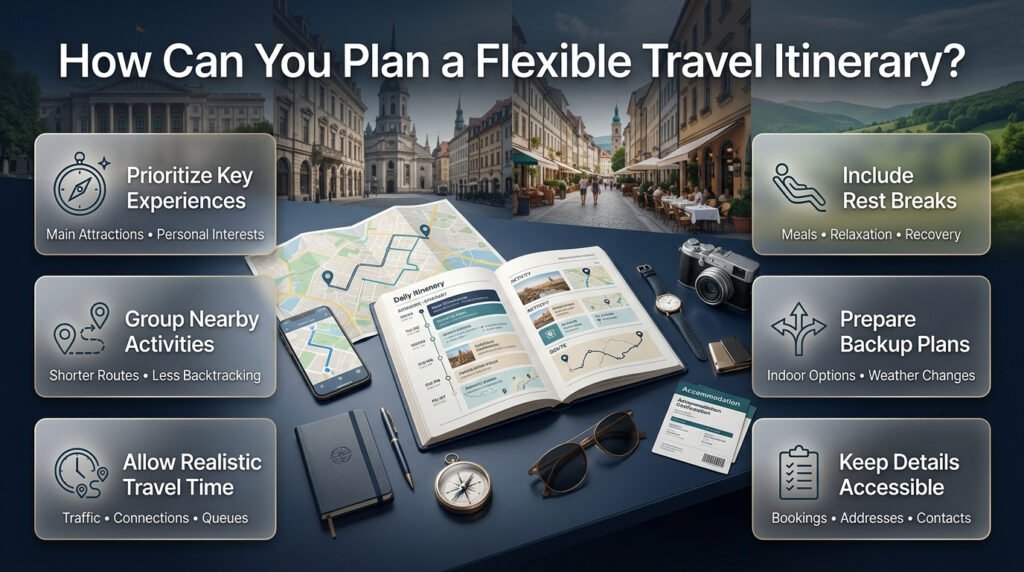
An itinerary is a practical outline of where you will go, what you hope to do, and how much time each activity may require.
The best itinerary gives you direction without making every hour feel like an appointment.
Begin with your priorities
Choose two or three important experiences for each full day, depending on their distance and duration. Then add meals, transport, rest, and optional activities.
For example, a city visit might include one major attraction in the morning, a nearby lunch stop, a relaxed afternoon walk, and an optional evening activity.
This structure is usually more manageable than traveling repeatedly between distant attractions.
Group activities by location
Look at a map and group nearby places together. This can reduce unnecessary travel and give you more time to enjoy each location.
Estimate realistic journey times rather than relying entirely on straight-line distances. Traffic, public transport connections, walking conditions, and queues can make short distances take longer than expected.
Include rest and backup time
Allow room for meals, tiredness, weather changes, and unexpected delays. Travelers who schedule activities from early morning until late evening may discover that they have little energy left to enjoy them.
Identify an alternative indoor activity for days when outdoor plans are disrupted. For a trip involving several towns or regions, avoid making every connection depend on perfect timing.
Keep essential information accessible
Your itinerary should include:
- Travel dates and departure times.
- Accommodation details.
- Important booking references.
- Planned transport arrangements.
- Addresses for key destinations.
- Emergency contact information.
- Alternative plans for major disruptions.
You do not need to share every detail publicly. Keep personal information secure and provide it only to people or services that genuinely need it.
Quick tip: Treat the itinerary as a guide rather than a promise. If an activity becomes impractical, choose the experience that matters most instead of rushing through everything.
10. How Can You Travel Comfortably With Family?
Family travel requires attention to different ages, interests, routines, and comfort levels. A plan that works for adults traveling alone may be difficult for children or older relatives.
Start by discussing the trip’s main purpose and identifying any practical requirements before booking.
Choose suitable accommodation and transport
Families may benefit from accommodation with enough sleeping space, suitable bathroom facilities, convenient meal options, and reasonable access to planned activities.
Check whether a property has stairs, lifts, accessible entrances, or other features relevant to your group.
For transport, consider journey duration, transfer times, luggage, seating arrangements, and the need for breaks. A slightly longer but simpler route may be more comfortable than a connection-heavy journey.
Plan activities for different energy levels
Do not assume everyone will want to visit every attraction. Include a mixture of shared experiences and optional activities when appropriate.
For younger children, keep snacks, weather-appropriate clothing, entertainment, and essential care items accessible. Confirm any child-specific transport or accommodation requirements before departure.
For older family members, consider walking distances, seating opportunities, access to medication, and the availability of necessary facilities.
Agree on practical arrangements
Before leaving, discuss:
- The expected daily schedule.
- The spending budget.
- Meeting points in busy places.
- Contact arrangements.
- Any dietary or accessibility needs.
- What to do if plans change.
Common mistake: Trying to fit too many attractions into a family holiday. A smaller number of enjoyable activities often creates a better experience than a demanding schedule that leaves everyone exhausted.
11. What Should You Know About Solo Travel?

Solo travel gives you greater freedom to choose your route, pace, activities, and spending priorities. It can also require more independent planning because there is no companion automatically available to help with luggage, navigation, or unexpected changes.
The right preparation depends on the destination and the nature of the trip.
Research your destination carefully
Learn about local transportation, neighborhood conditions, opening hours, local customs, and practical arrival arrangements.
Choose accommodation based on reliable information, convenient access, and the facilities you need. Avoid booking an unfamiliar place without understanding how you will reach it.
Share your itinerary appropriately
Tell a trusted person where you plan to stay and how you can be contacted. For remote trips or activities with limited connectivity, establish a realistic communication plan.
Keep copies of essential documents and emergency contact details accessible without depending on a single device.
Protect your independence and privacy
You do not need to disclose your full itinerary or personal details to strangers. Be cautious about sharing accommodation information publicly in real time.
If a situation feels uncomfortable, you can leave, decline an invitation, or seek help from appropriate staff or local authorities.
Balance independence with support
Solo travel does not mean doing everything alone. Reputable guided tours, established transport services, and organized group activities can be useful when they fit your interests and safety needs.
Professional advice: Make the first day relatively simple. Arrive, check in, understand the surrounding area, and identify nearby essentials before attempting a complicated schedule.
12. How Can You Prepare Your Home Before Leaving for a Trip?
A travel plan should include the property you are leaving behind. Returning home to a leak, an unpleasant smell, spoiled food, or an avoidable maintenance problem can undermine an otherwise enjoyable trip.
The preparation required depends on the length of your absence, the property’s condition, the weather, and whether someone will be checking on it.
Inspect essential areas before departure
Start with a basic home check:
- Check for visible plumbing leaks.
- Ensure taps are turned off properly.
- Dispose of perishable food that will not remain safe.
- Empty rubbish bins where necessary.
- Close and secure suitable windows and doors.
- Check that essential appliances are used safely.
- Arrange for pets and plants to receive appropriate care.
- Leave emergency contact details with a trusted person where appropriate.
Do not switch off systems that are necessary for safety, security, refrigeration, medical equipment, or protection against extreme temperatures without understanding the consequences.
For a broader preparation routine, the Home Maintenance guide can help you organize regular checks and understand which tasks deserve attention before an extended absence.
Deal with small repairs in advance
A minor problem may become more inconvenient when nobody is available to notice it. A loose fitting, damaged seal, or unreliable lock deserves attention if it could affect security or cause further damage.
Do not begin a major repair immediately before departure unless it is necessary. Last-minute work can create additional problems if there is insufficient time to test the result.
The guide to Common Home Repairs and Improvements provides a relevant starting point for understanding ordinary repair priorities and planning improvements sensibly.
Prepare outdoor areas
Outdoor spaces may need attention before a long absence, particularly during periods of heavy rain, strong winds, or extreme temperatures.
Check that drains are not visibly obstructed, loose outdoor objects are secured, and plants have a suitable watering arrangement. Consider whether bins, garden furniture, or other items need to be moved to a protected area.
The Outdoor & Garden Care guide can support a practical approach to maintaining outdoor spaces without turning departure day into a large garden project.
Leave the property clean and organized
A clean home is more pleasant to return to and makes it easier to identify any unusual problem after a trip.
Wash necessary dishes, clear food waste, organize laundry, and leave frequently used areas tidy. Avoid storing damp items in closed spaces where they may develop odors.
For room-by-room preparation ideas, explore Cleaning & Organization.
Review wider property responsibilities
If you own or manage a property, consider any responsibilities that will continue while you are away. These may include scheduled maintenance, contractor visits, deliveries, garden care, or arrangements for urgent repairs.
The Property Care resource is relevant when you want to approach routine property responsibilities in a more organized way.
For a property undergoing building work or a substantial improvement project, review the status of the work before departure. Confirm access arrangements, site security, agreed responsibilities, and whether any work must pause while you are unavailable. The Construction guide can help readers understand the broader planning considerations associated with building and improvement projects.
Use a simple departure checklist
| Task | Before leaving |
|---|---|
| Security | Check doors, windows, and access arrangements |
| Kitchen | Remove unsuitable perishable food and manage waste |
| Plumbing | Check visible leaks and taps |
| Appliances | Confirm safe operating settings |
| Outdoor areas | Secure loose items and consider weather |
| Pets and plants | Confirm reliable care arrangements |
| Documents | Keep travel information accessible |
| Emergency plan | Leave appropriate contact details with a trusted person |
For many households, the most useful approach is to prepare gradually during the days before departure rather than attempting every task in the final hour.
13. How Can You Avoid Common Travel Planning Mistakes?
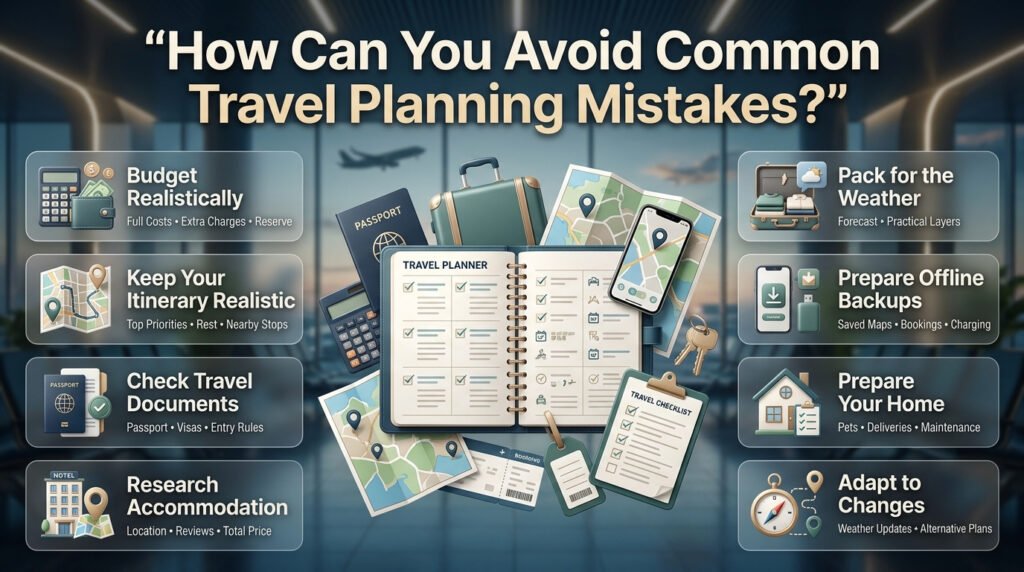
Travel problems often result from assumptions rather than a complete lack of preparation. Recognizing common mistakes makes it easier to prevent avoidable expenses, delays, and disappointment.
Mistake 1: Underestimating the total cost
Why it happens: Travelers focus on the headline transport or accommodation price.
Why it causes problems: Additional charges, meals, local transport, and activity fees can quickly exceed the original estimate.
How to avoid it: Calculate the complete trip cost and keep a separate contingency reserve. Compare the final price rather than the advertised starting price.
Mistake 2: Overloading the itinerary
Why it happens: People want to make every day count and try to visit as many places as possible.
Why it causes problems: Constant movement creates fatigue, increases transport expenses, and leaves little time for unexpected discoveries.
How to avoid it: Prioritize the experiences that matter most. Group nearby attractions together and include time for meals and rest.
Mistake 3: Ignoring document requirements
Why it happens: Travelers assume that a valid ticket or passport is sufficient.
Why it causes problems: Missing visas, entry permissions, or required supporting documents may prevent boarding or entry.
How to avoid it: Check the current requirements for your destination and transit points before booking and again before departure.
Mistake 4: Booking accommodation without checking the location
Why it happens: A low price or attractive photograph receives more attention than the surrounding area.
Why it causes problems: Long transfers, inconvenient transport, or unexpected neighborhood conditions may reduce comfort and increase expenses.
How to avoid it: Review the map, recent guest feedback, full charges, and access arrangements.
Mistake 5: Packing without checking the weather
Why it happens: Travelers pack based on their home climate or an outdated expectation of the destination.
Why it causes problems: Unsuitable clothing can make planned activities uncomfortable and require additional purchases.
How to avoid it: Check the forecast shortly before departure and pack practical layers suited to the expected conditions.
Mistake 6: Depending entirely on a phone
Why it happens: Digital tickets, maps, and bookings make travel easier.
Why it causes problems: A discharged battery, poor signal, or lost device can make important information difficult to access.
How to avoid it: Keep essential confirmations available offline, carry a suitable charging option, and maintain secure backup copies of important details.
Mistake 7: Forgetting responsibilities at home
Why it happens: Attention remains focused on transport, accommodation, and sightseeing.
Why it causes problems: Unchecked maintenance issues, unattended pets, or unplanned deliveries may create problems during the trip.
How to avoid it: Include household preparation in the travel checklist and arrange appropriate support before leaving.
Mistake 8: Ignoring changing conditions
Why it happens: Travelers assume that the original plan will remain practical.
Why it causes problems: Weather, service disruptions, local restrictions, or other events may affect the journey.
How to avoid it: Review relevant updates, identify alternatives, and remain willing to adjust your schedule.
14. What Practical Travel Advice Makes a Real Difference?
The most useful travel habits are often simple. They reduce the number of decisions you must make under pressure and help you respond more calmly when something changes.
Keep important information organized
Use a single secure place for booking references, addresses, departure times, insurance details, and emergency contacts. Organize information by travel date or destination so that you can find it quickly.
Keep backup copies separate from original documents. Avoid sharing sensitive information unnecessarily.
Confirm arrangements before departure
Check transport schedules, accommodation details, baggage restrictions, and arrival instructions shortly before leaving.
If you have booked an activity that requires a specific arrival time, confirm its location and how long it takes to reach it. Do not assume that a confirmation message means every operational detail is unchanged.
Build flexibility into spending
Unexpected expenses are easier to manage when the main budget does not depend on spending every available amount.
Keep emergency money separate from planned entertainment spending where practical. If a major unexpected expense occurs, review the remaining itinerary before making optional purchases.
Make decisions based on reliable information
Travel photographs, personal recommendations, and online reviews can be useful, but they may not reflect current conditions.
Verify important matters such as entry requirements, road access, transport cancellations, and accommodation policies through the relevant official or service-provider information.
Respect the place you visit
Travel is more rewarding when visitors consider the communities and environments they enter.
Follow local rules, respect religious and cultural spaces, avoid disturbing wildlife, and use resources thoughtfully. Support local businesses where appropriate and avoid leaving rubbish in natural areas.
Know when to change the plan
A good traveler does not insist on completing an activity when conditions have become unsuitable.
If weather worsens, a route closes, or an arrangement becomes unsafe or impractical, reconsider the plan. Protecting your time, budget, and well-being matters more than following an itinerary exactly.
15. How Can You Make Travel More Responsible and Sustainable?

Responsible travel means considering how your choices affect local communities, natural environments, and the people who live in the places you visit.
It does not require a perfect journey or expensive specialist products. Small, realistic choices can help reduce unnecessary waste and support a more respectful travel experience.
Reduce avoidable waste
Carry reusable items when they are suitable and permitted. Avoid taking more disposable products than you need, and use local waste facilities properly.
Follow rules about water use, protected areas, and wildlife. Do not remove natural objects from protected locations or disturb animals for photographs.
Support local communities
Consider locally owned accommodation, restaurants, guides, and shops when they meet your needs and provide reliable service.
Learn basic expressions used in the destination and ask permission before photographing people or private spaces. Be respectful when visiting cultural or religious sites.
Consider the environmental cost of transport
Different transport options have different environmental impacts depending on the distance, route, occupancy, and type of vehicle.
When practical, consider direct routes, shared transport, walking, or public transport for suitable journeys. Avoid adding unnecessary travel simply to follow a popular itinerary.
However, responsible choices must still account for safety, accessibility, weather, and local transport availability.
Avoid treating destinations as photo opportunities only
A meaningful trip involves more than collecting photographs. Take time to understand the place, listen to local guidance, and consider whether your activities are appropriate for the environment.
Responsible travel improves the experience for visitors and can reduce unnecessary pressure on the places they come to enjoy.
16. How Can You Make Long Journeys More Comfortable?
Long journeys can be tiring because of extended sitting, disrupted routines, unfamiliar surroundings, and limited access to normal facilities.
A little preparation can make the experience more manageable.
Prepare for the journey itself
Keep essential items within reach, including identification, booking details, medication you may need, drinking water where permitted, and basic personal care supplies.
Dress for the expected conditions and consider bringing a light layer if temperatures may change between transport settings.
For flights, trains, or buses, check the operator’s rules about hand luggage, food, liquids, batteries, and restricted items before packing.
Plan breaks where possible
During long road journeys, schedule suitable stops and avoid driving when tired. Drivers should follow road rules and use appropriate rest arrangements.
On longer journeys where movement is permitted, changing position and taking short walks can improve comfort. Follow any medical advice relevant to your circumstances.
Manage sleep and time differences
When traveling across time zones, consider the destination’s local time and plan the first day accordingly.
Avoid scheduling demanding activities immediately after a tiring overnight journey if you can reasonably postpone them. Allow time to eat, rest, and become familiar with the surroundings.
Keep entertainment and essential information available
Downloaded reading material, music, or other suitable entertainment can help make a long journey feel shorter. Check that necessary content is accessible without an internet connection.
Do not allow entertainment to distract you from transport announcements, safety instructions, or your belongings.
17. What Should You Do When Travel Plans Change Unexpectedly?
Unexpected changes are part of travel. A flight may be delayed, accommodation may become unavailable, or weather may prevent an outdoor activity.
Your response should depend on the nature of the disruption and the options available.
Step 1: Establish what has changed
Check the transport provider’s or accommodation provider’s official information. Determine whether the disruption affects the entire journey or only one part.
Avoid making expensive replacement arrangements before you understand your existing booking conditions.
Step 2: Identify your immediate needs
Ask yourself whether you need transport, accommodation, food, communication, medical support, or assistance reaching a safe location.
Address urgent needs first. Nonessential activities can usually wait until the main problem is under control.
Step 3: Review the available alternatives
Consider different departure times, routes, accommodation options, or revised activities.
Check the costs and conditions of each option before committing. If a provider is responsible for handling a cancellation, follow its stated process and keep relevant records.
Step 4: Inform the people affected
If a change affects your arrival time, contact your accommodation or anyone expecting you. Share updated information with a trusted person when appropriate.
Step 5: Keep a record
Save relevant confirmations, receipts, notices, and communications. These may be useful when requesting assistance or making an insurance claim, depending on the policy and circumstances.
Professional tip: Flexibility works best when you have already identified your priorities. If your main activity becomes impossible, you can choose an alternative without trying to rebuild the entire trip from the beginning.
18. What Should You Check Immediately Before Departure?
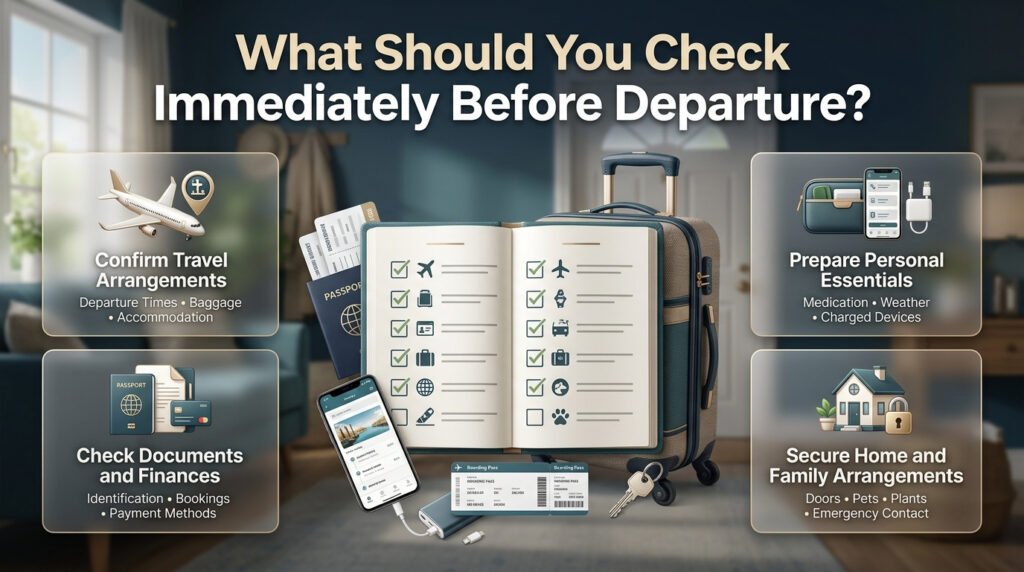
A final departure check helps catch small problems while there is still time to resolve them.
Travel arrangements
- Confirm departure times and terminal or station details.
- Check baggage allowances and any restrictions.
- Confirm accommodation and arrival arrangements.
- Review current conditions that may affect the route.
- Ensure you know how to reach the departure point.
Documents and finances
- Check identification and required entry documents.
- Keep booking confirmations accessible.
- Confirm that your payment methods will work at the destination.
- Understand any relevant bank charges or currency arrangements.
- Keep essential contact details available offline.
Personal needs
- Pack regular medication and necessary personal supplies.
- Check weather conditions and suitable clothing.
- Charge your phone and other essential devices.
- Arrange food, care, and accessibility requirements where relevant.
Home and family arrangements
- Check doors and windows.
- Manage rubbish and perishable food.
- Confirm pet and plant care.
- Arrange any necessary property checks.
- Tell a trusted person how to contact you in an emergency.
You can complete this checklist over several days. The goal is to avoid leaving every important decision until the final hour.
19. How Can You Get More Value From Every Trip?
Getting value from travel does not mean spending as little as possible or visiting the largest number of attractions. It means using your time, money, and energy in ways that match your priorities.
Spend on experiences that matter to you
Identify the activities that make the destination worthwhile for you. These might include a guided historical visit, a nature walk, a local meal, time with relatives, or a quiet afternoon away from busy areas.
Choose optional expenses based on their value to your experience rather than pressure to follow trends.
Learn a little about the destination
Understanding local history, basic language expressions, cultural expectations, and transportation can make everyday interactions easier.
Even a small amount of preparation can help you recognize useful services, ask clearer questions, and appreciate the places you visit.
Leave room for discovery
Not every worthwhile experience needs to be booked in advance. A flexible afternoon may allow you to explore a neighborhood, visit a local market, or rest when you need it.
Keep flexibility within reasonable limits, particularly when transport, safety, weather, or opening hours require advance planning.
Review the trip afterward
When you return, take a few minutes to note what worked and what you would change next time.
You might discover that you packed too much, underestimated local transport, or scheduled too many activities. These observations become useful planning information for future journeys.
For further practical advice about maintaining an organized home and managing everyday responsibilities, visit Brendan Active Property Care. Keeping household routines organized can make it easier to prepare for future trips and return to normal life afterward.
How Do You Plan a Trip From Start to Finish?
Planning a trip from start to finish involves choosing a suitable destination, setting a realistic budget, confirming travel dates, arranging transportation, and booking appropriate accommodation. The process becomes easier when you organize the essential details in a logical order instead of trying to manage everything at once. Your plan should also account for weather, required travel documents, daily activities, and possible changes to your arrangements.
A practical approach is to establish your priorities first, then make bookings that fit your time and budget. Before departure, review your reservations, prepare your luggage, and organize responsibilities at home. Keep your itinerary flexible enough to accommodate delays or unexpected opportunities.
Important steps to follow:
Choose a destination that matches your interests, travel time, and budget.
Research seasonal conditions, local transportation, and entry requirements.
Compare the complete cost of transport and accommodation before booking.
Prepare a daily itinerary with realistic travel times and rest periods.
Confirm important arrangements and complete a final departure checklist.
How Can You Travel on a Budget Without Sacrificing Comfort?
Budget-friendly travel means controlling unnecessary expenses while protecting the essentials that make a journey comfortable and practical. The most effective approach is to calculate the complete trip cost before booking, including transportation, accommodation, meals, local transfers, activities, and additional charges. This prevents the common mistake of choosing an inexpensive ticket only to discover that the overall trip is much more expensive than expected.
Travelers can often reduce costs by comparing different travel dates, considering suitable accommodation outside the most expensive areas, using reliable public transport, and choosing activities that genuinely match their interests. However, saving money should not mean ignoring safety, accessibility, or essential travel requirements.
Practical ways to manage travel expenses:
Set a maximum budget and keep an emergency reserve separate.
Compare total booking prices, including baggage fees, taxes, and transfers.
Prioritize meaningful experiences instead of spending on every available activity.
Plan meals and local transport to reduce unplanned daily expenses.
Track spending during the trip and adjust optional purchases when necessary.
What Should You Check Before Booking Flights and Accommodation?
Before booking flights and accommodation, compare the complete price, travel times, location, cancellation conditions, and any additional requirements. A low advertised price does not always represent the best value. A flight with inconvenient connections or accommodation far from your planned activities may increase expenses and make the trip more tiring.
For flights, review baggage allowances, departure and arrival times, connection arrangements, and ticket-change conditions. For accommodation, check recent guest reviews, neighborhood access, check-in procedures, taxes, and the facilities you need. International travelers should also verify passport validity, visa requirements, and applicable transit rules before making nonrefundable arrangements.
Booking checklist:
Compare transport options by total cost, duration, and convenience.
Read the cancellation and change policies before paying.
Check accommodation location and recent reviews.
Confirm additional charges, baggage limits, and arrival arrangements.
Verify official entry requirements for the destination and transit countries.
How Can You Stay Safe and Prepared During a Trip?
Staying safe during travel requires preparation, awareness, and the ability to respond sensibly when circumstances change. Before departure, research current destination conditions, local laws, transportation options, and relevant travel advisories. During the trip, protect your belongings, use reputable transport services, and keep important contact details accessible.
It is equally important to prepare for ordinary disruptions. A delayed connection, lost phone, unexpected weather change, or canceled reservation can become more difficult to manage when all your information is stored in one place. Keeping secure backups of essential documents and sharing your itinerary with a trusted person when appropriate can improve your preparedness.
Essential travel safety practices:
Keep identification, booking details, and emergency contacts secure.
Check current weather conditions and relevant local guidance.
Use reputable transport and confirm your destination before traveling.
Maintain access to essential information when internet service is unavailable.
Review suitable travel insurance and understand its coverage and exclusions.
Change your plans when conditions become unsafe or impractical.
How Should You Prepare Your Home Before Leaving for a Holiday?
Preparing your home before a holiday helps reduce avoidable maintenance problems and makes returning home more comfortable. The appropriate preparation depends on how long you will be away, the condition of your property, local weather, and whether someone will check the house during your absence. Even a short trip is a good reason to review basic security, food storage, waste management, and essential household arrangements.
Start by checking for visible plumbing leaks, securing doors and windows, removing perishable food that may spoil, and arranging appropriate care for pets and plants. Consider outdoor areas and any scheduled property responsibilities. Avoid switching off essential appliances or systems without understanding the consequences for security, refrigeration, temperature control, or other necessary functions.
Before-you-leave checklist:
Check doors, windows, locks, and visible plumbing issues.
Dispose of unsuitable perishable food and manage household rubbish.
Arrange reliable care for pets and plants.
Secure outdoor furniture and consider forecast weather conditions.
Organize necessary property checks for a longer absence.
Leave appropriate emergency contact details with a trusted person.
For additional practical guidance, explore Home Maintenance and Property Care to help organize household tasks before departure.
Conclusion: Plan Better, Travel Smarter, and Enjoy Every Journey
Successful travel starts with thoughtful planning, realistic expectations, and a clear understanding of your priorities. From choosing the right destination and managing your budget to booking suitable accommodation, preparing essential documents, and organizing a flexible itinerary, every step can help make your journey more comfortable and enjoyable. The goal is not to plan every minute but to prepare well enough that you can handle unexpected changes with confidence.
Before departure, remember to check your travel arrangements, pack according to the weather and planned activities, and review relevant safety information. Preparing your home is equally important, as securing your property, addressing basic maintenance concerns, and arranging necessary household responsibilities can give you greater peace of mind while you are away.
Most importantly, choose experiences that suit your interests, time, and budget rather than feeling pressured to follow someone else’s travel plans. Whether you are taking a short weekend break, exploring a new destination, or organizing a family holiday, practical preparation and a flexible approach can make a meaningful difference.
Use these travel planning tips to organize your next journey, avoid common mistakes, and make informed decisions from departure to return. With a balanced plan and the right preparation, you can spend less time worrying about logistics and more time enjoying the experiences that make travel worthwhile.