
Introduction
Property Maintenance | Property maintenance can quickly become expensive when small problems are ignored. A minor roof leak, a damaged window seal, or an air conditioner that receives no regular servicing may eventually lead to larger repairs, unnecessary disruption, and avoidable costs. The challenge isn’t simply fixing problems when they appear. It’s knowing what to inspect, when to take action, and how to maintain a property without wasting time or money.
Whether you own a house, manage a rental property, or look after a commercial building, a practical property maintenance plan helps you protect the building’s condition, improve safety, and make better long-term decisions. You don’t need to repair everything at once or hire a contractor for every minor task. You need a clear system that identifies priorities, organizes routine work, and makes it easier to recognize when professional assistance is necessary.
At Brendan Active Property Care, property care is part of a broader approach to keeping buildings functional, organized, and well maintained. Understanding the fundamentals of property maintenance can help you create a more reliable routine, whether you’re responsible for a small home or a larger property.
This guide explains the main types of property maintenance, the areas that need regular attention, how to build a maintenance schedule, how to budget for repairs, and how to avoid common mistakes. You’ll also learn how homeowners, landlords, and property managers can approach maintenance differently while working toward the same goal: keeping a property safe, functional, and in good condition.
What Is Property Maintenance?
Property maintenance is the ongoing process of inspecting, cleaning, servicing, repairing, and protecting a building and its surrounding areas. It includes routine activities that keep a property functioning properly and corrective work that addresses defects before they cause more serious problems.
Property maintenance covers much more than repairing broken items. It involves understanding how different parts of a building work together, recognizing early warning signs, maintaining essential equipment, and planning for future repairs.
For example, checking accessible plumbing connections may help identify a leak before it damages a cabinet. Servicing an air-conditioning system according to the manufacturer’s recommendations may help maintain performance. Inspecting exterior walls can reveal deteriorating sealant or moisture entry that needs further investigation.
What Does Property Maintenance Include?
A complete property maintenance plan commonly covers these areas:
- Structural maintenance: Roofs, foundations, walls, floors, balconies, and other building components.
- Plumbing maintenance: Pipes, taps, toilets, drains, water connections, and water-heating equipment.
- Electrical maintenance: Visible electrical components, lighting, safety devices, and professional inspections.
- Mechanical maintenance: Heating, ventilation, air conditioning, pumps, and other building equipment.
- Interior maintenance: Doors, windows, flooring, ceilings, paintwork, and fixtures.
- Exterior maintenance: Gutters, pathways, fences, external finishes, and outdoor drainage.
- Preventive maintenance: Planned inspections and servicing intended to reduce the likelihood of breakdowns.
- Corrective maintenance: Repairs that address problems already identified.
- Administrative maintenance: Work schedules, inspection records, contractor coordination, and repair budgets.
The exact responsibilities depend on the property’s type, age, location, occupancy, and ownership arrangements.
A detached home may require attention to its roof, garden, and drainage, while an apartment owner may also need to coordinate with building management regarding shared systems and common areas.
Why Is Property Maintenance Important?
Regular maintenance helps protect a building from avoidable deterioration while supporting safety, comfort, and reliable operation. Although maintenance requires time and money, ignoring developing problems can lead to greater disruption and less predictable expenses.
1. It Helps Prevent Expensive Repairs
Many building problems develop gradually. A loose fitting, deteriorating seal, or minor leak may initially appear insignificant. If the underlying problem continues, the repair may eventually involve several materials or systems rather than one small component.
Routine inspections help identify defects while they’re easier to investigate and address.
For example, noticing moisture beneath a kitchen sink allows you to arrange an inspection before the problem spreads to nearby flooring or cabinetry.
2. It Supports a Safer Environment
Maintenance helps identify hazards such as damaged handrails, deteriorating steps, faulty electrical fittings, blocked exits, and damaged walkways.
Some problems require immediate attention. Suspected gas leaks, exposed live electrical components, serious structural movement, and major uncontrolled water leaks should never be treated as ordinary maintenance tasks.
Follow appropriate emergency procedures and obtain qualified assistance whenever a problem creates a potential danger.
3. It Protects Property Condition and Value
A building that receives appropriate care is generally easier to maintain and present to prospective buyers or tenants. Functional equipment, clean surroundings, well-maintained surfaces, and documented repairs can demonstrate that the property has been looked after.
Maintenance doesn’t guarantee a particular sale price or increase in market value. Location, demand, property design, and wider market conditions also matter.
However, neglect can create visible defects, reduce usability, and make inspections or future repairs more complicated.
4. It Improves Everyday Comfort
Functional plumbing, properly maintained ventilation, reliable heating and cooling, and well-sealed windows all contribute to a more comfortable indoor environment.
Regular maintenance can also help identify avoidable energy or water waste. For instance, a continuously running toilet or poorly performing air conditioner may indicate a problem that deserves attention.
5. It Makes Planning Easier
A maintenance schedule helps you anticipate routine servicing and prepare for larger repairs.
Instead of reacting to every problem as an emergency, you can organize contractor visits, compare quotations, and decide which work should happen first.
Pro Tip: Keep a simple record of inspections, repairs, invoices, warranties, and contractor recommendations. These details make future maintenance decisions more informed and help you identify recurring problems.
What Are the Main Types of Property Maintenance?
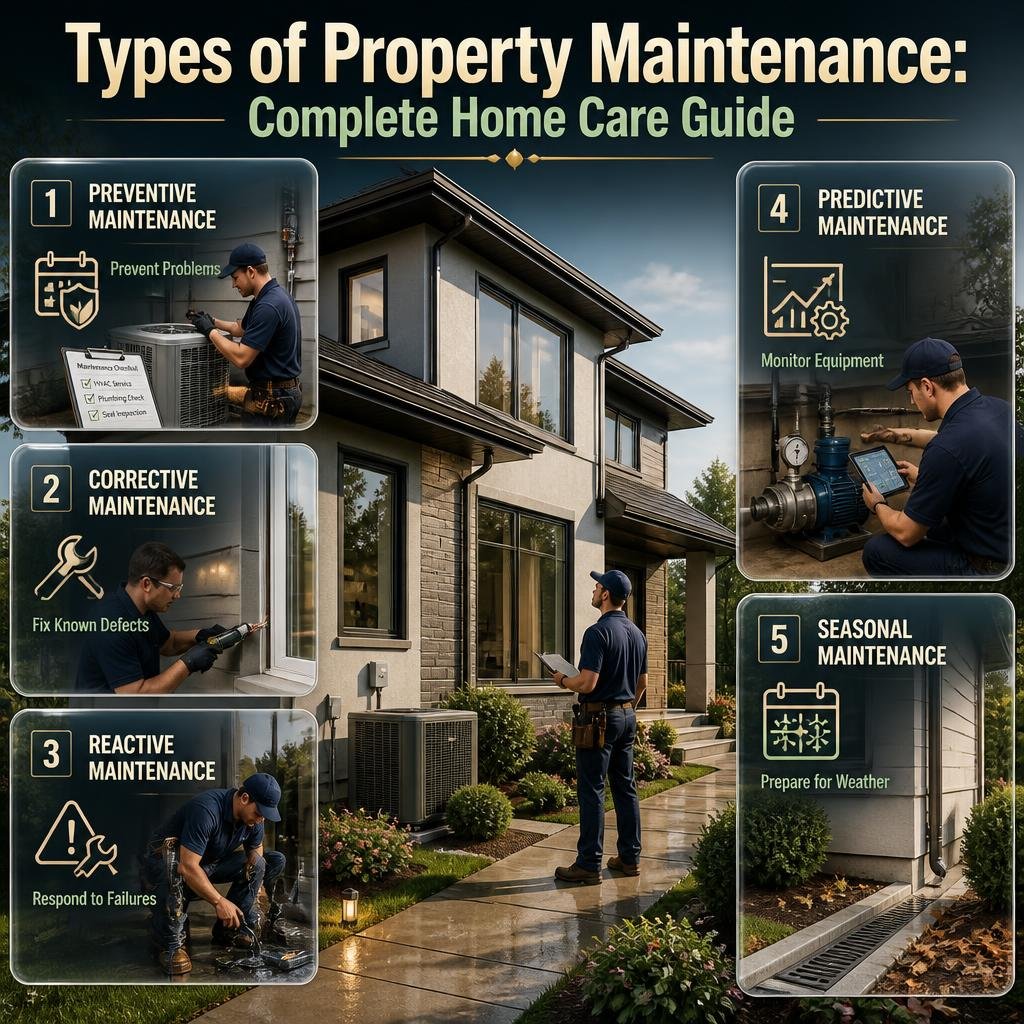
Property maintenance can be divided into several categories according to when work occurs and why it’s needed. Understanding these categories helps you choose the right approach for different situations.
Preventive Property Maintenance
Preventive maintenance involves planned inspections and servicing intended to reduce the likelihood of equipment failure or building deterioration.
Examples include arranging HVAC servicing, inspecting accessible plumbing, maintaining drainage, and checking exterior seals.
Its main advantage is that work can be planned before a problem becomes urgent. You can also coordinate inspections and budget for predictable tasks.
However, preventive maintenance must be appropriate for the equipment and property. Replacing functional components too early or performing unnecessary servicing can waste money. Follow manufacturer guidance and seek professional recommendations where necessary.
Corrective Property Maintenance
Corrective maintenance addresses a defect that has already been identified.
For example, an inspection may reveal damaged window sealant that allows water to enter during rain. The repair is corrective because the defect is known, even if the window hasn’t caused serious damage yet.
Corrective maintenance is often easier to organize than emergency work because you have time to investigate the problem, obtain quotations, and arrange access.
Reactive Property Maintenance
Reactive maintenance occurs in response to an unexpected failure or urgent problem.
Examples include arranging repairs after a pipe bursts, responding to a sudden electrical fault, or addressing a broken external door.
Some reactive work is unavoidable. Components can fail without obvious warning, and weather or accidental damage may create sudden problems.
The goal isn’t to eliminate every unexpected repair. It’s to reduce avoidable emergencies through suitable inspections, maintenance, and planning.
Predictive Property Maintenance
Predictive maintenance uses equipment condition, monitoring data, operating patterns, or measurements to anticipate potential failures.
It can be particularly useful in larger buildings with complex HVAC systems, pumps, lifts, generators, or other essential equipment.
For example, monitoring abnormal vibration in a pump may help identify a developing mechanical problem before the pump fails.
Most small residential properties don’t need advanced monitoring technology. Regular inspections and accurate service records may provide sufficient information for many everyday maintenance decisions.
Seasonal Property Maintenance
Seasonal maintenance prepares a property for changing weather and operating conditions.
Depending on the local climate, tasks may include inspecting drainage before periods of heavy rain, checking air-conditioning performance before hot weather, or protecting vulnerable pipes before freezing temperatures.
The timing should reflect actual local conditions rather than a universal calendar.
| Maintenance type | Main purpose | Example |
|---|---|---|
| Preventive | Reduce the likelihood of failure | Scheduled equipment servicing |
| Corrective | Fix an identified defect | Repairing a damaged window seal |
| Reactive | Respond to an unexpected problem | Urgent plumbing repair |
| Predictive | Identify developing equipment issues | Monitoring pump performance |
| Seasonal | Prepare for changing conditions | Inspecting drainage before rainy weather |
Which Areas of a Property Need Regular Maintenance?
A reliable maintenance routine covers the entire building rather than focusing only on visible or frequently used areas.
1. Roofs, Walls, and Structural Components
Roofs and exterior walls protect the building from weather and help prevent moisture from entering internal spaces.
Inspect accessible areas for visible deterioration, including missing roofing materials, damaged exterior finishes, deteriorating sealant, and unexplained water stains.
Pay attention to:
- New or widening cracks in walls.
- Water stains on ceilings.
- Damaged balcony finishes.
- Deteriorating seals around windows.
- Signs of moisture entering after rainfall.
- Changes in doors or windows that suggest possible movement.
Not every crack is structural. Small cosmetic cracks can develop for several reasons, including normal material movement. However, cracks that widen, appear alongside noticeable movement, or occur with other concerning changes deserve professional assessment.
Roof inspections should be conducted safely. Don’t climb onto a roof without appropriate training, access arrangements, and protective equipment.
2. Plumbing and Drainage Systems
Plumbing problems can remain hidden for a long time, particularly when pipes run behind walls or beneath floors.
Regularly check accessible plumbing connections, taps, toilets, sinks, showers, and drainage points.
Look for dripping taps, damp cabinets, water stains, slow-draining fixtures, unusual changes in water pressure, and persistent drainage smells.
A slow drain may result from accumulated debris, while repeated blockages may indicate a deeper problem.
If you notice a leak, identify its apparent location without dismantling unsafe equipment. Where appropriate, isolate the affected water supply and arrange a plumber’s assessment.
Common Mistake: Repeatedly treating a recurring blockage without investigating its cause. Temporary clearing may restore drainage, but it won’t necessarily resolve damaged pipes, unsuitable connections, or a deeper obstruction.
3. Electrical Systems
Electrical maintenance helps protect occupants and equipment from hazards associated with damaged components or faulty installations.
Notice damaged switches, broken sockets, frayed cords, repeated circuit-breaker trips, buzzing sounds, or unusual burning smells.
Don’t open electrical panels or attempt repairs involving live wiring unless you’re properly qualified and equipped.
A qualified electrician should investigate recurring faults, damaged fittings, or unexplained electrical problems. Electrical safety devices should be inspected and tested according to the manufacturer’s instructions and applicable local requirements.
Keep electrical panels accessible and avoid storing materials where they could obstruct safe access.
4. Heating, Ventilation, and Air Conditioning
HVAC equipment supports indoor comfort, ventilation, and temperature control. Poor maintenance can contribute to reduced performance, avoidable energy use, and equipment problems.
A suitable maintenance routine may include cleaning or replacing filters according to manufacturer instructions, keeping vents unobstructed, checking accessible condensate drainage, and arranging professional servicing.
Pay attention to unusual noises, persistent odours, water around indoor equipment, reduced airflow, or difficulty maintaining the desired temperature.
These symptoms can have several causes. A system that isn’t cooling effectively may need professional diagnosis rather than simply being operated at a lower thermostat setting.
5. Doors, Windows, and Interior Finishes
Doors and windows should open, close, and lock correctly. Damaged seals, loose hardware, and deteriorating frames can affect security, comfort, and resistance to moisture.
Inspect handles, hinges, locks, weatherstripping, and accessible seals.
Inside the property, look for peeling paint, bubbling finishes, damp patches, and recurring ceiling stains.
Cosmetic repairs are appropriate when the underlying surface is sound. If moisture or movement is responsible for the damage, investigate the cause before repainting or replacing finishes.
6. Outdoor Areas and Landscaping
Exterior maintenance includes gardens, driveways, walkways, boundary walls, fences, balconies, and outdoor drainage.
Keep pathways clear and address uneven surfaces that could create trip hazards. Inspect outdoor lighting, remove loose debris from accessible drainage points, and manage vegetation that obstructs access or interferes with building systems.
Large trees, retaining walls, and significant drainage issues may require specialist advice.
Outdoor maintenance should reflect the property’s exposure to weather, the materials used, and the amount of use each area receives.
How Do You Create a Property Maintenance Schedule?

A property maintenance schedule identifies what needs attention, when the task should occur, who is responsible, and how completion will be recorded.
The best schedule is specific to the building. A newer apartment, an older house, and a commercial facility will have different inspection and servicing requirements.
Step 1: Create a Property Inventory
Start by listing the building’s main components and equipment.
Include the roof, windows, doors, plumbing, electrical systems, HVAC equipment, drainage, interior finishes, and outdoor areas.
For each item, record its condition, relevant service information, and any known defects.
Why it matters: A property inventory creates a starting point. It helps prevent forgotten tasks and makes it easier to recognize changes during later inspections.
Step 2: Identify Problems and Rank Their Urgency
Not every defect deserves the same priority.
Use a simple classification system to separate immediate hazards from routine work and optional improvements.
| Priority | Example | Appropriate response |
|---|---|---|
| Emergency | Suspected gas leak or exposed live wiring | Follow emergency procedures and obtain urgent professional help |
| High | Significant roof leak or worsening water damage | Arrange prompt assessment |
| Routine | Scheduled servicing or worn non-urgent seals | Plan the work appropriately |
| Improvement | Optional decorative upgrade | Schedule according to budget |
The circumstances matter. A small leak near electrical equipment may require a more urgent response than the same leak in another location.
Step 3: Establish Suitable Intervals
Choose inspection and servicing intervals using manufacturer instructions, professional recommendations, local requirements, and the property’s condition.
A sample planning framework might look like this:
| Interval | Possible activity |
|---|---|
| Weekly | Notice new leaks, unusual smells, and equipment changes |
| Monthly | Check accessible plumbing and visible interior or exterior defects |
| Quarterly | Review recurring issues and inspect selected building areas |
| Twice yearly | Review seasonal preparation and relevant servicing needs |
| Annually | Review major systems, maintenance records, and upcoming expenditure |
These intervals are examples, not universal technical standards. Some equipment needs more frequent attention, while other tasks should follow specific professional or regulatory schedules.
Step 4: Assign Responsibility
Decide which tasks belong to the owner, tenant, property manager, building-management team, or contractor.
For rental properties, make sure the process for reporting defects, arranging access, authorizing repairs, and responding to emergencies is clear.
Written responsibilities help avoid delays caused by assumptions.
Step 5: Record Completed Work
After each task, record the date, work performed, contractor details, and recommended follow-up.
For example, if a plumber repairs a recurring leak, note the affected fitting, the repair completed, and whether another inspection is recommended.
A maintenance log becomes particularly useful when a problem returns. It helps you identify patterns rather than treating every incident as an unrelated issue.
How Can You Budget for Property Maintenance?
Property maintenance budgeting means setting aside funds for routine servicing, inspections, minor repairs, and larger replacements.
The amount required depends on the property’s size, age, construction, condition, equipment, location, and maintenance history. There isn’t one percentage or fixed amount that is appropriate for every property.
Identify the Main Cost Categories
Organize expenses into four practical groups.
Routine expenses: These may include filter replacements, cleaning materials, ordinary servicing, and minor consumables.
Repair expenses: These include plumbing repairs, damaged fixtures, leak investigations, and corrective work.
Major replacements: Examples include roofing, HVAC equipment, water heaters, and other costly building components.
Contingency funds: This is money reserved for unexpected failures or urgent work.
Separating these categories helps you understand the difference between normal operating costs and significant future expenditure.
How Can You Estimate Maintenance Costs?
Start by reviewing the previous year’s invoices and identifying recurring tasks. If the property is new to you, arrange an appropriate inspection and obtain estimates for known defects.
Ask contractors to provide itemized quotations for significant work. Confirm whether the quoted price includes labour, materials, disposal, access equipment, taxes where applicable, and follow-up visits.
For major replacements, compare more than the initial price. Consider expected service life, energy use, reliability, maintenance requirements, and compatibility with the building.
Should You Repair or Replace a Component?
The cheapest immediate option isn’t always the most economical long-term decision.
| Factor | Repair may be appropriate when… | Replacement may be appropriate when… |
|---|---|---|
| Condition | Damage is limited | Deterioration is widespread |
| Reliability | Failures are uncommon | Breakdowns happen repeatedly |
| Cost | Repair is proportionate to remaining service life | Repeated repairs are becoming uneconomical |
| Performance | Equipment still meets requirements | Performance is consistently inadequate |
| Safety | A reliable, safe repair is possible | The component cannot be restored appropriately |
Consider an air conditioner that has required several repairs but still struggles to maintain the desired temperature. A professional assessment can help determine whether the problem is repairable or whether replacement is more sensible.
Avoid replacing expensive equipment solely because it is old. Its actual condition, performance, safety, and expected remaining life should inform the decision.
What Is the Difference Between Residential and Commercial Property Maintenance?
Residential property maintenance generally focuses on homes and apartments, while commercial maintenance often involves more complex equipment, higher occupancy, business operations, and additional compliance requirements.
| Area | Residential property | Commercial property |
|---|---|---|
| Main objective | Safety, comfort, and property protection | Safety, operations, and business continuity |
| Common systems | Domestic plumbing and household HVAC | Larger HVAC systems, lifts, pumps, and specialized equipment |
| Scheduling | Based on household needs and equipment | Often coordinated around occupancy and operating hours |
| Documentation | Repair records and service history | May include formal inspections and compliance records |
| Coordination | Owners, occupants, and tradespeople | Property managers, facilities teams, and specialist contractors |
Both property types benefit from preventive maintenance, clear responsibilities, and documented repairs.
Commercial buildings may also require specific fire-safety inspections, accessibility provisions, equipment certifications, emergency procedures, and statutory servicing. These requirements vary according to jurisdiction and building use.
A property manager should understand which obligations apply and arrange appropriate professional support rather than assuming a general maintenance checklist covers every legal requirement.
What Are the Most Common Property Maintenance Mistakes?

Even responsible property owners can make decisions that increase costs or allow defects to continue.
1. Waiting Until Something Breaks
Why it happens: Routine inspections may seem unnecessary when everything appears to work.
Why it’s harmful: Hidden leaks, worn components, and deteriorating seals can cause damage before the problem becomes obvious.
How to avoid it: Use a written schedule and pay attention to areas that are easily overlooked, including accessible pipe connections, window seals, and service equipment.
2. Treating Symptoms Instead of Causes
Why it happens: Repainting a stain or repeatedly clearing a blocked drain appears quicker than investigating the source.
Why it’s harmful: The underlying issue may remain active and cause the same problem again.
How to avoid it: Determine why the defect occurred before deciding on a permanent repair. Seek professional assessment when the cause is unclear.
3. Ignoring Manufacturer Instructions
Why it happens: People assume every appliance or building system requires the same maintenance routine.
Why it’s harmful: Unsuitable cleaning products, incorrect servicing intervals, or incompatible replacement parts can damage equipment.
How to avoid it: Keep manuals and follow manufacturer guidance for cleaning, servicing, and component replacement.
4. Attempting Unsafe DIY Repairs
Why it happens: Owners want to save money or complete work quickly.
Why it’s harmful: Unqualified work involving electricity, gas, roofing, structural elements, or specialized equipment can create serious hazards and additional costs.
How to avoid it: Limit DIY work to tasks that are safe for your skill level. Use qualified professionals for hazardous or technically complex work.
5. Failing to Keep Records
Why it happens: Minor repairs seem easy to remember.
Why it’s harmful: Recurring problems may go unnoticed, and warranty details or previous repair information may be difficult to find.
How to avoid it: Keep a digital folder or spreadsheet containing invoices, service reports, warranties, photographs, and completed tasks.
6. Choosing Contractors Based Only on Price
Why it happens: A low quotation appears to be the easiest way to reduce costs.
Why it’s harmful: An incomplete scope, unsuitable materials, or poor workmanship can lead to additional expenses.
How to avoid it: Compare quotations that cover the same work. Check relevant qualifications, insurance, references, warranty terms, and the proposed repair method.
7. Ignoring Small Changes in Equipment Performance
Why it happens: Gradual changes can become normal to occupants.
Why it’s harmful: Reduced airflow, unusual noises, recurring leaks, or increasing energy use may indicate developing problems.
How to avoid it: Record unusual changes and arrange assessment when they persist or worsen.
Which Property Maintenance Tasks Can You Do Yourself?
Many simple maintenance tasks can be handled by a capable owner or occupant, provided the work is low-risk and the relevant instructions are followed.
Suitable examples may include:
- Cleaning accessible surfaces and removing ordinary household clutter.
- Checking accessible areas for visible water leaks.
- Cleaning HVAC filters when the manufacturer permits it.
- Keeping accessible outdoor drainage points clear of loose debris.
- Checking doors and windows for obvious operating problems.
- Recording defects and photographing visible damage.
- Replacing ordinary consumable items according to instructions.
- Keeping maintenance records organized.
Some tasks that appear simple can still involve hidden risks. Don’t work at height without suitable training and equipment, dismantle electrical panels, interfere with gas systems, or open pressurized equipment unless appropriately qualified.
Expert Tip: When a problem involves electrical safety, gas, structural stability, or significant water damage, focus on following safe procedures and obtaining professional assistance rather than experimenting with a DIY solution.
How Do You Choose a Reliable Property Maintenance Contractor?
A reliable contractor should understand the problem, explain the proposed work, provide clear pricing, and communicate any limitations or follow-up requirements.
Before approving significant work, consider the following points.
Check Relevant Experience
Ask whether the contractor regularly handles the type of defect or equipment involved. Specialized systems may require specific training or qualifications.
Request a Written Scope
The quotation should explain what work is included, which materials will be used, what is excluded, and whether additional charges could apply.
Compare Quotations Fairly
A cheaper quotation may cover less work. Compare labour, materials, access arrangements, disposal, warranties, and follow-up rather than looking at the final figure alone.
Confirm Qualifications and Insurance
Check licences, certifications, insurance, and other requirements where applicable. These details are particularly important for electrical work, gas systems, structural repairs, and other regulated activities.
Ask About Guarantees and Documentation
Understand whether the contractor provides a workmanship warranty, material warranty, service report, or completion documentation.
For complicated defects, consider obtaining another quotation or an independent professional opinion before committing to expensive work.
Avoid approving extensive repairs based solely on a verbal estimate, particularly if the contractor hasn’t properly investigated the underlying problem.
Expert Property Maintenance Advice That Saves Time and Money
Good maintenance is less about doing everything frequently and more about identifying the right work, understanding its urgency, and completing it appropriately.
Prioritize Water Ingress
Water can affect multiple building components, including ceilings, flooring, insulation, internal finishes, and electrical equipment.
Investigate unexplained dampness promptly. Repainting a stain without addressing the moisture source may produce only a temporary improvement.
Pay Attention to Recurring Problems
If a component fails repeatedly, review its repair history before authorizing another identical repair.
Repeated failure may indicate an unsuitable replacement part, poor installation, incorrect operating conditions, or a problem elsewhere in the system.
Plan Major Work Before It Becomes Urgent
Whenever possible, arrange inspections and replacements before essential equipment fails.
For example, checking air-conditioning performance before a period of heavy use gives you more time to obtain quotations and plan repairs.
Consider How Building Systems Interact
A visible defect may have a cause somewhere else in the property.
A damp wall could result from exterior water entry, plumbing leakage, condensation, or inadequate ventilation. The correct solution depends on identifying the cause rather than automatically replacing the damaged finish.
Review Your Maintenance Plan Regularly
A property maintenance plan should change as the building ages, equipment is replaced, occupancy changes, and new defects appear.
Review completed work, recurring problems, upcoming servicing, and available funds. Update responsibilities and schedules when circumstances change.
Keep Emergency Information Accessible
Maintain a list of relevant contacts, including the property manager, plumber, electrician, and other essential contractors.
Where appropriate, occupants should know how to report an urgent issue and where authorized isolation controls are located. They should not attempt to operate unfamiliar or unsafe equipment.
Match Maintenance to the Local Environment
Climate, dust, humidity, rainfall, and temperature changes affect maintenance requirements.
For example, properties in hot climates may experience heavy air-conditioning use, heat exposure, dust accumulation, and seal deterioration. Buildings exposed to frequent rainfall may need particular attention to drainage and water entry.
Use local conditions and professional advice to determine which tasks deserve more frequent attention.
What Does Property Maintenance Include, and Why Is It Important?
Property maintenance includes the regular inspection, servicing, cleaning, and repair of a building to keep it safe, functional, and in good condition. It covers essential areas such as plumbing, electrical systems, roofing, HVAC equipment, drainage, doors, windows, and exterior surfaces. A well-planned maintenance routine helps property owners identify developing problems before they become expensive repairs. It also supports occupant safety, improves everyday comfort, and helps protect the property’s long-term condition.
Important points to consider:
Inspect essential building systems regularly and address visible defects promptly.
Follow manufacturer recommendations for equipment servicing and maintenance.
Keep records of repairs, inspections, warranties, and contractor visits.
Arrange professional assessments for structural, electrical, gas, or other complex issues.
How Often Should Property Maintenance Be Performed?
Property maintenance should follow a schedule based on the building’s age, condition, equipment, occupancy, and local climate. Some tasks, such as noticing new leaks or unusual equipment noises, require attention as soon as a problem appears. Other activities, including HVAC servicing and specialist inspections, should follow manufacturer instructions, professional recommendations, and applicable regulations. A customized maintenance schedule helps property owners manage routine work without overlooking important repairs or spending money on unnecessary servicing.
A practical maintenance routine may include:
Weekly: Notice unusual smells, visible leaks, or changes in equipment performance.
Monthly: Check accessible plumbing, doors, windows, and visible signs of deterioration.
Seasonally: Review drainage, weather protection, and equipment needs according to local conditions.
Annually: Review maintenance records, major building components, and upcoming repair requirements.
These intervals are general planning examples. Ac
How Can Property Owners Reduce Property Maintenance Costs Without Compromising Quality?
Property owners can control maintenance costs by identifying problems early, prioritizing essential repairs, maintaining equipment correctly, and planning for major replacements. The cheapest immediate repair isn’t always the most economical option, particularly when the same defect keeps returning. Before approving expensive work, compare itemized quotations, understand the cause of the problem, and consider the component’s expected remaining service life. A realistic maintenance budget also helps owners prepare for unexpected failures without neglecting essential work.
Cost-saving strategies that make a difference:
Schedule preventive maintenance for important building systems.
Investigate recurring leaks, blockages, and equipment failures instead of repeatedly treating symptoms.
Compare contractors based on scope, qualifications, materials, warranties, and overall value.
Maintain a contingency fund for unexpected repairs.
Evaluate repair-versus-replacement decisions using condition, safety, reliability, and long-term cost.
What Is the Difference Between Preventive and Reactive Property Maintenance?
Preventive property maintenance involves planned inspections and servicing intended to reduce the likelihood of equipment failure or building deterioration. Reactive maintenance, on the other hand, takes place when an unexpected problem or breakdown occurs. For example, servicing an air conditioner according to its maintenance requirements is preventive, while arranging an urgent repair after it stops working is reactive. Both approaches have a role, but relying entirely on reactive maintenance can make costs less predictable and increase the risk of disruption.
Key differences to understand:
Preventive maintenance: Planned work, scheduled inspections, and routine servicing.
Reactive maintenance: Repairs initiated after a fault or unexpected failure.
Main advantage of prevention: Better planning and earlier identification of developing problems.
Main challenge of reactive work: Urgent repairs may require faster decisions and disrupt normal activities.
A balanced maintenance strategy combines planned care with a clear process for responding to unexpected problems.
Should Property Owners Hire a Professional Maintenance Company or Handle Repairs Themselves?
The right choice depends on the type of repair, its complexity, safety risks, and the owner’s skills. Simple tasks, such as cleaning accessible surfaces, checking for visible leaks, or replacing permitted consumable items, may be suitable for DIY maintenance. However, electrical faults, gas systems, structural concerns, roof work, and complicated equipment repairs often require qualified professionals. Hiring an appropriate contractor can help ensure that the underlying problem is correctly diagnosed and that the work meets relevant safety and technical requirements.
Before deciding, consider the following:
Assess whether the task can be completed safely with your existing skills and equipment.
Check whether the work requires a licence, certification, or specialist training.
Request a written quotation explaining the work, materials, exclusions, and warranty terms.
Compare relevant experience, insurance, references, and communication.
Choose professional assistance when a defect is recurring, difficult to diagnose, or potentially dangerous.
The goal isn’t to outsource every small task or attempt every repair yourself. It’s to make responsible decisions that protect the property, its occupants, and your maintenance budget.
Conclusion
Effective property maintenance is about more than fixing problems when they appear. It involves understanding how a property functions, identifying potential issues early, protecting essential systems, and following a practical maintenance schedule throughout the year. From plumbing and electrical inspections to roof care, drainage, exterior upkeep, and routine repairs, every task contributes to the property’s long-term condition, safety, and usability.
A well-planned maintenance approach also helps property owners manage expenses more effectively. Regular inspections can reveal minor concerns before they develop into costly repairs, while accurate records and a realistic maintenance budget make it easier to prioritize important work. Knowing when to handle a simple task independently and when to consult a qualified professional further supports responsible property management.
Whether you manage a rental property, own a family home, or oversee a commercial building, consistency is the key to better results. Start with the most important maintenance needs, organize tasks by frequency, and adjust your plan according to the property’s age, condition, climate, and usage. For additional guidance on everyday upkeep, explore our Home Maintenance resources and discover more practical ideas on the Active Property Care Brendan homepage.
Ultimately, property maintenance is a long-term investment in reliability, comfort, and peace of mind. By taking a proactive approach and making informed decisions, property owners can preserve their property’s value, reduce avoidable disruptions, and create a safer, better-maintained environment for the people who use it.