Introduction
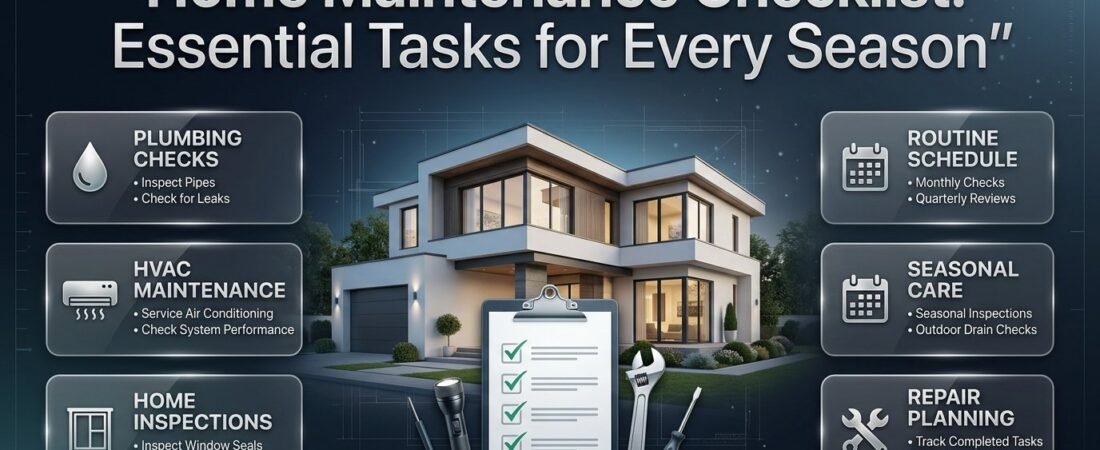
Home Maintenance Checklist | Owning a home means taking care of dozens of small details that are easy to forget. A leaking pipe under the kitchen sink, a blocked outdoor drain, a damaged window seal, or an air conditioner that hasn’t been serviced can gradually turn into a much bigger problem. The difficulty is knowing what to check, when to check it, and which tasks deserve immediate attention.
A practical home maintenance checklist gives you a clear plan for looking after your property throughout the year. Instead of relying on memory or waiting until something stops working, you can follow a consistent schedule, record completed tasks, and identify potential problems before they become more disruptive.
Whether you own a house, manage a rental property, or have recently moved into a new home, this guide explains the essential inspections and maintenance tasks worth adding to your routine. You’ll learn what to check monthly, quarterly, seasonally, and annually, how to organize repairs, which tasks require professional help, and how to build a maintenance schedule that suits your property.
The goal isn’t to spend every weekend fixing things. It’s to make property care more organized, predictable, and manageable.
What Is a Home Maintenance Checklist?
A home maintenance checklist is a written or digital record of the inspections, cleaning tasks, routine servicing, and minor repairs needed to keep a property in good working condition. It organizes tasks by frequency and importance, helping homeowners remember essential responsibilities and respond to problems at the right time.
A complete checklist typically covers:
- Interior walls, ceilings, floors, and doors.
- Roofs, gutters, exterior walls, and drainage.
- Plumbing fixtures, visible pipes, and water-related equipment.
- Heating, ventilation, and air-conditioning systems.
- Kitchen appliances and bathroom fixtures.
- Windows, locks, seals, and weather protection.
- Smoke alarms, carbon monoxide alarms, and other safety equipment.
- Gardens, pathways, garages, and outdoor structures.
- Maintenance records, warranties, and repair budgets.
Not every property needs exactly the same schedule. An older house may require closer attention to plumbing and exterior materials, while a modern apartment may have fewer outdoor maintenance responsibilities but still need regular checks of appliances, ventilation, and water fixtures.
The best checklist reflects your actual home rather than a generic list of every possible maintenance task.
Why Is a Home Maintenance Checklist Important?
Regular maintenance helps you recognize developing problems, keep essential systems functioning, and plan repairs before they become urgent. It also provides a practical way to manage household responsibilities without trying to remember everything at once.
Here are the main benefits of maintaining a consistent checklist.
1. Identify Small Problems Early
A minor leak, damaged seal, or unusual appliance noise may not seem important at first. However, repeated moisture exposure or an unresolved mechanical problem can affect other parts of the property.
For example, checking beneath a bathroom sink each month may reveal moisture around a plumbing connection. Finding it early gives you an opportunity to arrange a repair before the cabinet or nearby flooring is damaged.
2. Protect Your Home’s Condition
Roofs, windows, exterior finishes, drainage systems, and appliances gradually experience wear. Regular inspections help you recognize deterioration and determine whether cleaning, adjustment, repair, or replacement is appropriate.
Maintenance cannot stop every component from aging, but it can help you avoid unnecessary neglect.
3. Make Household Spending More Predictable
A maintenance schedule helps separate routine expenses from larger planned repairs.
Instead of being surprised by every service appointment, you can review previous invoices, identify upcoming maintenance needs, and set aside money according to your circumstances.
4. Improve Everyday Safety
Checking safety alarms, visible electrical warning signs, loose handrails, damaged steps, and blocked exits helps you recognize hazards that may otherwise go unnoticed.
Some problems require immediate professional attention rather than ordinary maintenance. A checklist makes it easier to record these concerns and follow up appropriately.
5. Maintain Comfort and Equipment Performance
Clogged filters, leaking fixtures, damaged window seals, and neglected appliances can affect comfort and efficiency.
Simple tasks, such as checking filters according to manufacturer instructions and repairing water leaks, help keep household systems operating as intended.
Pro Tip: Keep one maintenance record for the entire property. Include the inspection date, condition observed, work completed, receipts, and the next recommended service date.
The Complete Monthly Home Maintenance Checklist
Monthly inspections should focus on accessible areas, visible warning signs, household safety, and equipment that needs regular attention.
You don’t need to dismantle appliances or perform technical inspections. The objective is to identify changes that may require cleaning, adjustment, servicing, or professional assessment.
Monthly Home Maintenance Tasks
Use the following checklist as your starting point.
| Area | Monthly task | What to look for |
|---|---|---|
| Plumbing | Inspect beneath sinks and around toilets | Moisture, drips, or damaged connections |
| HVAC | Inspect accessible filters | Dust buildup or restricted airflow |
| Safety | Test smoke and carbon monoxide alarms according to instructions | Fault warnings or failed tests |
| Kitchen | Check visible appliance connections | Leaks, unusual odors, or deterioration |
| Bathroom | Inspect sealant and visible fittings | Gaps, moisture, or loose fixtures |
| Windows | Check operation and visible seals | Damage, drafts, or difficulty opening |
| Interior | Inspect walls and ceilings | New stains, peeling paint, or unusual cracks |
| Exterior | Check accessible drainage points | Debris, standing water, or overflow |
| Doors | Test handles and locks | Loose fittings or sticking mechanisms |
| Laundry | Clean the dryer lint filter after every load | Lint accumulation and restricted airflow |
Check for Water Leaks and Moisture
Water damage is one of the most important problems to identify early because it can affect cabinets, flooring, paint, and concealed building materials.
Look beneath kitchen and bathroom sinks, around toilet connections, near washing machines, and around accessible water heaters. Pay attention to persistent dampness, musty smells, swelling, or discoloration.
A small stain does not automatically prove that an active leak exists. However, new or expanding stains deserve investigation.
If water reaches electrical outlets, wiring, or electrical equipment, keep clear and contact an appropriately qualified professional. Do not touch wet electrical components.
Inspect Air Filters and Ventilation
Check your heating or cooling system’s filter according to the equipment manufacturer’s instructions. Replace or clean it when required, using the correct filter specification.
A dirty filter can restrict airflow and make a system work harder. However, filter replacement intervals vary depending on filter design, equipment, indoor conditions, and how frequently the system operates.
Also check that accessible supply and return vents are not blocked by furniture, curtains, or stored items.
Check Household Safety Equipment
Test smoke alarms and carbon monoxide alarms according to their manufacturer’s instructions and local requirements. Check warning indicators and replace batteries or equipment when required.
Make sure fire extinguishers are accessible, appropriate for their intended use, and maintained according to their labels.
Common Mistake: Don’t assume that an alarm is working simply because it has a battery installed. Follow the manufacturer’s testing procedure and replace faulty equipment promptly.
Inspect Kitchens and Bathrooms
Kitchen and bathroom fixtures experience frequent use, moisture, grease, and cleaning-product exposure.
Check for loose handles, leaking taps, deteriorating sealant, slow drainage, and damaged cabinet surfaces. Clean accessible appliance filters or components according to their manuals.
Avoid pouring unsuitable chemicals into drains or mixing cleaning products. If a blockage repeatedly returns, investigate the underlying cause rather than relying on repeated temporary fixes.
Quarterly Home Maintenance Checklist
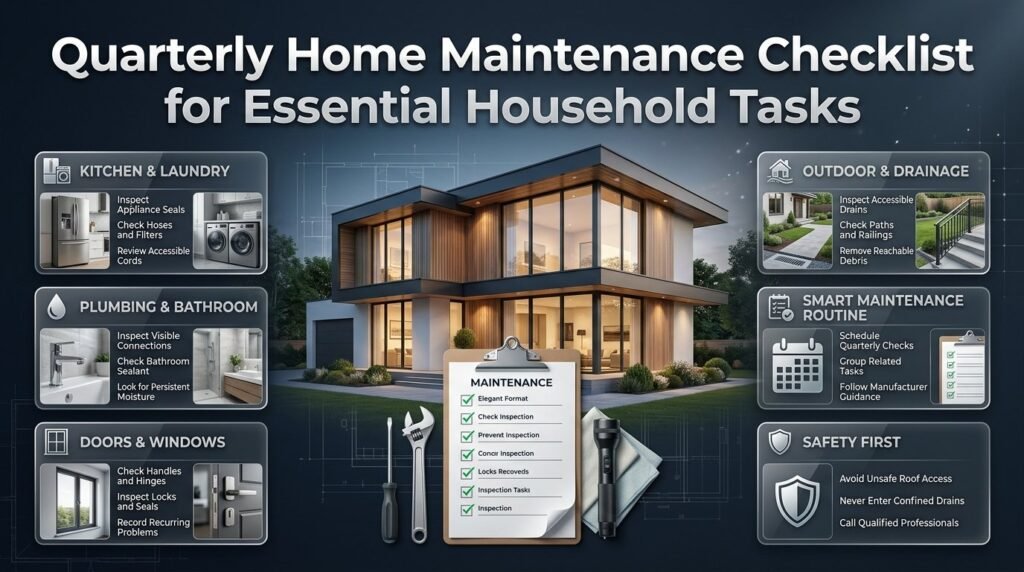
Quarterly maintenance covers tasks that may not need attention every month but should be reviewed several times throughout the year.
The precise interval depends on how frequently equipment is used and the manufacturer’s instructions.
Kitchen and Laundry Maintenance
Every three months, consider the following tasks:
- Inspect refrigerator door seals for visible damage.
- Clean appliance filters and removable components as instructed.
- Check washing-machine hoses for visible deterioration or moisture.
- Inspect dishwasher connections and accessible filter areas.
- Clean kitchen extractor filters when needed.
- Check the laundry area for unusual smells or persistent dampness.
- Review the condition of accessible appliance power cords without dismantling equipment.
Some tasks may need to happen more frequently. For example, the dryer lint filter should generally be cleaned after each load, rather than waiting for a quarterly inspection.
For refrigerators and other appliances, consult the exact model’s instructions before cleaning coils, filters, or internal components.
Plumbing and Bathroom Maintenance
Inspect visible plumbing connections, faucet aerators, showerheads, and bathroom sealant.
Mineral deposits can restrict water flow, particularly in areas with hard water. Suitable cleaning may restore normal flow, but use products that are compatible with the fixture’s materials.
Look for missing grout, loose sealant, persistent moisture, or water escaping from shower enclosures.
If moisture keeps returning after cleaning, the problem may involve inadequate ventilation, hidden leakage, or damaged waterproofing.
Doors, Windows, and Interior Fixtures
Check commonly used doors, handles, cabinet hinges, locks, and accessible window mechanisms.
Look for loose screws, damaged hardware, sticking doors, and seals that have become brittle or detached.
Small adjustments may be straightforward, but doors that suddenly stop closing properly can sometimes indicate movement or moisture-related changes. Record recurring issues instead of repeatedly adjusting the same fitting without investigating the cause.
Outdoor Areas and Drainage
Inspect accessible outdoor drains, pathways, railings, and exterior fixtures.
Remove ordinary debris where it can be reached safely. Look for standing water, loose handrails, uneven paving, and vegetation obstructing drainage.
Do not climb onto roofs or enter confined drainage spaces to complete a routine inspection. Arrange qualified assistance when access or the work itself presents a safety risk.
Quick Tip: Group quarterly tasks into one scheduled maintenance session. Keeping related checks together makes the routine easier to remember and reduces the chance of overlooking smaller jobs.
Spring Home Maintenance Checklist
Spring maintenance is an opportunity to review the property’s exterior condition, inspect for water damage, and prepare systems for the next period of heavier use.
In areas where winter weather is significant, check for damage left by freezing conditions. In warmer regions, focus on drainage, exterior materials, ventilation, and cooling equipment.
Exterior and Roof Checks
- Inspect accessible roof areas from the ground.
- Look for displaced roofing materials, visible damage, or debris.
- Check gutters and downspouts for signs of overflow or loose sections.
- Inspect exterior paint, siding, masonry, and visible sealant.
- Check whether water drains away from the building.
- Look for cracks or movement around exterior steps and pathways.
- Inspect window and door seals for deterioration.
- Review any exterior repairs that remain unfinished.
A roof inspection from the ground can reveal obvious warning signs, but it cannot confirm the condition of every roof component. Arrange a qualified inspection when damage is suspected or the roof cannot be assessed safely.
Plumbing and Moisture Checks
Inspect accessible pipes, taps, drains, and areas around appliances for leakage.
If your home has a basement, crawlspace, or other lower-level area, check for damp surfaces, standing water, musty odors, or new discoloration where access is safe.
Don’t assume that sealing a visible stain will solve a moisture problem. Determine whether the source is plumbing, exterior water intrusion, condensation, or another issue.
Cooling System Preparation
If your home uses air conditioning, check the filter, thermostat, visible condensate drainage area, and accessible vents.
Arrange professional servicing according to the system’s maintenance requirements, particularly before a period of heavy use.
For detailed guidance on weather-related tasks, see Seasonal Home Maintenance.
Summer Home Maintenance Checklist
Summer maintenance often focuses on cooling, outdoor surfaces, ventilation, and water management.
In hot climates, prolonged air-conditioning use may place additional demands on filters, condensate drainage, and equipment performance. In other regions, summer may be the main period for outdoor repairs.
Cooling and Ventilation
- Inspect and maintain HVAC filters as directed.
- Check that vents and returns are unobstructed.
- Monitor rooms for unusual changes in cooling performance.
- Look for visible water around condensate drainage areas.
- Arrange professional servicing if the system requires it.
- Keep outdoor equipment areas clear of inappropriate storage or obstructions.
If the air conditioner repeatedly shuts down, leaks water, or struggles to cool the home, don’t assume that cleaning the filter will resolve the problem. Electrical faults, refrigerant issues, drainage blockages, and mechanical defects require appropriate diagnosis.
Exterior Surfaces and Outdoor Structures
Inspect decks, balconies, patios, steps, and railings for deterioration.
Look for loose boards, damaged fasteners, unstable handrails, peeling finishes, and cracks that may create trip hazards.
Do not use a damaged outdoor structure until its safety has been assessed. Repairs involving structural components should be handled by a qualified professional.
Water Use and Outdoor Fixtures
Check irrigation systems, garden taps, hoses, and accessible water connections for leakage.
Look for water collecting where it should not, excessive irrigation, or damaged sprinkler components. Adjust watering practices according to local restrictions and actual conditions.
A simple inspection can help you identify waste and prevent water from repeatedly soaking the same area beside your home.
Autumn Home Maintenance Checklist
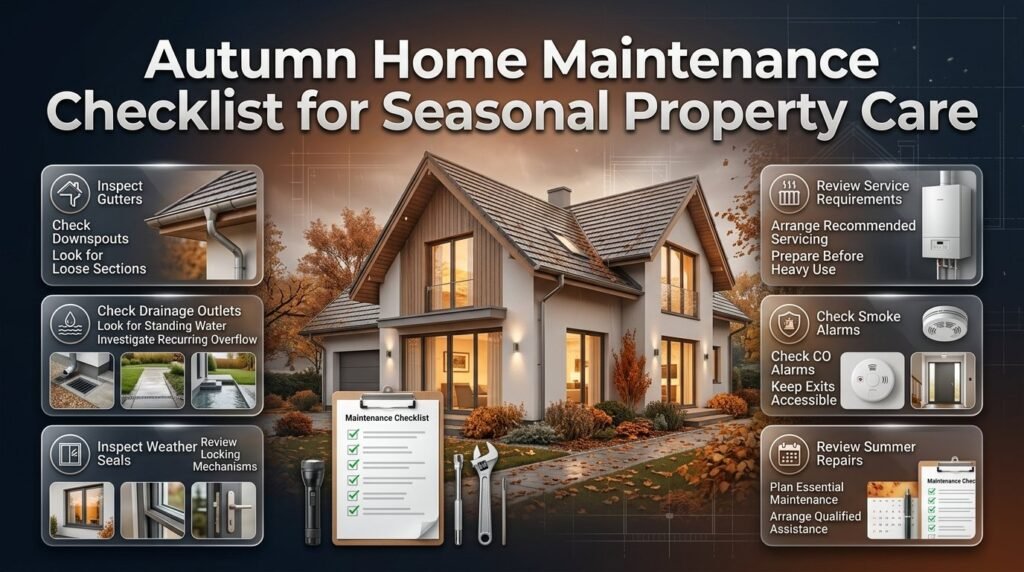
Autumn is a useful time to prepare for cooler temperatures, stronger winds, and rainy weather where relevant.
It is also an opportunity to review repairs discovered during summer and complete work before conditions make access more difficult.
Roof, Gutters, and Drainage
- Inspect gutters and downspouts for leaves and other debris.
- Check for visible loose sections or damaged joints.
- Inspect roof edges from a safe position.
- Look for signs of water collecting near exterior walls.
- Confirm that accessible drainage outlets are not blocked.
- Arrange repairs for recurring overflow or drainage problems.
Gutters should direct water away from vulnerable parts of the building. If they overflow despite being clean, investigate whether the outlet, slope, capacity, or surrounding drainage system needs attention.
Doors, Windows, and Weather Seals
Inspect weather stripping and sealant around accessible windows and doors.
Look for gaps, brittle materials, damaged locking mechanisms, and signs of water intrusion. Repair deteriorated seals where appropriate.
Avoid covering ventilation openings that are designed to remain open. Some gaps may be part of an intentional ventilation system rather than defects.
Heating and Safety Preparation
If your home uses a heating system, review its maintenance requirements and arrange servicing before heavy use when recommended.
Check smoke and carbon monoxide alarms, ensure exits remain accessible, and review the household emergency plan.
Fuel-burning appliances, chimneys, and flues should receive appropriate professional attention according to their requirements.
Winter Home Maintenance Checklist
Winter maintenance depends on the climate. Homes exposed to freezing temperatures need different precautions from homes in regions with mild winters and seasonal rain.
Heating and Indoor Conditions
- Inspect accessible heating-system filters.
- Check thermostat operation and settings.
- Monitor unusual odors, noises, or changes in performance.
- Inspect visible areas for condensation and moisture.
- Check door and window seals for drafts.
- Keep ventilation openings clear.
- Arrange professional servicing when recommended.
Persistent condensation may indicate excessive indoor humidity, insufficient ventilation, cold surfaces, or another moisture problem. Wiping away visible condensation may help temporarily, but the underlying conditions should also be addressed.
Pipes and Water Protection
In freezing regions, follow local guidance for protecting exposed pipes and outdoor taps.
If you notice a leak, unusual pipe noise, or reduced water flow during freezing weather, arrange an appropriate assessment promptly. Avoid unsafe attempts to thaw pipes with open flames or unsuitable heating equipment.
Exterior Safety
Check accessible paths, steps, handrails, and entrances for conditions that could create slipping or tripping hazards.
Keep drainage outlets clear and arrange repairs for damaged exterior fixtures.
If your climate does not experience freezing temperatures, adapt this section to focus on rainy-season preparation, dampness, and drainage rather than winterization.
Annual Home Maintenance Checklist
An annual review helps you evaluate the overall condition of your property and identify maintenance that may not be obvious during monthly checks.
Some tasks need specialist attention, while others involve reviewing records, checking visible conditions, or confirming that routine servicing has been completed.
| Area | Annual review | Recommended action |
|---|---|---|
| Roof | Review visible condition and any leak history | Arrange specialist inspection when warranted |
| Exterior | Check paint, sealant, siding, and masonry | Repair deteriorated materials |
| Plumbing | Review recurring leaks and fixture condition | Arrange repairs or specialist assessment |
| HVAC | Review service records and equipment performance | Follow manufacturer recommendations |
| Electrical safety | Note damaged fittings or unusual symptoms | Contact a qualified electrician |
| Water heater | Review service and inspection requirements | Follow the manufacturer’s instructions |
| Windows and doors | Review seals, hardware, and operation | Repair damage and persistent faults |
| Fire safety | Review alarm condition and household procedures | Test and replace equipment as required |
| Appliances | Review age, condition, and recurring faults | Service or replace when justified |
| Maintenance records | Review completed and outstanding tasks | Update the schedule and budget |
Roof and Exterior Condition
Review any visible damage, past leaks, recurring gutter problems, or deteriorating exterior finishes.
A professional assessment may be appropriate if the roof is aging, a leak has occurred, or visible materials appear damaged.
Do not automatically schedule every specialist service at the same interval. Follow the material manufacturer’s guidance, local conditions, and the professional recommendations relevant to your property.
Plumbing and Water-Heating Equipment
Check maintenance records for the water heater, plumbing fixtures, and any pumps or filtration systems installed in your home.
Some equipment requires periodic servicing, while other components may need attention only when an issue develops. Never open a pressurized system or carry out unfamiliar servicing simply because a generic checklist recommends it.
Safety and Documentation
Review your household emergency plan, alarm records, warranties, receipts, and contact details for qualified service providers.
Make sure unresolved issues are carried forward into the next maintenance period. An annual review is also a useful opportunity to remove tasks that no longer apply and add checks for newly installed equipment.
Home Maintenance Checklist for Plumbing and Water Systems
Plumbing problems can be difficult to notice when pipes are hidden behind walls or beneath floors. A checklist should therefore focus on visible warning signs, drainage performance, and the maintenance instructions for installed equipment.
Plumbing Inspection Checklist
- Check beneath accessible sinks for moisture.
- Look around toilet bases and visible supply connections.
- Inspect exposed pipes for corrosion or dripping.
- Notice changes in water pressure or drainage.
- Check taps for persistent dripping.
- Look for recurring dampness near washing machines.
- Review water-heater service requirements.
- Record any unusual sounds or repeated plumbing problems.
A slow drain may result from an ordinary blockage, but recurring problems can indicate a deeper issue. Avoid repeatedly using unsuitable drain chemicals, especially when you do not know what is causing the blockage.
What Should You Do About a Leak?
First, determine whether the leak presents an immediate risk. If water is spreading rapidly, move away from electrical hazards and contact the appropriate emergency or repair service.
If it is safe and you know how to operate the correct water shutoff, follow the property’s established procedure. Otherwise, ask a qualified person for assistance.
Record the location and visible symptoms, and arrange an appropriate repair. After the repair, check whether moisture returns and keep the service record for future reference.
Home Maintenance Checklist for Electrical and Fire Safety
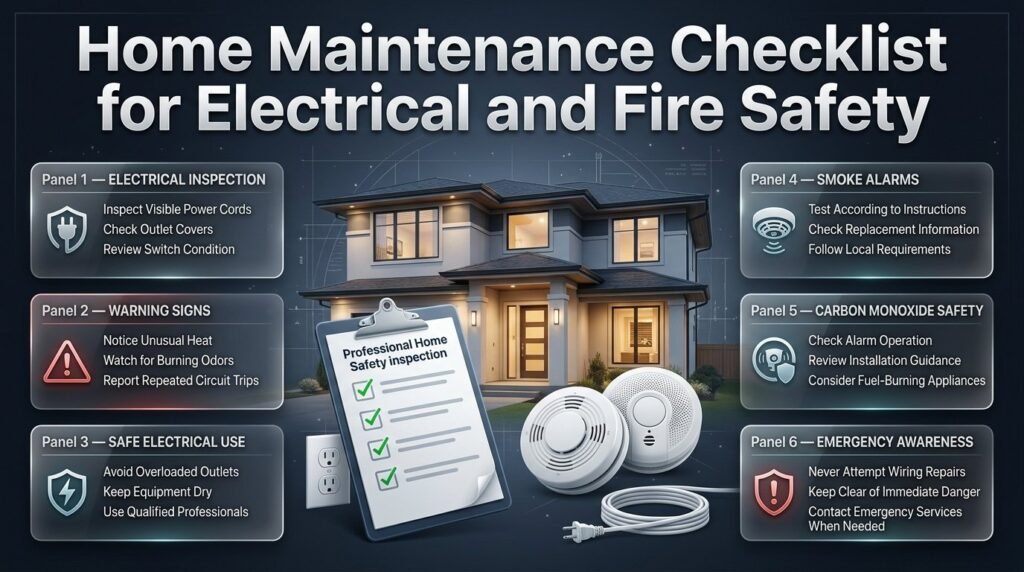
Electrical and fire safety deserve special attention because some faults can create serious hazards before obvious damage appears.
Homeowners should carry out permitted visual checks and alarm tests, but technical electrical repairs should be left to appropriately qualified professionals.
Electrical Safety Checks
- Look for visibly damaged power cords.
- Check for cracked outlet covers or damaged switches.
- Notice unusual heat, buzzing, burning odors, or repeated circuit trips.
- Keep electrical equipment away from wet areas.
- Avoid overloading outlets or extension equipment.
- Arrange professional assessment for suspected electrical faults.
Never remove electrical covers or attempt wiring repairs as part of a routine checklist.
If you notice burning smells, smoke, sparks, or another immediate electrical danger, keep clear and contact the appropriate emergency service.
Smoke and Carbon Monoxide Alarms
Test alarms according to their instructions and local requirements. Check expiry or replacement information and ensure that alarms are installed in appropriate locations.
Carbon monoxide alarms are particularly important where fuel-burning appliances are present, although the exact installation requirements depend on local regulations and the building.
Never assume that an alarm is unnecessary simply because you cannot see or smell a problem.
Home Maintenance Checklist for Windows, Doors, and Interior Surfaces
Windows, doors, walls, ceilings, and floors can reveal early signs of moisture, movement, and everyday wear.
Windows and Doors
Inspect the following:
- Window and door seals.
- Locks, hinges, handles, and latches.
- Visible gaps around frames.
- Damaged glass or loose components.
- Signs of water intrusion.
- Doors or windows that suddenly become difficult to operate.
A stiff hinge may be a minor issue, but a door that suddenly sticks along with new cracks or visible movement may need professional assessment.
Walls, Ceilings, and Floors
Look for new stains, peeling paint, unusual cracks, soft flooring, or changes that become more noticeable over time.
Take dated photographs of recurring issues. They can help you compare changes and explain the problem to a repair professional.
Avoid covering stains or cracks before determining whether they are associated with moisture, movement, or another defect.
Home Maintenance Checklist for Outdoor Areas
Outdoor areas are exposed to weather, drainage, vegetation, and regular use. Their maintenance requirements depend on the property layout and the materials installed.
Outdoor Inspection Checklist
- Inspect accessible paths and steps.
- Check handrails and exterior fittings for looseness.
- Look for water pooling beside the building.
- Inspect visible fence and gate condition.
- Check garden taps and irrigation equipment for leaks.
- Keep drainage outlets clear where safely accessible.
- Look for vegetation touching vulnerable building surfaces.
- Review outdoor lighting and visible damage.
- Check balconies and patios for deterioration.
Don’t climb onto roofs, unstable structures, or high outdoor fixtures to complete these tasks. Use a qualified professional whenever access is unsafe.
How to Prioritize Tasks on Your Home Maintenance Checklist
A checklist should help you decide what needs attention first, rather than simply creating a long list of jobs.
The most effective approach is to separate urgent hazards from important repairs, routine maintenance, and optional improvements.
| Priority | Examples | What to do |
|---|---|---|
| Urgent safety concern | Suspected gas leak, serious electrical danger, uncontrolled flooding | Keep clear and contact appropriate emergency services |
| High priority | Active plumbing leak, significant roof leak, major equipment fault | Arrange prompt assessment |
| Routine maintenance | Dirty compatible filter, deteriorating sealant, blocked accessible drain | Schedule appropriate maintenance |
| Planned work | Repainting, optional upgrades, cosmetic improvements | Budget and arrange when suitable |
Step 1: Identify the Problem
Record what you observed, where it happened, and whether it appears to be changing.
Avoid diagnosing complex problems from appearance alone. A damp patch, for example, could have several causes.
Step 2: Consider Safety and Potential Damage
Ask whether the issue creates an immediate hazard or could cause further damage if left unresolved.
Safety concerns and active leaks should not be postponed simply because they were discovered during a routine inspection.
Step 3: Arrange the Appropriate Response
Choose between simple cleaning, routine maintenance, specialist assessment, or urgent repair.
For detailed guidance on maintaining your property before problems grow, read Preventive Home Maintenance.
Step 4: Record the Outcome
After the task is completed, record what was done, who carried it out, and whether any follow-up is required.
This prevents recurring problems from disappearing from view once the immediate repair is finished.
DIY Home Maintenance Checklist: What Can You Handle Yourself?
Many maintenance tasks involve simple observation, cleaning, and routine care. Others require specialist training, appropriate equipment, permits, or knowledge of local regulations.
Tasks Often Suitable for Homeowners
Depending on your abilities and the property’s condition, you may be able to:
- Clean accessible household surfaces.
- Inspect visible plumbing connections.
- Check compatible HVAC filters.
- Test alarms according to manufacturer instructions.
- Clean accessible appliance filters.
- Inspect door and window seals.
- Record visible defects.
- Organize service records and maintenance reminders.
Tasks That May Require a Professional
Electrical wiring, gas appliance repairs, roof work, major plumbing repairs, structural defects, and specialist equipment servicing may require qualified help.
The important distinction is between identifying a problem and attempting a repair. You can often recognize a warning sign without needing to dismantle or repair the affected system.
Expert Tip: If you are unsure whether a task is safe, check the manufacturer’s instructions and local requirements or ask a qualified professional before proceeding.
How to Create a Home Maintenance Schedule That Works
A maintenance schedule should be realistic enough to follow consistently. A complicated system that is abandoned after a few weeks is less useful than a simple checklist that becomes part of your routine.
Step 1: List Your Property’s Main Systems
Write down the areas and equipment that apply to your home, including plumbing, cooling, electrical safety, windows, exterior drainage, appliances, and outdoor structures.
Add any special equipment, such as a water pump, generator, solar water heater, or irrigation system.
Step 2: Assign Each Task a Frequency
Use monthly, quarterly, seasonal, and annual categories as a starting point. Then adjust the schedule according to manufacturer instructions, local conditions, and any defects discovered.
Not every task belongs in every category. Some items, such as dryer lint-filter cleaning, require attention more frequently than monthly.
Step 3: Estimate the Time Required
A visual inspection may take only a few minutes, while professional servicing or a major repair may require an appointment.
Group related tasks together when practical, but don’t delay an urgent problem just because it falls outside the planned schedule.
Step 4: Add Reminders
Use a calendar, spreadsheet, notebook, or maintenance application. Include the task, due date, completion status, and any follow-up action.
Step 5: Review Your Checklist Regularly
At the end of each season, check what was completed and which tasks remain outstanding.
Remove irrelevant tasks and add new ones when equipment is installed or the property’s condition changes.
For additional practical guidance, visit Home Maintenance Tips.
How Much Should You Budget for Home Maintenance?
Home maintenance costs vary according to property age, size, location, materials, equipment, and the condition of existing systems. There is no single budget that suits every homeowner.
A more useful approach is to divide maintenance spending into three categories.
Routine Maintenance
This includes ordinary cleaning supplies, compatible filters, small adjustments, and other recurring tasks.
Planned Professional Services
This category includes inspections and servicing required for particular appliances, mechanical systems, and building components.
Repairs and Replacements
This covers unexpected faults, deteriorated materials, appliance replacement, and larger repair projects.
Review your previous maintenance expenses where possible. If you lack records, begin tracking costs and use the information to develop a realistic budget for the next year.
Don’t delay a serious repair simply because the money was originally allocated to cosmetic improvements. Safety-related work and active damage should take priority.
For a more detailed budgeting guide, see Home Maintenance Costs.
Common Home Maintenance Checklist Mistakes to Avoid
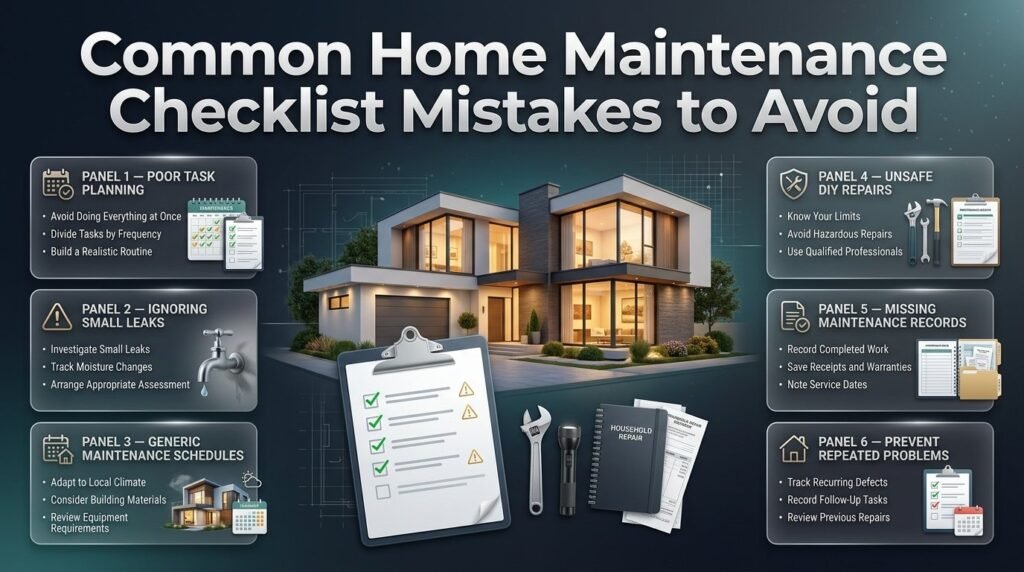
Even a detailed checklist can be ineffective if the tasks are poorly prioritized or the schedule is unrealistic.
Mistake 1: Trying to Complete Everything at Once
Why it happens: Homeowners create a long list and attempt to finish every task in one weekend.
Why it’s harmful: The workload becomes overwhelming, increasing the likelihood that maintenance will be postponed.
How to avoid it: Divide tasks by frequency and complete a manageable group at a time.
Mistake 2: Ignoring Small Leaks
Why it happens: A small drip or stain appears harmless.
Why it’s harmful: Continued moisture can damage surrounding materials or reveal a larger hidden problem.
How to avoid it: Record the issue, check whether it changes, and arrange an appropriate assessment rather than simply painting over the stain.
Mistake 3: Using the Same Schedule for Every Property
Why it happens: Generic checklists often present tasks without explaining how local conditions affect them.
Why it’s harmful: Important maintenance may be missed, while irrelevant tasks consume time.
How to avoid it: Adapt the checklist to your climate, equipment, building materials, and maintenance history.
Mistake 4: Attempting Repairs Beyond Your Skills
Why it happens: Homeowners want to save time or avoid service costs.
Why it’s harmful: Incorrect repairs can create additional damage or safety hazards.
How to avoid it: Handle straightforward maintenance within your abilities and use qualified professionals for hazardous or specialist work.
Mistake 5: Forgetting to Record Completed Tasks
Why it happens: Once a repair is finished, the problem no longer seems important.
Why it’s harmful: You may lose warranty details, forget service dates, or overlook recurring defects.
How to avoid it: Record the date, work completed, service provider, receipts, and any recommended follow-up.
Expert Advice for Maintaining Your Home More Effectively
A good maintenance routine is based on observation, documentation, appropriate priorities, and consistent follow-up.
Keep a Simple Maintenance Log
Create a record with these columns:
| Date | Area | Finding | Action | Follow-up |
|---|---|---|---|---|
| Example | Kitchen sink | Moisture beneath connection | Repair arranged | Recheck after repair |
| Example | HVAC | Filter needs attention | Follow manual | Review next month |
| Example | Exterior wall | New discoloration | Assessment requested | Monitor condition |
These examples illustrate the format rather than reporting actual completed work.
Learn Where Important Shutoffs Are Located
Know where your water shutoff is located and how to follow the property’s established procedure for isolating utilities when safe and appropriate.
If you are unfamiliar with a control or it appears damaged, ask a qualified professional to explain its function. Do not experiment with unfamiliar electrical or gas equipment.
Keep Photographs of Recurring Defects
Photographs taken from a safe position can help you compare changes over time. Include dates and notes describing what you observed.
Images cannot establish the cause of a structural crack, leak, or other defect, but they can help a professional understand its history.
Follow Equipment-Specific Instructions
Different appliances and building systems have different service requirements. A universal checklist should never replace the instructions supplied for your particular model.
Check the manual before cleaning, adjusting, or servicing equipment. If the task requires specialist knowledge, arrange qualified help.
Review Your Home’s Condition Before Spending on Upgrades
A decorative improvement may be appealing, but unresolved leaks, damaged seals, or failing equipment can deserve greater priority.
Review the condition of existing components before committing to optional upgrades. This helps you direct available money toward the property’s most important needs.
What Should Be Included in a Complete Home Maintenance Checklist?
A complete home maintenance checklist should cover the essential areas of your property, including plumbing, electrical safety, HVAC systems, appliances, roofs, gutters, windows, doors, and outdoor drainage. It should also include seasonal inspections, routine cleaning, professional servicing, and a record of completed repairs. The exact tasks depend on your home’s age, location, equipment, and condition.
Important tasks to include:
Inspect visible plumbing connections for leaks and moisture.
Check HVAC filters and replace them according to manufacturer instructions.
Test smoke and carbon monoxide alarms as recommended.
Examine accessible windows, doors, and exterior seals for damage.
Review drainage, gutters, and visible roof conditions safely.
Record maintenance dates, repair costs, warranties, and follow-up work.
A well-organized checklist makes it easier to identify developing problems and keep maintenance responsibilities manageable throughout the year.
How Often Should You Perform Home Maintenance?
Home maintenance should follow a regular schedule rather than relying on a single annual inspection. Monthly checks help identify visible warning signs, quarterly tasks cover selected fixtures and appliances, and seasonal inspections prepare your property for changing weather. Annual reviews help you assess major systems, review service records, and plan future repairs.
A practical maintenance schedule includes:
Monthly: Check for leaks, inspect HVAC filters, and test safety alarms according to their instructions.
Quarterly: Review bathroom sealant, appliance connections, door hardware, and accessible drainage.
Seasonally: Inspect exterior surfaces, drainage, weather seals, and heating or cooling equipment as relevant.
Annually: Review the roof’s visible condition, major systems, warranties, and outstanding maintenance needs.
Remember that some tasks require more frequent attention. For example, dryer lint filters generally need cleaning after every load. Always follow manufacturer recommendations and respond promptly to unexpected problems.
How Can a Home Maintenance Checklist Help Prevent Expensive Repairs?
A home maintenance checklist helps homeowners identify small problems before they cause additional damage. Regular inspections can reveal leaking pipes, deteriorating sealant, blocked drainage, damaged weather seals, or changes in equipment performance. Addressing these warning signs early may reduce repair costs and help protect the property’s condition.
To reduce avoidable maintenance expenses:
Investigate new damp patches instead of simply repainting them.
Repair leaking taps and visible plumbing connections promptly.
Maintain appliances according to their service requirements.
Keep accessible drainage routes clear to reduce overflow risks.
Record recurring faults so the underlying cause can be investigated.
Set aside money for planned servicing and unexpected repairs.
Preventive maintenance cannot eliminate every breakdown, but it can make repairs more predictable and reduce the likelihood of avoidable damage. The key is to act on inspection findings rather than allowing problems to remain unresolved.
Which Home Maintenance Tasks Can You Do Yourself, and When Should You Hire a Professional?
Many routine maintenance tasks can be handled by homeowners when they are straightforward and safe. These include cleaning accessible surfaces, inspecting visible plumbing connections, checking compatible HVAC filters, testing alarms according to their instructions, and recording signs of deterioration. However, tasks involving electrical wiring, gas appliances, roof access, structural defects, or major plumbing problems may require qualified professionals.
Tasks often suitable for DIY maintenance:
Cleaning accessible household surfaces and appliance filters.
Checking visible areas beneath sinks for moisture.
Inspecting windows, doors, and accessible weather seals.
Maintaining a maintenance calendar and organizing service records.
Tasks that may require professional assistance:
Electrical wiring repairs or repeated circuit problems.
Gas appliance faults or suspected gas leaks.
Roof repairs and work at height.
Persistent leaks, significant structural cracks, or recurring drainage problems.
Specialist HVAC servicing and major equipment repairs.
The safest approach is to recognize the problem, assess its urgency, and choose the appropriate response. Avoid attempting repairs that require training, specialist tools, or safety precautions you cannot provide.
What Is the Best Way to Create a Home Maintenance Checklist for the Entire Year?
The best way to create a year-round home maintenance checklist is to start with your property’s main systems, assign tasks suitable frequencies, and track their completion in one place. A practical schedule should reflect your home’s condition, local climate, equipment manuals, and previous repair history rather than copying an identical routine for every property.
Follow these steps to build an effective schedule:
List your main systems: Include plumbing, HVAC, appliances, electrical safety, windows, exterior surfaces, and drainage.
Assign maintenance intervals: Organize tasks into monthly, quarterly, seasonal, and annual categories.
Set reminders: Use a calendar, spreadsheet, notebook, or maintenance application.
Keep a repair log: Record inspection findings, completed work, invoices, and recommended follow-ups.
Review the schedule regularly: Add tasks when new equipment is installed and adjust intervals when professional recommendations change.
Consistency is more important than complexity. A simple checklist that you follow throughout the year is more useful than a lengthy maintenance plan that becomes difficult to manage. Start with essential inspections, address problems according to their urgency, and gradually develop a routine that suits your home.
Conclusion
A well-organized home maintenance checklist makes it easier to protect your property, maintain comfort, and identify small problems before they develop into expensive repairs. From inspecting plumbing and electrical systems to cleaning gutters, checking heating and cooling equipment, and preparing for seasonal changes, regular maintenance helps every part of your home perform more reliably.
The most effective approach is to divide maintenance tasks into monthly, quarterly, seasonal, and annual schedules. Prioritize safety-related concerns, keep records of completed inspections, and set aside a realistic budget for routine upkeep and unexpected repairs. While many basic tasks can be handled independently, qualified professionals should manage complex electrical, plumbing, roofing, and structural issues when specialized knowledge or equipment is required.
Remember that consistency matters more than completing every task at once. A simple checklist that you follow throughout the year is more useful than a detailed plan that gets forgotten after a few weeks.
Whether you are maintaining a new property or caring for an older home, the right habits can help extend the life of essential systems, preserve property value, and reduce unnecessary stress. Explore more practical guidance at Brendan Active Property Care and build a maintenance routine that keeps your home safe, comfortable, and ready for every season.