Introduction
Home Maintenance | A home can look clean, comfortable, and perfectly fine while small maintenance problems are quietly developing behind the scenes. A dripping tap may seem insignificant. A blocked gutter may not look urgent. A slightly damaged seal around a window may be easy to ignore. But small issues often become much harder and more expensive when they’re left unattended for months.
That’s why home maintenance isn’t simply about fixing things after they break. It’s about paying attention to your home, identifying changes early, keeping important areas in good condition, and dealing with problems before they grow.
If you’re building a practical approach to looking after your property, you can also explore Brendan Active Property Care for broader property-care guidance and practical maintenance resources.
This complete guide explains how home maintenance works, what should be checked regularly, which tasks belong on a monthly or seasonal schedule, what beginners can safely handle themselves, when professional help makes sense, how to organize maintenance costs, and how to build a routine that doesn’t become overwhelming.
The goal isn’t to turn every homeowner into a professional tradesperson. The goal is to help you understand your property well enough to notice problems, prioritize correctly, and make sensible maintenance decisions.
What Is Home Maintenance?
Home maintenance is the regular process of inspecting, cleaning, servicing, protecting, and repairing the different parts of a home. It includes routine tasks such as checking plumbing, cleaning filters, inspecting gutters, maintaining doors and windows, monitoring moisture, looking after appliances, and identifying visible signs of deterioration.
Some maintenance tasks take only a few minutes. Others may require planning or professional assistance.
The important point is that maintenance is ongoing.
A home isn’t something you inspect once and then forget about. Materials age, weather changes, equipment wears down, seals deteriorate, drainage becomes blocked, and small defects appear through normal use.
A practical maintenance approach therefore combines:
- Regular inspections
- Routine cleaning
- Preventive maintenance
- Seasonal preparation
- Minor repairs
- Professional servicing
- Record keeping
- Budget planning
- Safety checks
Why is regular maintenance better than waiting for something to break?
Regular maintenance allows you to identify problems while they are still relatively small. Waiting until something completely fails can increase repair costs, cause secondary damage, interrupt your daily routine, and sometimes create safety concerns.
For example, noticing a small plumbing leak early gives you an opportunity to investigate the connection and correct the problem. Ignoring it may eventually affect surrounding cabinets, flooring, walls, or other materials.
The same principle applies to many parts of a house.
Why Is Home Maintenance So Important?
A house is made up of many connected systems and materials. Plumbing, electrical components, roofing, drainage, heating and cooling, windows, doors, appliances, exterior surfaces, and structural elements all need some level of attention.
When one area is neglected, the consequences can sometimes affect another.
A drainage problem can contribute to moisture. Moisture can damage materials. Damaged materials can lead to additional repairs. What started as a simple maintenance issue can therefore become a much larger project.
Regular maintenance helps interrupt that chain.
The biggest benefits include:
- Protecting the property from avoidable deterioration
- Identifying problems earlier
- Reducing the likelihood of emergency repairs
- Maintaining everyday comfort
- Supporting household safety
- Helping equipment operate as intended
- Extending the useful life of materials and systems
- Making repair expenses more predictable
- Keeping the property organized
- Preserving the overall condition of the home
Maintenance is also about peace of mind
One of the less obvious benefits of maintenance is confidence.
When you know when your important systems were last checked, which repairs have already been completed, and which tasks are coming next, property care becomes less stressful.
Instead of constantly wondering whether something has been forgotten, you have a system.
Pro Tip: Don’t try to remember every maintenance task mentally. Use a calendar, notebook, spreadsheet, or maintenance app. A simple system that you actually use is more valuable than a complicated system that you abandon.
Home Renovation Planning Checklist: Prepare Before You Begin
A successful home renovation starts with a clear plan, a realistic budget, and an organized schedule. Before starting any improvement work, identify which areas need renovation, decide which materials and finishes suit your needs, and discuss the project timeline with your contractor. It is also important to allow room in your budget for unexpected repairs and confirm that any necessary permissions are in place. Follow this practical home renovation planning checklist to organize essential tasks, prepare for potential challenges, and make informed decisions before work begins. Careful preparation can help reduce unnecessary expenses, prevent avoidable delays, and keep your renovation project on the right track.
How to Prepare Your Home Before Travelling
Before leaving home for a trip, it is important to make sure your property is clean, secure, and ready to remain unattended. Check that taps are properly closed, unplug non-essential electrical devices, secure doors and windows, and arrange for any necessary plant care or pet care. If you will be away for an extended period, consider asking a trusted person to check your property and look for signs of leaks or other maintenance issues. Taking these precautions can help reduce avoidable problems and give you greater peace of mind while travelling. For additional advice on organizing your trip, preparing for departure, and managing important travel arrangements, explore this helpful travel guide.
What Areas of a Home Need Regular Maintenance?
Almost every part of a property can benefit from periodic inspection, but some areas deserve more attention than others.
A useful home maintenance plan should cover both the inside and outside of the property.
1. Plumbing
Plumbing problems can start with small signs such as:
- Dripping faucets
- Slow drains
- Moisture under sinks
- Damp cabinet surfaces
- Low water pressure
- Unusual sounds
- Toilet problems
- Water stains
Not every plumbing issue is an emergency, but unexplained moisture deserves attention.
Water can travel farther than the original source suggests, so simply drying the visible area isn’t always enough.
2. Roof and Drainage
The roof protects the rest of the home from weather. Gutters and downspouts help direct rainwater away from the building.
These systems should therefore be treated as high-priority maintenance areas.
Look for:
- Visible damage
- Missing or deteriorated materials
- Blocked gutters
- Damaged downspouts
- Water accumulation
- Signs of moisture
- Loose exterior components
Never take unnecessary risks to inspect a roof yourself. A professional inspection may be more appropriate for difficult or dangerous areas.
3. Electrical System
Homeowners should pay attention to visible warning signs rather than attempting complex electrical work themselves.
Potential warning signs include:
- Damaged outlets
- Loose switches
- Burning smells
- Sparking
- Repeated circuit problems
- Unusual heat around electrical components
- Visible damage to cords or equipment
Electrical problems can create serious safety risks. When there is uncertainty, qualified professional assistance is the appropriate choice.
4. Heating and Cooling
Heating and cooling systems need regular attention because they operate frequently and affect both comfort and energy use.
Routine care can include:
- Checking appropriate filters
- Keeping vents clear
- Watching for unusual sounds
- Monitoring performance
- Keeping outdoor equipment clear where applicable
- Arranging professional servicing according to the equipment requirements
If a system suddenly behaves differently, don’t assume it will correct itself.
5. Doors and Windows
Doors and windows affect security, ventilation, comfort, moisture control, and weather protection.
Check whether:
- Doors close properly
- Locks work correctly
- Hinges are loose
- Window seals appear damaged
- Frames show signs of moisture
- Weatherstripping has deteriorated
- Windows are difficult to operate
A small seal replacement can sometimes be much easier than dealing with the consequences of prolonged moisture or air leakage.
What Should Be on a Home Maintenance Checklist?
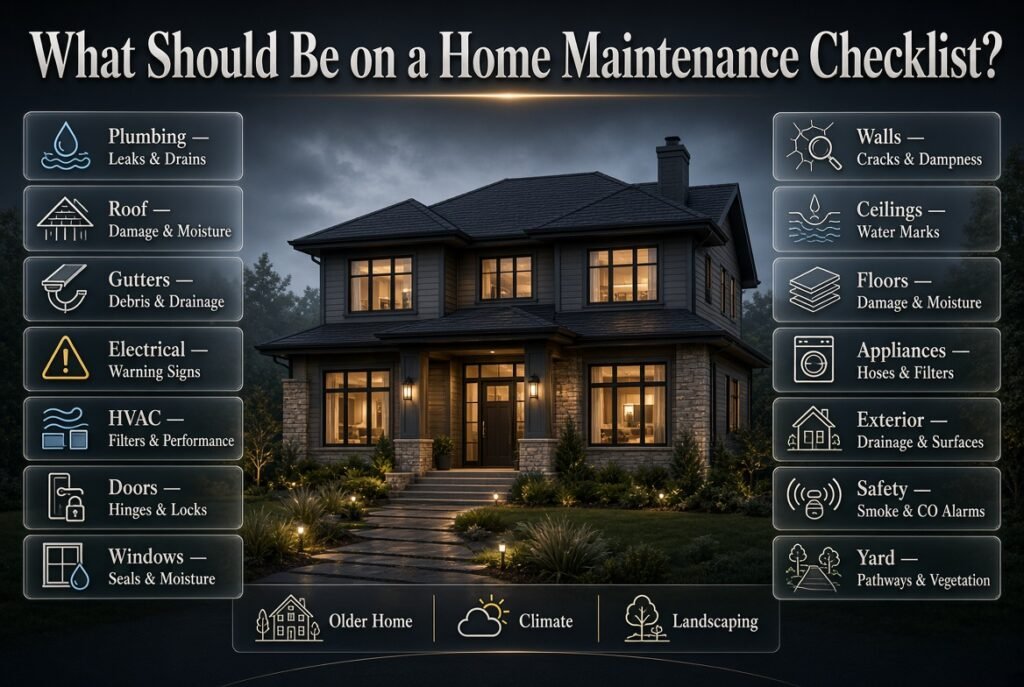
A useful checklist should be comprehensive without becoming impossible to follow.
Here’s a practical framework.
| Area | Regular Checks |
|---|---|
| Plumbing | Leaks, drains, faucets, toilets |
| Roof | Visible damage, moisture signs |
| Gutters | Leaves, debris, drainage |
| Electrical | Visible damage and warning signs |
| HVAC | Filters, performance, servicing |
| Doors | Hinges, locks, alignment |
| Windows | Seals, operation, moisture |
| Walls | Cracks, stains, dampness |
| Ceilings | Water marks and changes |
| Floors | Damage, movement, moisture |
| Appliances | Hoses, filters, unusual sounds |
| Exterior | Surfaces, drainage, vegetation |
| Safety | Smoke and carbon monoxide alarms |
| Yard | Drainage, pathways, vegetation |
The checklist should be adapted to your particular home.
An older property may require more frequent attention than a newer one. A home in a wet climate may have different priorities from one in a dry environment. A property with extensive landscaping will have different outdoor maintenance needs from an apartment.
How Often Should Home Maintenance Be Done?
There isn’t one perfect schedule for every home.
Instead, divide tasks into different frequencies.
Monthly Home Maintenance
Monthly checks are mainly about noticing changes.
You can inspect:
- Under sinks
- Faucets
- Toilets
- Visible pipes
- HVAC filters where appropriate
- Smoke and carbon monoxide alarms
- Appliances
- Doors and windows
- Drains
- Areas prone to moisture
You don’t necessarily need to repair anything every month.
The purpose is observation.
A homeowner who regularly notices what “normal” looks like is more likely to recognize when something changes.
Quarterly Home Maintenance
Every few months, take a broader look.
Depending on your property, consider:
- Inspecting exterior drainage
- Cleaning accessible vents
- Checking doors and windows
- Reviewing appliance condition
- Inspecting outdoor areas
- Looking for developing moisture problems
- Checking visible roof areas from a safe location
- Reviewing your maintenance records
This is also a good time to check whether previously identified issues were actually resolved.
Seasonal Home Maintenance
Seasonal maintenance prepares your home for changing weather and usage patterns.
Before a major weather change, consider checking:
- Gutters
- Downspouts
- Roof condition
- Exterior drainage
- Windows
- Doors
- Weather seals
- HVAC systems
- Outdoor plumbing
- Landscaping
- Trees and vegetation near structures
For more practical guidance on preparing your property for changing weather conditions, explore this Seasonal Home Maintenance guide.
Seasonal maintenance is especially useful because weather can expose weaknesses that remain hidden during ordinary conditions.
Annual Home Maintenance
Once or twice a year, perform a broader review of the entire property.
An annual review can include:
- Roof condition
- Attic or accessible roof spaces
- Plumbing
- Electrical warning signs
- HVAC servicing
- Drainage
- Exterior finishes
- Windows
- Doors
- Major appliances
- Safety devices
- Moisture-prone areas
- Outdoor structures
This doesn’t mean every homeowner needs to perform technical inspections personally.
The purpose is to understand the condition of the property and identify areas that may require qualified assistance.
A Simple Home Maintenance Schedule
If you don’t know where to begin, use this basic framework.
Every Month
- Check visible plumbing leaks
- Look under sinks
- Inspect drains
- Check filters where appropriate
- Test or inspect safety alarms according to manufacturer guidance
- Look for unusual moisture
- Notice changes in appliance performance
Every Three Months
- Review doors and windows
- Inspect accessible exterior areas
- Check drainage
- Clean appropriate vents
- Review maintenance records
- Look for developing damage
Every Six Months
- Inspect gutters where safely accessible
- Review roof condition from a safe position
- Check exterior surfaces
- Review major equipment
- Inspect outdoor spaces
- Prepare for upcoming seasonal conditions
Every Year
- Review the complete property
- Arrange appropriate professional servicing
- Update your maintenance records
- Review expected repair costs
- Replace or repair deteriorated components
- Update your maintenance plan
How Do You Create a Home Maintenance Plan?
A maintenance plan works best when it reflects the actual property rather than a generic checklist.
Step 1: List Every Major Area
Write down:
- Interior rooms
- Plumbing
- Electrical
- HVAC
- Roof
- Gutters
- Windows
- Doors
- Appliances
- Exterior
- Yard
- Safety equipment
- Outdoor structures
Step 2: Identify Existing Problems
Walk through the property and record anything that doesn’t look or operate normally.
Don’t worry about fixing everything immediately.
The first objective is simply to create visibility.
Step 3: Rank Problems by Priority
Use three levels:
High Priority
Problems involving safety, active water damage, serious structural concerns, major electrical issues, or other conditions that could quickly worsen.
Medium Priority
Problems that aren’t immediately dangerous but could become expensive or disruptive.
Low Priority
Cosmetic improvements, minor adjustments, and non-urgent upgrades.
This prevents you from spending your limited time and money on low-priority tasks while important problems remain unresolved.
Step 4: Assign a Date
Give each task a realistic deadline.
Don’t put ten major jobs into the same weekend.
Spread them across the year.
Step 5: Record What You Did
After completing a task, record:
- Date
- Work completed
- Materials used
- Problem discovered
- Repair performed
- Professional contacted
- Next inspection date
This creates a maintenance history for the property.
How to Plan a Journey for a Smooth and Enjoyable Trip
Planning a journey in advance helps you manage your time, organize travel expenses, and enjoy a more comfortable experience. Start by choosing your destination, deciding how long you will stay, and setting a realistic travel budget. Research transportation options, accommodation, weather conditions, and local attractions before finalizing your itinerary. Keep important documents accessible, prepare a packing list, and leave some flexibility in your schedule to accommodate unexpected delays or changes. If you are travelling with family or friends, discuss everyone’s preferences and confirm essential arrangements before departure. For practical guidance on organizing each stage of your trip, explore this helpful guide on how to plan a journey. A thoughtful travel plan can help you avoid last-minute confusion, manage expenses effectively, and make your journey more enjoyable.
What Can Homeowners Safely Do Themselves?

Many routine maintenance tasks are suitable for homeowners.
Examples include:
- Cleaning accessible areas
- Replacing appropriate filters
- Checking visible leaks
- Cleaning gutters when safely accessible
- Tightening loose cabinet hardware
- Cleaning appliances
- Replacing suitable weatherstripping
- Testing safety devices according to instructions
- Keeping drains clear through appropriate routine care
- Maintaining gardens and outdoor areas
- Monitoring doors and windows
However, DIY doesn’t mean “do everything yourself.”
Some work requires specialist knowledge, equipment, licensing, or safety precautions.
Construction Planning and Property Maintenance: What Homeowners Should Know
Understanding basic construction principles can help homeowners make better decisions when maintaining, repairing, or improving their properties. Before starting any major work, inspect the affected area, identify the underlying problem, and determine whether the repair requires professional expertise. Projects involving structural changes, roofing, plumbing, or electrical systems need careful planning to ensure safety, quality, and long-term reliability. It is also helpful to compare material options, review contractor estimates, and establish a realistic timeline before work begins. For more detailed information about construction methods, project preparation, materials, and essential building considerations, explore this practical construction guide. Having a better understanding of construction can help you plan property improvements more effectively, recognize when expert assistance is necessary, and maintain your home with greater confidence.
When Should You Call a Professional?
Professional assistance is appropriate when a task involves significant safety risk, specialized equipment, difficult diagnosis, or technical work.
Examples include:
- Major electrical faults
- Gas-related concerns
- Serious plumbing failures
- Structural problems
- Major roof repairs
- Significant water intrusion
- Complex HVAC problems
- Difficult drainage issues
- Work at dangerous heights
- Problems requiring specialist diagnostic equipment
A professional can also help identify the underlying cause.
That’s important because treating the visible symptom doesn’t always solve the actual problem.
Expert Tip: If you’ve repaired the same issue more than once and it keeps returning, stop treating it as an isolated repair. Look for the underlying cause.
What Are the Most Common Home Maintenance Mistakes?
Mistake 1: Waiting Until Something Breaks
Reactive maintenance feels convenient because you only act when something becomes obvious.
The problem is that failure can happen at the worst possible time.
A better approach is to monitor important systems and respond to early warning signs.
Mistake 2: Ignoring Small Leaks
A small leak is easy to ignore because the amount of water may seem insignificant.
But water can damage materials over time.
Look for:
- Dampness
- Staining
- Swelling
- Musty odors
- Discoloration
- Repeated condensation
Mistake 3: Ignoring Gutters
Gutters aren’t merely decorative.
Their purpose is to move rainwater away from the building.
When blocked, damaged, or poorly connected, they may contribute to unwanted water around the property.
Mistake 4: Focusing Only on Appearance
A home can look beautiful while having important maintenance problems.
Fresh paint doesn’t solve a leak.
A clean room doesn’t fix poor drainage.
A new decoration doesn’t repair a damaged window seal.
Maintenance should prioritize function and protection before cosmetic upgrades.
Mistake 5: Doing Unsafe DIY Repairs
A tutorial can explain a process, but it doesn’t remove the hazards associated with electrical systems, gas, heights, structural work, or complex machinery.
Know your limits.
Mistake 6: Having No Maintenance Records
Without records, homeowners often forget:
- When equipment was serviced
- Which parts were replaced
- When a problem first appeared
- Which repairs were temporary
- Which tasks are due next
Simple records solve this problem.
Mistake 7: Trying to Fix Everything at Once
An enormous maintenance list can become discouraging.
Break it down.
One month, one area, one priority at a time.
How Can You Tell When a Small Problem Is Becoming Serious?
Not every defect requires immediate action, but certain patterns deserve attention.
Watch for problems that:
- Keep returning
- Become progressively worse
- Spread to other areas
- Produce moisture
- Cause unusual odors
- Affect equipment performance
- Create visible staining
- Change the appearance of materials
- Affect doors or windows
- Create unusual sounds
- Appear after severe weather
A useful principle is:
Change is information.
If something that normally works quietly and smoothly suddenly behaves differently, investigate why.
How Do You Prioritize Home Repairs?
When several problems exist at once, use a simple priority system.
| Priority | Examples | Action |
|---|---|---|
| Urgent | Serious safety issue, active major leak | Address promptly |
| High | Significant deterioration, recurring failure | Schedule soon |
| Medium | Developing damage, worn components | Plan repair |
| Low | Cosmetic defects | Handle when practical |
The exact classification depends on the circumstances.
A small crack in a decorative surface is different from a crack associated with movement or water intrusion.
Context matters.
Home Maintenance and Preventive Maintenance: What’s the Difference?
Home maintenance is the broader concept.
Preventive maintenance is one part of it.
Preventive maintenance involves taking action before failure occurs.
For example:
- Cleaning a filter before airflow becomes restricted
- Inspecting a roof before heavy weather
- Replacing deteriorated seals before water enters
- Clearing drainage before rainy conditions
- Servicing equipment according to its requirements
The purpose is to reduce avoidable failures.
Why is preventive maintenance valuable?
Because it changes the homeowner’s approach from:
“Something broke. What do I do?”
to:
“What could become a problem, and what can I reasonably do now?”
That shift can make property care much more predictable.
Preventive Home Maintenance
Preventive maintenance helps you identify potential problems before they become more expensive or difficult to manage.
Regular preventive tasks may include:
- Inspecting plumbing for leaks
- Checking electrical systems for visible issues
- Cleaning gutters and drainage areas
- Maintaining HVAC equipment
- Checking windows and doors
- Inspecting roofs and exterior surfaces
- Testing smoke alarms and safety devices
- Looking for signs of dampness or moisture
For more practical guidance on organizing routine inspections and keeping your property in good condition, explore this Preventive Home Maintenance guide.
Preventive maintenance is especially useful because small issues can often be identified before they develop into more extensive repairs.
How Can Home Maintenance Save Money?
Maintenance isn’t free.
You may need replacement parts, cleaning supplies, professional servicing, or repairs.
But avoiding maintenance can be more expensive.
Consider a simple example.
A small leak is identified early.
You investigate it and arrange an appropriate repair.
Now compare that with ignoring the leak until surrounding materials become damaged.
The second situation may involve:
- More labour
- More replacement materials
- Longer repair time
- Greater disruption
- Additional moisture-related problems
Preventive care doesn’t guarantee that major repairs will never happen, but it can reduce some avoidable costs.
Essential Property Care Tips for a Safe and Well-Maintained Home
Regular property care helps homeowners maintain a clean, comfortable, and functional living environment while reducing the risk of costly repairs. Start by checking for leaks, inspecting doors and windows, maintaining plumbing fixtures, and keeping indoor and outdoor areas clean. It is also important to monitor signs of dampness, maintain heating and cooling equipment, and address minor problems before they become more serious. Creating a seasonal maintenance schedule can make these responsibilities easier to manage and help ensure that essential tasks are not overlooked. For more practical advice on home upkeep, routine inspections, repairs, and preventive maintenance, explore this comprehensive guide to property care and maintenance. Following a consistent property care routine can help protect your home’s condition, improve everyday comfort, and support its long-term value.
Home Maintenance Costs: A Practical Guide to Planning Your Property Budget
Understanding home maintenance costs helps homeowners plan routine upkeep, prepare for unexpected repairs, and manage their property budget more effectively. Expenses can vary depending on the age of the property, its size, the condition of essential systems, the local climate, and the type of maintenance required. Regularly inspecting plumbing, electrical systems, roofing, ventilation, and exterior surfaces can help identify potential concerns before they develop into more expensive problems. A practical budget should account for routine servicing, seasonal maintenance, replacement of worn components, and a reasonable allowance for unexpected repairs. Explore our Home Maintenance Costs guide to better understand the factors that influence maintenance expenses and learn how to prioritize essential work. With consistent planning, realistic budgeting, and timely professional support when needed, you can keep your property in good condition while making more informed decisions about long-term maintenance.
Home Maintenance Tips
Simple home maintenance habits can help you keep your property organized, comfortable, and in good condition.
Useful home maintenance practices include:
- Checking for plumbing leaks
- Keeping gutters and drains clear
- Inspecting windows and doors
- Cleaning ventilation areas
- Monitoring walls and ceilings for signs of moisture
- Maintaining appliances according to manufacturer guidance
- Testing smoke alarms and other safety devices
- Keeping outdoor areas clean and accessible
For more practical ideas on organizing routine property care and managing everyday maintenance tasks, explore this Home Maintenance Tips guide.
Consistent attention to these tasks can help you notice developing issues early and make property maintenance easier to manage throughout the year.
How Should You Budget for Home Maintenance?
Create a separate maintenance category in your household planning.
Your budget can include:
- Routine supplies
- Filter replacements
- Cleaning materials
- Professional servicing
- Minor repairs
- Seasonal maintenance
- Emergency repair reserves
- Larger future replacements
Don’t assume every year will cost the same.
Some years may involve only routine care.
Another year might include a major appliance, roof repair, exterior work, or other significant expense.
A maintenance budget gives you flexibility.
How to Plan a Construction Budget for Your Project
Planning a construction budget helps you control expenses, prioritize essential work, and make better decisions throughout your building project. Start by defining the project scope, estimating material and labour costs, and obtaining detailed quotations from reliable contractors. Include expenses for permits, design services, equipment, transportation, and finishing work, along with a contingency allowance for unexpected issues. Review your budget regularly as the project progresses, and keep records of payments and changes to avoid unnecessary overspending. For practical guidance on estimating expenses and organizing your finances, explore this helpful guide on how to plan a construction budget. A well-prepared budget makes it easier to track costs, adjust priorities, and keep your construction project financially manageable.
Home Maintenance vs. Home Improvement

These two concepts are often confused.
Home maintenance
Maintains existing function and condition.
Examples:
- Repairing a leaking faucet
- Cleaning gutters
- Replacing worn seals
- Servicing equipment
Home improvement
Changes, upgrades, or enhances the property.
Examples:
- Installing new flooring
- Remodeling a room
- Upgrading fixtures
- Changing the layout
- Adding new features
Maintenance usually protects what you already have.
Improvement changes or enhances it.
Both can be valuable, but maintenance should not be neglected simply because improvement projects are more exciting.
How Does Weather Affect Home Maintenance?
Weather is one of the biggest external factors affecting a property.
Rain can expose drainage problems.
Heat can affect materials and increase cooling demand.
Cold conditions can create different risks for plumbing and heating systems.
Wind can reveal loose exterior components.
Humidity can contribute to moisture-related problems.
Because of this, seasonal maintenance isn’t just about following a calendar. It’s about preparing the property for conditions that may place additional stress on it.
What Should You Check Before Heavy Rain?
Before periods of heavy rain, focus on water management.
Check:
- Gutters
- Downspouts
- Visible drainage paths
- Roof condition from a safe position
- Areas where water normally collects
- Exterior openings
- Basement or lower-level moisture-prone areas
- Nearby vegetation that may obstruct drainage
The goal is simple:
Help water move where it’s supposed to go.
What Should You Check Before Hot Weather?
Before a period of high temperatures, review the systems that are likely to work harder.
Consider:
- Cooling equipment
- Filters
- Ventilation
- Window seals
- Shading
- Outdoor equipment
- Electrical warning signs
- Refrigeration appliances
If cooling equipment isn’t performing normally, early attention may be easier than waiting for complete failure during the hottest part of the season.
What Should You Check Before Cold Weather?
Cold-weather preparation depends heavily on local conditions.
Potential areas to review include:
- Heating equipment
- Doors and windows
- Weather seals
- Exposed plumbing
- Roof drainage
- Exterior openings
- Moisture-prone areas
- Safety devices
Always follow the manufacturer’s guidance for heating systems and other equipment.
How Should You Maintain Doors and Windows?
Doors and windows are used constantly, so changes can be easy to notice.
Check whether:
- They open and close smoothly
- Locks operate properly
- Hinges are secure
- Seals are intact
- Frames show moisture
- Glass is damaged
- Drafts or unwanted air movement have increased
Don’t force a window or door that suddenly becomes difficult to operate.
The resistance may be caused by alignment, hardware, swelling, frame movement, or another underlying issue.
How Should You Maintain the Kitchen?
The kitchen combines plumbing, appliances, electrical equipment, cabinetry, ventilation, and surfaces.
Regularly check:
- Under-sink plumbing
- Faucet connections
- Dishwasher connections
- Refrigerator condition
- Appliance filters where applicable
- Cabinet moisture
- Exhaust ventilation
- Countertop seals
- Drain performance
The area under the sink deserves particular attention because small leaks can remain hidden for a surprisingly long time.
Quick Tip: Open cabinets occasionally and look rather than relying only on smell or visible floor damage. Early moisture can be easier to identify inside the cabinet than from the room itself.
Cleaning and Organization Tips for a Well-Maintained Home
Keeping your home clean and organized is an important part of property maintenance. Regular cleaning helps prevent dust buildup, keeps frequently used areas hygienic, and makes it easier to identify maintenance issues such as dampness, leaks, or damaged surfaces. Start by creating a practical cleaning schedule for kitchens, bathrooms, bedrooms, and shared living spaces. Store everyday items in designated places, remove unnecessary clutter, and organize cleaning supplies so they are easy to access when needed. You can also divide larger tasks into smaller weekly routines to make household upkeep more manageable. For additional guidance on maintaining a tidy, functional, and comfortable living environment, explore this helpful guide to cleaning and organization. A consistent approach to cleaning and organizing can simplify daily routines and help you keep your property in better condition.
How Should You Maintain the Bathroom?
Bathrooms experience frequent moisture, so maintenance should focus on water control and ventilation.
Check:
- Faucets
- Toilets
- Shower areas
- Drains
- Sealant
- Grout
- Ventilation
- Under-sink plumbing
- Signs of dampness
Persistent moisture should not simply be covered with paint or cleaned repeatedly without understanding why it’s occurring.
The source matters.
How Should You Maintain Bedrooms and Living Areas?
These spaces may not have as many mechanical systems as kitchens and bathrooms, but they still require regular attention.
Check:
- Windows
- Doors
- Floors
- Walls
- Ceilings
- Vents
- Furniture condition
- Electrical outlets
- Signs of moisture
- Heating or cooling performance
Look especially at corners, ceilings, and areas around windows if moisture is a concern.
How Should You Maintain Outdoor Areas?

Outdoor areas are exposed directly to weather, vegetation, moisture, and physical wear.
Routine outdoor maintenance can include:
- Clearing pathways
- Checking drainage
- Managing vegetation
- Cleaning outdoor surfaces
- Inspecting fences
- Checking steps
- Looking at exterior walls
- Monitoring water accumulation
- Maintaining garden areas
Outdoor maintenance isn’t only about appearance.
A blocked pathway can create a safety concern. Poor drainage can affect the property. Overgrown vegetation can interfere with structures and drainage.
Outdoor and Garden Care Tips for a Well-Maintained Property
Maintaining outdoor spaces is an important part of keeping your property attractive, functional, and well cared for throughout the year. Regularly remove fallen leaves, trim overgrown plants, inspect garden pathways, and keep outdoor areas free from unnecessary clutter. Check fences, gates, drainage systems, and exterior walls for signs of damage, especially after heavy rain or seasonal weather changes. Proper watering, suitable plant care, and routine lawn maintenance can also help keep your garden healthy without creating unnecessary work. If you have patios, driveways, or outdoor seating areas, include them in your regular cleaning and inspection schedule. For more practical advice on maintaining gardens, improving outdoor spaces, and caring for exterior property features, explore this helpful guide to outdoor and garden care. Consistent outdoor maintenance can improve your property’s appearance, prevent avoidable damage, and create a more enjoyable environment for everyday use.
How Do You Maintain Gutters and Downspouts?
Gutters collect rainwater from the roof and direct it toward downspouts.
When they become blocked, water may overflow where it isn’t intended to go.
A sensible maintenance approach includes:
- Inspecting gutters safely.
- Removing suitable debris where access is safe.
- Checking visible connections.
- Ensuring downspouts are not obviously blocked.
- Watching where water flows during rainfall.
- Addressing recurring drainage problems.
Never climb onto an unstable ladder or roof just to complete routine maintenance. Safety comes first.
How Do You Maintain Appliances?
Appliances vary significantly, so manufacturer instructions should always take priority.
General maintenance may include:
- Cleaning filters
- Checking hoses
- Removing buildup where appropriate
- Cleaning accessible components
- Watching for leaks
- Listening for unusual sounds
- Checking performance
An appliance that suddenly becomes noisy, inefficient, unusually hot, or unreliable may require inspection.
Don’t continue using equipment that presents an obvious safety concern.
What Is the Best Way to Maintain a New Home?
A new home doesn’t mean a maintenance-free home.
New properties still contain:
- Plumbing
- Electrical systems
- HVAC
- Roofing
- Drainage
- Appliances
- Windows
- Doors
- Exterior finishes
The advantage of starting maintenance early is that you can establish a clear baseline.
Keep documentation from installation and servicing.
Record warranties where applicable.
Understand the manufacturer’s maintenance requirements.
Don’t wait for visible deterioration before learning how the major systems work.
What Is Different About Maintaining an Older Home?
Older properties may require more observation because materials and systems have had more time to age.
Potential areas of attention include:
- Plumbing
- Wiring
- Roofing
- Windows
- Insulation
- Drainage
- Structural components
- Heating and cooling
- Exterior materials
Older doesn’t automatically mean problematic.
The important factor is condition.
A well-maintained older home may perform better than a poorly maintained newer property.
How Can You Make Home Maintenance Easier?
The easiest maintenance system is one that fits into normal life.
Instead of creating a huge annual project, distribute tasks.
Use the “small and regular” approach
Spend a short amount of time checking one category at a time.
For example:
Week 1: Plumbing
Week 2: Interior
Week 3: Exterior
Week 4: Equipment
Then repeat or adjust according to your property.
This approach reduces mental load.
How to Care for a Property: Essential Home Maintenance Tips
Proper property care helps protect your home, maintain its condition, and prevent small problems from becoming expensive repairs. Start by inspecting essential areas such as the roof, walls, plumbing, electrical systems, doors, and windows. Keep gutters clear, address leaks promptly, maintain outdoor spaces, and follow a regular cleaning schedule to keep your property safe, functional, and comfortable. Seasonal inspections can also help you identify maintenance needs before they develop into larger issues. Create a simple maintenance checklist, keep records of completed repairs, and arrange professional assistance whenever a task requires specialist knowledge. For more practical advice on maintaining your home throughout the year, explore this comprehensive guide on how to care for a property. A consistent maintenance routine can help extend the life of important building components, manage repair costs, and preserve your property’s long-term value.
Property Maintenance Tips to Keep Your Home in Good Condition
Regular property maintenance helps homeowners protect their investment, maintain everyday comfort, and identify potential problems before they require expensive repairs. Begin by inspecting the roof, walls, windows, doors, plumbing fixtures, and electrical systems at appropriate intervals. Pay attention to warning signs such as water stains, unusual dampness, damaged seals, and small cracks that may indicate the need for further investigation. Cleaning gutters, servicing essential equipment, and keeping outdoor areas in good condition can also help prevent avoidable maintenance issues. Create a seasonal maintenance checklist, keep records of completed repairs, and consult qualified professionals whenever a task requires specialist knowledge. For more practical advice on inspections, preventive care, and managing essential household repairs, explore this comprehensive guide to property maintenance. A consistent maintenance routine can help preserve your property’s condition, manage repair expenses, and support its long-term value.
A Practical 12-Month Home Maintenance Plan
Here’s an example framework you can adapt.
Month 1: Interior Review
Inspect:
- Ceilings
- Walls
- Floors
- Doors
- Windows
- Visible moisture
- Fixtures
Month 2: Plumbing
Check:
- Faucets
- Toilets
- Drains
- Under-sink areas
- Visible pipes
- Water-related stains
Month 3: Exterior
Review:
- Walls
- Doors
- Windows
- Drainage
- Outdoor surfaces
Month 4: HVAC
Review:
- Filters
- Vents
- Performance
- Servicing requirements
Month 5: Kitchen
Inspect:
- Appliances
- Plumbing
- Cabinets
- Ventilation
Month 6: Bathroom
Check:
- Drains
- Fixtures
- Sealant
- Ventilation
- Moisture
Month 7: Outdoor Areas
Review:
- Garden
- Paths
- Drainage
- Fences
- Vegetation
Month 8: Safety
Check:
- Smoke alarms
- Carbon monoxide alarms where applicable
- Emergency equipment
- Visible electrical concerns
Month 9: Windows and Doors
Inspect:
- Locks
- Hinges
- Seals
- Frames
- Operation
Month 10: Roof and Drainage
From a safe position, review:
- Visible roof condition
- Gutters
- Downspouts
- Water flow
Month 11: Appliances
Review:
- Filters
- Hoses
- Performance
- Maintenance records
Month 12: Annual Review
Review everything.
Ask:
- What was repaired?
- What keeps recurring?
- What needs professional attention?
- What needs replacement planning?
- What should be checked next year?
This creates a continuous cycle rather than a one-time project.
How Do You Know Whether to Repair or Replace Something?

This is one of the most common maintenance decisions.
Don’t automatically replace something simply because it isn’t working perfectly.
Consider:
- Age
- Condition
- Repair cost
- Replacement cost
- Reliability
- Availability of parts
- Safety
- Energy or operating performance
- Likelihood of future problems
For inexpensive components, repair may be sensible.
For aging equipment with repeated failures, replacement may eventually make more sense.
The right answer depends on the specific item and circumstances.
Common Home Repairs and Improvements Every Homeowner Should Know
Regular home repairs and timely improvements help maintain your property’s safety, functionality, and overall condition. Small issues such as dripping taps, damaged door handles, peeling paint, loose fixtures, and worn window seals may seem minor, but addressing them early can help prevent more significant problems. Start by inspecting your home regularly, prioritizing repairs according to their urgency, and setting aside a practical budget for materials and professional services. You can also consider improvements that make everyday living more comfortable, such as upgrading storage, improving lighting, or repairing damaged surfaces. For additional guidance on identifying common household problems, choosing suitable repair solutions, and planning practical upgrades, explore this helpful guide to common home repairs and improvements. A proactive approach to repairs and improvements can help keep your home functional, comfortable, and easier to maintain over time.
Construction Cost Breakdown Explained: Plan Your Building Budget
Understanding construction expenses before starting a project helps you make informed decisions, compare contractor quotations, and avoid unexpected costs. A practical budget should account for materials, labour, foundation work, structural construction, electrical and plumbing systems, flooring, painting, and finishing. You should also consider design fees, permits, transportation, and a contingency allowance for unforeseen expenses. Before committing to a contractor, request an itemized estimate that clearly explains the work included, material specifications, payment schedule, and any potential additional charges. Read this helpful guide to understand the construction cost breakdown and learn how to organize your budget, prioritize essential work, and manage your construction project more confidently.
What Maintenance Tasks Should Never Be Delayed?
Certain problems deserve quicker attention because delay can increase risk or damage.
These may include:
- Active significant water leaks
- Serious electrical warning signs
- Gas-related concerns
- Major structural changes
- Significant roof damage
- Severe drainage failures
- Major water intrusion
- Dangerous broken steps or railings
When safety is involved, don’t prioritize convenience over risk.
How Can Maintenance Improve Everyday Comfort?
Maintenance isn’t only about preventing disasters.
It can also make the home feel better every day.
A well-maintained home can have:
- Better functioning doors
- Cleaner air filters
- More reliable appliances
- Better drainage
- Fewer unexpected leaks
- More comfortable temperatures
- Better ventilation
- Fewer irritating small defects
These improvements may seem minor individually, but together they can significantly improve how a property feels and functions.
How Does Cleaning Fit Into Home Maintenance?
Cleaning and maintenance overlap but aren’t identical.
Cleaning removes dirt and buildup.
Maintenance focuses on condition and function.
For example:
Cleaning a gutter removes debris.
Maintenance also asks whether the gutter is damaged, properly connected, and directing water correctly.
Cleaning a filter removes accumulated particles.
Maintenance also asks whether the equipment is functioning properly.
This distinction is important because a clean problem is still a problem if its underlying cause hasn’t been addressed.
How Does Organization Help With Maintenance?
A well-organized home makes maintenance easier to perform.
Keep important information together:
- Appliance manuals
- Service records
- Warranty information
- Repair receipts
- Contractor details
- Product specifications
- Paint or finish information
- Maintenance dates
When something goes wrong, having this information available can save time.
It can also help you make better repair or replacement decisions.
What Should You Do After a Major Repair?
Don’t simply consider the job finished.
Ask:
Why did the problem happen?
If the cause isn’t addressed, the same issue may return.
For example, if moisture damaged an area, repairing the visible damage is only part of the process. The source of the moisture should also be considered.
This is one of the most important principles in effective maintenance:
Fix the cause, not only the symptom.
How Can Homeowners Avoid Maintenance Overload?
Maintenance becomes overwhelming when everything feels equally important.
It isn’t.
Start with:
- Safety
- Active damage
- Water and moisture
- Major systems
- Structural concerns
- Preventive tasks
- Cosmetic improvements
This order helps you spend your time where it matters most.
Expert Advice for Better Home Maintenance
Experienced property care is often less about doing more and more about noticing earlier.
1. Learn What Normal Looks Like
Know how your home normally sounds, smells, feels, and operates.
A change becomes easier to identify when you understand the baseline.
2. Investigate Repeated Problems
If something repeatedly fails, don’t assume each failure is unrelated.
Look for the underlying cause.
3. Watch Water Closely
Water is one of the most important things to monitor because it can affect many materials.
4. Keep Records
Maintenance history makes future decisions easier.
5. Don’t Ignore Professional Recommendations
If a qualified professional identifies a serious issue, don’t automatically delay it simply because the property still appears functional.
6. Plan Large Expenses Early
If an important component is aging, start planning before it fails completely.
7. Separate Maintenance From Upgrades
You don’t need to remodel your home every time you perform maintenance.
Protect function first.
A Simple Home Maintenance Decision Tree
You can use this basic process whenever you notice a problem:
Something looks different
↓
Is there an immediate safety risk?
→ Yes → Seek appropriate professional help.
→ No → Continue checking.
↓
Is there active water, moisture, or structural damage?
→ Yes → Investigate promptly.
→ No → Continue.
↓
Is the problem getting worse or recurring?
→ Yes → Diagnose the underlying cause.
→ No → Add it to the maintenance schedule.
↓
Can you safely handle the task?
→ Yes → Complete the appropriate maintenance.
→ No → Arrange qualified assistance.
This simple process helps prevent both overreaction and dangerous delay.
Build or Renovate: How to Make the Right Property Decision
Deciding whether to build a new property or renovate an existing one depends on your budget, long-term goals, property condition, and lifestyle needs. Before making a decision, assess the current structure, identify the improvements required, and compare renovation expenses with the estimated cost of new construction. Consider additional factors such as planning permissions, project timelines, energy efficiency, maintenance requirements, and the potential for future expansion. Renovation may be suitable when the existing structure is sound and can be adapted to your needs, while building from scratch may offer greater flexibility when extensive changes are necessary. For a more informed decision, explore this practical guide on whether to build or renovate to compare both options, evaluate important considerations, and choose an approach that aligns with your property goals and available resources.
Home Maintenance Tools Every Homeowner Should Have

The exact tools depend on your experience and property, but basic household maintenance may benefit from having:
- Screwdrivers
- Adjustable wrench
- Pliers
- Measuring tape
- Flashlight
- Level
- Basic cleaning supplies
- Appropriate replacement filters
- Protective gloves
- Step stool where safe
- Storage containers for maintenance parts
Tools should be used only for tasks you’re qualified and comfortable performing.
Owning a tool doesn’t mean every job is a DIY job.
How Should You Store Maintenance Supplies?
Organization saves time.
Keep common supplies in a designated area.
Separate:
- Cleaning products
- Hand tools
- Replacement parts
- Filters
- Fasteners
- Safety equipment
- Outdoor supplies
Label containers when necessary.
Avoid storing incompatible chemicals together and follow product instructions for safe storage.
What Should Beginners Focus on First?
If you’re completely new to home maintenance, don’t start with complicated repairs.
Start by learning to:
- Identify leaks
- Notice moisture
- Check filters
- Inspect doors and windows
- Observe drainage
- Understand basic appliance maintenance
- Test safety devices according to instructions
- Keep maintenance records
- Recognize when professional help is needed
The most valuable beginner skill isn’t repairing everything.
It’s knowing what deserves attention.
Home Maintenance Checklist for Beginners
Use this as a simple starting point.
Interior
- Check ceilings for stains
- Check walls for unusual moisture
- Inspect floors
- Check doors
- Check windows
- Look under sinks
- Check visible plumbing
Kitchen
- Inspect sink plumbing
- Check appliances
- Clean appropriate filters
- Look inside cabinets for moisture
- Check ventilation
Bathroom
- Check faucets
- Check toilet
- Check drains
- Inspect sealant
- Look for moisture
Exterior
- Check drainage
- Inspect gutters safely
- Review downspouts
- Look for exterior damage
- Manage vegetation
Safety
- Check smoke alarms
- Check carbon monoxide alarms where applicable
- Watch for electrical warning signs
- Keep emergency information accessible
How Can a Home Maintenance Checklist Prevent Problems?
A checklist creates consistency.
Without a checklist, homeowners tend to maintain the things they notice most.
That might mean cleaning visible rooms while forgetting:
- Gutters
- Under-sink plumbing
- Filters
- Drainage
- Exterior seals
- Equipment servicing
A checklist removes some of that guesswork.
It doesn’t need to be complicated.
The best checklist is one that matches your property and gets used regularly.
Home Maintenance Checklist: A Practical Guide to Keeping Your Home in Good Condition
Keeping a home well-maintained requires regular attention to its essential systems, interior spaces, and exterior areas. A practical home maintenance checklist helps homeowners and property managers organize routine inspections, keep track of seasonal tasks, and identify potential problems before they become more complicated to resolve. From checking plumbing for leaks and monitoring ventilation to reviewing doors, windows, drainage, and general property condition, a structured approach makes everyday upkeep easier to manage. Use our Home Maintenance Checklist to plan recurring tasks, record completed work, and decide which issues need further attention. By following a realistic schedule and seeking qualified assistance for repairs that require specialist knowledge, you can maintain a safer, more comfortable, and better-organized living environment throughout the year.
What Are the Most Important Home Maintenance Habits?
If you remember nothing else from this guide, develop these habits:
Look
Pay attention to changes.
Listen
Notice unusual sounds.
Check
Inspect areas that are normally hidden.
Record
Keep maintenance history.
Prioritize
Deal with important problems first.
Prevent
Don’t wait unnecessarily for failure.
Ask
Seek professional advice when the problem exceeds your skills or involves safety.
These habits are more important than memorizing hundreds of individual maintenance tasks.
How often should you perform home maintenance?
Home maintenance should be treated as an ongoing routine rather than a once-a-year job. Some tasks need monthly attention, while others are better handled seasonally or annually. Regular inspections help you notice leaks, moisture, worn materials, drainage problems, and equipment issues before they become expensive repairs.
A practical schedule should be based on your home’s age, condition, climate, construction, and the systems installed in the property. Newer homes still need maintenance, while older homes may require more frequent inspections.
Important points to include in your routine:
Check visible plumbing leaks and moisture regularly.
Inspect gutters and drainage before periods of heavy rain.
Check HVAC filters according to the equipment requirements.
Inspect doors and windows for damaged seals or difficult operation.
Review safety devices according to their manufacturer’s instructions.
Arrange professional servicing when equipment requires specialist attention.
Keep a record of completed maintenance and upcoming tasks.
The most effective schedule is one you can follow consistently. A simple monthly inspection combined with seasonal and annual checks is usually more useful than an overly complicated checklist that gets forgotten.
What home maintenance tasks should homeowners prioritize?
The best starting point is to prioritize maintenance according to safety, potential damage, and the likelihood that a small problem could become a larger one. Water-related issues, electrical warning signs, structural concerns, major equipment problems, and poor drainage generally deserve more attention than cosmetic imperfections.
When several maintenance problems appear at the same time, don’t automatically choose the easiest or most visible one. Consider what could cause the greatest damage if ignored.
A useful priority order is:
Safety issues: Electrical hazards, gas-related concerns, dangerous steps, or other immediate risks.
Active water problems: Leaks, significant moisture, drainage failures, or water intrusion.
Structural concerns: Serious cracks, movement, or visible deterioration that may indicate a larger issue.
Major systems: HVAC, plumbing, electrical, and other essential household systems.
Preventive tasks: Filters, seals, inspections, cleaning, and routine servicing.
Cosmetic work: Painting, decorating, and other appearance-related improvements.
This approach helps homeowners spend time and money where they can make the greatest difference instead of treating every maintenance task as equally urgent.
How can regular home maintenance help reduce repair costs?
Regular home maintenance can reduce avoidable repair expenses by identifying problems while they’re still relatively small. A minor leak, deteriorating seal, blocked drainage path, or unusual equipment noise may be easier and less expensive to investigate than the damage that can develop after months of neglect.
Maintenance doesn’t eliminate every repair. Homes naturally experience wear, aging, accidental damage, and equipment failure. However, preventive care can make problems easier to manage and give homeowners more time to plan for larger expenses.
Ways to control maintenance costs include:
Fix small leaks before surrounding materials become damaged.
Keep gutters and drainage systems functioning properly.
Follow appropriate maintenance recommendations for major equipment.
Replace worn or damaged components before they cause secondary problems.
Keep records of repairs so recurring problems can be identified.
Budget for aging appliances and major systems before they fail.
Avoid repeatedly paying for temporary fixes when the underlying cause hasn’t been addressed.
The key is not to spend money on every possible upgrade. Good maintenance means spending intelligently on protection, prevention, and timely repairs.
What home maintenance can you safely do yourself?
Homeowners can handle many basic maintenance tasks when they are low-risk and within their skills. Routine cleaning, visual inspections, replacing appropriate filters, checking for visible plumbing leaks, maintaining outdoor areas, and tightening simple household hardware are examples of tasks that may be suitable for DIY maintenance.
The important distinction is between routine upkeep and specialist work. A task shouldn’t be attempted simply because it appears easy. Electrical systems, gas-related work, structural repairs, major plumbing problems, complex HVAC equipment, roofing, and work at dangerous heights may require qualified professionals.
DIY maintenance is generally more suitable for tasks such as:
Cleaning accessible areas and vents.
Replacing appropriate filters.
Checking under sinks for visible leaks.
Maintaining gardens and outdoor spaces.
Cleaning suitable appliance components.
Inspecting doors and windows.
Checking accessible drainage areas.
Testing household safety devices according to manufacturer instructions.
If you aren’t confident about a repair or the task involves significant safety risk, stop before experimenting. Knowing when to call a professional is an important part of responsible home maintenance.
What are the most important signs that a home needs maintenance?
The most important warning signs are usually changes from normal conditions. A new leak, unusual smell, strange sound, moisture stain, difficult-to-open window, recurring equipment failure, or change in drainage should not automatically be dismissed as normal wear.
You don’t need to panic every time you notice a minor defect. Instead, look at whether the problem is getting worse, returning repeatedly, spreading to another area, or affecting the function or safety of the property.
Common warning signs worth investigating include:
Water stains on ceilings or walls.
Dampness or unexplained moisture.
Persistent dripping or visible plumbing leaks.
Unusual sounds from appliances or mechanical equipment.
Burning smells or other electrical warning signs.
Doors or windows that suddenly become difficult to operate.
Repeated drainage problems.
Cracks that appear to be changing.
Roof or exterior damage after severe weather.
Equipment that no longer performs as it normally does.
One of the best maintenance habits is learning what is normal for your home. When you know how your property usually looks, sounds, and operates, unusual changes become much easier to recognize and address early.
Conclusion
Home maintenance is not about waiting for something to break and then dealing with an expensive repair. It is about noticing small problems early, keeping essential systems in good condition, and creating a simple routine that protects your home over time. From checking the roof and plumbing to maintaining heating, cooling, electrical, exterior, and safety systems, consistent care can make a major difference.
A practical maintenance routine does not need to be complicated. Start with the areas that can cause the biggest problems when ignored, follow seasonal checks, keep track of recurring tasks, and bring in a qualified professional when a repair goes beyond safe DIY work. Even small actions—such as cleaning gutters, checking for leaks, replacing worn seals, testing safety devices, and inspecting outdoor areas—can help prevent larger issues.
The most effective approach is to think of home maintenance as an ongoing part of responsible homeownership rather than a once-a-year project. When you stay ahead of problems, your home can remain safer, more comfortable, efficient, and easier to manage throughout the year. A little attention today can save significant time, stress, and repair costs later.