
Introduction
Home Maintenance Costs | Owning a home brings comfort and stability, but it also comes with expenses that can be difficult to predict. A small plumbing problem, an aging air conditioning system, damaged roofing, or an unexpected appliance failure can quickly put pressure on your household budget. The challenge isn’t simply paying for repairs; it’s knowing which expenses to expect, how much to save, and when spending money now can prevent a larger bill later.
Understanding home maintenance costs gives you a practical way to protect your property without allowing repair expenses to control your finances. Instead of waiting for something to break, you can plan for routine servicing, prepare for major replacements, and keep money available for emergencies.
This guide explains how to calculate a realistic maintenance budget, estimate common repair expenses, compare professional quotes, plan for future replacements, and avoid costly budgeting mistakes. You’ll also learn how property age, climate, home size, and maintenance history affect your spending.
Whether you’ve recently purchased a house or have managed the same property for years, the goal is the same: make informed decisions, protect your home, and spend money where it matters most. You can explore the wider property care resources available through Brendan Active Property Care as you develop a maintenance plan suited to your home.
What Are Home Maintenance Costs?
Home maintenance costs are the expenses associated with keeping a property functional, safe, and in good condition. They include routine servicing, inspections, minor repairs, replacement of worn components, and other work required to prevent deterioration or restore normal operation.
These expenses are different from mortgage payments, property taxes, insurance premiums, and utility bills. Although all of them contribute to the overall cost of owning a home, maintenance costs specifically relate to the condition and operation of the building, its fixtures, and its equipment.
For example, replacing an air conditioning filter is a routine maintenance expense. Repairing a leaking pipe is a repair expense. Replacing a failed water heater is a replacement expense. All three belong in a household property maintenance budget, but they may require different savings strategies.
Common maintenance expenses include:
- Heating, ventilation, and air conditioning servicing.
- Plumbing inspections and leak repairs.
- Roof inspections and minor roofing repairs.
- Gutter cleaning and drainage maintenance.
- Electrical inspections and appropriate repairs.
- Appliance servicing and replacement.
- Exterior painting, sealant, and weatherproofing.
- Pest prevention and moisture management.
- Maintenance supplies, tools, and replacement fittings.
- Professional inspections and specialist services.
The exact costs depend on your property. A recently built home with modern equipment may require relatively little repair work initially, while an older property with aging systems could need more frequent attention.
The important point is that maintenance isn’t an unusual expense. It’s a normal part of protecting a property over time.
How Much Should You Budget for Home Maintenance?
A common starting point is the 1% rule, which suggests setting aside approximately 1% of your home’s value each year for maintenance and repairs. Some homeowners use a higher allowance, such as 2% or 3%, when their property is older, has significant maintenance needs, or contains systems approaching replacement.
These percentages are budgeting guidelines, not guaranteed spending requirements. A property’s market value doesn’t always reflect the condition of its roof, plumbing, appliances, or heating and cooling equipment.
For example, a home valued at $300,000 would produce the following illustrative annual budgets:
| Budgeting rate | Annual allowance | Monthly equivalent |
|---|---|---|
| 1% | $3,000 | $250 |
| 2% | $6,000 | $500 |
| 3% | $9,000 | $750 |
These figures are examples, not predictions of actual repair bills. Your local labor rates, materials, property condition, and planned replacements may lead to a different result.
When Does the 1% Rule Work Best?
The 1% rule can be useful when you need a simple starting figure but don’t yet have reliable maintenance records.
It provides an initial savings target while you investigate your property’s actual needs. After collecting inspection reports, invoices, and contractor estimates, you can adjust the target to better reflect the home.
However, the rule has limitations.
A modest property with an aging roof may need more maintenance funding than a newer, more expensive home. Similarly, a large property with several mechanical systems may have higher servicing expenses even if its market value is relatively low.
Professional tip: Use the percentage method to begin planning, then replace assumptions with real estimates. The condition of your property is usually more useful than its market value when deciding which repairs need funding.
What Factors Affect Your Annual Maintenance Budget?
Several factors influence how much you should save.
Property age: Older components may need more frequent inspections, repairs, or replacement.
Home size: Larger homes generally contain more windows, fixtures, exterior surfaces, and equipment to maintain.
Construction quality: Poor installation or unsuitable materials can increase the frequency of repairs.
Climate: Heat, humidity, freezing temperatures, heavy rainfall, and storms affect different parts of a property.
Maintenance history: Regular servicing may reduce preventable failures, although it cannot eliminate every problem.
Occupancy: Frequent use can increase wear on appliances, plumbing fixtures, flooring, and doors.
Local prices: Labor costs, material availability, transportation, and contractor demand vary by location.
Known defects: Existing leaks, damaged sealant, drainage issues, or aging equipment can create expenses that a general percentage doesn’t adequately cover.
Review these factors before choosing your final annual savings target.
What Types of Home Maintenance Expenses Should You Expect?
A realistic budget separates expenses according to their purpose and predictability. This makes it easier to prepare for ordinary maintenance while keeping enough money available for unexpected problems.
1. Routine Maintenance Expenses

Routine maintenance includes recurring work intended to keep systems operating as expected.
Examples include HVAC filter replacement, ordinary fixture cleaning, scheduled equipment servicing, and inspections of accessible areas.
Some tasks require only inexpensive supplies. Others require professional labor, specialist equipment, or manufacturer-approved servicing.
Although routine expenses may appear small individually, they can add up over a year.
Create a list of recurring tasks and record their expected frequency and cost. This provides a more accurate annual estimate than trying to remember expenses when they arise.
2. Preventive Maintenance Expenses
Preventive maintenance focuses on identifying and addressing developing problems before they cause more extensive damage.
Examples include correcting damaged exterior sealant, repairing loose gutter connections, servicing equipment that shows signs of deterioration, and investigating recurring moisture.
The financial benefit comes from reducing avoidable damage and improving the likelihood that a developing fault will be identified early.
For example, a small leak beneath a sink may initially require a straightforward repair. If it remains unnoticed, it can damage cabinets, flooring, and nearby materials.
Preventive work does not guarantee that a system will never fail, but it can help reduce some risks.
For a closer look at how planned maintenance supports property protection, see Preventive Home Maintenance.
3. Emergency Repair Expenses
Emergency repairs occur when a failure requires urgent attention.
Examples include major water leaks, serious electrical faults, storm damage, or an essential heating or cooling failure during dangerous weather.
These jobs can cost more than planned repairs because of urgent attendance, additional diagnostic work, specialist equipment, or work outside ordinary business hours.
The cost also depends on how far the damage has spread.
A leaking pipe may require only a plumbing repair if detected quickly. If water has damaged surrounding walls and flooring, restoration work may become necessary.
Keep an emergency repair reserve separate from your ordinary maintenance savings when possible. This helps prevent an unexpected failure from consuming the money allocated to scheduled work.
4. Major Replacement Expenses
Some building components eventually require replacement even when they have been maintained appropriately.
Potential examples include roofing materials, water heaters, air conditioning systems, windows, doors, appliances, and outdoor structures.
These expenses can be substantially larger than routine maintenance bills. However, they are often easier to prepare for when you monitor the condition of the component and obtain estimates before failure.
If a system is showing signs of deterioration, ask a qualified professional whether repair, continued monitoring, or replacement is the most reasonable option.
5. Maintenance Supplies and Equipment
Homeowners often overlook the cost of basic supplies.
Sealant, suitable cleaning products, replacement filters, small fittings, batteries for safety devices, and other consumables may be inexpensive individually but can contribute meaningfully to annual spending.
You may also need occasional purchases such as a suitable hand tool or basic inspection equipment.
Budget for supplies separately from contractor labor. This makes it easier to identify where expenses are increasing and whether purchasing an item is more practical than hiring a professional for a simple, safe task.
How Much Do Common Home Maintenance Tasks Cost?

Maintenance prices vary widely according to location, property design, accessibility, labor rates, material quality, and the complexity of the problem.
For that reason, a single universal price list can be misleading. A more reliable approach is to identify the factors affecting each task and obtain estimates that reflect your property.
| Maintenance task | Main factors affecting cost | How to budget |
|---|---|---|
| HVAC servicing | Equipment type, access, service requirements | Obtain a scheduled servicing quote |
| Plumbing repairs | Fault location, parts, water damage | Separate minor repairs from major plumbing work |
| Roof inspection | Roof design, height, access | Request a professional inspection estimate |
| Gutter cleaning | Property height, gutter length, debris | Compare routine service prices |
| Electrical repairs | Fault complexity, materials, local requirements | Use an appropriately qualified electrician |
| Appliance repairs | Appliance age, parts, diagnosis | Compare repair cost with replacement options |
| Exterior painting | Surface area, preparation, paint type | Estimate the measured area and preparation work |
| Pest treatment | Pest type, severity, treatment method | Request a defined treatment plan |
| Drainage repairs | Blockage, pipe condition, excavation | Investigate the cause before approving work |
| Water heater replacement | Capacity, installation, connections | Request a complete installed estimate |
Why Can Two Contractors Quote Different Prices?
Different quotes don’t automatically mean one contractor is overcharging.
One estimate may include better materials, more extensive preparation, a longer warranty, or additional work that another contractor has excluded.
For example, two roof repair quotes may appear similar, but one might include replacement of damaged flashing while the other covers only a surface patch.
Before comparing prices, ask each contractor to explain the proposed scope of work.
Check whether the quote includes:
- Labor and materials.
- Diagnostic or inspection charges.
- Removal and disposal of old components.
- Necessary permits or inspections.
- Repair of surrounding finishes.
- Travel or call-out fees.
- Warranty terms and exclusions.
- Taxes and other applicable charges.
Common mistake: Choosing the lowest price without checking what is included. An incomplete repair can lead to additional expenses if the original cause remains unresolved.
How Should You Estimate a Repair Before Calling a Contractor?
Begin by recording the problem and its visible symptoms.
Note when it started, whether it happens repeatedly, and whether it affects other parts of the home. Photographs of visible damage may help a contractor understand the situation before visiting.
Don’t dismantle electrical equipment, enter unsafe roof spaces, or disturb suspected hazardous materials simply to obtain more information.
Next, request an estimate that explains the likely cause, proposed repair, materials, and any uncertainty.
For complex faults, an initial diagnostic visit may be necessary before a reliable price can be provided.
How to Create a Home Maintenance Budget Step by Step
A useful maintenance budget reflects both your household finances and the actual condition of your property.
The following process helps you develop a practical plan without trying to predict every possible repair.
Step 1: Assess the Condition of Your Home
List the major building components and systems.
Include roofing, exterior walls, drainage, plumbing, electrical installations, heating and cooling equipment, appliances, windows, doors, and outdoor areas.
For each item, record what you know about its condition, previous repairs, service history, and any visible signs of deterioration.
If important information is missing, consider an appropriate professional inspection.
Step 2: Separate Urgent Repairs From Future Expenses
Not every maintenance task needs immediate attention.
Prioritize active leaks, serious safety concerns, and faults that could quickly damage the property. Then identify overdue servicing, repairs that can be planned, and improvements that can wait.
A practical priority list is:
- Immediate safety hazards and active damage.
- Problems likely to worsen quickly.
- Essential servicing and maintenance.
- Planned replacements.
- Cosmetic upgrades and optional improvements.
This helps you direct limited funds toward the most important needs first.
Step 3: Estimate Recurring Annual Expenses
List the services and supplies that you expect to pay for regularly.
Use actual invoices and local quotes whenever possible.
For example, your recurring budget might include equipment servicing, gutter cleaning, filter replacement, routine inspections, maintenance supplies, and minor repairs.
Avoid assuming that all maintenance expenses occur at the same time. Some tasks may be needed once a year, while others depend on usage, weather, or manufacturer instructions.
Step 4: Identify Major Future Replacements
Review the condition of expensive components.
A professional may be able to explain whether a roof, water heater, air conditioning system, or other component needs immediate attention or is likely to require replacement in the future.
Ask for an estimated replacement cost and record any uncertainty.
This does not mean predicting the exact failure date. It means recognizing that some components will eventually need substantial investment.
Step 5: Calculate Your Monthly Savings Target
Add your expected annual maintenance expenses and divide the total by 12.
Suppose your estimated annual budget is $4,800.
Your monthly target would be:
$4,800 ÷ 12 = $400 per month.
This example assumes you are building the annual amount over a full year. If you already have savings available, your additional monthly contribution may be lower.
If the target is currently unaffordable, begin with a realistic amount and prioritize urgent maintenance. Review your plan as your finances and property needs change.
Step 6: Keep Separate Savings Categories
If practical, organize your savings into three categories:
- Routine maintenance: Scheduled servicing, inspections, and supplies.
- Planned replacements: Major components that will eventually need replacing.
- Emergency repairs: Unexpected failures and urgent property damage.
These categories can exist as separate accounts or as clearly recorded amounts within one savings account.
The purpose is to understand which money is already committed and which funds remain available for an emergency.
Step 7: Review Your Plan Every Three to Six Months
Update the budget when you complete major repairs, obtain new estimates, or discover previously unknown defects.
Compare your actual spending with your original estimates.
If an appliance repeatedly requires repairs, for example, you may need to adjust the replacement fund. If several years pass with few unexpected problems, you can review whether your current reserve remains appropriate.
A budget becomes more accurate as your records improve.
How Can You Reduce Home Maintenance Costs Without Cutting Corners?

Lowering maintenance expenses isn’t about avoiding necessary repairs. It’s about making better decisions, reducing preventable damage, and avoiding unnecessary spending.
Address Developing Problems Early
Small faults can become more expensive when they affect other parts of the property.
A dripping pipe may damage cabinetry. Poor drainage can contribute to moisture near foundations. Damaged exterior sealant can allow water into vulnerable building materials.
When you notice a problem, investigate its cause and decide whether repair is needed.
Don’t assume that every small issue will become serious, but don’t ignore recurring symptoms without understanding them.
Compare Quotes for Major Work
For substantial non-emergency projects, request written estimates from more than one qualified contractor when practical.
Compare the work proposed, materials, labor, schedule, warranty, and exclusions.
A detailed quote helps you understand what you’re paying for and reduces the chance of unexpected additions.
For urgent safety problems, prioritize an appropriate response rather than delaying necessary work solely to collect multiple estimates.
Follow Manufacturer Recommendations
Equipment often has specific servicing and care requirements.
Follow the manufacturer’s instructions for filters, cleaning, inspections, and scheduled maintenance. Using unsuitable products or ignoring service requirements may affect performance and, in some circumstances, warranty coverage.
Don’t assume every appliance needs the same maintenance frequency.
Learn Which Tasks You Can Safely Handle
Some basic maintenance tasks can be performed by homeowners who understand the process and can work safely.
Examples may include replacing accessible filters, cleaning ordinary household fixtures, or organizing maintenance records.
Electrical wiring, gas equipment, structural repairs, work at unsafe heights, and complex mechanical faults should be handled by appropriately qualified professionals.
The money saved by doing a task yourself isn’t worthwhile if it creates a safety hazard or damages the property.
Maintain Detailed Records
Keep receipts, invoices, inspection reports, manuals, and warranty information together.
Record the date of each repair, what was completed, and whether additional work was recommended.
These records help you recognize repeated faults and make more informed decisions about repair versus replacement.
They also prevent you from paying for unnecessary repeat inspections when relevant documentation is available.
Plan Purchases Instead of Making Emergency Decisions
When a major component is approaching the end of its useful life, research suitable replacements before it fails.
Compare installation requirements, efficiency, compatibility, warranty terms, and the total installed price.
Planning ahead gives you more time to select an appropriate option instead of choosing whatever is immediately available.
For more general advice on organizing property care, visit Home Maintenance Tips.
Home Maintenance Costs vs. Home Improvement Costs
Maintenance, repairs, replacements, and improvements may all involve spending money on your property, but they serve different purposes.
Understanding the difference helps you build a more accurate budget and avoid treating every home-related purchase as a necessary maintenance expense.
| Expense category | Main purpose | Example |
|---|---|---|
| Maintenance | Keep existing systems working | Scheduled HVAC servicing |
| Repair | Restore a damaged or faulty component | Fixing a leaking pipe |
| Replacement | Substitute a worn or failed component | Installing a new water heater |
| Improvement | Upgrade features or appearance | Remodeling a kitchen |
| Emergency work | Address an urgent failure or hazard | Repairing a major active leak |
Some projects include more than one category.
Replacing damaged windows with upgraded energy-efficient windows, for example, may involve necessary repairs and an optional improvement.
Similarly, repairing a damaged section of flooring is different from replacing the entire floor to change its appearance.
Why Does This Distinction Matter?
Separating the categories helps you decide which expenses are essential, which can be planned, and which can wait.
It also makes annual spending easier to analyze. If your maintenance budget appears unusually high, you may discover that much of the money was actually spent on optional upgrades.
For financial reporting or tax purposes, the distinction can have additional implications depending on local rules. Consult a qualified local professional if you need advice about tax treatment.
How to Build a Home Repair Emergency Fund
An emergency repair fund is money reserved for unexpected property problems. It helps you respond to urgent repairs without immediately relying on high-interest borrowing or disrupting money needed for essential household expenses.
There isn’t one ideal reserve for every home. A newer property with recently serviced systems may have different risks from an older house with aging plumbing, roofing, or electrical installations.
Step 1: Identify Your Biggest Risks
Consider which failures would be most expensive or disruptive.
Depending on your property, these may include roof damage, water leaks, heating and cooling failure, drainage problems, or appliance breakdowns.
Use inspection reports and contractor estimates to understand the likely costs.
Step 2: Choose a Realistic Savings Target
Set a target based on the property’s condition, the cost of essential repairs, and your household finances.
If you can’t fund the entire target immediately, begin with a smaller amount and build your savings over time.
Don’t neglect urgent repairs simply because your emergency fund hasn’t reached its intended level.
Step 3: Replenish the Fund After Use
If you use emergency savings for a repair, update your records and begin rebuilding the balance when possible.
Otherwise, a second unexpected problem may arrive before you’ve restored your reserve.
Quick tip: If your roof or cooling equipment is aging, consider creating a separate replacement allowance rather than expecting your emergency fund to cover every future expense.
How Do Property Age and Condition Affect Maintenance Costs?
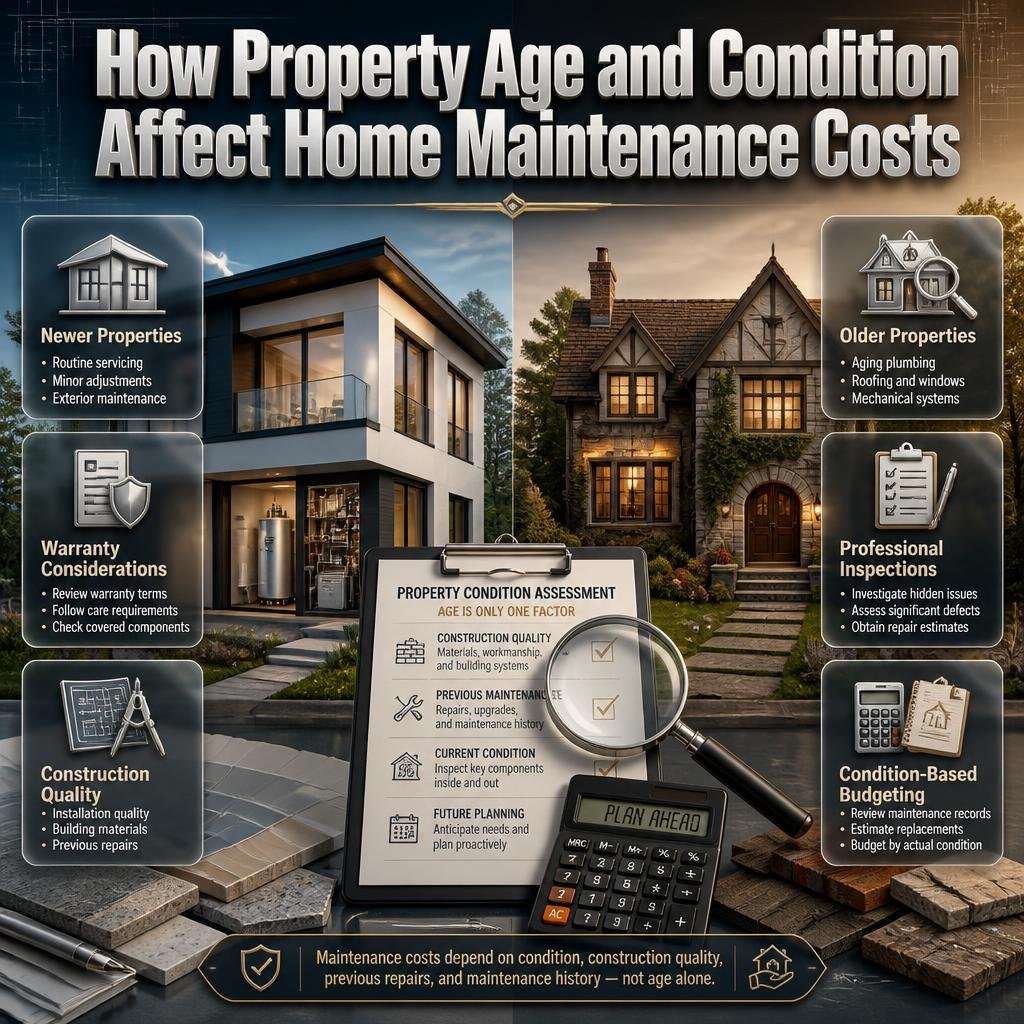
Property age influences maintenance requirements, but it doesn’t determine them entirely.
Construction quality, previous repairs, materials, weather exposure, occupancy, and maintenance history also affect the likelihood and cost of future work.
Newer Properties
Newer homes may require less immediate repair work when major systems have been installed correctly and are in good condition.
However, new construction doesn’t eliminate maintenance expenses.
Owners may still need routine servicing, appliance care, minor adjustments, exterior maintenance, and repairs to components that aren’t covered by applicable warranties.
Read warranty terms carefully and follow any maintenance requirements.
Older Properties
Older homes may have aging plumbing, roofing, windows, wiring, insulation, or mechanical systems.
Some issues are visible, while others require specialist investigation.
Before buying an older property, consider obtaining appropriate inspections and estimates for significant defects.
This allows you to distinguish between ordinary maintenance, necessary repairs, and major work that may require a separate budget.
How Should You Adjust Your Budget?
Base your estimates on actual condition rather than age alone.
A well-maintained older home may need fewer immediate repairs than a newer property with defective drainage, poor installation, or neglected equipment.
Use professional findings, maintenance records, and replacement estimates to set your budget.
How Do Seasonal Changes Affect Home Maintenance Costs?
Weather conditions influence which parts of a home need attention and when expenses are likely to occur.
The best schedule depends on your local climate, building materials, and equipment.
Spring Maintenance Expenses
Spring can be a useful time to inspect exterior surfaces, check for moisture, examine drainage, and prepare cooling equipment.
Potential expenses include gutter cleaning, minor exterior repairs, servicing, and replacing damaged sealant.
Address signs of water entry before they lead to more extensive damage.
Summer Maintenance Expenses
Hot weather may increase cooling demand and reveal problems with ventilation, insulation, or air conditioning equipment.
Budget for appropriate servicing, filters, and repairs if the system shows unusual behavior.
Keep outdoor equipment clear of obstructions and follow the manufacturer’s operating instructions.
Autumn Maintenance Expenses
In areas with seasonal rainfall or falling leaves, autumn may bring additional gutter cleaning, drainage checks, and exterior inspections.
In colder climates, homeowners may also need to prepare heating equipment and protect vulnerable pipes.
The purpose is to address known weaknesses before more demanding weather arrives.
Winter Maintenance Expenses
Cold conditions can increase the importance of heating equipment, insulation, and pipe protection.
In warmer climates, winter may still bring heavy rainfall, storms, or humidity that affect roofing and drainage.
Plan around your local weather rather than following a calendar designed for a different region.
For a more detailed schedule, see Seasonal Home Maintenance.
Common Home Maintenance Budgeting Mistakes to Avoid

Even homeowners who understand the importance of maintenance can underestimate expenses or allocate money inefficiently.
Mistake 1: Budgeting Only for Visible Problems
Homeowners often focus on damage they can see and overlook hidden wear.
A roof may appear acceptable from the ground while certain components need professional inspection. A concealed plumbing leak may exist before obvious surface damage develops.
How to avoid it: Review inspection reports, maintenance history, and the condition of major systems. Arrange specialist inspections when the circumstances justify them.
Mistake 2: Spending the Entire Budget on Routine Work
Routine servicing is predictable, so it can be tempting to allocate every available dollar to scheduled tasks.
However, this leaves little room for unexpected failures or planned replacements.
How to avoid it: Separate ordinary maintenance savings from emergency and replacement reserves when possible.
Mistake 3: Choosing Contractors Based Only on Price
A low quote may appear attractive but might exclude necessary work or use materials that aren’t suitable for the job.
How to avoid it: Compare the scope, materials, qualifications, warranty, and exclusions. Ask contractors to explain significant differences between estimates.
Mistake 4: Delaying Necessary Repairs
Homeowners may postpone a repair because the immediate cost feels inconvenient.
However, an unresolved fault can worsen, damage nearby materials, or create safety concerns.
How to avoid it: Prioritize active damage and safety-related problems. If money is limited, postpone optional improvements before essential repairs.
Mistake 5: Forgetting Future Replacements
Equipment may continue operating even as it approaches the end of its useful life.
Waiting until failure can force you to make an expensive decision quickly.
How to avoid it: Track the condition of major components, obtain estimates in advance, and save gradually for replacement.
Mistake 6: Ignoring Local Conditions
A generic maintenance plan may not reflect the weather, building materials, or common property issues in your area.
How to avoid it: Adapt your budget to local conditions, manufacturer guidance, and advice from qualified professionals familiar with your type of property.
Mistake 7: Failing to Track Actual Spending
Without records, homeowners may repeatedly underestimate costs or forget how much recurring repairs consume.
How to avoid it: Record invoices, materials, labor, and completed tasks. Review actual spending against your estimates every three to six months.
Professional Advice for Managing Home Maintenance Expenses
A practical maintenance strategy combines financial planning with informed decisions about the property itself.
Investigate Repeated Problems
If the same problem returns after repair, ask whether the underlying cause has been addressed.
Repeated damp patches, recurring drain blockages, or frequent equipment failures may indicate a problem that requires further investigation.
Paying for repeated temporary fixes can become more expensive than identifying the original cause.
Ask for Itemized Estimates
For substantial work, request a breakdown of labor, materials, disposal, and additional charges.
Ask whether the price is fixed or subject to change if hidden damage is discovered.
Clarify which tasks are included and which would require separate approval.
Compare Repair and Replacement Options
Repeated repairs aren’t always the most economical long-term choice.
Compare the current repair cost with the likely future costs, expected reliability, efficiency, warranty, and age of the component.
Replacement may be sensible in some cases, but it isn’t automatically better. A qualified assessment can help you avoid unnecessary spending.
Keep Safety-Critical Repairs at the Top of the List
Serious electrical faults, suspected gas leaks, significant structural concerns, and active water damage should not be ignored to protect a routine budget.
Seek appropriate professional assistance and follow local emergency guidance when necessary.
Review Your Budget After Every Major Repair
A major repair can reveal information about your property’s condition that wasn’t previously available.
Update your estimates and consider whether another component needs inspection or future replacement.
This turns an unexpected expense into useful information for the next budgeting cycle.
A Practical Annual Home Maintenance Budget Example
Consider a homeowner planning an annual maintenance allowance of $3,600.
The following example shows one way to organize that money. The figures are illustrative, not average market prices or recommended allocations for every property.
| Budget category | Example annual allocation |
|---|---|
| HVAC servicing and filters | $450 |
| Plumbing and minor repairs | $500 |
| Roof, gutter, and drainage maintenance | $400 |
| Electrical and safety checks | $250 |
| Appliance servicing | $300 |
| Exterior and interior upkeep | $500 |
| General maintenance supplies | $200 |
| Flexible repair allowance | $1,000 |
| Total annual allowance | $3,600 |
The monthly equivalent is $300.
This example assumes the homeowner is planning for routine maintenance and minor repairs. Major replacements, extensive restoration, and large emergencies may require additional savings.
The categories should also change to reflect the property. A home with recently replaced roofing may need less money allocated to roof repairs in the near term, while a property with aging cooling equipment may need a larger replacement allowance.
How to Adapt This Budget to Your Property
Start with your actual maintenance history.
If you have previous invoices, use them to estimate recurring expenses. If you’re a new homeowner, obtain appropriate inspections and quotes for significant concerns.
Identify which expenses are predictable and which depend on the condition of individual components.
Then choose a monthly contribution that fits your finances and review it regularly.
The aim isn’t to spend every dollar allocated to each category. Unused funds can remain available for future maintenance or be transferred to a suitable reserve.
How Much Should You Budget for Home Maintenance Each Year?
The amount you should budget for home maintenance depends on your property’s value, age, condition, size, and location. A common starting point is to set aside 1%–3% of your home’s value annually, but this is only a general guideline. Homes with aging roofs, plumbing problems, or older heating and cooling systems may require a larger budget.
To create a realistic estimate, review your previous repair bills, inspect major household systems, and obtain professional quotes for upcoming work. Divide your annual target into monthly savings so you’re better prepared when maintenance expenses arise.
Key budgeting tips:
Include routine servicing, minor repairs, and maintenance supplies.
Set aside additional savings for major replacements and unexpected damage.
Review your budget regularly as your property’s condition changes.
What Are the Most Expensive Home Maintenance and Repair Costs?
The most expensive home maintenance expenses often involve roofing, structural repairs, plumbing failures, water damage restoration, and heating or cooling system replacement. The actual cost depends on the extent of the damage, material prices, labor rates, and the complexity of the work.
For example, repairing a small roof defect may be relatively straightforward, while widespread deterioration can require extensive repairs. Similarly, addressing a plumbing leak early may prevent damage to walls, cabinets, and flooring.
Ways to manage major expenses:
Arrange inspections when you notice signs of deterioration.
Obtain itemized quotes before approving substantial work.
Start saving for major replacements before equipment fails.
Prioritize repairs that affect safety or could cause further property damage.
How Can You Reduce Home Maintenance Costs Without Compromising Quality?
You can reduce home maintenance costs by identifying problems early, following manufacturer servicing recommendations, comparing contractor quotes, and keeping accurate maintenance records. The objective is to prevent avoidable expenses rather than postpone necessary repairs or choose unsuitable materials.
For example, a small leak that receives prompt attention may require less work than one that damages surrounding surfaces. Regular equipment servicing can also help identify developing faults, although it cannot guarantee that a system will never fail.
Practical ways to save money:
Follow a written maintenance schedule.
Complete suitable, low-risk DIY tasks when you have the necessary skills.
Hire qualified professionals for hazardous or technically complex work.
Compare the long-term value of repairs and replacements rather than focusing only on the lowest initial price.
Is It Better to Repair or Replace an Expensive Home Component?
The decision to repair or replace a home component depends on its age, condition, repair cost, reliability, and expected future expenses. A relatively new appliance with an isolated fault may be worth repairing, while an aging system that repeatedly breaks down may be a better candidate for replacement.
Before making a decision, compare the immediate repair quote with the estimated replacement and installation cost. Consider warranty coverage, parts availability, energy efficiency, and the likelihood of further repairs.
Before deciding, check:
Whether the repair addresses the underlying problem.
Whether similar failures have occurred repeatedly.
Whether replacement offers meaningful reliability or efficiency benefits.
Whether the component presents a safety concern that requires professional attention.
How Much Money Should You Keep in a Home Repair Emergency Fund?
A home repair emergency fund should reflect your property’s condition, the potential cost of major failures, and your household’s financial circumstances. There is no single amount that works for every homeowner. A newer home with well-maintained systems may have different risks from an older property with aging plumbing, roofing, or mechanical equipment.
Begin by identifying the repairs that could be most expensive or disruptive. Use inspection reports and professional estimates to set a savings target, then contribute regularly. Keep this reserve separate from money allocated to predictable maintenance whenever possible.
Building a practical emergency fund:
Start with an affordable monthly contribution.
Prioritize essential repairs and known property defects.
Maintain a separate allowance for planned replacements.
Replenish the emergency fund after using it.
A well-planned reserve gives you more flexibility when an unexpected repair occurs and helps prevent one property problem from disrupting your entire household budget.
Conclusion
Managing home maintenance costs is easier when you plan ahead, understand your property’s needs, and address small problems before they become expensive repairs. From routine inspections and seasonal upkeep to unexpected plumbing, roofing, or HVAC issues, a realistic budget helps you protect your home without putting unnecessary pressure on your finances.
The most effective approach is to set aside money regularly, prioritize repairs according to safety and urgency, and compare repair options before making major decisions. Although the commonly used 1%–3% rule can provide a starting point, your actual budget should reflect your home’s age, size, condition, location, and the systems that may need attention.
Remember that preventive maintenance is an investment in your home’s long-term condition, not simply another household expense. Following practical home maintenance tips and planning ahead with preventive home maintenance can help you avoid unnecessary spending and make more informed decisions throughout the year.
Start by reviewing your property’s current condition, estimating your regular expenses, and creating a dedicated home repair fund. With consistent planning and a flexible budget, you can manage maintenance costs more confidently, reduce financial surprises, and keep your home safe, comfortable, and well-maintained for years to come.
For more practical guidance on property care, maintenance planning, and home improvement, explore Brendan Active Property Care.