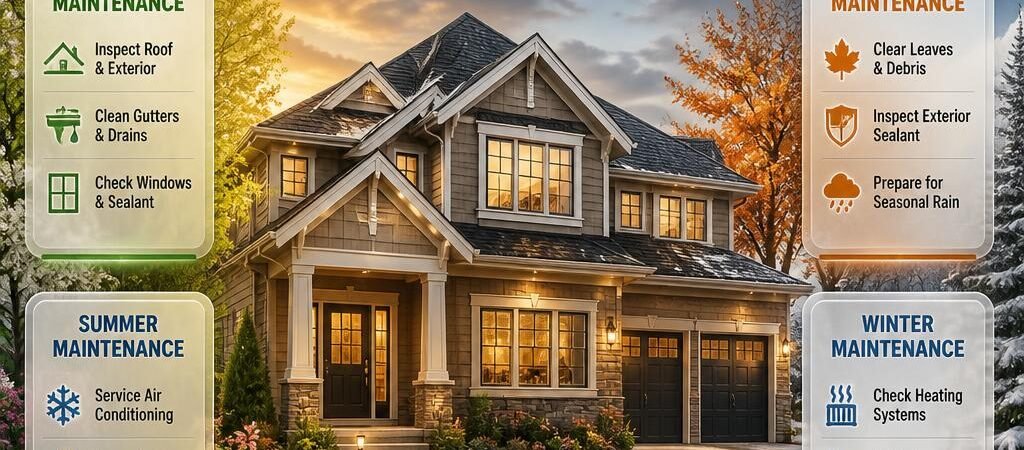
Introduction
Seasonal Home Maintenance | A home can appear perfectly fine while small problems develop quietly behind walls, around windows, beneath sinks, or on the roof. A minor drainage issue can become water damage, an overlooked air-conditioning problem can affect indoor comfort, and deteriorating exterior sealant can allow rainwater to enter the property. These issues often become more difficult to manage when homeowners wait until something stops working.
Seasonal home maintenance offers a practical way to prevent these problems by organizing inspections, cleaning, servicing, and minor repairs around changing weather conditions. Rather than treating every repair as an unexpected emergency, homeowners can identify potential issues early and plan maintenance throughout the year.
The right maintenance schedule depends on where you live. A home in a hot climate may require additional attention to air conditioning, sun exposure, dust, and seasonal rainfall. Properties in colder regions may need protection against freezing pipes, heating-system problems, and winter storms. Coastal homes may also need closer monitoring for corrosion and moisture damage.
This guide explains how to plan seasonal home maintenance for spring, summer, autumn, and winter, with practical adjustments for different climates. You will learn which tasks deserve priority, what beginners can safely inspect, when professional help is appropriate, how to organize a maintenance calendar, and how to avoid common mistakes.
For broader property-care information and practical resources, visit Brendan Active Property Care. The aim is to help you develop a realistic routine that protects your property without turning maintenance into an overwhelming responsibility.
What Is Seasonal Home Maintenance?
Seasonal home maintenance is the process of inspecting, cleaning, testing, and maintaining a property’s essential components according to weather patterns and changing household needs. It combines routine preventive care with tasks that become especially important at particular times of the year.
For example, inspecting gutters before heavy rainfall helps identify drainage problems before water overflows. Checking an air-conditioning system before extreme heat can reveal restricted airflow or other performance issues before the equipment is needed continuously.
Seasonal maintenance generally covers:
- Roofs, exterior walls, gutters, and drainage systems.
- Air conditioning, heating, ventilation, and accessible filters.
- Plumbing fixtures, visible pipes, and water heaters.
- Windows, doors, weather seals, and insulation.
- Smoke alarms, carbon monoxide alarms where applicable, and other safety devices.
- Gardens, driveways, patios, balconies, and outdoor structures.
- Interior surfaces, moisture control, and ventilation.
- Appliances and equipment that require periodic servicing.
The important distinction is that seasonal maintenance is not simply a list of chores. It is a method of deciding what needs attention, when it should be checked, and how urgently a problem should be addressed.
A property in a region with long, hot summers may benefit from a schedule based on heat, dust, humidity, and rainfall rather than traditional four-season dates. Homeowners should therefore use local weather conditions, manufacturer instructions, and the age of their property to determine the most appropriate maintenance routine.
Why Is Seasonal Home Maintenance Important?
Regular maintenance helps homeowners recognize deterioration before it affects several parts of a building. It also makes household responsibilities easier to organize because inspections and routine servicing can be planned instead of handled entirely through emergency appointments.
1. It helps prevent avoidable property damage
Water intrusion, blocked drainage, deteriorating sealant, and neglected plumbing can gradually damage building materials. A small leak may initially affect only a limited area, but persistent moisture can spread to ceilings, flooring, insulation, or nearby finishes.
Seasonal inspections provide opportunities to identify visible warning signs and investigate them before damage becomes more extensive.
2. It supports energy efficiency
Air leaks, dirty filters, obstructed vents, and poorly maintained heating or cooling equipment can make indoor temperatures more difficult to manage.
Seasonal checks help identify maintenance issues that may contribute to unnecessary energy consumption. However, savings depend on the property’s design, equipment condition, local climate, and household habits.
3. It improves indoor comfort
A well-maintained home is generally easier to keep comfortable throughout changing weather conditions. Suitable ventilation, functioning cooling or heating equipment, properly closing windows, and effective moisture control all contribute to a more comfortable living environment.
These measures are especially useful when temperatures or humidity levels change substantially during the year.
4. It supports household safety
Maintenance inspections create opportunities to test safety alarms, check visible electrical components for damage, inspect handrails, and identify hazards around entrances and walkways.
Electrical faults, gas-equipment concerns, structural damage, and other technical problems should be assessed by qualified professionals rather than treated as ordinary DIY projects.
5. It makes maintenance budgeting easier
A planned schedule helps homeowners distinguish routine expenses from larger repairs. They can arrange professional servicing in advance, purchase necessary supplies, and set aside money for foreseeable maintenance.
A budget cannot eliminate unexpected problems, but it can make them easier to manage.
Why Preventive Home Maintenance Matters
Regular home maintenance helps you identify small problems before they develop into expensive repairs. Checking plumbing fixtures, window seals, ventilation, drainage, and essential household systems can help you recognize potential issues early. A consistent schedule, clear maintenance records, and timely professional inspections make property care easier to manage. For more practical guidance, explore this guide to preventive home maintenance, which explains how regular inspections and timely care can help protect your property.
The Complete Seasonal Home Maintenance Checklist
Before planning individual tasks, it helps to understand which areas deserve attention during each season.
| Season or weather period | Main priority | Examples of maintenance |
|---|---|---|
| Spring or after winter | Inspect and refresh | Check visible exterior damage, inspect plumbing, review drainage, test alarms |
| Summer or peak heat | Cooling and heat management | Inspect filters, check shading, monitor outdoor water use, inspect exterior seals |
| Autumn or before heavy rain | Prepare for changing weather | Clear accessible drainage, inspect windows, check outdoor fittings, arrange servicing |
| Winter or colder weather | Indoor protection | Monitor condensation, protect vulnerable pipes, check heating equipment, inspect entrances |
| Before the local rainy season | Water management | Inspect roof drainage, check visible seals, investigate previous leaks |
| Before the hottest period | Cooling performance | Check filters, clear obstructions, arrange HVAC servicing when needed |
These are starting points rather than universal deadlines. Some tasks need attention more frequently, while others depend on equipment instructions, local building requirements, and the property’s condition.
Expert tip: Prioritize maintenance before the weather creates the greatest demand on a system. It is usually more convenient to arrange routine air-conditioning servicing before peak heat than to wait until the equipment is struggling.
Spring Home Maintenance: What Should You Inspect First?

Spring is often a convenient time to review a property’s condition after winter. In other climates, the equivalent inspection may be most useful after a dry period or before the rainy season.
The objective is to identify damage, restore normal drainage, and prepare essential systems for the conditions ahead.
1. Inspect the roof and exterior walls
Start by looking for visible signs of deterioration. From a safe location, inspect accessible roof edges, exterior walls, window surrounds, and other areas where water could enter.
Look for:
- Missing or displaced roofing materials visible from the ground.
- Water stains on ceilings or upper walls.
- Cracked or deteriorating exterior sealant.
- Peeling paint and damaged surface finishes.
- New cracks or changes in existing cracks.
- Loose exterior fittings or damaged flashing visible from a safe position.
Not every crack indicates structural damage, and not every stain originates from the roof. The purpose of an initial inspection is to identify changes that may require further assessment.
Avoid climbing onto roofs or using unstable ladders. Arrange a qualified inspection if damage is suspected or the affected area cannot be accessed safely.
2. Check gutters and drainage outlets
Gutters and downspouts help move rainwater away from vulnerable building areas. When debris restricts the flow, water can overflow against walls or collect near entrances and foundations.
Inspect accessible outlets for leaves, dirt, and other obstructions. Check whether downspouts discharge water appropriately and whether visible ground drains remain clear.
Do not assume that a gutter is working properly simply because its opening looks clean. Water also needs a clear route through the entire drainage system.
If drainage repeatedly overflows, investigate the underlying cause rather than relying on repeated surface cleaning.
3. Examine visible plumbing
Inspect the areas beneath sinks, around toilets, near water heaters, and along accessible pipes.
Look for moisture, corrosion, loose fittings, damaged supply hoses, and unexplained water stains. Run taps and observe whether drains empty normally.
A slow drain may indicate a local blockage, but repeated problems can have a deeper cause. Avoid repeatedly pouring aggressive chemicals into drains, particularly when the plumbing materials and blockage type are unknown.
Arrange professional assistance for persistent leaks, recurring blockages, unusual water pressure, or visible pipe damage.
4. Prepare cooling and ventilation equipment
Before warmer weather arrives, inspect accessible air-conditioning filters and clean or replace them according to the manufacturer’s instructions.
Make sure return-air grilles and supply vents are not blocked by furniture, curtains, or stored items. Inspect accessible outdoor equipment for obvious obstructions, while following the manufacturer’s safety guidance.
Unusual noises, persistent moisture, poor cooling, and repeated shutdowns may indicate that professional servicing is needed.
Do not open electrical compartments or attempt refrigerant repairs without appropriate qualifications.
5. Review outdoor areas
Inspect patios, balconies, garden paths, steps, fences, and exterior lighting.
Look for loose paving, damaged handrails, standing water, and fittings that may become hazardous during wet weather.
Check whether garden irrigation is functioning as intended and whether water is collecting near building walls. Correcting these issues early can reduce unnecessary water use and help protect exterior surfaces.
Summer Home Maintenance: How Can You Protect Your Property From Heat?
Summer maintenance focuses on cooling performance, heat exposure, water use, and the condition of materials exposed to sunlight. In particularly hot climates, cooling equipment may operate for extended periods, making airflow and routine servicing especially important.
1. Maintain the air-conditioning system
Air conditioning plays a major role in indoor comfort during hot weather. Restricted airflow, neglected filters, and equipment faults can reduce performance.
Follow the manufacturer’s maintenance instructions and check:
- Whether accessible filters need cleaning or replacement.
- Whether indoor vents remain unobstructed.
- Whether unusual moisture appears near indoor equipment.
- Whether outdoor units have adequate clearance.
- Whether cooling performance has changed noticeably.
If the system starts producing unusual noises, repeatedly shuts down, leaks persistently, or fails to cool adequately, contact a qualified HVAC technician.
A filter replacement will not resolve every cooling problem. The underlying cause may involve drainage, controls, airflow, electrical components, or other technical issues.
2. Reduce unwanted indoor heat
Sunlight entering through windows can increase indoor temperatures, particularly where glass receives direct afternoon sun.
Suitable curtains, blinds, external shading, and properly maintained window seals can help manage unwanted heat.
Homeowners may also review insulation where appropriate. However, insulation improvements should be selected according to the building design and local climate rather than applied without considering ventilation and moisture movement.
For a practical example, a room that becomes unusually hot every afternoon may benefit from examining direct sunlight and window shading before investing in larger cooling equipment.
3. Monitor water use
Inspect visible outdoor taps, hoses, irrigation lines, and plumbing connections for leaks.
If your water bill rises unexpectedly, compare it with previous usage and consider changes in occupancy, irrigation, or seasonal demand. A persistent unexplained increase may justify a plumbing inspection.
Do not ignore a continuously dripping outdoor connection simply because the water disappears into the ground. The leak may waste water or contribute to moisture near the property.
4. Check exterior paint and sealant
Strong sunlight and high temperatures can accelerate deterioration in some exterior paints, caulking products, and exposed plastic materials.
Look for gaps around windows, brittle sealant, peeling paint, and damaged surface coatings.
Choose repair products that are compatible with the building material and local weather conditions. Follow the manufacturer’s instructions for surface preparation, temperature limits, and curing time.
Painting over damp or deteriorating material without addressing the underlying problem may lead to premature failure.
5. Review electrical safety
Cooling equipment, fans, and other appliances may operate more frequently during hot weather.
Watch for damaged cords, burning odors, buzzing sounds, frequently tripping breakers, or unusually hot outlets.
Stop using affected equipment and contact a qualified electrician. Never replace a protective device with a higher-rated one simply to stop it from tripping.
6. Protect outdoor materials
Inspect outdoor furniture, storage areas, paving, and exposed fittings for damage caused by heat and sunlight.
Materials may fade, crack, or deteriorate at different rates depending on their composition and exposure. Follow suitable care instructions for timber, metal, plastics, and outdoor fabrics.
Keep outdoor pathways clear and make sure movable objects are secured when strong winds are expected.
Autumn Home Maintenance: How Should You Prepare for Changing Weather?
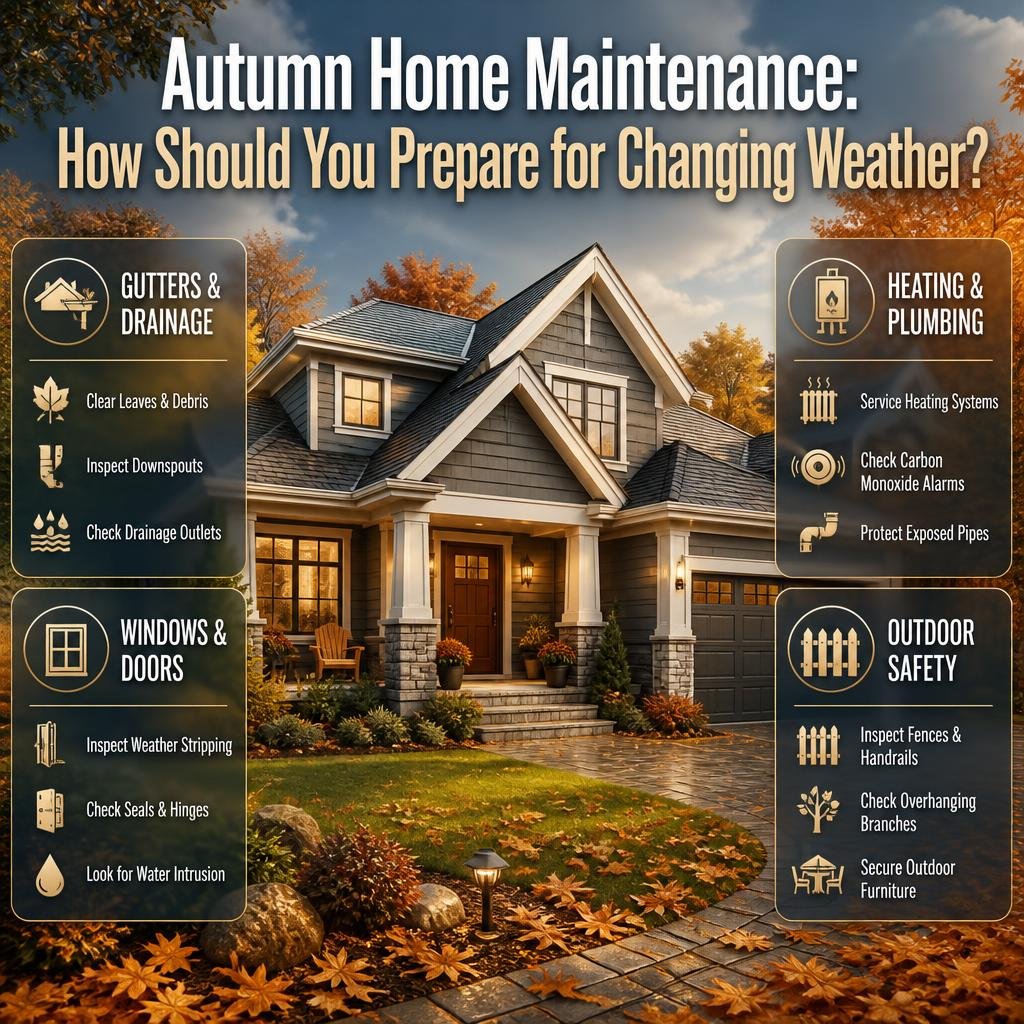
Autumn is a preparation period in regions where temperatures fall, leaves accumulate, and rainfall increases. In other climates, the same maintenance principles can be applied before a storm season or a major change in weather.
1. Clear gutters and inspect drainage
Leaves, dust, and other debris can obstruct drainage systems. Inspect accessible gutters, downspouts, balcony outlets, and ground-level drains before periods of heavy rainfall.
Pay attention to places where water has previously overflowed or collected. Recurring problems may indicate an unsuitable slope, a damaged outlet, or a blockage farther along the system.
Do not enter enclosed drainage systems or remove fixed covers unless qualified to do so. Professional assistance is appropriate when the system is difficult to access safely.
2. Inspect windows and doors
Check weather stripping, hinges, locks, handles, and visible sealant around doors and windows.
Look for gaps, damaged rubber seals, loose fittings, and signs of water intrusion.
In colder regions, these checks can help reduce drafts. In rainy climates, they may help identify openings that allow water to enter.
Replacing a worn seal can be a relatively straightforward maintenance task, provided the correct product is selected and installed according to its instructions.
3. Prepare heating equipment where applicable
If your property has a furnace, boiler, heat pump, or another heating system, follow the recommended servicing schedule.
Check that accessible vents remain clear and that thermostats operate normally. Arrange qualified servicing when required, particularly if the system has not been maintained according to the manufacturer’s instructions.
Fuel-burning appliances require appropriate ventilation and safe exhaust arrangements. Never use outdoor generators or outdoor cooking appliances inside a home or enclosed garage.
Test carbon monoxide alarms where applicable and follow local safety guidance.
4. Inspect plumbing before freezing weather
In regions where temperatures fall below freezing, exposed pipes in unheated areas may be vulnerable.
Identify visible plumbing in garages, utility spaces, and other areas exposed to cold conditions. Insulate suitable pipes and understand where the main water shutoff is located.
If a pipe freezes, do not apply an open flame or attempt an unfamiliar repair. Follow local emergency guidance and contact a plumber when needed.
Homes in warm climates may not need freeze protection, but inspecting visible pipes for leaks, corrosion, and damaged insulation remains useful.
5. Check trees and outdoor structures
Inspect fences, gates, outdoor storage structures, and handrails for loose fittings or deterioration.
Look for tree branches that may interfere with the roof or overhead utility lines. Use qualified professionals for hazardous branches, large trees, or work near electrical infrastructure.
Secure movable outdoor furniture and other objects before strong winds arrive.
Winter Home Maintenance: How Can You Protect Indoor Spaces?
Winter maintenance depends heavily on local conditions. Homes in freezing regions need additional plumbing and heating precautions, while properties in milder or humid climates may need greater attention to ventilation, rainwater, and condensation.
1. Protect vulnerable plumbing
Where freezing weather is possible, suitable insulation and appropriate indoor temperatures can help protect vulnerable pipes.
Follow local recommendations for exposed plumbing and know how to shut off the water supply if a leak develops.
If water flow suddenly stops during freezing conditions, do not force taps or use direct flame to thaw pipes. A qualified plumber can assess the situation safely.
2. Control condensation and excess moisture
Condensation often appears around windows, exterior walls, and other cold surfaces when warm, humid indoor air comes into contact with them.
Use bathroom and kitchen exhaust fans where installed, maintain suitable ventilation, and investigate sources of excess moisture.
Persistent condensation may indicate a combination of ventilation, insulation, temperature, or humidity problems. Simply wiping the surface does not correct the underlying cause.
If dampness or visible mold repeatedly returns, investigate the source and arrange appropriate professional advice when needed.
3. Maintain heating and ventilation
Inspect accessible filters and vents according to manufacturer guidance. Keep required clearances around heating equipment and avoid blocking air intakes or exhaust outlets.
If a heating system produces unusual odors, repeated shutdowns, or unfamiliar noises, arrange professional assessment.
Suspected combustion problems or carbon monoxide alarms require immediate attention according to local emergency guidance.
4. Check for water intrusion
Rain and wind can expose weaknesses in roof coverings, window seals, exterior joints, and drainage systems.
Inspect ceilings and walls for fresh stains, bubbling paint, damp patches, or other changes.
If water reaches electrical fittings or equipment, avoid the affected area and seek qualified help. Do not touch wet electrical equipment or attempt to investigate it while it may be energized.
5. Maintain entrances and walkways
In freezing regions, use suitable methods to manage snow and ice and keep entrances accessible.
In wetter climates, inspect paving for slippery surfaces, standing water, and blocked drainage.
Check handrails, steps, and outdoor lighting. Small defects in these areas can become more hazardous when visibility or surface conditions deteriorate.
How to Adapt Seasonal Home Maintenance to Your Climate
A successful maintenance plan reflects local conditions rather than assuming every home experiences four distinct seasons.
Hot and dry climates
Prioritize air-conditioning performance, filter care, exterior sealant, window shading, dust management, and monitoring water use.
Before extreme heat arrives, check that cooling equipment operates normally and that accessible outdoor components are free from obstructions.
Inspect exterior finishes for cracking or deterioration and investigate unusual indoor temperature changes.
Hot and humid climates
In humid regions, moisture control becomes especially important.
Monitor bathrooms, kitchens, air-conditioning drainage, window surrounds, and other areas where condensation or leaks may occur.
Maintain appropriate ventilation and investigate persistent musty odors or recurring damp patches. Do not assume that every moisture problem is caused by humidity alone; plumbing and rainwater intrusion may also be responsible.
Rainy and monsoon-affected climates
Focus on drainage, roof condition, window seals, balconies, exterior walls, and previously affected areas.
Inspect drainage before heavy rainfall and after severe weather when conditions are safe.
Look for changes in ceilings, walls, and floors that could indicate water intrusion. Arrange repairs promptly when leaks are active or damage appears to be worsening.
Cold and snowy climates
Prioritize pipe protection, heating-system maintenance, weather seals, roof and drainage inspections, and safe walkways.
Prepare vulnerable plumbing before freezing temperatures arrive. Follow local guidance for snow accumulation, ice, and severe winter conditions.
Do not climb onto snow-covered or icy roofs to perform inspections.
Coastal climates
Salt-laden air and moisture can accelerate corrosion on some exposed metal components.
Inspect accessible railings, hinges, fasteners, outdoor fittings, and exterior surfaces for corrosion or deterioration.
Use materials and protective coatings suitable for the local environment. Follow manufacturer instructions for cleaning and maintenance.
How to Create a Seasonal Home Maintenance Schedule
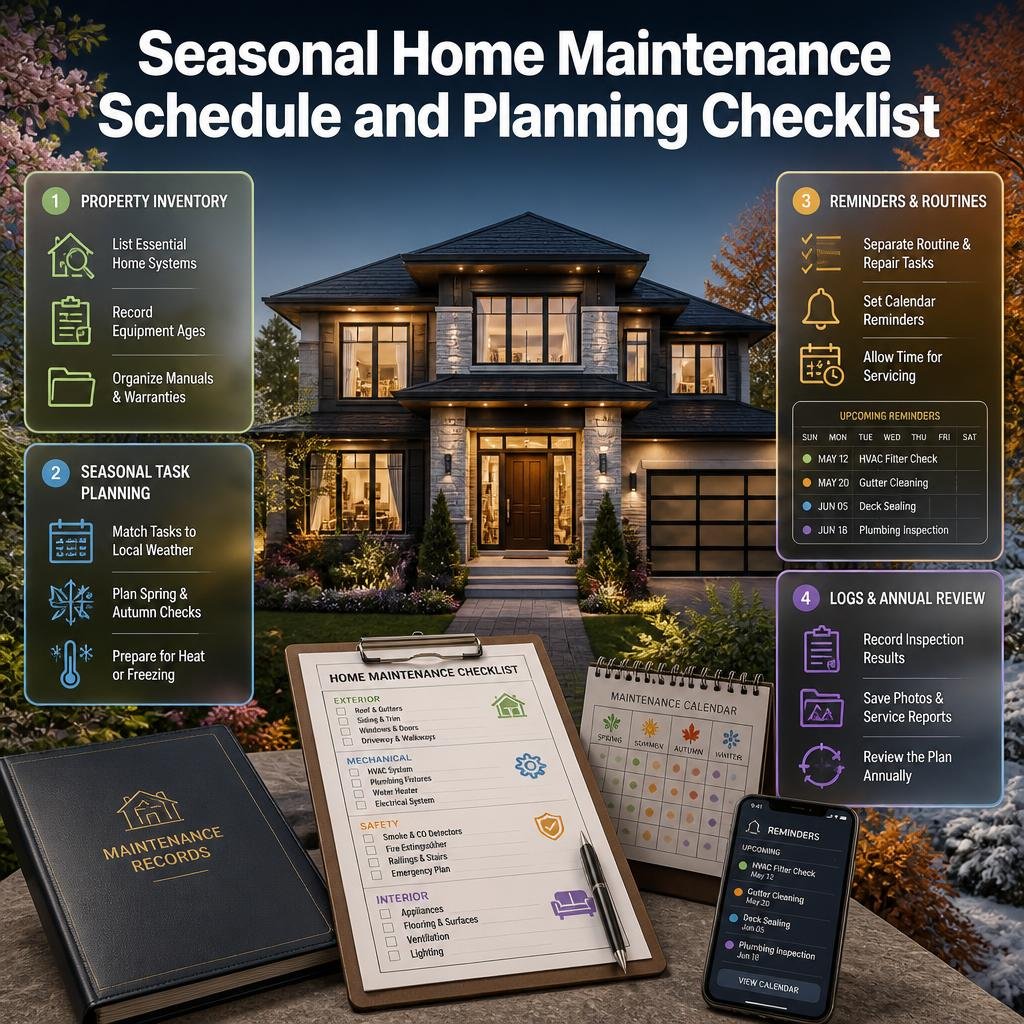
A checklist becomes much more useful when tasks are assigned to specific periods and recorded consistently.
Step 1: Make a property inventory
List the main systems and components that require attention.
Include the roof, exterior walls, drainage, plumbing, air conditioning, heating where applicable, windows, doors, safety devices, and outdoor areas.
Record the age of major equipment where known and keep relevant manuals, warranties, and service documents in an accessible place.
Step 2: Assign tasks to the right season
Use local weather patterns to decide when each task should be completed.
For example, a homeowner in a hot region might schedule air-conditioning checks before the hottest months and drainage inspections before heavy rainfall.
A homeowner in a cold region might arrange heating maintenance and pipe protection before freezing temperatures become common.
Step 3: Separate recurring checks from occasional projects
Some maintenance tasks recur regularly, while others are needed only when a problem develops or a component reaches a particular stage of wear.
A practical schedule can separate work into:
- Routine observations and basic cleaning.
- Seasonal inspections and preparation.
- Manufacturer-recommended servicing.
- Repairs identified during inspections.
- Larger improvement projects.
This distinction prevents a simple inspection from becoming an unnecessarily large project.
Step 4: Set reminders
Use a phone calendar, digital task list, or paper planner.
Assign each task a realistic deadline and avoid putting every job on the same weekend.
Where professional servicing is required, allow time for booking appointments and obtaining quotations.
Step 5: Keep a maintenance log
For each inspection, record the date, the area checked, what you observed, and whether any action was taken.
Include photographs when they help document changes over time. Keep receipts and service reports for major equipment.
These records can help identify recurring problems and provide useful information when a contractor assesses the property.
Step 6: Review the plan annually
Your maintenance needs may change as the property ages, household use changes, or equipment is replaced.
Review your schedule at least once a year. Update it after renovations, major repairs, or installation of new equipment.
For broader guidance on organizing routine property care, explore the dedicated Home Maintenance resource.
DIY Seasonal Maintenance vs. Professional Help
Some maintenance tasks are suitable for homeowners, while others involve technical work or significant safety risks. Understanding the difference helps you avoid unnecessary expenses without taking unsafe shortcuts.
| Maintenance task | Appropriate approach | Important consideration |
|---|---|---|
| Checking visible wall stains | Homeowner observation | Investigate new or recurring moisture |
| Inspecting accessible plumbing | Basic visual check | Arrange repairs for leaks or corrosion |
| Cleaning accessible HVAC filters | Usually suitable for DIY | Follow manufacturer instructions |
| Testing smoke alarms | Homeowner task | Use the specified test procedure |
| Cleaning accessible ground-level drainage | Often suitable for DIY | Avoid enclosed or unsafe systems |
| Roof repairs | Qualified professional | Significant fall risk |
| Electrical fault diagnosis | Qualified electrician | Shock and fire hazards |
| Refrigerant servicing | Qualified HVAC technician | Requires specialist training and equipment |
| Major plumbing leaks | Qualified plumber | Helps prevent further damage |
| Hazardous tree work | Qualified tree-care professional | Falling branches and utility hazards |
A useful rule is to separate observing a problem from repairing it. Homeowners can often recognize warning signs, but identifying the cause or completing the repair may require specialist skills.
If a task involves working at height, live electricity, gas equipment, refrigerants, structural damage, or unfamiliar machinery, arrange qualified assistance.
How Much Should You Budget for Seasonal Home Maintenance?
Maintenance costs vary according to property size, age, construction, location, equipment, labor rates, and the number of repairs required.
A small apartment may have limited exterior responsibilities, while a detached house may need additional attention to roof drainage, gardens, fences, and outdoor structures.
Instead of relying on a single cost estimate, divide your budget into three categories.
Routine maintenance expenses
These may include suitable cleaning supplies, replacement filters, basic consumables, and minor upkeep materials.
The actual amount depends on the property and which tasks can safely be completed by the homeowner.
Planned professional servicing
This category includes scheduled HVAC servicing, specialist inspections, and other recurring work recommended for the property’s systems.
Obtain quotations when appropriate and compare the scope of work, not simply the headline price.
Unexpected repairs
Set aside money where possible for unplanned problems such as leaks, equipment breakdowns, storm damage, or deteriorating building materials.
The purpose of a reserve is to make unexpected work easier to manage. It does not guarantee that every major repair will be affordable.
Keep invoices and review annual spending. If the same problem repeatedly requires repair, investigate the underlying cause rather than continuing to pay for temporary fixes.
Common Seasonal Home Maintenance Mistakes and How to Avoid Them

Even homeowners who understand the importance of maintenance can overlook important details. The following mistakes are particularly worth avoiding.
1. Waiting until something breaks
Why it happens: Maintenance is easy to postpone when equipment appears to work normally.
Why it matters: Developing problems may remain unnoticed until they affect other materials or systems.
How to avoid it: Set recurring reminders and carry out brief inspections throughout the year. Pay attention to changes in performance, unusual odors, recurring moisture, and visible deterioration.
2. Following a checklist designed for another climate
Why it happens: Many online guides assume that all properties experience the same seasonal conditions.
Why it matters: A winter-focused checklist may be less relevant to a hot region where cooling performance and heavy rainfall deserve greater attention.
How to avoid it: Adapt the schedule to local temperature patterns, humidity, rainfall, dust, wind, and storm risk.
3. Ignoring small leaks and stains
Why it happens: A small mark or occasional damp patch may not seem urgent.
Why it matters: Persistent moisture can damage materials and create conditions that encourage mold growth.
How to avoid it: Investigate new or recurring moisture. Identify and address the source before repainting or replacing damaged finishes.
4. Choosing unsuitable repair materials
Why it happens: A convenient product may appear suitable for every surface.
Why it matters: Incompatible sealants, paints, or coatings can fail prematurely or interfere with the material they are meant to protect.
How to avoid it: Check compatibility, prepare surfaces correctly, and follow the manufacturer’s installation and curing instructions.
5. Attempting unsafe repairs
Why it happens: Homeowners may assume that basic tools are sufficient for any task.
Why it matters: Roof work, electrical repairs, gas equipment, and structural problems can create serious hazards.
How to avoid it: Recognize the limits of DIY maintenance and use qualified professionals for hazardous or technical work.
6. Forgetting maintenance records
Why it happens: People remember that a repair occurred but forget the date, findings, or materials used.
Why it matters: Missing information makes it harder to track recurring problems, warranty requirements, and servicing intervals.
How to avoid it: Keep a simple property log containing dates, photographs, receipts, and contractor recommendations.
7. Treating cosmetic repairs as permanent solutions
Why it happens: Fresh paint or new sealant can make a damaged area look better quickly.
Why it matters: If the underlying cause remains, the problem may return.
How to avoid it: Identify why the damage occurred. For example, investigate the source of a ceiling stain before repainting the ceiling.
Professional Recommendations for More Effective Seasonal Maintenance
A useful maintenance plan focuses on risk, timing, and the consequences of leaving a problem unresolved.
Prioritize water management
Water-related issues deserve prompt attention because moisture can affect several building components.
Check visible drainage, plumbing, roof edges, window seals, and areas that have experienced previous leaks.
If water is actively entering the property, prioritize safety and arrange appropriate repairs. Do not attempt roof or electrical work during unsafe conditions.
Look for changes over time
A single inspection provides a snapshot, but comparing observations can reveal developing problems.
For example, a crack that appears unchanged over several inspections is different from one that is visibly widening. Similarly, a new water stain deserves investigation even if the surrounding surface looks sound.
Photographs and dated notes make these comparisons easier.
Follow manufacturer instructions
Different appliances and systems have different maintenance requirements.
Filter types, cleaning methods, servicing intervals, and replacement schedules vary by model. Keep manuals or digital copies for important equipment and use the specified recommendations.
Do not assume that a maintenance routine suitable for one appliance applies to another.
Understand the difference between symptoms and causes
A visible problem does not always reveal its source.
A damp ceiling could relate to roof damage, plumbing, condensation, or another issue. Poor cooling might involve airflow, controls, drainage, or equipment faults.
Document the symptoms and arrange a suitable assessment when the cause is uncertain. Correcting the underlying problem is usually more useful than repeatedly treating its visible effects.
Schedule work before peak demand
Where possible, book routine servicing before the relevant season begins.
This allows more flexibility when arranging appointments and gives you time to address identified problems before the equipment or building system is under greater demand.
Match maintenance to the property
Older properties may require closer attention to aging seals, plumbing, roofing materials, and equipment.
Newer properties still need routine maintenance, but their priorities may differ. Follow handover documentation, warranties, equipment instructions, and applicable building requirements.
What seasonal home maintenance tasks should homeowners prioritize throughout the year?
Homeowners should prioritize tasks that protect the property’s structure, prevent water damage, maintain essential equipment, and support household safety. The exact priorities change with local weather conditions. Spring is often suitable for inspecting exterior damage and drainage, summer calls for air-conditioning and heat management, autumn is ideal for preparing for heavy rain or colder weather, and winter requires attention to heating, plumbing protection, and indoor moisture where relevant.
A practical maintenance routine should focus on the condition of the property rather than following a rigid calendar. Homes in hot climates may need more frequent cooling-system checks, while properties exposed to heavy rainfall need particular attention to gutters, roof drainage, window seals, and signs of water intrusion.
Important tasks to include:
Inspect visible roof damage, exterior walls, and window seals.
Check plumbing fixtures and accessible pipes for leaks.
Maintain HVAC filters according to manufacturer instructions.
Test smoke alarms and carbon monoxide alarms where applicable.
Clear accessible drainage outlets before heavy rainfall.
Record problems and schedule professional repairs when necessary.
How can seasonal home maintenance help prevent expensive repairs?
Seasonal home maintenance helps control repair costs by identifying developing problems before they cause more extensive damage. A minor leak, deteriorating sealant, or blocked drainage outlet may initially require limited attention, but leaving it unresolved can damage surrounding materials and create additional repair work.
Regular inspections also help homeowners recognize changes in equipment performance. For example, an air conditioner that begins cooling less effectively may need maintenance or professional diagnosis before the problem worsens. Similarly, recurring dampness around a window should be investigated rather than repeatedly covered with paint.
Preventive maintenance cannot eliminate every unexpected breakdown, but it can reduce avoidable deterioration and make household expenses easier to plan.
Cost-saving practices:
Address active leaks and safety hazards promptly.
Investigate recurring problems instead of relying on temporary fixes.
Follow manufacturer-recommended servicing schedules.
Keep maintenance records, invoices, and photographs.
Set aside a separate budget for unexpected repairs.
What should homeowners check before summer and the rainy season?
Before summer, homeowners should focus on cooling performance, airflow, exterior materials, and water use. Before the rainy season, attention should shift toward drainage, roof condition, exterior seals, and areas where leaks have occurred previously. Preparing for both conditions helps protect the property from different weather-related risks.
For summer, inspect accessible air-conditioning filters, keep vents unobstructed, and arrange professional servicing if cooling performance has changed. Check exterior sealant for deterioration and use suitable shading to reduce unwanted indoor heat.
Before heavy rainfall, inspect gutters and accessible drainage outlets, look for visible roof damage from a safe location, and check windows and exterior walls for signs of water intrusion. Repairs should be completed before severe weather arrives whenever possible.
Pre-season checklist:
Clean or replace accessible HVAC filters as directed.
Check outdoor cooling equipment for visible obstructions.
Inspect roof edges, gutters, and drainage outlets safely.
Look for damaged window seals and recurring damp patches.
Monitor water consumption for unexplained increases.
Arrange qualified repairs for roof, electrical, or plumbing problems.
Which seasonal home maintenance tasks can homeowners do themselves, and when should they hire a professional?
Homeowners can usually manage basic inspections, simple cleaning, accessible filter maintenance, and routine safety checks when these tasks follow the manufacturer’s instructions. Professional assistance is appropriate when a job involves technical diagnosis, hazardous equipment, working at height, or damage that could affect the building’s safety.
For example, a homeowner can inspect a visible plumbing connection for moisture but should arrange a plumber to investigate a persistent leak or damaged pipe. Similarly, checking an accessible air-conditioning filter is different from opening electrical components or handling refrigerants.
Knowing when to stop a DIY task is an important part of responsible property care. Attempting an unfamiliar repair can create additional damage, increase costs, or expose occupants to unnecessary risks.
Usually suitable for basic DIY maintenance:
Inspecting accessible areas for visible damage.
Testing smoke alarms according to instructions.
Cleaning permitted filters and ventilation grilles.
Checking visible plumbing for leaks.
Recording changes with dated photographs.
Tasks generally requiring qualified professionals:
Roof repairs and hazardous gutter access.
Electrical fault diagnosis and repairs.
Refrigerant handling and complex HVAC servicing.
Major plumbing leaks and concealed pipe problems.
Structural damage and hazardous tree work.
How do you create a seasonal home maintenance schedule that works for your climate and budget?
An effective seasonal home maintenance schedule combines local weather conditions, the property’s age, equipment requirements, and available budget. Instead of completing every task at once, homeowners should divide maintenance into routine checks, seasonal inspections, planned professional servicing, and repairs that need immediate attention.
Start by listing the property’s main systems, including roofing, drainage, plumbing, cooling or heating equipment, windows, doors, and safety devices. Assign each task to an appropriate time of year based on local conditions. For example, homeowners in hot regions may schedule air-conditioning checks before peak heat, while those in rainy regions should inspect drainage before heavy rainfall.
Keep a maintenance log with inspection dates, findings, repair costs, and recommended follow-up work. Reviewing these records annually makes it easier to recognize recurring issues and plan future expenses.
A practical scheduling approach:
Monthly: Look for visible leaks, unusual odors, and changes in equipment performance.
Before major weather changes: Inspect relevant exterior areas, drainage, and essential systems.
According to manufacturer guidance: Arrange equipment servicing and filter replacement.
When a problem appears: Assess its urgency and arrange appropriate repairs.
Annually: Review maintenance records, update the checklist, and plan the next year’s budget.
The most useful schedule is one you can maintain consistently. Adjust it whenever your local weather, household needs, or property condition changes.
Conclusion
Seasonal home maintenance is one of the most practical ways to protect your property, maintain everyday comfort, and reduce the risk of unexpected repair costs. By adjusting your maintenance routine throughout the year, you can address weather-related concerns before they develop into larger problems. From inspecting the roof and gutters before rainy weather to servicing heating and cooling systems, checking plumbing, and preparing outdoor areas for changing temperatures, small preventive steps can make a meaningful difference in the long-term condition of your home.
The key is to follow a realistic schedule rather than waiting until something stops working. Start with the areas most likely to affect safety, water protection, indoor comfort, and essential home systems. Keep a record of completed inspections, note any developing issues, and plan larger repairs according to their urgency and your budget. While many basic checks can be handled independently, electrical work, complex plumbing repairs, roof repairs, and other potentially hazardous tasks are best left to qualified professionals.
For more practical guidance, explore our Home Maintenance resources and discover useful home maintenance tips that can help you organize your routine. You can also visit Brendan Active Property Care for more information and ideas to support responsible property care throughout the year.
Ultimately, effective seasonal maintenance is not about completing every task at once. It is about understanding your home’s needs, responding to local weather conditions, and taking consistent action before minor concerns become expensive repairs. With a well-planned seasonal checklist and regular attention, you can help preserve your property’s value, improve its reliability, and enjoy a safer, more comfortable home in every season.