Introduction
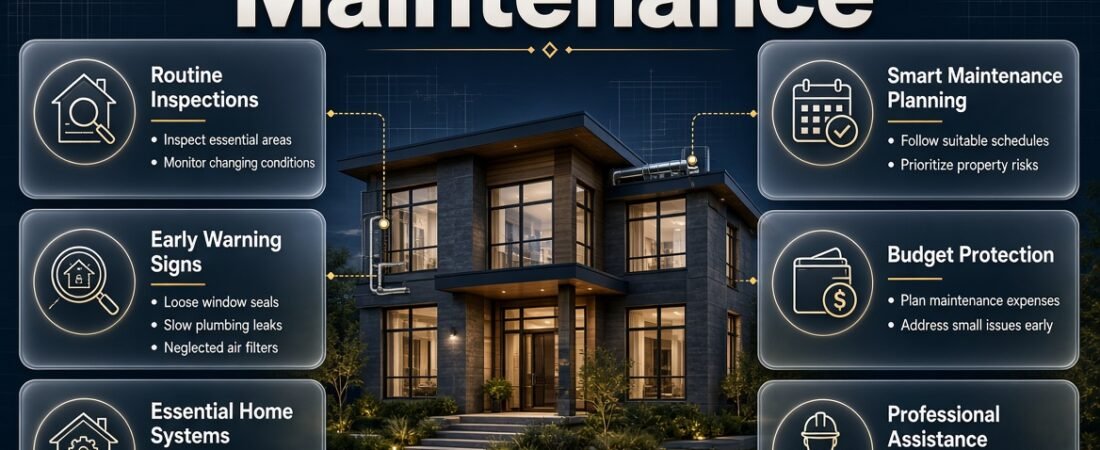
Preventive Home Maintenance | A home can look perfectly fine on the surface while small problems develop behind walls, beneath sinks, around windows, or inside important equipment. A loose seal, a slow plumbing leak, or a neglected ventilation filter may not seem urgent today, but ignoring these early warning signs can lead to expensive repairs and unnecessary disruption later.
Preventive home maintenance helps you identify these problems before they become serious. Instead of waiting for something to break, you inspect important areas, follow suitable maintenance schedules, monitor changes, and arrange repairs when they are needed.
For homeowners and property managers, this approach offers a more organized way to protect a building, manage household expenses, and maintain a comfortable living environment. You can find more property-care information at Brendan Active Property Care, while this guide focuses specifically on prevention rather than general repair advice.
In this comprehensive guide, you’ll learn how preventive maintenance works, which home systems need regular attention, how to create a risk-based maintenance schedule, which warning signs deserve priority, how to plan a maintenance budget, and when professional assistance is necessary.
What Is Preventive Home Maintenance?
Preventive home maintenance is the planned inspection, cleaning, servicing, and minor repair of a property to reduce the likelihood of equipment failure, building deterioration, and avoidable damage.
The key idea is simple: identify developing problems early and take appropriate action before they become more disruptive or expensive.
For example, inspecting visible plumbing connections can reveal a small leak before it damages a cabinet. Checking exterior seals can help identify places where rainwater might enter. Following the manufacturer’s servicing instructions for an air-conditioning system can help maintain its performance and reveal developing faults.
Preventive home maintenance covers several areas:
- Building structure: Foundations, walls, ceilings, roof coverings, and structural components.
- Water management: Plumbing connections, drainage, gutters, and moisture control.
- Mechanical systems: Heating, ventilation, air conditioning, and water-heating equipment.
- Electrical safety: Visible damage, safety devices, and professional electrical inspections.
- Interior protection: Window seals, bathroom sealant, flooring, and areas exposed to moisture.
- Exterior protection: Doors, windows, paintwork, outdoor drainage, and weather-resistant finishes.
- Household equipment: Appliances, ventilation fans, and other systems that require periodic servicing.
Preventive maintenance doesn’t mean replacing everything before it wears out. It means understanding the condition of your property and responding appropriately to its actual needs.
How Is Preventive Maintenance Different From Ordinary Cleaning?
Cleaning is one part of preventive maintenance, but the two aren’t identical.
Cleaning removes dirt, dust, grease, and other buildup. Preventive maintenance also involves checking for deterioration, testing equipment where appropriate, recording changes, and arranging repairs.
For example, cleaning a bathroom floor improves hygiene. Inspecting the bathroom’s plumbing connections, checking the sealant, and investigating recurring dampness help prevent property damage.
A complete maintenance routine combines both activities without treating every household chore as a major repair project.
Why Is Preventive Home Maintenance Important?
Preventive maintenance helps reduce avoidable damage, improve household safety, maintain essential equipment, and make future expenses easier to anticipate. It cannot eliminate every unexpected failure, but it gives homeowners a better opportunity to identify problems while they are still manageable.
1. It Helps Control Repair Costs
Small defects can become more expensive when they remain unnoticed.
Consider a leaking connection beneath a kitchen sink. Initially, the problem may involve a minor repair. If the leak continues, however, water can damage cabinet panels, flooring, stored belongings, and nearby materials.
The original plumbing fault may be relatively simple, but the resulting damage can require several separate repairs.
Regular inspections help you discover issues before they spread. The financial benefit depends on the problem and the cost of inspection or maintenance, but early detection can prevent some avoidable expenses.
2. It Protects Building Materials
Roofs, exterior walls, window frames, flooring, insulation, and other building materials can deteriorate when exposed to persistent moisture, unsuitable cleaning products, excessive heat, or poor maintenance.
Preventive inspections help identify damaged seals, deteriorating finishes, blocked drainage, and other conditions that can accelerate wear.
Addressing the underlying cause is essential. Repainting a damp wall without investigating the moisture source may improve its appearance temporarily, but the problem can return.
3. It Helps Maintain Equipment Reliability
Heating and cooling systems, water heaters, refrigerators, ventilation fans, and other household equipment need appropriate care.
Following manufacturer recommendations, maintaining suitable airflow, cleaning accessible filters, and arranging professional servicing can help equipment operate as intended.
These actions don’t guarantee that a component will never fail. Equipment age, installation quality, operating conditions, and manufacturing defects also affect reliability.
4. It Supports Household Safety
Some maintenance problems affect more than the condition of a building.
Damaged electrical equipment, malfunctioning safety alarms, unstable handrails, blocked ventilation, and gas-appliance faults can create serious risks.
A preventive maintenance plan should therefore give safety-related checks higher priority than cosmetic improvements.
5. It Improves Financial Planning
A maintenance record helps you identify aging equipment, recurring repairs, and components that may need attention in the future.
Instead of being surprised by every developing problem, you can request estimates, compare suitable options, and set aside money for planned work.
This is especially useful when several building systems are approaching the end of their expected service lives.
6. It Supports Property Condition and Comfort
Well-maintained windows, doors, ventilation systems, and building surfaces can contribute to a more comfortable indoor environment.
Preventive maintenance can also help preserve the property’s presentation and provide useful documentation of completed work.
However, maintenance alone doesn’t guarantee a higher resale price. Market conditions, location, property size, and many other factors influence property value.
Preventive, Reactive, Predictive, and Corrective Maintenance
Understanding the different maintenance approaches helps you decide which one is appropriate for each situation.
| Maintenance type | What it means | Practical example | Main purpose |
|---|---|---|---|
| Preventive | Planned work performed at suitable intervals | Inspecting window seals before the rainy season | Reduce avoidable deterioration |
| Reactive | Responding after an unexpected failure | Arranging a repair after a pipe begins leaking | Restore normal operation |
| Predictive | Using condition information to anticipate a potential fault | Reviewing specialist equipment-monitoring data | Identify developing failures |
| Corrective | Repairing a known defect | Replacing a damaged seal discovered during inspection | Correct an existing problem |
These approaches can work together.
For instance, a routine inspection may reveal unusual air-conditioning performance. A technician can investigate the condition, identify the fault, and complete corrective work. Future inspections can then follow the equipment’s recommended schedule.
Most households don’t need sophisticated predictive monitoring for every component. A reliable preventive schedule, supported by timely corrective repairs, is usually a practical starting point.
Which Areas of Your Home Need Preventive Maintenance?
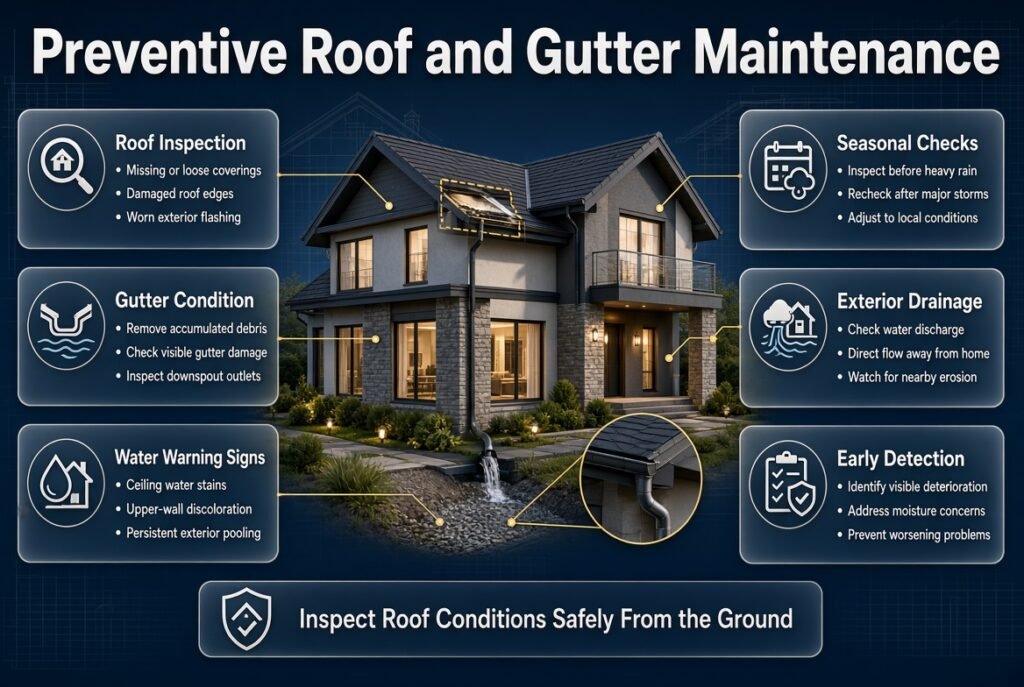
The best preventive maintenance plan covers the systems that protect the building, manage water, support daily living, and maintain household safety.
The following sections explain what to inspect, why it matters, and which warning signs deserve attention.
1. Roofs, Gutters, and Exterior Drainage
Your roof and drainage system help protect the building from weather-related damage. When these systems deteriorate or become obstructed, water can enter the property or collect in unsuitable locations.
What Should You Inspect?
Look for visible signs such as:
- Missing, loose, or damaged roof coverings.
- Debris accumulating in gutters.
- Downspouts that discharge water too close to the building.
- Damaged exterior flashing or visible gaps around roof penetrations.
- Water stains on ceilings or upper walls.
- Erosion or persistent pooling near the property’s exterior.
- Deteriorating seals around accessible exterior openings.
Inspect the roof from the ground whenever possible. Roof access can be dangerous, and climbing onto a roof isn’t necessary for an ordinary homeowner inspection.
How Often Should You Check the Roof and Gutters?
A practical starting point is to inspect visible roof conditions and drainage seasonally, before periods of heavy rain, and after significant storms when it is safe.
Properties surrounded by trees may need more frequent gutter checks. Buildings exposed to strong winds or severe weather may also need additional inspections.
The appropriate frequency depends on the roof material, building design, local climate, and previous problems.
Why Is Early Detection Important?
A damaged roof covering or obstructed gutter may allow water to enter places that are difficult to inspect.
Once moisture reaches insulation, ceiling materials, timber, or wall cavities, repairs can become more extensive.
Common Mistake: Cleaning the visible part of a gutter without checking whether the downspout carries water away properly. A clear gutter cannot manage rain effectively if its outlet is blocked or the discharge location creates drainage problems.
2. Plumbing and Water Supply Systems
Plumbing deserves consistent attention because even a relatively small leak can continue for days or weeks before anyone notices it.
Preventive plumbing maintenance focuses on visible connections, early leak detection, appropriate drainage, and monitoring changes in water use.
Which Plumbing Areas Need Attention?
Inspect accessible areas around:
- Kitchen and bathroom sinks.
- Toilets and their supply connections.
- Washing machines and dishwashers.
- Water heaters.
- Exposed pipes and valves.
- Outdoor taps and irrigation connections.
- Visible drainage outlets.
Look for moisture, corrosion, damaged hoses, unusual dripping, swollen cabinet panels, and recurring puddles.
You should also pay attention to changes in water pressure, unexplained water consumption, and drains that repeatedly become slow.
What Should You Do If You Discover a Leak?
First, determine whether the leak is active and whether it creates an immediate hazard.
If it is safe and you know how to do so, use the appropriate water shutoff to limit the flow. Keep water away from electrical equipment and arrange qualified assistance when needed.
Record the affected location and take photographs if doing so is safe. After the repair, monitor the area to confirm that the moisture doesn’t return.
How Can You Prevent Plumbing Problems?
- Follow the maintenance instructions for hoses, appliances, and water heaters.
- Avoid forcing unsuitable objects into drains.
- Investigate recurring blockages rather than repeatedly treating the symptoms.
- Keep accessible plumbing areas clear enough for inspection.
- Arrange professional assessment when pipes corrode, leak repeatedly, or show other signs of deterioration.
Preventive maintenance cannot prevent every pipe failure, but it can help identify warning signs before water damage becomes extensive.
3. Heating, Ventilation, and Air Conditioning
Heating, ventilation, and air conditioning systems often operate for long periods, particularly in homes with demanding seasonal conditions.
Their maintenance requirements depend on the equipment type, usage, environment, and manufacturer’s recommendations.
What Does HVAC Preventive Maintenance Include?
Common tasks include:
- Checking accessible filters for dust and blockage.
- Cleaning or replacing filters as instructed.
- Keeping outdoor equipment free from inappropriate obstructions.
- Checking accessible condensate drainage where the system design allows.
- Monitoring unusual sounds, odors, or changes in performance.
- Arranging professional servicing at the recommended intervals.
A clogged filter can restrict airflow, while blocked condensate drainage may contribute to water leakage in some systems.
However, poor cooling or heating can have several causes. Avoid assuming that a filter is responsible for every performance problem.
Why Does HVAC Maintenance Matter?
A well-maintained system can provide more consistent comfort and may avoid certain preventable operating problems.
Regular care can also reveal issues such as damaged insulation, unusual vibration, drainage faults, or components that require professional attention.
Actual energy consumption depends on the equipment, building insulation, thermostat settings, outdoor conditions, and other factors.
Expert Tip: Record filter sizes, model numbers, service dates, and any recurring performance problems. This information makes it easier to follow the correct maintenance instructions and explain concerns to a technician.
4. Electrical Safety and Household Devices
Electrical systems require particular care because faults may not be visible during an ordinary inspection.
Preventive maintenance should focus on recognizing warning signs, checking accessible safety devices, and arranging qualified assessment rather than attempting unfamiliar electrical repairs.
What Should Homeowners Check?
Look for:
- Frayed or damaged electrical cords.
- Cracked outlet covers.
- Discoloration around electrical outlets.
- Unusual buzzing or burning odors.
- Frequently tripping circuit breakers.
- Damaged plugs or loose-looking electrical fittings.
- Smoke alarms that fail their recommended tests.
Don’t remove electrical covers or handle exposed wiring to investigate a problem.
If you notice sparks, a burning smell, or repeated electrical faults, stop using the affected equipment where safe and contact a qualified electrician. If there is immediate danger, move away and follow appropriate emergency procedures.
How Should Safety Alarms Be Maintained?
Test smoke alarms and carbon monoxide alarms according to their manufacturers’ instructions and applicable local requirements.
Replace batteries or devices as specified. An alarm that repeatedly fails a test should not simply be ignored.
Carbon monoxide alarms are particularly important where fuel-burning equipment or other potential sources of carbon monoxide are present. Follow local safety guidance when selecting and installing them.
5. Windows, Doors, and Weather Seals
Windows and doors are exposed to sunlight, temperature changes, movement, moisture, and everyday use.
Damaged seals can allow drafts or water to enter, while poorly operating doors and windows may indicate worn hardware or other developing problems.
What Should You Inspect?
Check whether:
- Windows open and close as intended.
- Door hinges and handles operate properly.
- Weather stripping is cracked, compressed, or detached.
- Exterior sealant has gaps or visible deterioration.
- Frames show signs of swelling, corrosion, or water damage.
- Condensation occurs repeatedly in the same locations.
A small gap in weather stripping may be relatively easy to correct, but water entering around a window can have several possible causes.
Inspect the surrounding exterior surfaces and investigate recurring moisture rather than automatically applying new sealant.
When Should You Replace Weather Stripping?
Replace damaged or ineffective weather stripping when the material and installation requirements are understood.
Choose a compatible product and follow the manufacturer’s instructions. If the frame is distorted or water continues to enter after a repair, further investigation may be necessary.
6. Bathrooms and Moisture-Prone Areas
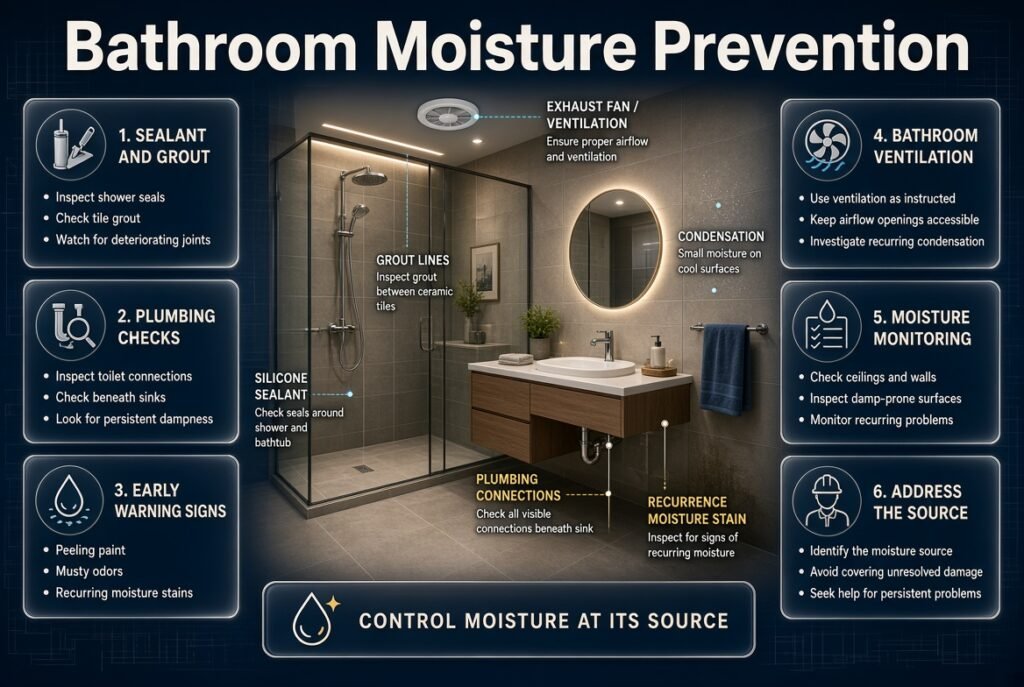
Bathrooms combine water supply lines, drainage, warm air, ventilation, and surfaces that are frequently exposed to moisture.
Preventive maintenance helps detect leaks, deteriorating sealant, and inadequate ventilation before these conditions damage surrounding materials.
What Should You Check?
Inspect the following areas regularly:
- Sealant around showers, bathtubs, and sinks.
- Grout between tiles.
- Toilet bases and visible supply connections.
- Cabinets beneath sinks.
- Exhaust fans and accessible ventilation openings.
- Ceilings and walls near plumbing fixtures.
Look for persistent dampness, peeling paint, musty smells, and recurring stains.
Why Is Ventilation Important?
Bathrooms generate moisture during showers and other activities. If moist air cannot escape effectively, condensation may develop on surfaces and contribute to mold growth.
Use ventilation equipment as instructed and investigate recurring moisture that remains after ordinary cleaning and ventilation.
Don’t cover a damp surface with paint or sealant without addressing the source. If mold is extensive, repeatedly returns, or results from hidden water damage, consider professional assessment.
7. Foundations, Walls, Ceilings, and Floors
Structural and building-envelope inspections help identify changes that may require further investigation.
Not every crack indicates a serious structural problem. Small cosmetic cracks can occur as materials settle or change with temperature and humidity. The location, progression, and surrounding conditions matter.
Which Warning Signs Deserve Attention?
Look for:
- Cracks that appear to widen over time.
- New cracks around doors and windows.
- Doors that suddenly begin sticking.
- Uneven floors or noticeable changes in floor level.
- Persistent moisture around the foundation.
- Ceiling stains or sagging.
- Repeated separation between building materials.
Photograph unusual changes and compare them over time.
If you notice rapid changes, significant movement, or several symptoms occurring together, arrange a qualified structural assessment. Do not assume that a crack is harmless solely because it is narrow.
How Can Exterior Drainage Protect the Building?
Water should be managed according to the property’s design and local drainage requirements.
Inspect visible ground conditions for recurring pooling, erosion, and drainage outlets that direct water toward the building. Keep suitable drainage routes clear and investigate repeated water accumulation.
Avoid making major changes to grading or drainage without understanding their effects on neighboring properties and the existing drainage system.
8. Appliances and Other Household Equipment
Household appliances benefit from cleaning, inspection, and servicing according to their instructions.
Preventive care can help maintain normal operation and reveal developing problems before they cause disruption.
A Practical Appliance Maintenance Checklist
Refrigerator
- Inspect door seals.
- Keep accessible ventilation areas clear.
- Clean accessible coils only as directed.
- Monitor unusual noise or cooling changes.
Washing machine
- Inspect accessible hoses and connections.
- Clean the detergent drawer and designated filters as instructed.
- Look for leaks after operation.
- Investigate unusual vibration.
Dishwasher
- Clean the designated filter according to the manual.
- Inspect accessible hoses and connections.
- Look for water beneath or around the appliance.
- Investigate recurring drainage problems.
Clothes dryer
- Clean the lint filter as instructed.
- Maintain the exhaust path according to the manufacturer’s guidance.
- Investigate unusual heat, odors, or operating changes.
- Arrange professional attention for ventilation or mechanical faults that cannot be safely addressed through routine cleaning.
Water heater
- Look for visible leaks, corrosion, or unusual changes in operation.
- Follow the manufacturer’s inspection and servicing requirements.
- Arrange qualified help for technical maintenance or suspected faults.
The exact requirements vary by model. Avoid dismantling appliances or performing maintenance that requires specialist training.
9. Outdoor Areas and Drainage
Outdoor maintenance contributes to the protection of the building as well as the appearance of the property.
Rainwater, soil movement, sunlight, plant growth, and weather exposure can gradually affect exterior structures and drainage.
Inspect:
- Paths, steps, and visible trip hazards.
- Fences, gates, and handrails.
- Outdoor taps and irrigation connections.
- Driveways and paved areas.
- Visible drainage channels.
- Exterior walls and accessible finishes.
- Areas where plants contact the building.
Trim vegetation when necessary and appropriate, but avoid damaging the building’s drainage system or disturbing foundations.
After heavy rain, look for recurring puddles, erosion, and signs that water is reaching places where it shouldn’t.
If you find damaged retaining structures, unstable steps, or significant ground movement, arrange professional assessment rather than relying on cosmetic repairs.
Building a Preventive Home Maintenance Schedule
A maintenance schedule transforms individual tasks into a repeatable system. It helps ensure that inspections happen consistently and that important findings receive follow-up attention.
The best schedule is based on manufacturer guidance, local conditions, the property’s age, and its observed condition.
Monthly Maintenance Tasks
Monthly checks are useful for systems that can develop visible problems during ordinary household use.
Consider checking:
- Visible plumbing connections for leaks.
- Kitchen and bathroom cabinets for unexplained dampness.
- Accessible HVAC filters.
- Drains for recurring slow drainage.
- Smoke alarms according to their instructions.
- Electrical cords and visible equipment damage.
- Ceilings and walls for new stains.
- Outdoor areas for obvious drainage problems.
These checks don’t need to take hours. A short, organized inspection can reveal changes that would otherwise go unnoticed.
Quarterly Maintenance Tasks
Every three months, review the property’s recurring maintenance needs.
Depending on your home, this may include:
- Inspecting bathroom sealant and grout.
- Reviewing appliance cleaning requirements.
- Checking accessible window and door seals.
- Looking for developing exterior damage.
- Reviewing maintenance records.
- Checking whether scheduled professional work is due.
- Investigating recurring problems that haven’t been resolved.
Quarterly checks supplement monthly observations; they don’t replace more frequent inspections where conditions require them.
Seasonal Maintenance Tasks
Seasonal maintenance prepares the property for changes in weather and usage.
Before periods of heavy rain, inspect drainage and visible exterior seals. Before periods of intense cooling demand, check the air-conditioning system according to its maintenance requirements. In colder climates, prepare plumbing and heating systems according to local conditions.
Homes in hot, humid, or dusty environments may need a different schedule from homes in cold climates.
The objective is to address predictable risks before environmental conditions make them more difficult to manage.
How Seasonal Home Maintenance Helps Protect Your Property
Seasonal maintenance tasks are an important part of keeping your property in good condition throughout the year. By inspecting your roof, windows, plumbing, ventilation, and drainage at appropriate times, you can identify potential issues before they become more complicated to address. To organize these tasks effectively, follow this practical guide to seasonal home maintenance, which explains how to plan inspections and prepare your home for changing weather conditions.
Annual Maintenance Reviews
An annual review should evaluate the condition of the home as a whole.
Review:
- Roof and exterior inspection records.
- Plumbing and HVAC servicing.
- Safety-device maintenance.
- Appliance performance and recurring faults.
- Previous repair costs.
- Warranty information.
- Components approaching replacement.
- Outstanding recommendations from professionals.
Use this review to update your maintenance plan rather than automatically scheduling every possible inspection regardless of need.
Preventive Home Maintenance Checklist by Frequency
The following table can help you create a starting schedule. Adjust the tasks to the manufacturer’s instructions, the property’s condition, and applicable local requirements.
| Frequency | Suggested tasks | Purpose |
|---|---|---|
| Monthly | Check visible plumbing, dampness, drains, and accessible filters | Identify developing problems |
| Monthly | Test safety alarms as instructed | Verify that devices function |
| Quarterly | Review seals, appliance care, and recurring defects | Monitor gradual deterioration |
| Seasonally | Inspect visible roof conditions and drainage | Prepare for weather changes |
| Seasonally | Review exterior seals and ventilation requirements | Reduce avoidable moisture and airflow problems |
| As specified | Service HVAC equipment and other major systems | Follow technical requirements |
| Annually or as appropriate | Review property condition and maintenance records | Plan repairs and future expenses |
| After significant weather | Check for visible damage when safe | Identify storm-related concerns |
| When symptoms appear | Investigate leaks, unusual noises, and repeated faults | Prevent unresolved problems from worsening |
Remember that the checklist is a planning tool, not a replacement for equipment manuals, specialist inspections, or emergency procedures.
How to Prioritize Maintenance When Several Problems Appear
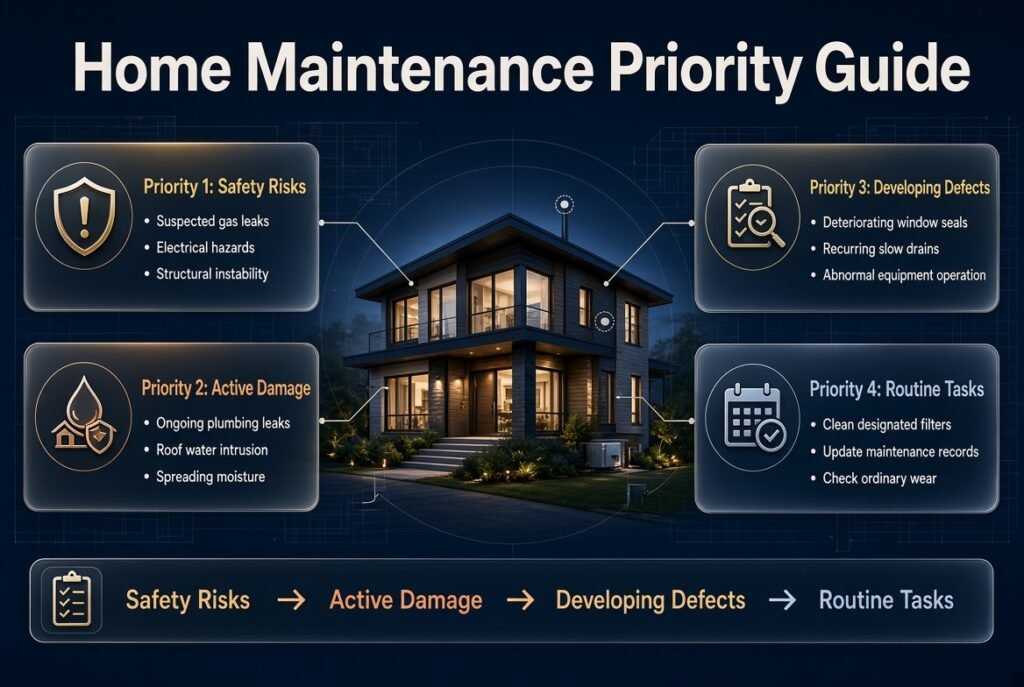
When several issues arise together, deciding what to address first can be difficult. A risk-based approach helps you focus on the problems that matter most.
Priority 1: Immediate Safety Risks
Examples include suspected gas leaks, sparking electrical equipment, significant structural instability, and uncontrolled water near electrical systems.
Move away from danger and contact the appropriate emergency service or qualified professional. Do not continue routine maintenance while an immediate hazard remains.
Priority 2: Active Damage
Examples include an ongoing plumbing leak, water entering through the roof, or rapidly spreading moisture.
Arrange prompt assessment and take safe, appropriate steps to limit further damage.
Priority 3: Developing Defects
Examples include deteriorating window seals, recurring slow drains, and equipment that repeatedly operates abnormally.
Schedule a suitable inspection or repair before the condition becomes more disruptive.
Priority 4: Routine Preventive Tasks
Examples include cleaning designated filters, updating maintenance records, and checking ordinary wear.
Complete these tasks according to the maintenance schedule while ensuring that higher-priority concerns are not neglected.
This approach prevents a low-risk cosmetic project from taking priority over a problem that could affect safety or cause significant damage.
How to Create a Property-Specific Maintenance Plan
A useful maintenance plan should reflect the actual building rather than relying entirely on a generic checklist.
Step 1: Build a Property Inventory
List the home’s major systems, equipment, and vulnerable areas.
Record the approximate age of the roof, water heater, HVAC system, major appliances, and other important components where the information is available.
Include installation dates, model numbers, warranty information, and relevant service records.
Step 2: Identify Known Weak Points
Review previous repairs and recurring issues.
A property with a history of bathroom leaks may need closer monitoring of plumbing connections and sealant. A house with mature trees may require more frequent gutter checks.
Use previous experience to identify where preventive attention is most valuable.
Step 3: Assign Inspection Intervals
Choose an appropriate interval for each task based on its purpose and the manufacturer’s recommendations.
Avoid checking everything at the same frequency simply because it makes the calendar easier to manage.
Step 4: Assign Responsibility
Decide which tasks can be handled safely by the homeowner and which require a professional.
If several people share responsibility for the property, make sure everyone understands how to report problems and where maintenance records are kept.
Step 5: Record Findings and Follow Up
Every inspection should lead to a clear decision: no action needed, monitor the condition, schedule a repair, or seek urgent assistance.
Record that decision and its outcome. A checklist is only useful when identified problems receive appropriate follow-up.
Step 6: Review the Plan Regularly
Update the schedule when equipment is replaced, a problem recurs, or professional advice changes the recommended maintenance interval.
The plan should evolve with the property’s condition.
For a broader overview of ongoing property-care responsibilities, explore the Home Maintenance resource. This article’s emphasis remains on prevention, early detection, and planned maintenance rather than covering every general repair or improvement project.
How Much Should You Budget for Preventive Home Maintenance?
There is no single maintenance budget that suits every home. Costs depend on the property’s size, age, construction, climate, equipment, local labor rates, and condition.
Instead of relying on one universal figure, divide your budget into practical categories.
Routine Supplies
This category may include replacement filters, approved cleaning products, batteries, and other consumables.
Review your actual usage over several months to estimate a realistic annual amount.
Planned Professional Servicing
Include recommended servicing for systems such as HVAC equipment, water heaters, and other components that require specialist attention.
Obtain local estimates and follow the equipment manufacturer’s instructions.
Minor Repairs
Set aside money for small repairs involving plumbing, seals, hardware, exterior finishes, and similar components.
Your maintenance records can help identify which categories require the most attention.
Major Repairs and Replacements
Some components eventually require substantial repairs or replacement even when they have been maintained correctly.
Review the age and condition of important systems, obtain estimates when appropriate, and plan ahead when a major expense appears likely.
Emergency Reserve
Keep a separate reserve for unexpected problems where your financial circumstances allow.
Preventive maintenance reduces some risks, but it cannot eliminate sudden failures, storm damage, or other unpredictable events.
How Can You Reduce Maintenance Costs Without Neglecting Your Home?
- Address genuine problems before they spread.
- Follow manufacturer instructions rather than guessing at servicing requirements.
- Compare qualified estimates for major work.
- Keep maintenance records and warranty information.
- Avoid replacing functional components without a sound reason.
- Learn to recognize tasks that are safe to complete yourself.
- Prioritize safety and damage prevention over cosmetic upgrades.
The aim is not to spend as little as possible on every task. It is to direct money toward work that protects the property and addresses genuine needs.
DIY Maintenance or Professional Help?
Homeowners can manage many routine inspection and cleaning tasks, but technical work should be assigned according to the risks involved.
| Task | General suitability | Important consideration |
|---|---|---|
| Checking visible pipes for leaks | Often suitable for DIY | Don’t dismantle unfamiliar connections |
| Cleaning accessible filters | Often suitable for DIY | Follow the manufacturer’s instructions |
| Testing safety alarms | Often suitable for DIY | Use the prescribed testing procedure |
| Inspecting exterior damage from the ground | Often suitable for DIY | Avoid unsafe access |
| Replacing suitable weather stripping | Often suitable for DIY | Use compatible materials |
| Diagnosing recurring plumbing faults | Professional assessment may be needed | Symptoms may have several causes |
| Electrical wiring repairs | Qualified professional | Electrical work presents serious hazards |
| Gas appliance repairs | Qualified professional | Incorrect repairs can create dangerous conditions |
| Major roof repairs | Professional work recommended | Falls and hidden damage are significant risks |
| Structural repairs | Qualified assessment required | Incorrect work may worsen the problem |
A professional should explain the identified issue, the recommended remedy, its urgency, and any relevant limitations.
When requesting estimates, compare the proposed scope of work rather than looking only at the final price.
Common Preventive Home Maintenance Mistakes
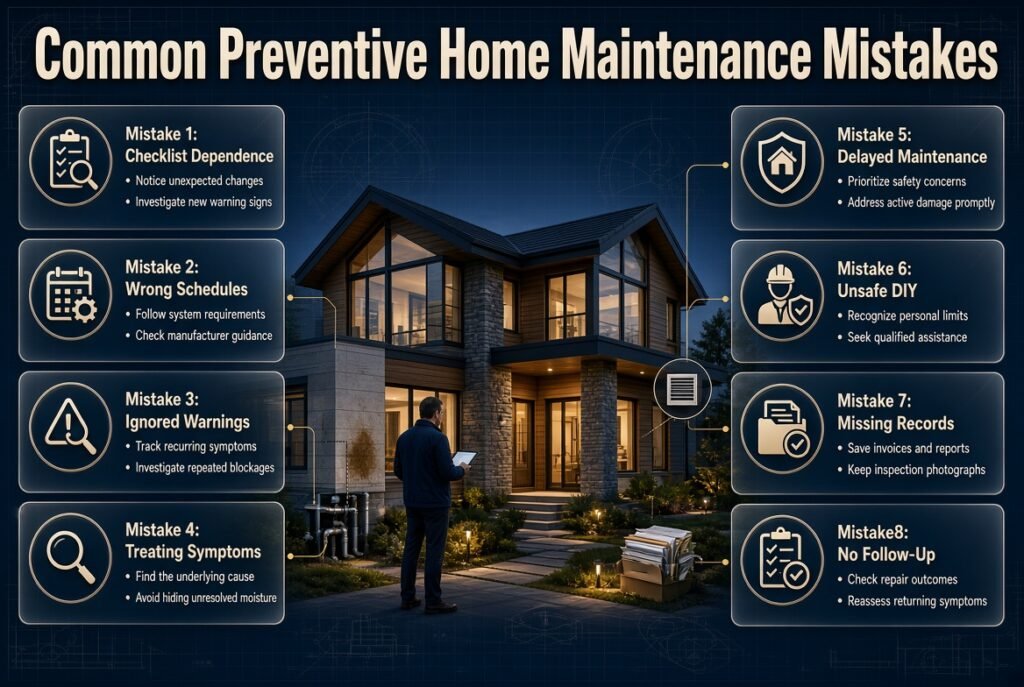
Even a well-organized homeowner can overlook important details. The following mistakes are particularly worth avoiding.
1. Treating the Checklist as a Substitute for Judgment
A checklist helps you remember tasks, but it cannot identify every possible problem.
If you notice a new leak or an unusual equipment noise, investigate it even if the next scheduled inspection is months away.
How to avoid it: Combine scheduled inspections with attention to unexpected changes.
2. Using One Maintenance Schedule for Every System
Different components have different requirements. An air filter, smoke alarm, water heater, and roof do not all need the same inspection interval.
How to avoid it: Follow manufacturer instructions and adjust the schedule to the property’s condition and environment.
3. Ignoring Repeated Warning Signs
A problem that disappears temporarily may still have an unresolved cause.
For example, a drain that repeatedly becomes blocked may require a more thorough investigation than routine cleaning.
How to avoid it: Record recurring symptoms and arrange appropriate diagnosis instead of repeatedly treating the same visible effect.
4. Performing Repairs Without Understanding the Cause
Applying sealant over persistent dampness or repainting a water stain may hide evidence without correcting the underlying fault.
How to avoid it: Identify the source before choosing a repair. Seek professional help when the cause is unclear.
5. Delaying Important Maintenance to Save Money
Postponing a low-risk cosmetic project may be reasonable. Delaying work involving active leaks, electrical hazards, or serious deterioration can be much more costly.
How to avoid it: Prioritize by safety, likelihood of further damage, and urgency rather than appearance alone.
6. Attempting Unsafe DIY Work
An online tutorial doesn’t make a hazardous repair safe.
How to avoid it: Recognize the limits of your skills and arrange qualified help for technical or dangerous tasks.
7. Failing to Document Repairs
Without records, it becomes difficult to identify recurring problems or confirm which work has already been completed.
How to avoid it: Save invoices, service reports, photographs, and inspection notes in one place.
8. Forgetting to Verify the Result
Completing a repair doesn’t always mean the problem has been resolved.
How to avoid it: Monitor the affected area or equipment appropriately after the repair. If symptoms return, request further assessment.
Expert Recommendations for More Effective Preventive Maintenance
The strongest maintenance routines rely on observation, accurate records, appropriate priorities, and consistent follow-up.
Focus on Causes Rather Than Symptoms
A stain, odor, unusual noise, or increase in water consumption is a clue rather than a complete diagnosis.
Record when the problem occurs, where it appears, and whether it changes under different conditions. This information can help a qualified professional investigate the underlying cause.
Use Photographs to Monitor Changes
Photographs can make gradual deterioration easier to recognize.
Take pictures of visible cracks, damaged seals, water stains, or exterior defects from safe locations. Include the date and location in your maintenance record.
If a condition changes noticeably, seek appropriate advice rather than relying only on visual comparisons.
Keep Equipment Information Accessible
Store manuals, model numbers, warranties, and servicing records in a dedicated folder.
These documents help you confirm maintenance requirements and avoid using incompatible parts or unsuitable cleaning methods.
Plan Maintenance Around Local Conditions
Climate and property design influence maintenance needs.
Homes exposed to heavy rainfall may require closer attention to drainage and roof conditions. Hot climates can place greater demands on cooling equipment, while humid environments require careful moisture management.
Adjust your schedule to the conditions your property actually experiences.
Review Professional Recommendations Carefully
When a contractor identifies a problem, ask for a clear explanation of its condition, likely consequences, recommended remedy, and urgency.
For significant work, consider obtaining another qualified opinion when practical. This is especially useful when the proposed repair is expensive or involves replacing major equipment.
Separate Necessary Repairs From Optional Improvements
A property can always be improved, but not every improvement is essential.
Distinguish between work needed to address a hazard or prevent deterioration and upgrades intended mainly to improve appearance or convenience.
This distinction helps you make better decisions when time and money are limited.
How Preventive Maintenance Supports Long-Term Property Care
Preventive maintenance becomes more valuable when it is connected to a broader property management routine.
A consistent record helps homeowners recognize recurring problems, identify components that are aging, and decide when professional inspection or replacement planning is appropriate.
It also improves communication when multiple people are involved in managing the property.
For example, a property manager can use inspection records to confirm that a reported leak has been investigated, a repair has been completed, and any necessary follow-up has taken place.
Similarly, homeowners preparing for renovations can use maintenance records to distinguish existing defects from planned improvements.
For additional guidance on practical household care and routine property responsibilities, visit Home Maintenance Tips. That resource can complement this guide without changing its central purpose: establishing a preventive system that identifies risks early and helps you act before minor defects become major concerns.
The main advantage of a structured maintenance approach is consistency. Instead of relying on memory or waiting for a failure, you have a repeatable process for inspecting, recording, prioritizing, and resolving property concerns.
What Preventive Home Maintenance Tasks Should Every Homeowner Do Regularly?
Every homeowner should regularly inspect plumbing, drainage, roofing, ventilation, electrical safety devices, windows, and moisture-prone areas. The purpose is to identify early warning signs before they develop into expensive repairs. A practical maintenance routine should combine monthly checks, seasonal inspections, and professional servicing based on the home’s condition and equipment requirements.
Important tasks include:
Check visible pipes, taps, and appliance connections for leaks.
Inspect accessible HVAC filters and clean or replace them as instructed.
Test smoke alarms according to the manufacturer’s recommendations.
Look for damaged window seals, bathroom sealant, and signs of moisture.
Inspect gutters and exterior drainage before periods of heavy rainfall.
A consistent schedule is more effective than waiting until something stops working. Record inspection dates and follow up on any problems you discover.
How Does Preventive Home Maintenance Help Reduce Expensive Repairs?
Preventive home maintenance helps reduce repair costs by identifying developing problems before they cause additional damage. A small plumbing leak, deteriorating roof seal, or blocked drainage outlet may be relatively straightforward to address when discovered early. If ignored, the same problem can affect flooring, walls, insulation, or other building materials, increasing the scope of the repair.
Homeowners can manage maintenance costs more effectively by:
Investigating water stains and recurring dampness promptly.
Following manufacturer-recommended equipment servicing.
Repairing deteriorated seals before water enters vulnerable areas.
Keeping records of previous faults and completed repairs.
Obtaining professional estimates for significant work before deciding on a solution.
Preventive maintenance cannot eliminate every unexpected expense, but it helps homeowners make informed decisions and plan for repairs rather than relying entirely on emergency fixes.
How Often Should You Schedule Preventive Home Maintenance Inspections?
The ideal inspection frequency depends on the property’s age, condition, climate, and installed equipment. Many homeowners benefit from monthly visual checks, quarterly reviews of recurring maintenance needs, seasonal exterior inspections, and professional servicing at intervals recommended by manufacturers or qualified specialists.
A practical schedule may include:
Monthly: Check visible plumbing, dampness, drains, and accessible HVAC filters.
Quarterly: Review window seals, bathroom sealant, appliance care, and recurring problems.
Seasonally: Inspect visible roof conditions, gutters, exterior drainage, and weather seals.
As recommended: Arrange servicing for HVAC equipment, water heaters, and other systems requiring specialist attention.
Additional inspections may be necessary after severe weather or when unusual noises, leaks, odors, or other warning signs appear. A schedule should guide your maintenance, not prevent you from investigating a problem as soon as you notice it.
Which Preventive Home Maintenance Tasks Can You Do Yourself, and When Should You Hire a Professional?
Homeowners can often manage straightforward tasks such as checking visible plumbing connections, cleaning accessible filters, testing safety alarms, inspecting weather stripping, and maintaining repair records. Professional assistance is appropriate when work involves specialized equipment, hazardous conditions, or technical knowledge beyond your experience.
Use these guidelines when deciding how to proceed:
Suitable DIY tasks: Basic visual inspections, routine cleaning, and replacing compatible filters according to instructions.
Professional assessment: Persistent leaks, recurring drainage problems, unusual equipment performance, and unexplained moisture.
Qualified specialist work: Electrical wiring, gas-appliance repairs, structural work, and major roof repairs.
Never attempt a repair simply because an online tutorial makes it appear straightforward. Choosing the right person for a task helps protect household safety and reduces the risk of making the original problem worse.
What Is the Best Way to Create a Preventive Home Maintenance Checklist and Budget?
The best approach is to create a property-specific checklist that identifies each maintenance task, its recommended frequency, its last completion date, and any follow-up action. Combine this checklist with a realistic budget for routine supplies, professional servicing, minor repairs, and future replacements.
To build a useful system:
List major components, including the roof, plumbing, HVAC equipment, water heater, appliances, and exterior drainage.
Record installation dates, warranties, service history, and known problems.
Assign maintenance intervals using manufacturer instructions and the property’s actual condition.
Prioritize safety hazards and active damage before cosmetic improvements.
Keep receipts, inspection reports, and photographs of developing problems.
Review costs periodically and set aside funds for larger repairs where possible.
A well-organized checklist makes maintenance easier to manage because you can see what has been completed, what needs attention, and which expenses may be approaching. The goal is not to spend money on every possible service, but to direct your time and budget toward protecting the property and preventing avoidable damage.
Conclusion: Build a Smarter Preventive Home Maintenance Routine
Preventive home maintenance is one of the most practical ways to protect your property, reduce unexpected repair costs, and maintain a safer, more comfortable living environment. Instead of waiting for something to break, a proactive approach helps homeowners identify early warning signs, address minor problems before they become serious, and keep essential systems working efficiently. Regular inspections of the roof, plumbing, electrical systems, heating and cooling equipment, windows, doors, and exterior areas can make a meaningful difference to a home’s long-term condition.
The key to successful maintenance is consistency rather than perfection. Create a realistic checklist, organize tasks by season, keep records of inspections and repairs, and set aside a maintenance budget for routine care and unexpected issues. While simple tasks may be suitable for homeowners, electrical hazards, major plumbing concerns, structural problems, and other complex repairs should be assessed by qualified professionals.
A well-planned routine also makes it easier to understand your property’s needs and prioritize work according to its age, condition, climate, and usage. For more practical guidance, explore our Home Maintenance resources and Home Maintenance Tips to help organize your ongoing property care.
Ultimately, preventive maintenance is an investment in your home’s reliability, safety, and future value. Start with a few essential checks, build a schedule you can maintain, and address problems as soon as they appear. With a thoughtful, consistent approach, you can reduce avoidable repairs and enjoy greater confidence in the condition of your home.